TX contractor LIC
UT contractor INS
FAA PART 107 FAA 107
Insurance $2M GL
Pricing Technology About Contact
Service · Austin & Hill Country

Land Clearing.
Done Right.

Cedar overgrowth or caliche hardpan. A ranchette in Spicewood or a lot in Austin.
We match the method to the outcome — and we prove everything with RTK-grade documentation.
No haul-away surprises. No guesswork on your grade.

Serving Austin & Hill Country Free Same-Week Quote 0.5 – 10+ Acres RTK Verified Every Job

Request a Quote

Send us a message for a free quote. We aim to respond within 1 business day to all inquiries.

    48hr Quote Turnaround Most competitors take 2–3 weeks
    0 Haul-Away Surprises Mulch-in-place or haul — your call, in the bid
    RTK Grade Verified Every job documented — not just the fancy ones
    1 Call to Scope CAT equipment + drone in one crew

    Land Clearing Services

    Four approaches to clearing land — each matched to a specific outcome. We'll tell you which one fits your project on the site walk.

    S1.01

    Brush & Cedar Clearing

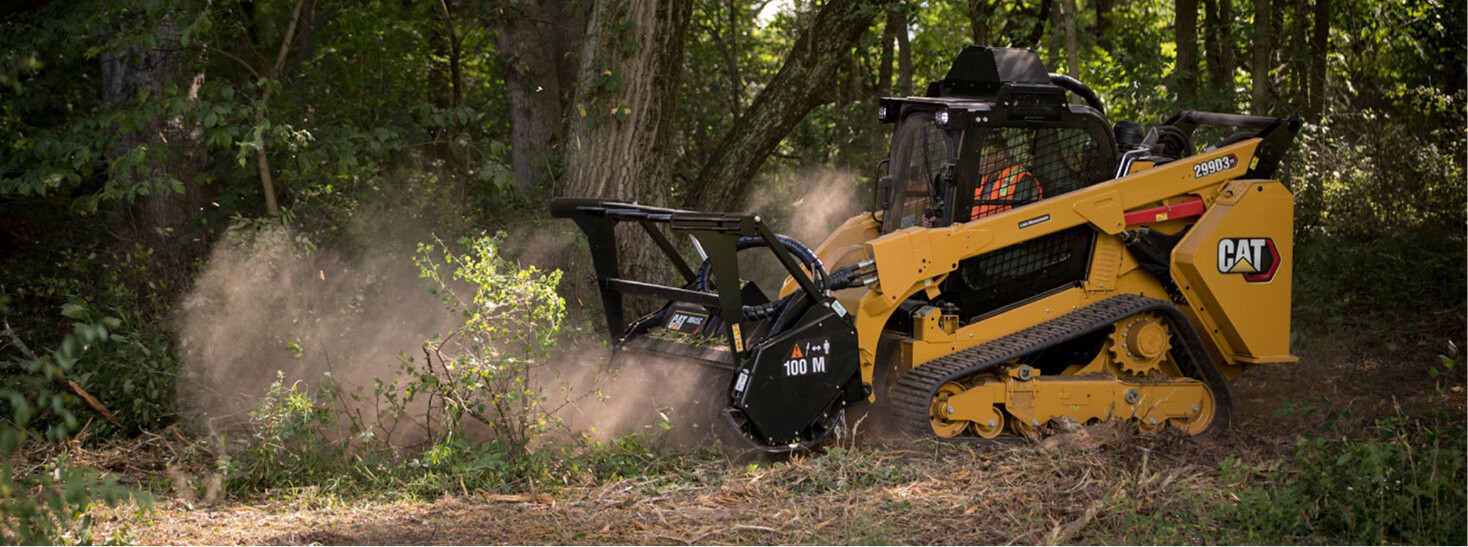
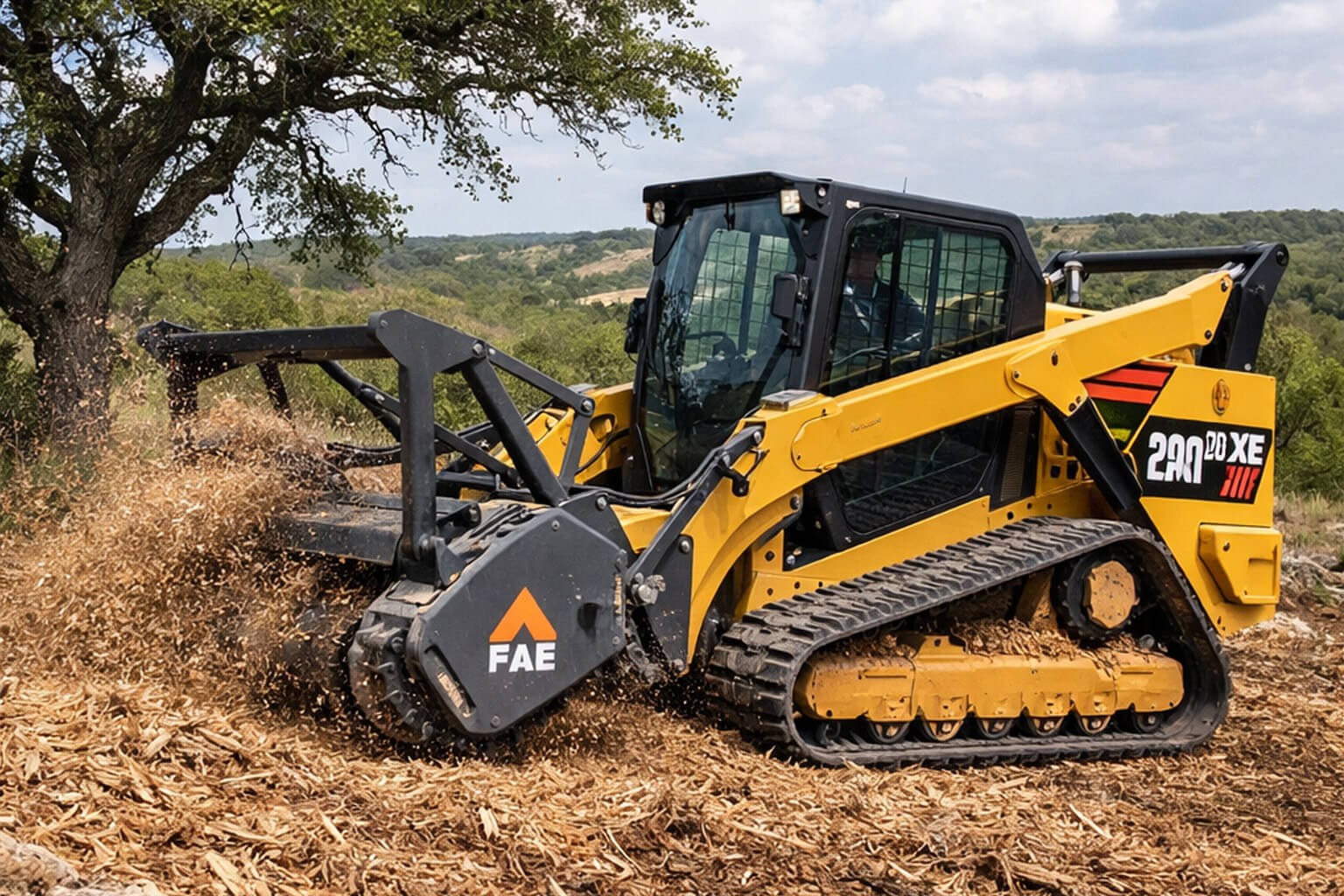
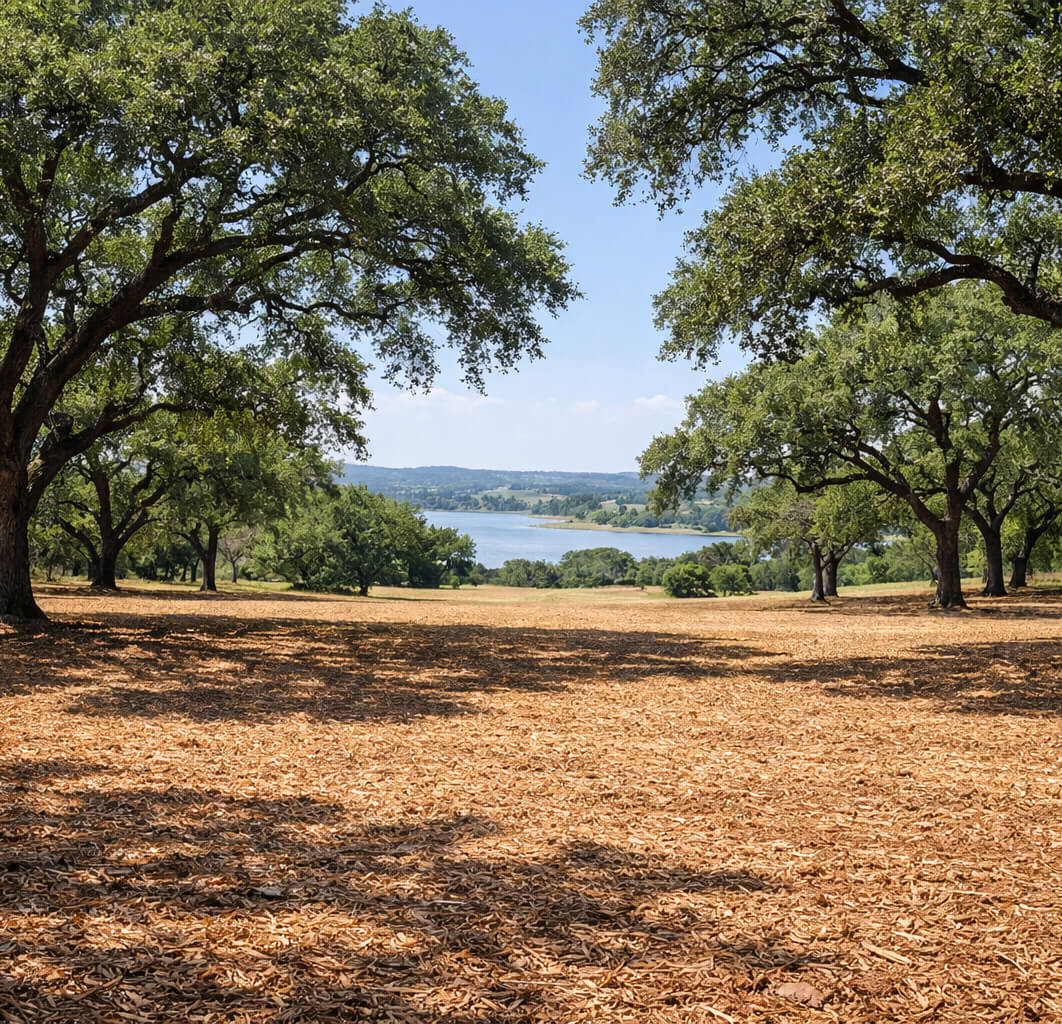
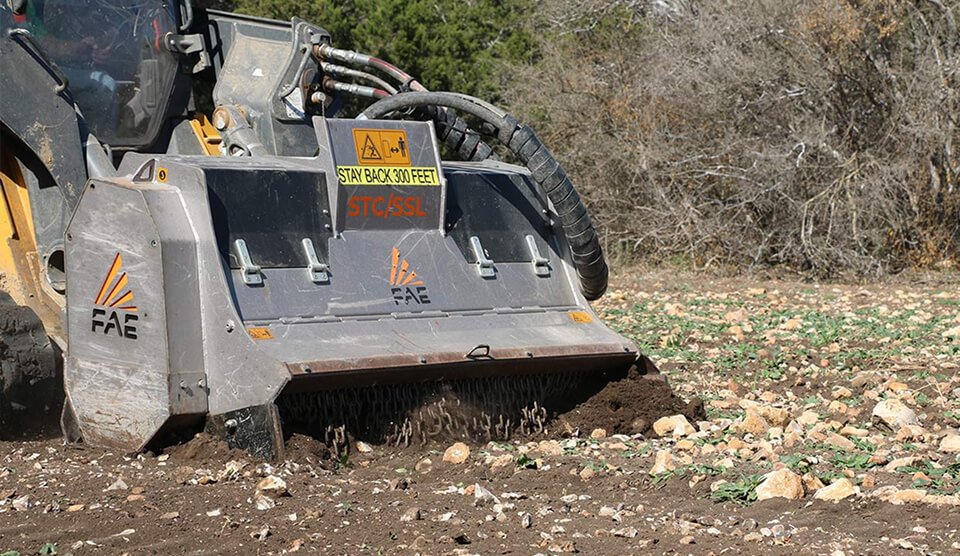
    The FAE mulching head on the CAT 299D3 chops cedar, juniper, and brush down to ground level — mulch stays on-site, feeding the soil instead of a landfill. No hauling fees. No burn permits. The result: a clean, natural-looking property that retains topsoil and reduces erosion.

    Park-like result · Soil stays · Nutrients return
    $800–$2,200/acre
    Density and terrain drive price up
    • Cedar & juniper overgrowth — any density
    • Invasive brush and undergrowth removal
    • Ranchette and estate clearing (10+ acres welcome)
    • Fire mitigation clearing (WUI compliance)
    • No haul-away — mulch returned to soil
    Technology Service Image
    S1.02

    Full Site Clearing

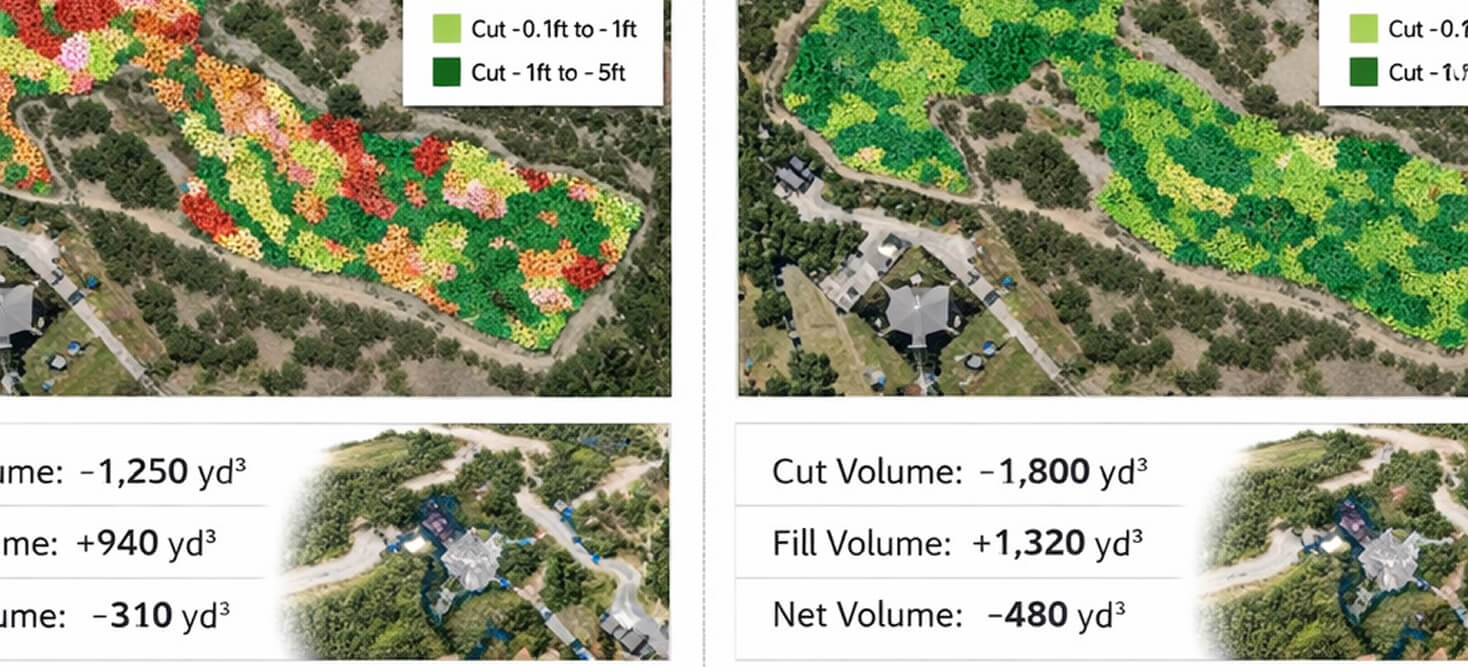
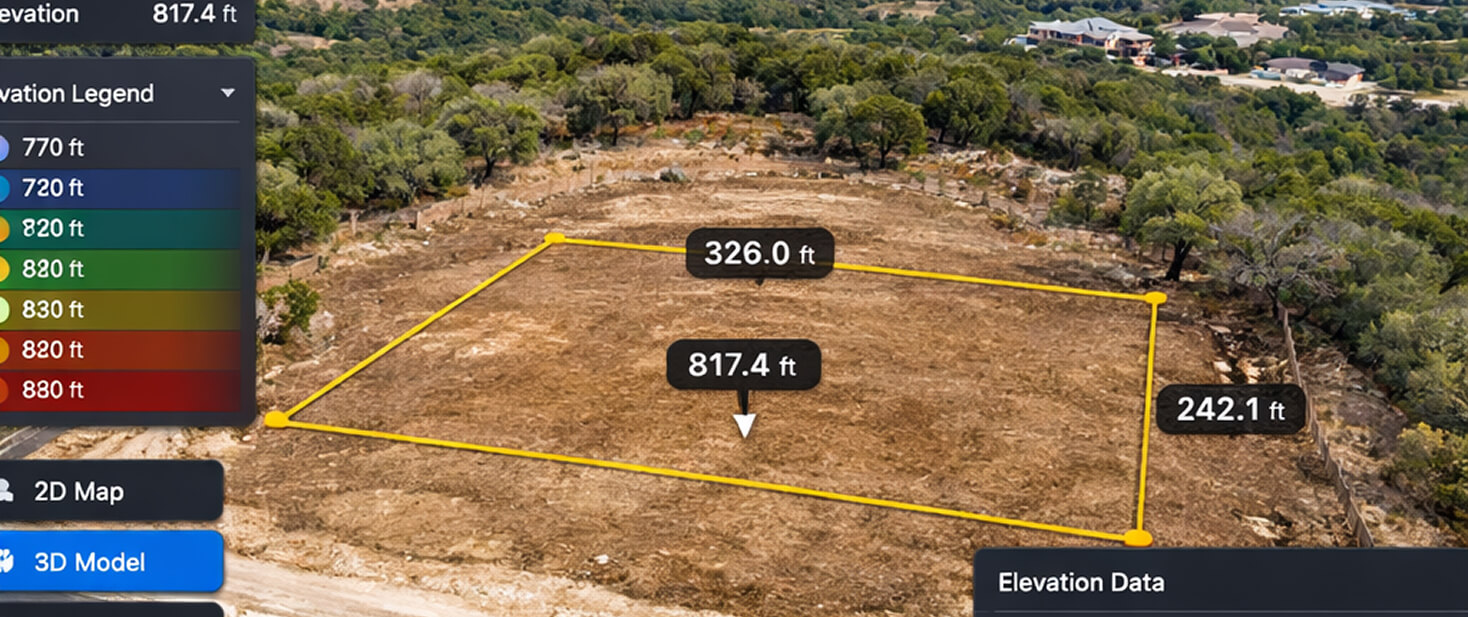
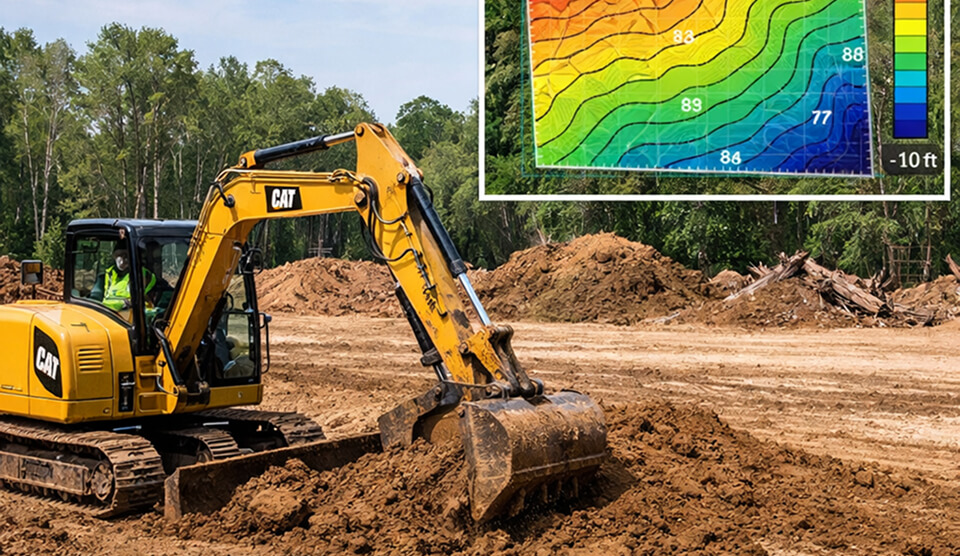
    When the outcome is bare ground — for a pool, foundation, or new build — we clear to grade. Stumps pulled. Debris hauled or chipped. CAT excavator and skid steer work the site together. RTK drone flies the finish grade and delivers a verified cut/fill report.

    Pad-ready · Build-ready · Grade-verified
    $1,200–$3,500/acre
    Density and terrain drive price up
    • Tree and stump removal with grinding
    • Debris haul-off or on-site mulching (your choice)
    • Rough grading to approved plan
    • Pool excavation and foundation pad prep
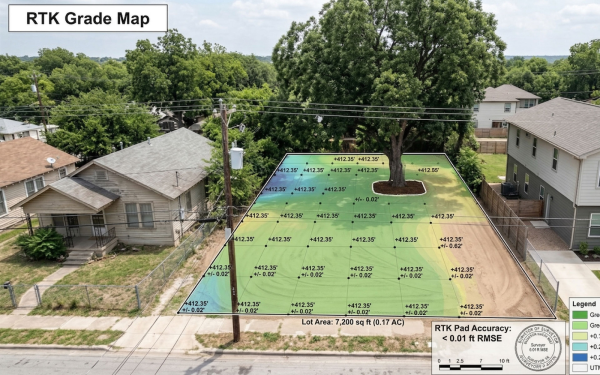
    • RTK-verified finish grade delivered as report
    Technology Service Image
    S1.03

    Lot Clearing
    (Construction-Ready)

    Complete vegetation removal and grubbing to bare dirt. Trees, brush, and root systems removed to construction-ready spec. Organic material is processed on-site when feasible — mulched in place or stockpiled for removal. The lot is delivered clean, flat, and ready for the next phase of work.

    1–3 Day Turnaround · 0.25–1 Acre Residential Lots
    CAT 299D3 XE + FAE Mulcher · Grubbing Attachments
    $3,000 – $8,000
    Typical residential lot clearing in the Austin metro and Hill Country.
    What drives the price up: Lot size is the primary variable — a 0.25-acre infill lot in East Austin runs $3K–$4K, while a full acre of dense cedar and live oak in Lakeway can push past $7K. Vegetation density matters: an overgrown lot with 8-inch cedar takes longer to process than open scrub with scattered mesquite. If the lot has significant debris, old fencing, or dumped material requiring off-site disposal, removal costs add to the base clearing price. Stump grubbing (vs. grinding flush) is more labor-intensive but required for construction-ready spec.
    Technology Service Image
    S1.04

    Selective Clearing +
    Heritage Tree Preservation

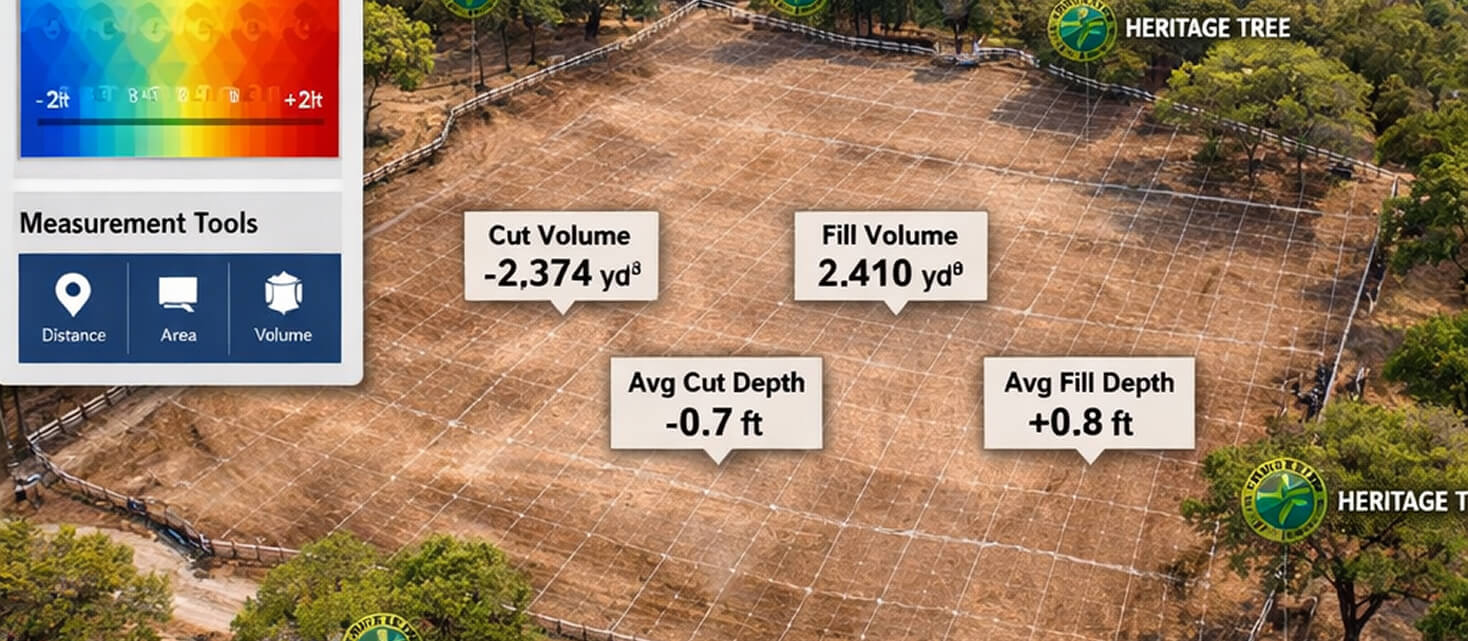
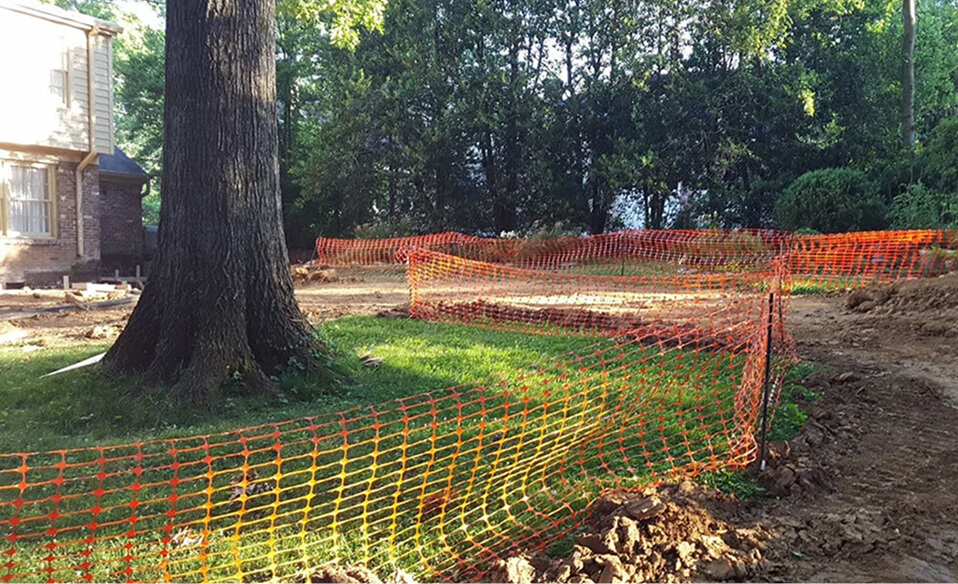
    Austin's Heritage Tree Ordinance isn't optional — it's a project-killing liability if you get it wrong. ClearGround flags Critical Root Zones before clearing begins, coordinates with certified arborists, and documents every protected tree's condition with pre- and post-work RTK scans. City compliance isn't something we figure out at the end. It's built into the plan from the first drone flight.

    CRZ Flagging + Arborist Coordination
    Austin Heritage Tree Ordinance Compliance
    Pre/Post RTK Documentation for City Review
    $4,000 – $10,000
    Per site. Scope depends on tree count, CRZ complexity, and clearing area.
    What drives the price up: The number of protected trees is the primary cost driver — a lot with one heritage live oak is a straightforward CRZ flag-and-clear, while a site with four protected trees and overlapping root zones requires precise, slow-speed work with constant boundary verification. Arborist coordination adds a per-tree assessment fee ($150–$400 per tree) that's passed through at cost. If a heritage tree's CRZ extends into the construction zone, the clearing plan has to route around it, which can add a day of machine time. The RTK documentation for city review is included — it's not optional, and it's the piece that prevents the $10K–$50K heritage tree violation penalty.
    Technology Service Image
    S1.05

    Rock Milling /
    Rock Crushing

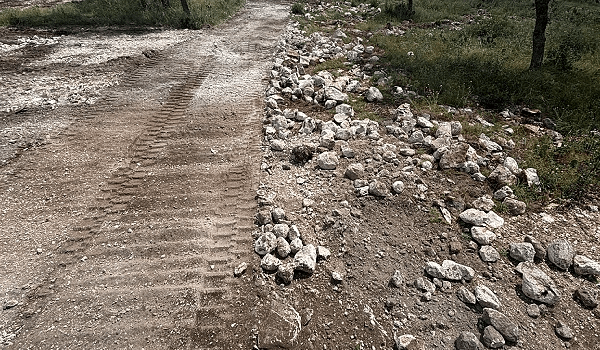
    Hill Country limestone doesn't have to leave the site. Our FAE rock crusher processes surface rock in place — turning obstruction into engineered aggregate that becomes drainage base, road sub-base, driveway material, or retaining wall backfill. What most contractors haul off at $35–$65 per cubic yard, we turn into a resource that saves the project money.

    Zero Haul-Off Waste · FAE Rock Crusher Attachment
    0.25–2 Acres · In-Situ Processing
    Crushed Limestone → Aggregate / Base Material
    $2,000 – $5,000
    Per acre of surface rock milling. Actual scope determined by pre-scan rock mapping.
    What drives the price up: Rock density and depth are the main variables. A thin 2-inch limestone cap across a half-acre lot mills quickly — under a day. A 6-inch shelf of hard Edwards limestone over a full acre can take 2–3 days of continuous processing. The FAE attachment mills to 4–6 inches of depth; anything deeper requires the excavator and rock hammer, which shifts into excavation pricing. Scattered boulders embedded in soil are more time-consuming per cubic yard than a consistent shelf because the machine repositions constantly. The offset: every cubic yard milled on-site saves $35–$65 in haul-off and tipping fees that you'd pay with a traditional clearing crew.
    Technology Service Image
    S1.06

    Rough Grading
    to Spec

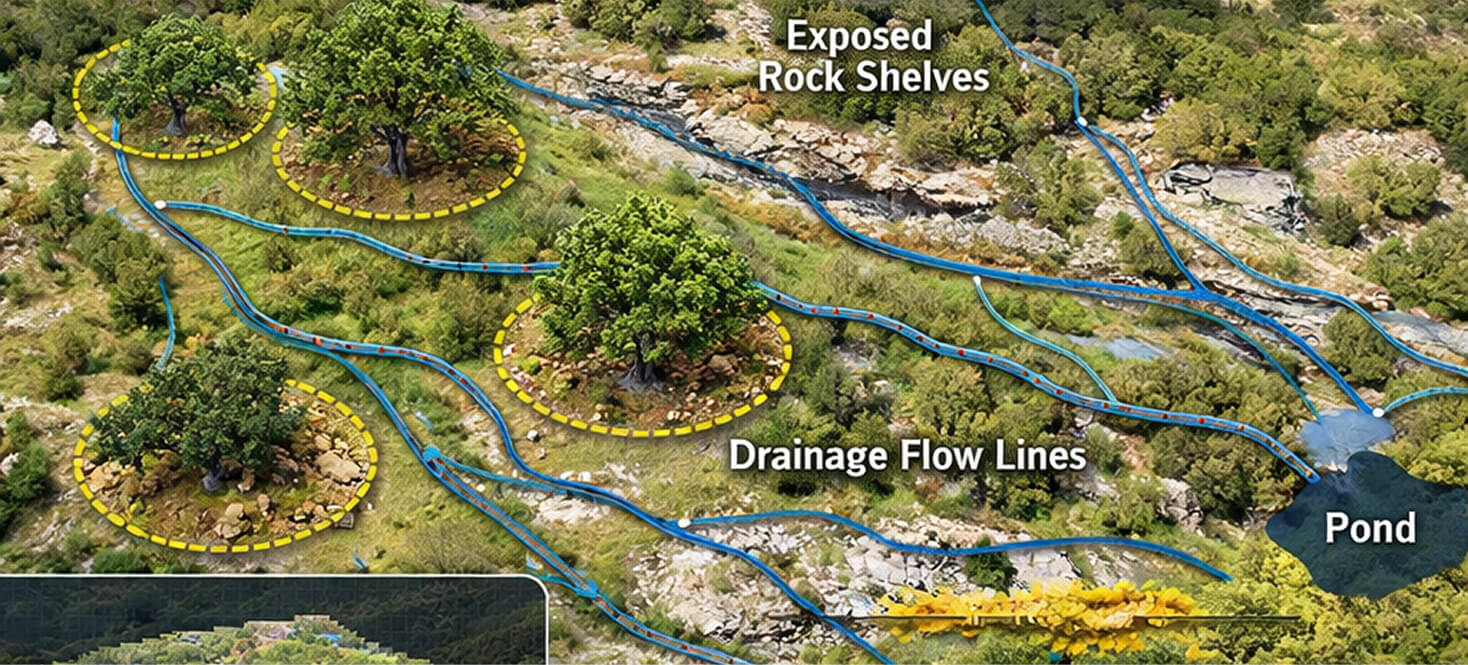
    Cut and fill to the drainage plan or construction-ready grade. Grading is verified with RTK survey data — not a bubble level and a gut feeling. The digital twin shows exactly where material was moved, how much was placed, and whether the final grade matches the engineered specification. Drainage flow lines are confirmed before handoff.

    Cut/Fill to Drainage Plan · RTK-Verified Elevations
    InSite Elevation Pro Workflow · CAT 308E2 CR
    Grade Confirmation Report Delivered
    $1,500 – $4,000
    Residential lot grading to engineered drainage plan. Often bundled with clearing scope.
    What drives the price up: Significant elevation changes require more material movement — a flat lot is a half-day job, but a sloped Hill Country lot with 4+ feet of grade change involves substantially more cut/fill work. Complex drainage plans with multiple flow paths, swales, or retention features take longer to grade precisely than a simple positive-slope-away-from-structure job. If rock is encountered during grading, the scope shifts to rock milling or excavation rates. When bundled with lot clearing as a single mobilization, rough grading is significantly more efficient than scheduling it as a separate phase — one crew, one scan, one handoff.
    Technology Service Image
    Who we work for

    Your Project. Our Scope.

    Three types of buyers hire us for land clearing. Here's how we approach each one.

    Pool Builders

    Austin MSA · Texas Hill Country

    Hit limestone at 18 inches? That's not a surprise — that's a Hill Country Tuesday. ClearGround scans the subsurface before your crew mobilizes, locates rock shelves in 3D, and clears the lot to construction-ready spec. Rock gets milled. Heritage trees get protected. Your pool dig starts on a pad that's been verified, not assumed.

    See how we work with pool builders

    Infill Developers

    Austin MSA · HOME Initiative · Infill Builders

    A heritage tree violation kills your permit timeline. A failed drainage review blows your pro forma. ClearGround handles selective clearing, CRZ compliance, and grading verification as a single mobilization — with RTK documentation that gives your engineer exactly what they need for city review. One partner, one scan, one handoff.

    See how we work with developers

    Estate & Ranchette Owners

    Zero-burn · Zero-permits · Zero headaches

    You want a park-like result on your property — not a clear-cut moonscape. Mulch stays on the ground. Topsoil is protected. Desirable trees are flagged before we start. Annual vegetation management available — one call, handled.

    Estate Owners page
    Predictable, not estimated
    TRANSPARENT PRICING
    FOR CENTRAL TEXAS.

    Every project is unique — but your quote shouldn't be a mystery. We price by terrain density and acreage, not by how long the crew feels like staying. Every estimate is backed by a pre-clearing RTK site scan.

    Service Ave. Project Duration Ave. Project Size Rate Basis 2026 Range
    Forestry Mulching 1-3 days 0.5-5 acres acres $1,500 - $3,500 / acre
    Cedar / Juniper Removal 1-3 days 1-10 acres acres $1,500 - $3,000 / acre
    Mesquite Grubbing 1-3 days 1-5 acres acres $1,500 - $3,500 / acre
    Dense Trees (Cedar, Juniper, Mesquite) Mulching 1-5 days 0.5-5 acres acres $4,000 - $10,000
    Brush / Underbrush Clearing 0.5-1 day 0.25-2 acres acres $800 - $2,000 / acre
    Field & Brush Clearing 0.5-1 day 1-10 acres acres $800 - $2,000 / acre
    Forestry Clearing & Land Prep 0.5-3 days 0.5-5 acres acres $1,500 - $3,500 / acre
    Forestry Mowing 0.5-1 day 0.25-2 acres acres $800 - $2,000 / acre
    Tree Mulching & Root Extraction 0.5-3 days 0.5-5 acres per project $4,000 - $10,000
    Ranch Pasture Restoration 1-3 days 1-10 acres acres $1,500 - $3,000 / acre
    Selective Clearing + Heritage Tree Preservation 1-3 days 1 lot Per lot/site $4,000 - $10,000
    Rock Milling / Rock Crushing Access Roads & Pads 1-3 days 0.25-2 acres acres $2,000 - $5,000 / acre
    ROW / Easement Clearing 1-5 days 3 linear miles linear miles $2,000 - $5,000 / mile
    Wildfire Defensible Space 3-10 days 5-50 acres acres $2,000 - $4,000 / acre
    Wildfire Recovery / Rehab 3-10 days 5-50 acres acres $2,000 - $4,000 / acre
    Lot Clearing (Construction-Ready) 1-3 days 0.25-1 acre lot 0.25-1 acre lot $3,000 - $8,000
    Rough Grading to Spec 1-3 days 0.25-1 acre lot 0.25-1 acre lot $1,500 - $4,000
    Mobilization / Transportation 2 hours - 0.5 days 1-3 acres project $500 - $1,500 / project

    Pricing includes veteran operators (12–20 years experience) and all fuel/maintenance costs. Projects with significant limestone may require integrated rock milling at a premium rate.

    Included Pre-clearing RTK drone scan
    Included Post-clearing verification scan
    Included Before/after Digital Twin
    Included Veteran operator + all fuel
    Recurring Maintenance
    VEGETATION MANAGEMENT
    SUBSCRIPTION.

    Cedar and juniper don't clear themselves once. They grow back. An annual maintenance agreement keeps your defensible space intact, your views open, and your fire risk managed — on a predictable schedule.

    Tier 01
    Buffer
    Perimeter fire break maintenance
    $1,800 / year
    Billed annually
    Coverage 1-Acre Perimeter
    Frequency 1× Annual
    Includes Defensible space zone
    Scan Annual comparison
    Tier 03
    Estate
    Full property + quarterly maintenance
    $12,000+ / year
    Billed quarterly
    Coverage Full Lot (5+ Acres)
    Frequency 4× Annual (Quarterly)
    Includes Full property management
    Scan Quarterly Digital Twin
    Every quote starts with a scan.
    Book a free RTK site scan and we'll walk your property, map the terrain, and build an accurate estimate — not a guess.
    Typical Project Flow

    Land clearing is often phase one of a multi-service project. One mobilization, multiple phases, verified handoff at each transition.

    01
    RTK Site Scan
    Subsurface + topo
    revealed before work
    02
    Land Clearing
    Clear, grub, mill
    to construction-ready
    03
    Rough Grade
    Cut/fill to plan
    RTK-verified surface
    04
    Excavation
    Pool shell, pad prep
    or foundation dig
    05
    As-Built Twin
    3D model delivered
    to next trade
    Equipment & Specifications

    The iron behind
    the precision.

    Primary — Clearing & Milling
    CAT 299D3 XE

    High-flow compact track loader with FAE attachment for vegetation processing and rock milling. Handles clearing, stump grinding, and surface rock in a single machine.

    HP Rating
    110 HP
    Operating Weight
    11,574 lbs
    Rock Mill Depth
    4–6 inches
    Primary Use
    Clear + Mill
    Primary — Excavation & Grading
    CAT 308E2 CR

    Compact-radius mini excavator purpose-built for tight residential and infill sites. Zero tail swing prevents structure damage on constrained lots. Handles grubbing, grading, boulder removal.

    HP Rating
    66 HP
    Operating Weight
    18,101 lbs
    Dig Depth
    15 ft 2 in
    Tail Swing
    Zero / Compact
    Survey — RTK Mapping
    DJI Mavic 3 RTK

    Survey-grade drone with Real-Time Kinematic positioning. Centimeter-level accuracy without ground control points. Captures orthomosaics, point clouds, and 3D models.

    Accuracy
    ±0.5 cm
    Sensor
    4/3 CMOS 20MP
    Flight Time
    45 min
    Output
    Ortho + 3D Twin
    Primary — Excavation & Grading
    Primary — Excavation & Grading
    CAT 320

    Mass Excavation & Bulk Earthmoving. Heavy Pipeline & Utility Work. High-Volume Truck Loading. Commercial Demolition. Precision Grading at Scale.

    HP Rating
    172 HP
    Operating Weight
    49,800 lb
    Dig Depth
    22 ft
    Torque
    54,900 lbf-ft

    Before & After

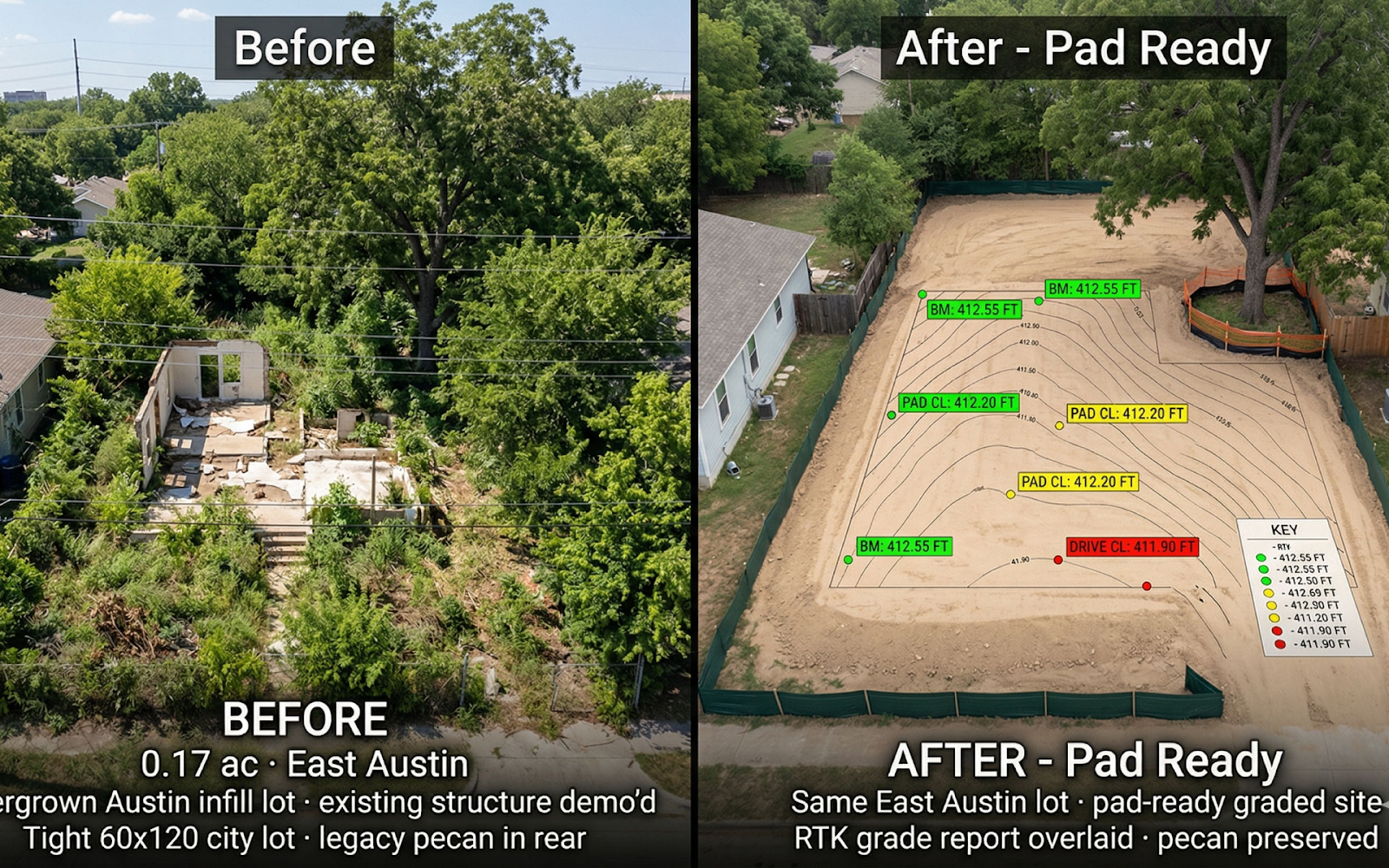
    Documentation is part of every job. Before the first pass and after the final grade — drone flights included.

    Before 2.3 ac · Spicewood, TX
    After — Day 1 FAE Mulch Head · No haul-away
    Before 0.17 ac · East Austin
    After — Pad Ready CAT 308E2 · RTK Grade Verified
    Service Overview

    From raw lot
    to construction-ready.

    Land reclamation takes an undeveloped, overgrown, or previously abandoned lot and delivers it construction-ready — cleared to bare dirt, grubbed, graded to drainage plan, and verified to spec. This is the first phase of any pool build, infill development, or new construction project in the Austin and Hill Country market.


    Unlike forestry mulching — which delivers a park-like finish with soil intact — land reclamation is about preparing ground for what comes next. Vegetation is removed. Stumps are grubbed. Surface limestone is milled in place or excavated. The result is a pad-ready site that your excavation crew, pool builder, or foundation team can mobilize onto without delay.

    Traditional "Clear & Grub"
    Guess what's under the surface
    Hand-level grade checks
    Heritage trees discovered mid-clear
    No documentation for next trade
    Rock haul-off cost surprises
    VS
    ClearGround Reclamation
    RTK pre-scan reveals subsurface
    Grade verified to ±0.5cm accuracy
    CRZ flagged before first pass
    3D digital twin delivered to builder
    Rock milled on-site — zero waste
    Land clearing
    is the easy part.
    Proving the outcome
    is where we
    separate from the field.
    We quote before they call back
    Most Austin land clearing companies take 2–3 weeks to quote. We do a site walk or drone assessment and have your number in 48 hours — before your project schedule is already in trouble.
    RTK Documentation on every job
    Not just the big ones. Every project gets a pre-job drone survey and a post-job RTK-verified grade report. You get a deliverable, not just a cleared lot.
    Method matched to outcome — in the bid
    Mulch in place or haul it out. Rock hammer or skid steer. Selective or full clear. You don't guess — it's in writing before the first blade touch.
    One crew. CAT equipment + drone.
    CAT 308E2 excavator, CAT 299D3 skid steer with FAE mulching head, and a DJI RTK drone. No sub-contractor gaps. One accountable scope from mobilization to final report.

    Common Questions

    The Questions We Get Every Week

    Straight answers. No bait-and-switch quoting language.

    What's the difference between land clearing and forestry mulching? +
    Around here, people use the terms interchangeably — and that's fine. The real difference is the outcome you want: a park-like cleared property (mulch stays on soil, topsoil protected) or bare ground ready to build on (everything out, grade verified). We scope both and quote both. You don't need to know the terminology — we'll tell you which method fits your project.
    Do you haul everything away? +
    Your choice, stated in the bid. Mulch-in-place eliminates hauling fees entirely — the FAE mulching head chips everything down to the ground and the mulch feeds the soil. Full haul-off is available for lots where bare ground is the goal. We'll recommend what makes sense for your site and your outcome. No surprise disposal charges after the fact.
    What if I hit limestone or caliche? +
    Standard in Hill Country work. We do a pre-excavation subgrade scan that shows rock depth before we start — you know what you're walking into before we turn a wheel. The CAT 308E2 with a hydraulic rock hammer handles hard caliche. Crushed rock stays on site as engineered fill unless you want it hauled. No rental equipment surprises.
    Will you protect my existing trees? +
    Yes — and we document it. A pre-job drone survey flags every tree you want to keep before the equipment mobilizes. Tight CAT equipment works within 24 inches of existing structures and root zones. For Austin infill lots with heritage tree ordinances, we mark every protected tree and include a compliance photo set in the project report.
    How big of a job do you take? +
    Our sweet spot is 0.5 to 10 acres — residential, ranchette, and infill work where compact-radius equipment and precision matter more than raw throughput. Larger acreage is considered case-by-case. We'll tell you honestly if a job calls for something outside our equipment spec.
    How long does a quote take? +
    We commit to 48 hours from site visit or drone assessment. Most quotes in Austin take 2–3 weeks from competitors — often because no one answers the phone. We answer, we scope, we send numbers. Call or use the form below and we'll schedule within the same week.

    How we work

    The 5-Phase Process

    Every ClearGround land clearing project — from a quarter-acre lot to a 10-acre ranchette — runs the same documented process. This is why the outcome matches the bid.

    Phase 01

    Site Assessment & Aerial Survey

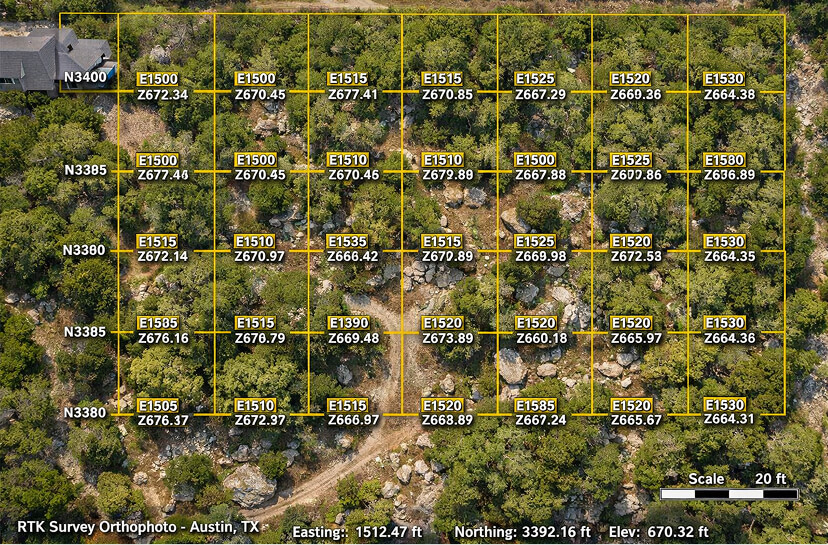
    Before a quote leaves our desk, a drone survey maps the site. Canopy density, terrain contours, existing structures, and rock indicators are documented. You get a pre-job aerial map — not a guess.

    DJI Mavic 3 RTK
    1/5
    2/5
    3/5
    4/5
    5/5

    Book Your Free
    Site Scan.

    Every project starts with an RTK drone scan of your site. We fly it, build your 3D model, and deliver a fixed-price proposal — all before you commit to anything.