TX contractor LIC
UT contractor INS
FAA PART 107 FAA 107
Insurance $2M GL
Technology About Contact
ClearGround Land Clearing S1.03 Lot Clearing
S1 — Land Reclamation · Sub-Service

Pad-Ready.
Grade-Verified.
No Surprises.

Complete vegetation removal, stump grubbing, and rough grade — delivered as a construction-ready lot with RTK verification before your excavation crew or pool builder mobilizes. One scan. One crew. One handoff.

The most common first phase for pool builds, infill new construction, and Austin metro residential development.

Before — Day 0
Day 0
Overgrown lot · Heritage tree constraint · Infill development
After — Day 1 · Pad Ready
Day 1 · Pad Ready
Illustrative — representative visualization
Cleared · Grubbed · Grade verified · 3D twin delivered
1–3 Days
Typical Turnaround
±0.5cm
RTK Grade Accuracy
48hr
Quote Turnaround
Zero
Rock Haul-Off on Mill Jobs
3D Twin
Delivered at Completion
Service Overview — LC.01 · S1.03

From overgrown lot
to construction-ready
in one mobilization.

Lot clearing (construction-ready) is the process of taking an undeveloped or overgrown residential lot — cedar, live oak, caliche, old fencing, debris — and delivering it as bare, graded, verified ground that your next trade can mobilize onto without delay.

This is not forestry mulching. The outcome here is bare dirt to spec, not a park-like mulched finish. Stumps are grubbed, not ground flush. Grade is cut and filled to the drainage plan and verified by RTK. The 3D digital twin is the handoff document your pool builder, excavation crew, or foundation team inherits as their baseline.

It's the most common first phase for pool builds, infill new construction, and residential development in the Austin metro and Hill Country.

Outcome 01
Bare Ground to Spec
Vegetation removed, stumps grubbed to below-grade, surface cleared to bare dirt. No organic material left in the construction zone. Construction-ready by definition — not just by description.
Outcome 02
Grade Verified to Plan
Rough grade cut and filled to your drainage plan, confirmed by RTK drone survey to ±0.5cm. Drainage flow modeled and verified before handoff. No surprises for your engineer or permit reviewer.
Outcome 03
3D Twin Delivered
Georeferenced as-built digital twin on DroneDeploy. Shareable with your GC, pool builder, engineer, or city reviewer. Measurable. Permanent. Not a photo album — a verified site baseline.
The Difference

The lot is cleared either way.
The question is whether you can prove it.

Standard Clear & Grub
Walk the lot, quote by eye from the truck
Rock shelves discovered after mobilization
Heritage trees identified mid-clear (or not)
Grade checked with a level and gut feeling
No documentation for the next contractor
Change orders when the ground doesn't match the quote
VS
ClearGround Lot Clearing
RTK pre-scan maps site before quote leaves the desk
Rock shelves located in 3D before iron touches dirt
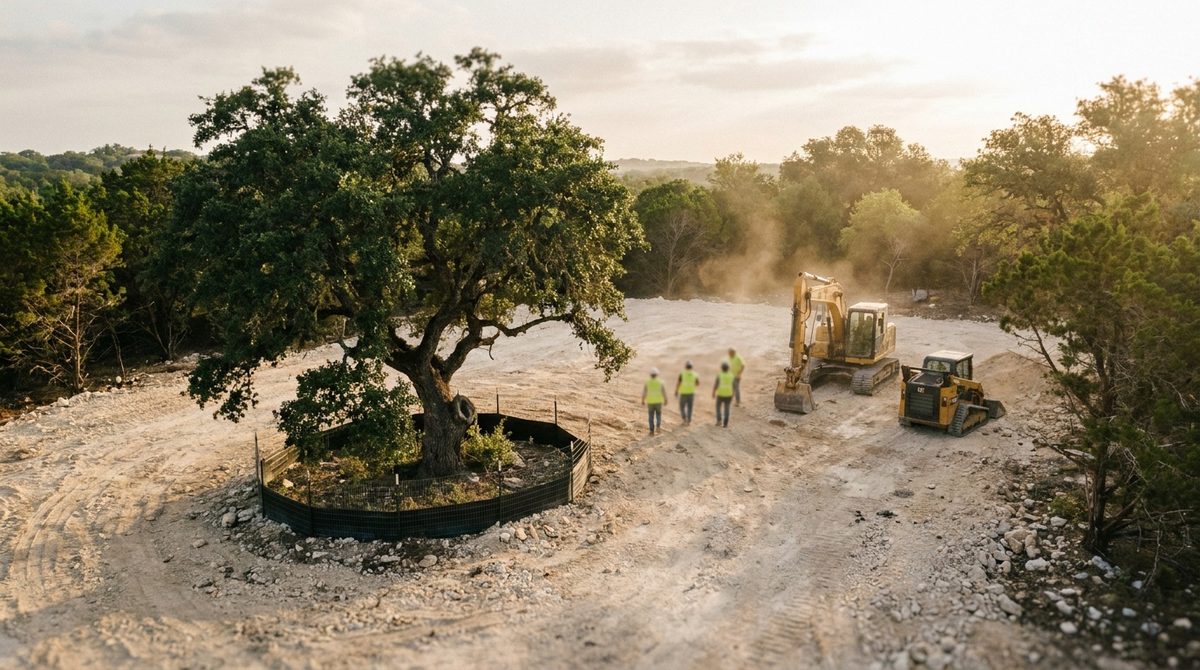
Heritage tree CRZ boundaries flagged pre-clearing
Grade verified to ±0.5cm by RTK drone at completion
3D as-built digital twin delivered to next trade
Fixed-price proposal based on data, not assumption

DON'T TRUST THAT THE LOT IS READY. PROVE IT.

AT ANY PHASE OF YOUR PROJECT
GET AN UNBIASED VIEW OF YOUR SITE

1/5

PRE-MOBILIZATION

PHASE 01 — BEFORE THE FIRST BUCKET

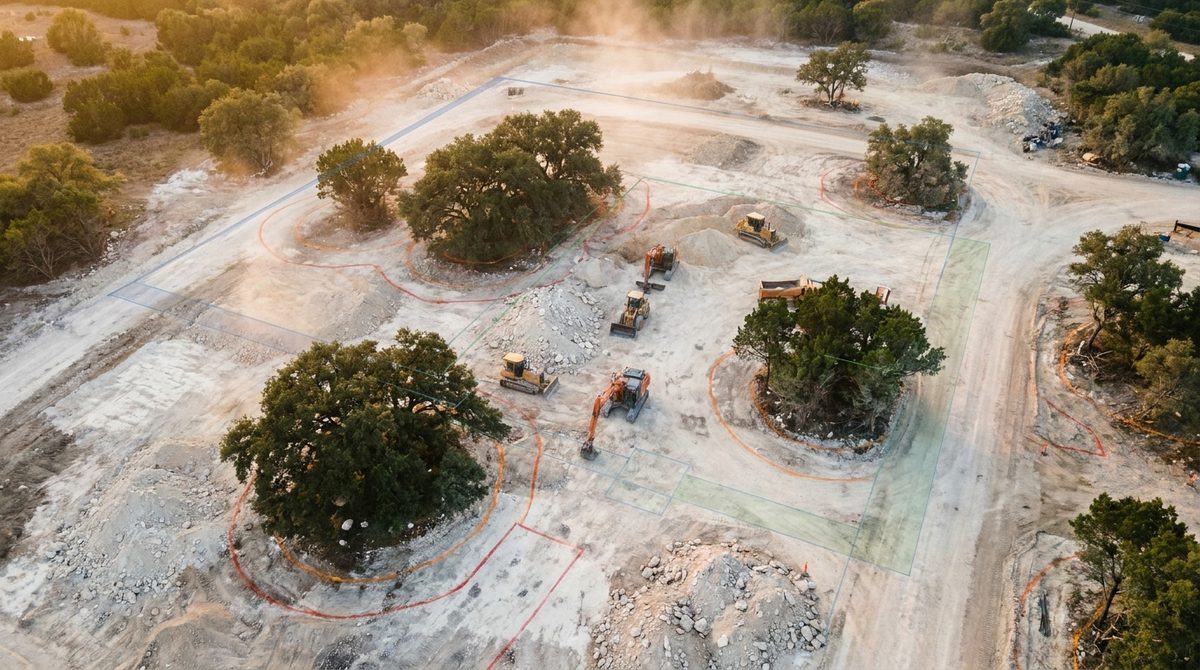
WE SCAN BEFORE WE CLEAR.

Every lot clearing job starts with a Mavic 3 Enterprise RTK drone flight before any equipment mobilizes. The result is a georeferenced orthomosaic showing vegetation density, terrain contours, rock indicators, existing structures, and drainage flow lines. Heritage trees get a Critical Root Zone boundary mapped. If there's a limestone shelf at 18 inches, the scan shows us where it is before the CAT 308 shows up. The pre-scan is how the quote becomes a fixed price instead of an estimate with asterisks.

± 0.5CM HORIZONTAL ACCURACY · HERITAGE TREE CRZ MAPPING · ROCK SHELF INDICATORS · DRAINAGE FLOW MODELING · 48HR MOBILIZATION

DroneDeploy RTK Orthomosaic Pre-clearing Austin infill lot Heritage tree CRZ overlaid Measurement tools and coordinates visible
Illustrative — representative visualization
2/5

CLEARING EXECUTION

PHASE 02 — RIGHT MACHINE, RIGHT LOT

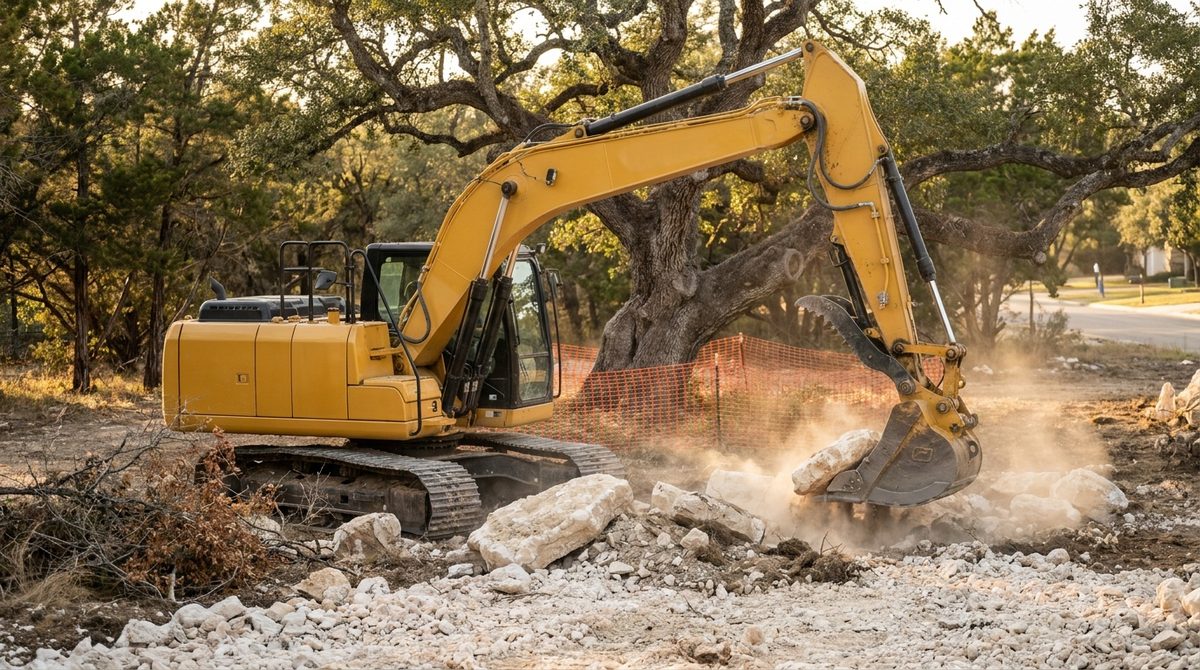
MATCHED TO YOUR SPECIFIC CONDITIONS.

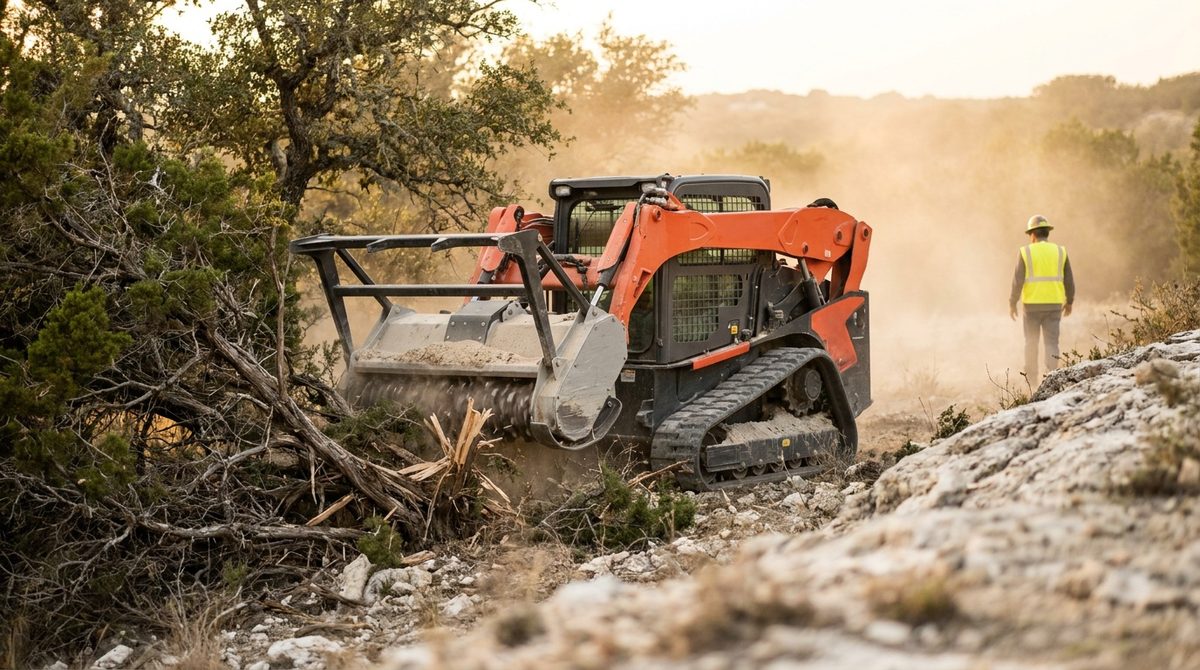
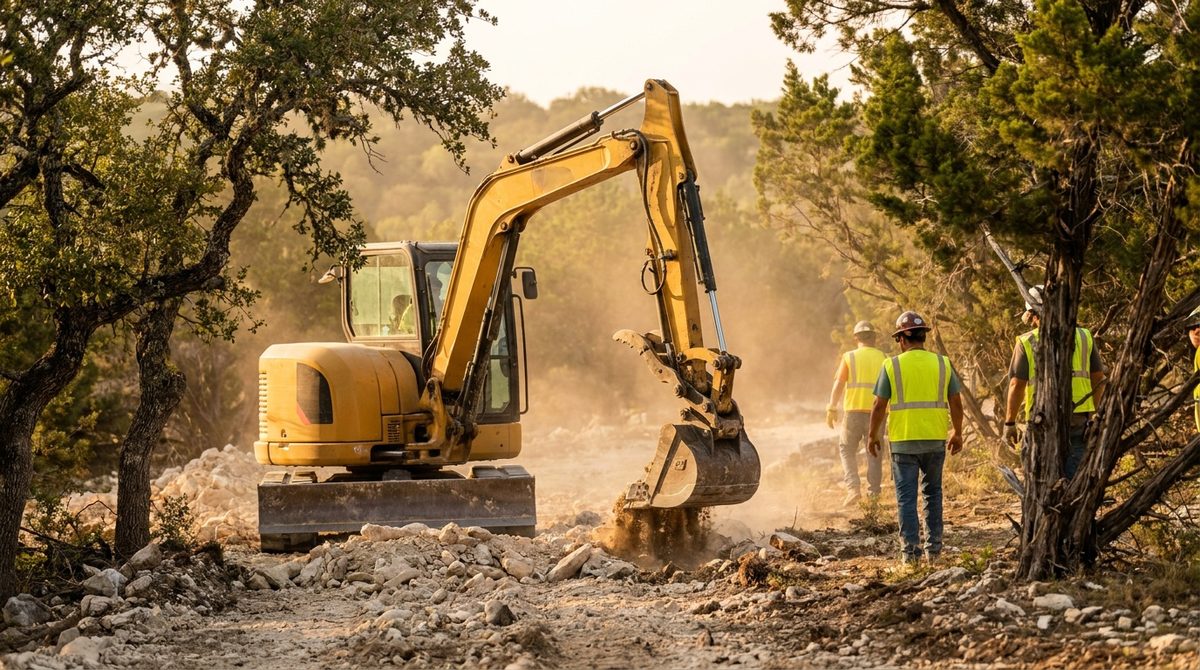
A tight East Austin infill lot with a heritage oak and a 4-foot setback calls for different equipment than a Spicewood acre sitting on exposed Edwards limestone. The CAT 299D3 XE handles vegetation processing and brush clearing. The CAT 308E2 CR handles grubbing, stump removal, and precision grading — its compact-radius design works within 24 inches of existing structures and root zone boundaries without tail swing that damages what's staying. The FAE rock crusher runs when limestone fights back. The pre-scan data determines the plan; the equipment follows the data.

CAT 299D3 XE (110HP) · CAT 308E2 CR COMPACT RADIUS · FAE MULCHER + ROCK CRUSHER · GRUBBING ATTACHMENTS

CAT 308E2 CR actively clearing Tight Austin infill lot Heritage oak visible and preserved Action shot
3/5

MID-JOB VERIFICATION

PHASE 03 — EVERY FRIDAY. NO EXCEPTIONS.

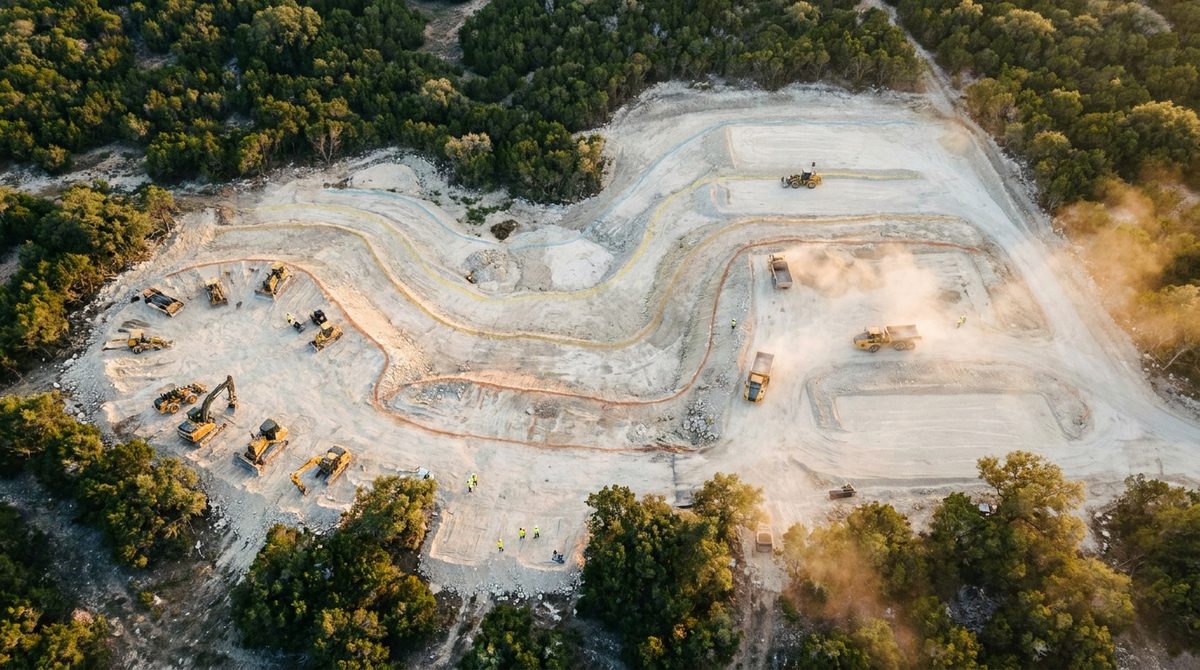
PROGRESS TRACKED. NOT TEXTED.

Multi-day clearing jobs don't get a status update from the operator's phone. Every Friday, the site gets a mid-job RTK scan — cleared area confirmed, heritage tree CRZ status documented, grade delta tracked against the plan. The updated digital twin is sent to you and your team before the weekend. Your pool builder sees the same data. Your GC sees the same data. If the condition of the ground changes the plan — rock encountered, drainage surprise — you know before it becomes a change order ambush.

WEEKLY RTK PROGRESS SCANS · REAL-TIME CUT/FILL DELTA · CRZ STATUS TRACKING · TEAM-SHAREABLE DATA

DroneDeploy Weekly Progress Report Cut/fill analysis screenshot Split view: last Friday vs. this Friday Elevation changes
Illustrative — representative visualization
4/5

COMPLETION

PHASE 04 — CONSTRUCTION-READY. NOT GUESSED AT.

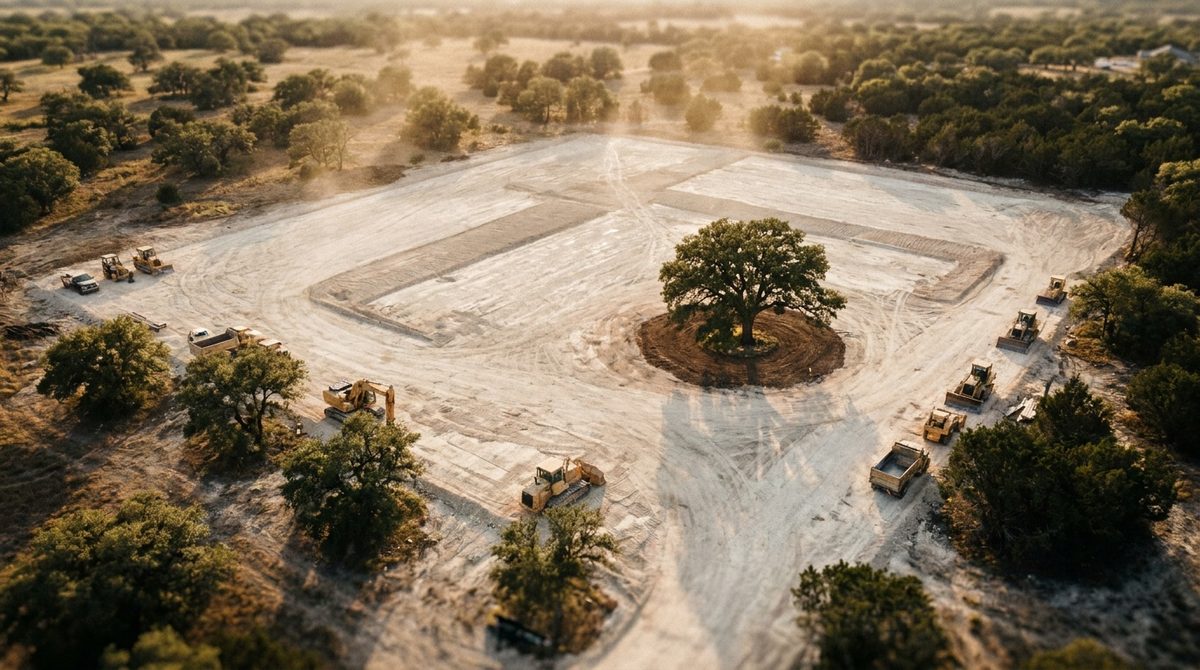
CLEARED. GRADED. VERIFIED TO SPEC.

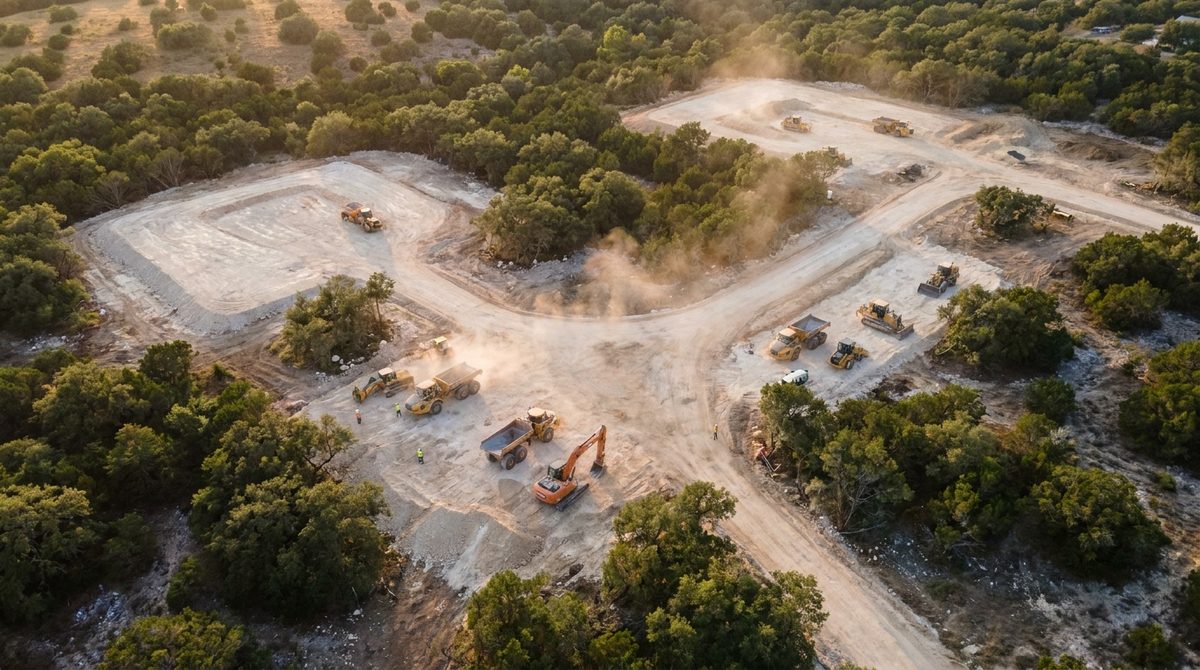
When clearing is complete, the final RTK survey confirms grade to the drainage plan, documents any protected trees standing and undisturbed, and generates a signed accuracy report. The lot is not handed off with a walkthrough and a handshake. It's handed off with a verified elevation surface, heritage tree compliance documentation, and a construction-ready digital twin your excavation crew or pool builder can open, measure, and plan from. Drainage review passes on the first submission because the data is already in the format the engineer needs.

AS-BUILT FINAL GRADE SURVEY · SIGNED RTK ACCURACY REPORT · HERITAGE TREE COMPLIANCE DOCS · CONSTRUCTION-READY HANDOFF

Completed lot — aerial view Bare, graded, construction-ready surface Heritage oak confirmed standing DroneDeploy final grade
Illustrative — representative visualization
5/5

THE DELIVERABLE

PHASE 05 — WHAT YOUR TEAM ACTUALLY RECEIVES

A DIGITAL TWIN YOUR NEXT TRADE INHERITS.

A georeferenced 3D model of the cleared, graded lot hosted on DroneDeploy. Shareable with your pool builder, your GC, your structural engineer, or your permit reviewer. Verified elevations, CRZ boundaries, drainage flow lines — all inside the model. Measurable. Permanent. Exportable to CAD and BIM. Not a PDF. Not a photo. A living as-built that your excavation crew uses to plan their first dig without asking you what the grade was supposed to be.

GEOREFERENCED 3D MODEL · DRONEDEPLOY PLATFORM · SHAREABLE LINK · MEASURABLE · CAD/BIM EXPORTABLE · PERMANENT RECORD

DroneDeploy 3D model interface Completed cleared lot — interactive viewer Measurement tools, elevation data visible "Live
Illustrative — representative visualization
Transparent Pricing — S1.03

$3,000 – $8,000.
Based on what's actually on your lot.

Every lot clearing quote starts with an RTK site scan. The scan reveals vegetation density, terrain, rock, and drainage — so the price you get is based on measured site conditions, not a guess from the truck. The range below reflects real project costs in the Austin metro and Hill Country for residential lots in the 0.25–1 acre range.

LC.01 · S1.03 — Lot Clearing (Construction-Ready)
Lot Clearing
(Construction-Ready)
Complete vegetation removal and grubbing to bare dirt. Trees, brush, and root systems removed to construction-ready spec. Organic material processed on-site when feasible — mulched in place or stockpiled for removal. Lot delivered clean, flat, and ready for the next phase of work. RTK pre-scan and post-clearing verification included in every job.
$3,000 – $8,000
Typical residential lot · Austin metro and Hill Country · 0.25–1 acre
Duration: 1–3 Days · Size: 0.25–1 Acre Residential
Equipment: CAT 299D3 XE + FAE Mulcher · CAT 308E2 CR + Grubbing Attachments
Includes: Pre/Post RTK Scan · Heritage Tree CRZ Mapping · 3D Digital Twin
What Drives the Price Up
Lot Size
The primary variable. A 0.25-acre infill lot in East Austin runs $3K–$4K. A full acre of dense cedar and live oak in Lakeway can push past $7K. Acreage drives both machine time and haul decisions.
Vegetation Density
An overgrown lot with 8-inch cedar takes longer to process than open scrub with scattered mesquite. Dense canopy cover at continuous acreage adds machine hours and increases processing time per acre.
Stump Grubbing Depth
Stump grubbing (full root ball extraction to below grade) is more labor-intensive than grinding flush. Construction-ready spec requires grubbing — not grinding — so root systems don't interfere with the foundation or pool shell.
Debris & Off-Site Haul
If the lot has significant debris, old fencing, dumped material, or bulky organic waste requiring off-site disposal, haul-off adds to the base clearing price. We state this in the bid — not after the fact.
Surface Limestone
Hill Country limestone at or near the surface shifts clearing scope into rock milling pricing. The pre-scan identifies rock indicators before mobilization — so this isn't a surprise on the invoice. FAE rock milling is typically bundled at $2,000–$5,000/acre.
Included in Every Job
Pre-clearing RTK drone scan
Post-clearing verification scan
Before/after 3D Digital Twin
Heritage tree CRZ mapping
Veteran operator + all fuel
Typical Project Flow

Lot clearing is
phase one of what comes next.

One mobilization, multiple phases. The as-built digital twin from lot clearing becomes the verified baseline your excavation crew or pool builder inherits — so they're planning from data, not from a cleared lot they're seeing for the first time.
01
RTK Site Scan
Subsurface + topo revealed before work begins
02
Lot Clearing
Clear, grub, mill to construction-ready · You are here
03
Rough Grade
Cut/fill to plan · RTK-verified surface
04
Excavation
Pool shell, pad prep, or foundation dig
05
As-Built Twin
3D model delivered to next trade
Equipment & Specifications

The iron behind
the precision.

CAT 299D3 XE + FAE Mulching Head
Primary — Clearing & Milling
CAT 299D3 XE
Vegetation Processing · Rock Milling
High-flow compact track loader with FAE forestry mulching head. Handles vegetation clearing, stump processing, and surface rock milling in a single machine. Primary clearing iron on lot clearing jobs.
HP Rating
110 HP
Operating Weight
11,574 lbs
Rock Mill Depth
4–6 inches
Primary Use
Clear + Mill
CAT 308E2 CR Mini Excavator
Primary — Grubbing & Grading
CAT 308E2 CR
Stump Grubbing · Rough Grading · Precision
Compact-radius mini excavator built for tight residential and infill sites. Zero tail swing prevents structure damage on constrained lots. Primary grubbing and grading machine — works within 24 inches of CRZ boundaries and existing structures.
HP Rating
66 HP
Operating Weight
18,101 lbs
Dig Depth
15 ft 2 in
Tail Swing
Zero / Compact
DJI Mavic 3 Enterprise RTK
Illustrative — representative visualization
Survey — RTK Mapping
DJI Mavic 3 RTK
Pre-Scan · Mid-Job · As-Built Verification
Survey-grade drone with Real-Time Kinematic positioning. Centimeter-level accuracy without ground control points. Captures orthomosaics, point clouds, and 3D models at pre-clearing, progress, and completion phases.
Accuracy
±0.5 cm
Sensor
4/3 CMOS 20MP
Flight Time
45 min
Output
Ortho + 3D Twin
Who This Service Is For

The people who need
the lot right before they dig.

ICP 01 / Primary
Pool Builders
Hill Country · Lakeway · Westlake · Spicewood · Austin MSA
Hit Limestone at 18 Inches? That's a Hill Country Tuesday.

Your crew shows up to dig and the lot hasn't been properly cleared. Stumps still in the ground. Grade hasn't been confirmed. Someone said the heritage oak was fine — but nobody documented it. Now you're the one managing the problem.

ClearGround scans the lot before mobilizing, locates rock shelves in 3D, grubs stumps to below construction grade, and hands you a verified as-built digital twin you can open on your iPad before your crew steps off the trailer. No surprises. No change orders you didn't see coming.

What You Get: Pre-clearing RTK scan with rock shelf identification
Heritage tree CRZ documented and cleared around
Bare dirt to construction-ready spec
3D digital twin as handoff for your excavation crew
See how we work with pool builders →
ICP 02 / Primary
Infill Developers
HOME Initiative · East Austin · Carr · Ash Creek · Hyde Park
Heritage Tree Violation Kills Your Permit. We Document Before We Clear.

An infill lot in Austin has complications a standard clearing crew doesn't care about: heritage tree ordinance compliance, drainage review documentation, and constrained access that makes a full-size excavator impossible. The clearing contractor who damages a protected tree root zone or delivers a lot without drainage verification just handed you a permit problem and a cost overrun.

ClearGround handles selective clearing, CRZ compliance, and grading verification as a single mobilization — with RTK documentation that gives your engineer exactly what they need for city review. One partner, one scan, one handoff.

What You Get: Heritage tree CRZ mapping before clearing begins
Austin Heritage Tree Ordinance documentation
Drainage-verified rough grade to your engineered plan
As-built digital twin for engineer and city review
See how we work with developers →
Project Results

Before & after.
Documentation is part of every job.

Before
0.17 AC · East Austin Dense cedar + live oak Heritage tree constraint Constrained infill lot
After — Day 1
Cleared to bare dirt Heritage oak preserved CAT 308E2 CR grading pass RTK grade verified
0.17 ACLot Size
1 DayDuration
East AustinLocation
Infill lot clearing with heritage oak preservation. CRZ boundary mapped pre-clearing, selective clearing executed around protected root zone. Lot delivered construction-ready for new single-family build.
Before
2.3 AC · Spicewood, TX Dense cedar thicket Surface limestone present Hill Country ranchette
After — Day 1
FAE mulch head — no haul-away Surface rock milled in place Mulch layer on ground RTK final scan delivered
2.3 ACLot Size
1 DayDuration
Spicewood, TXLocation
Hill Country clearing with FAE mulch head — no haul-away required. Surface limestone encountered and milled in place. Before/after orthomosaics delivered same day. Pool excavation followed week 2.
Frequently Asked

Questions About
Lot Clearing (Construction-Ready)

Standard clearing gets vegetation off the ground. Construction-ready goes further: stumps grubbed (not ground flush, because flush-ground stumps still interfere with foundations and pool shells), grade cut and filled to the drainage plan, and the finished surface verified by RTK drone to ±0.5cm. A construction-ready lot is one your excavation crew can mobilize onto without discovering something the clearing crew left behind. The RTK as-built is the document that proves the lot is actually ready — not just cleared.
That's a Hill Country Tuesday. The pre-clearing RTK scan identifies surface rock indicators before we mobilize, so it's in the quote — not on the invoice after the fact. Shallow limestone (4–6 inches) is handled by the FAE rock crusher, which mills it in place as aggregate. Deeper rock shifts into hydraulic rock hammer territory and falls under excavation pricing. Either way, you know before we start because the pre-scan told us where the rock is.
The pre-clearing RTK scan maps every protected tree's canopy extent before a machine moves. Heritage trees get a Critical Root Zone boundary in the plan — the CAT 308E2 CR works within that boundary at low speed, and its compact-radius design avoids tail swing damage in tight root zones. After clearing, the heritage tree's condition is documented in the final RTK scan and included in the handoff package. Austin Heritage Tree Ordinance compliance documentation is available when required for permit review.
The outcome. Forestry mulching delivers a park-like finish — vegetation processed in place, mulch layer on the ground, topsoil protected, soil structure intact. That's the right choice for estate clearing, ranchette maintenance, and wildfire mitigation. Lot clearing (construction-ready) delivers bare dirt to spec — vegetation removed, stumps grubbed below grade, no organic material in the construction zone. That's the right choice for pool builds, infill development, and anything where a foundation or excavation follows the clearing. The equipment overlaps. The outcome doesn't.
Yes — and it's more efficient. When rough grading is bundled with clearing as a single mobilization, the same crew and the same scan handles both phases without a separate setup, site walk, and quote process. The RTK drone verifies the grade before the crew rolls up. For most residential lot clearing jobs, this is how we scope it: clear, grub, grade, verify, handoff. One call, one crew, one invoice, one as-built.
A georeferenced, measurable 3D model of the cleared lot hosted on DroneDeploy. Your pool builder opens a shared link and sees verified elevations, drainage flow lines, CRZ boundary documentation, and the as-built grade — all measurable in the model. They can export elevation points to CAD or BIM. They can compare the clearing phase baseline against their excavation plan before they mobilize. For infill developers, the same model goes to your structural engineer and can be submitted directly to the city reviewer. It's not a photo. It's a working data set.
48 hours. Most Austin land clearing companies take 2–3 weeks to quote because no one answers the phone and no one drives the lot. We drive the lot (or fly it remotely for properties we can assess aerially), build the site estimate, and send your number within 48 hours of first contact. If your project timeline is already in motion, call the Texas office directly — (512) 880-8888 — and we'll tell you in real time whether we can hit your schedule.

We scan before
we quote. And before we clear.

Book a free RTK site scan. We'll fly your lot, build the 3D model, locate the rock, and map any heritage trees — then send you a fixed-price proposal based on data. 48-hour quote turnaround. One crew, one call.

Book a Site Scan Full Land Clearing Page