


Is your property a cedar thicket and fire hazard? Blocked views destroy land value.
Forestry Mulching in Austin & the Texas Hill Country
reclaim your view
Forestry mulching grinds cedar, mesquite and brush into mulch in place, in one pass, on ranch, estate and development land in Austin and the Texas Hill Country. Most jobs run $2,000–$5,200 per acre by vegetation density and take 1–5 days on a typical site. The price covers the site walk, the mulching and cleanup.
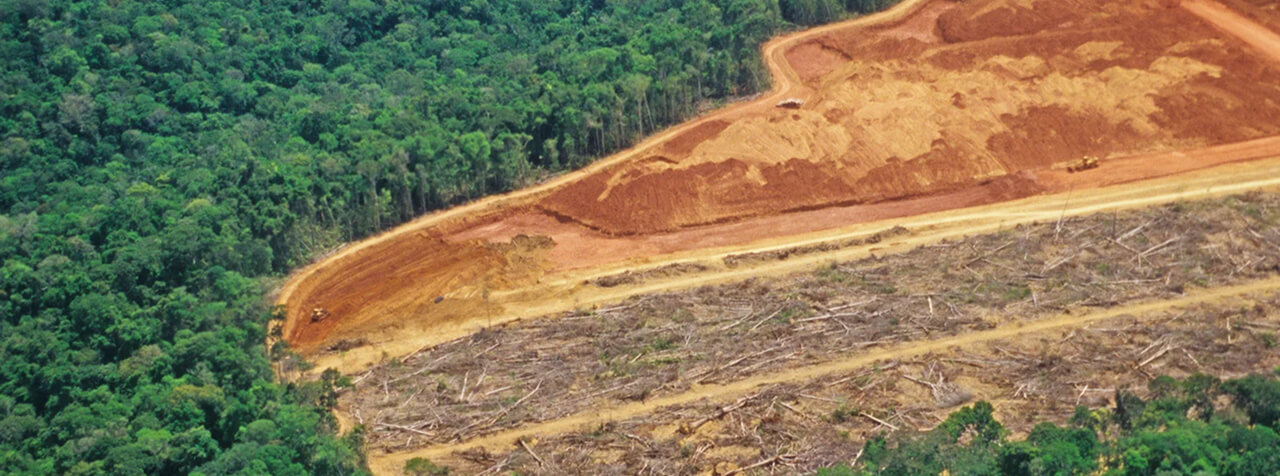
Traditional land clearing is a multi-stage clear-and-grub job that scars the ground and adds hauling and tipping costs. Mulching leaves the cleared vegetation on site as a protective layer, so there is nothing to burn, pile or truck away.
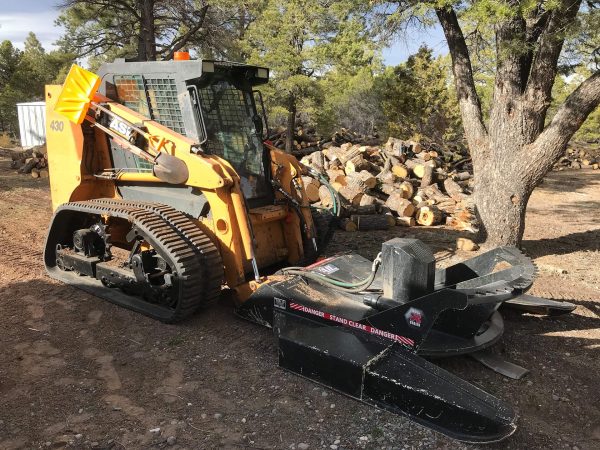
5–50 acre properties. Site walk included; drone scan optional.
Properties with structures require a more precise clearing plan — defensible space zones, ember-resistant perimeters, and access road clearance all have to be coordinated. Texas A&M Forest Service describes home ignition zones of 0–5 ft, 5–30 ft and 30–100 ft around a structure, and the layout depends on your site's slope and wind exposure. Steep terrain limits machine speed and adds time per acre.
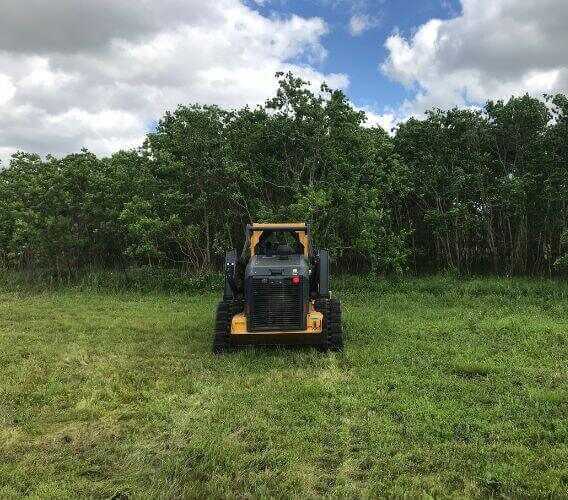
Priced per acre based on tree density and terrain.
Mature mesquite with large trunks takes more mulching head time per tree than young growth. Properties with a mix of invasive species require more selective passes than a uniform stand. Rough or rocky terrain slows machine speed and increases wear. Properties that haven't been maintained in 10+ years have denser undergrowth than land with recent clearing history.
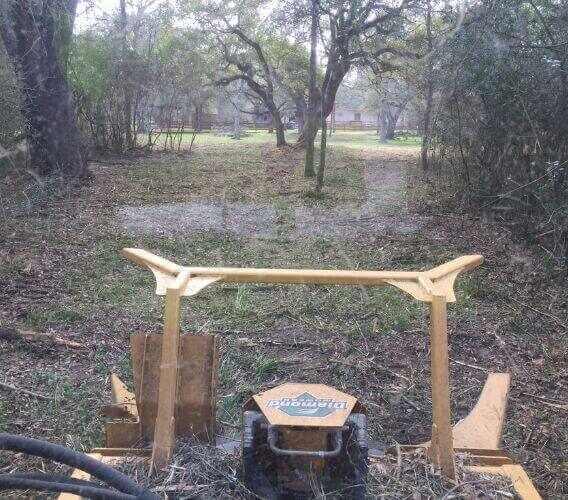
Varies by cedar density and terrain slope.
Dense cedar stands with mature trees require slower machine passes and more mulching head hours per acre than light brush. Steep terrain limits machine speed and increases equipment wear. Properties with significant rock outcroppings require the operator to navigate around formations rather than run efficient straight passes. Larger contiguous acreage is more efficient per acre than fragmented clearing.
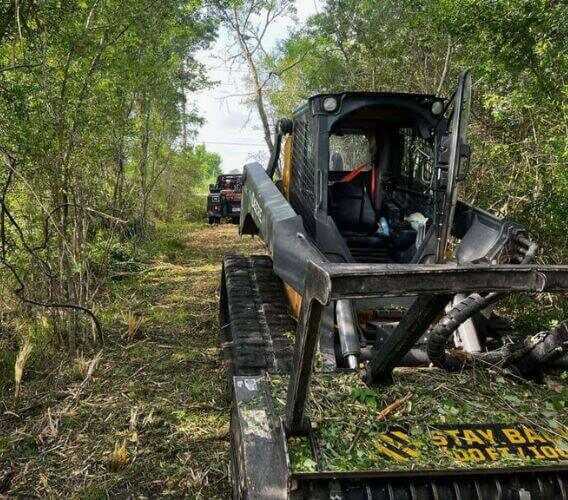
Lighter vegetation, faster passes — priced accordingly.
Thick mesquite or thorny brush tangles the mulching head more than straight cedar, slowing pass speed. Soft or wet soil after rain can limit machine access and slow the job. Properties not maintained recently have denser undergrowth requiring more passes per acre. The more uniform and accessible the terrain, the faster the machine runs and the lower the per-acre cost.
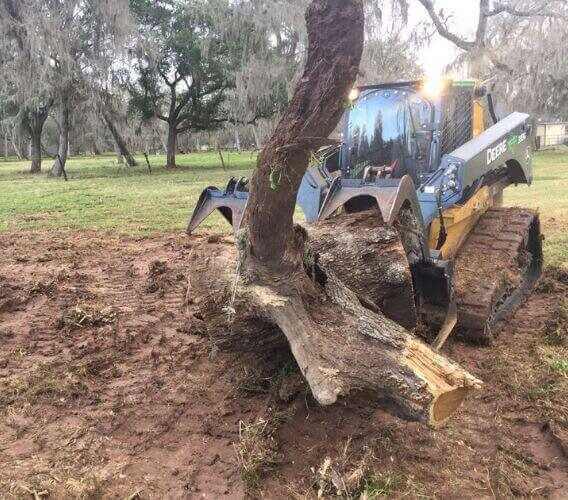
Quoted after the site walk. Root depth and density are key variables.
Mesquite roots run deep, so extraction needs an excavator in addition to the mulching head. Tree diameter and density are the primary variables — a few mature trees are a different job than hundreds of saplings. Work near existing structures or fences requires precision excavation to avoid damage. Every specimen tree flagged near the clearing zone adds repositioning time.
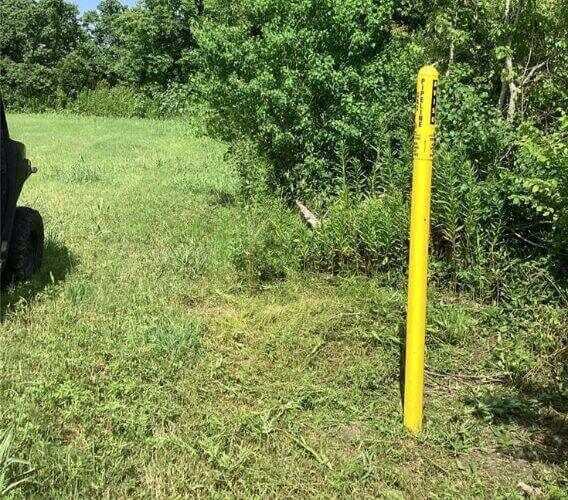
Light to medium vegetation density.
Dense multi-stem brush tangles the mulching head more than single-trunk trees, requiring slower pass speeds. Wet conditions after rain can limit machine access. Properties with significant rock outcroppings require navigation around formations. If the clearing goal is construction-ready bare ground rather than a managed finish, scope shifts to land clearing, which is priced separately.
AT ANY PHASE OF YOUR CLEARING
SEE EXACTLY WHAT CHANGED
WE WALK BEFORE WE MULCH.
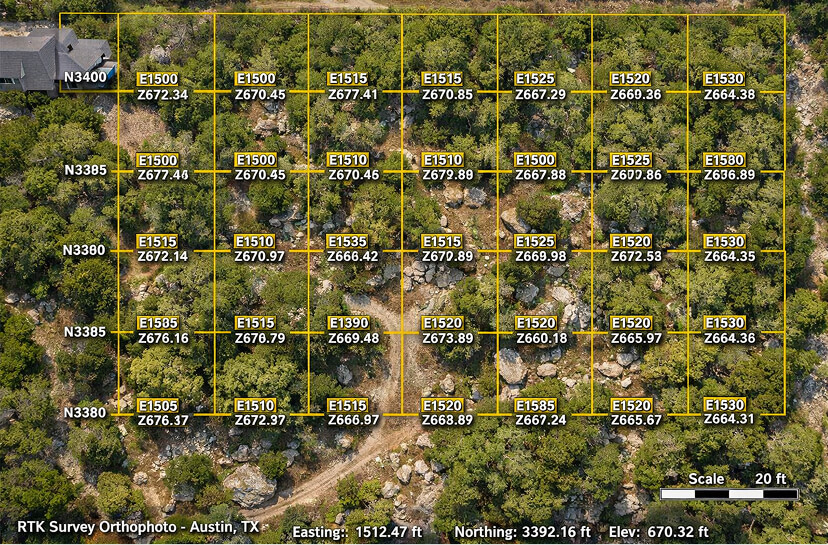
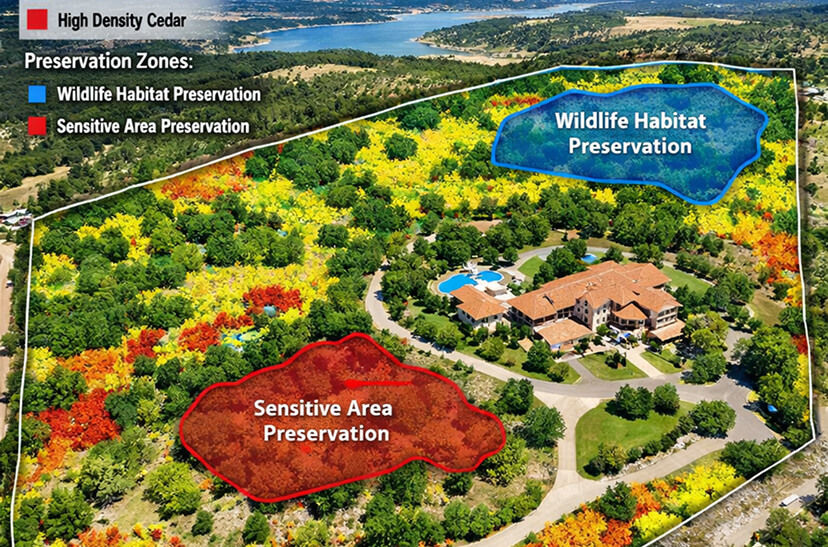
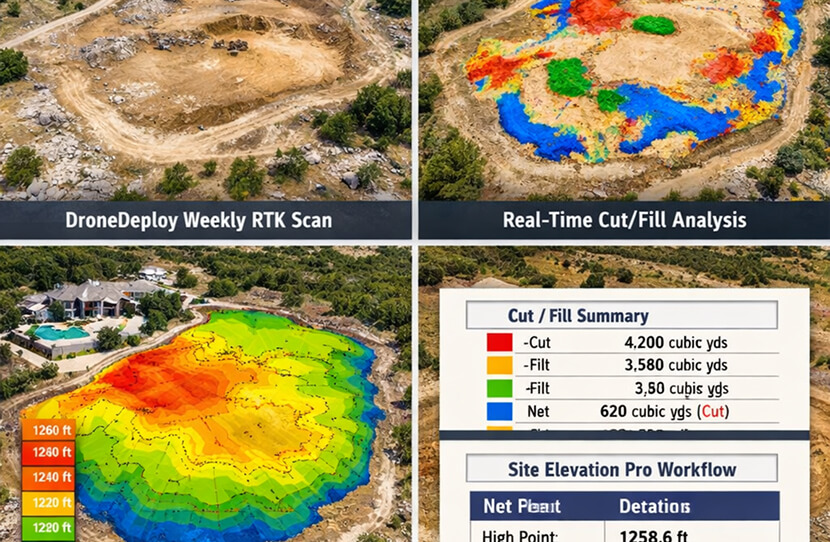
We walk the property with you before a single tree is touched. Cedar density gets noted by zone. Fire hazard areas get flagged. Specimen oaks and view corridors get marked for preservation. You approve the clearing plan. An optional drone scan adds a 3D surface model of the site.
Forestry Mulching.
Austin & Hill Country.
Cedar, mesquite and brush mulched in place, with the ground left open.





Factors That Shape a Forestry Mulching Job




FOR CENTRAL TEXAS.
We price forestry mulching by vegetation density and acreage. Mulching is priced differently from land clearing, which grubs, hauls and preps the ground. The ranges below are mulching only.
| Service | Typical Timeline | Typical Size | Unit | Range |
|---|---|---|---|---|
| Forestry mowing Light vegetation, upkeep of cleared land |
0.5–1 day | 0.25–2 acres | per acre | $1,600–$2,400 |
| Light brush and field clearing Brush and small stems |
0.5–1 day | 1–10 acres | per acre | $2,000–$2,800 |
| Moderate density Mixed cedar and mesquite, ranch and pasture |
1–3 days | 1–10 acres | per acre | $2,800–$3,900 |
| Heavy density Dense cedar, forest clearing and land prep |
1–5 days | 0.5–5 acres | per acre | $4,000–$5,200 |
| Wildfire defensible space Fuel reduction around structures and roads |
3–10 days | 5–50 acres | per acre | $3,000–$4,500 |
| Tree mulching and root extraction Mesquite and other resprouters; extraction adds an excavator |
0.5–3 days | 0.5–5 acres | per acre | $5,000–$8,000 |
Dense mesquite root extraction runs to $12,000 per acre. Projects with significant limestone may need rock milling, which is priced separately (see rock-milled access roads). For grubbed, hauled, construction-ready ground, see land clearing and the land clearing calculator. Full rate list on pricing.
Prices reviewed: September 2026. Ranges for Austin and Central Texas; your site walk sets the final number.
DOZING AND BURNING?
Mulching suits pasture, views, fuel breaks and land you want to keep covered. Dozing and hauling or burning suits ground that has to be bare for a slab, a pool or roads. Pick by what the land is for.
| Question | Forestry mulching | Dozing, then burning or hauling |
|---|---|---|
| What is left | A mulch layer over intact topsoil. Stumps and roots stay in the ground. | Bare, disturbed dirt. Roots pushed out. Piles to burn or load. |
| Burning | None. No burn-ban delays and no smoke. | Burning falls under TCEQ outdoor-burning rules and county burn bans. |
| Regrowth | Resprouters (mesquite, huisache, shin oak, redberry juniper) come back from the roots unless the crowns are extracted. Ashe juniper does not resprout. | Grubbing removes most root crowns, so resprouting is lower. |
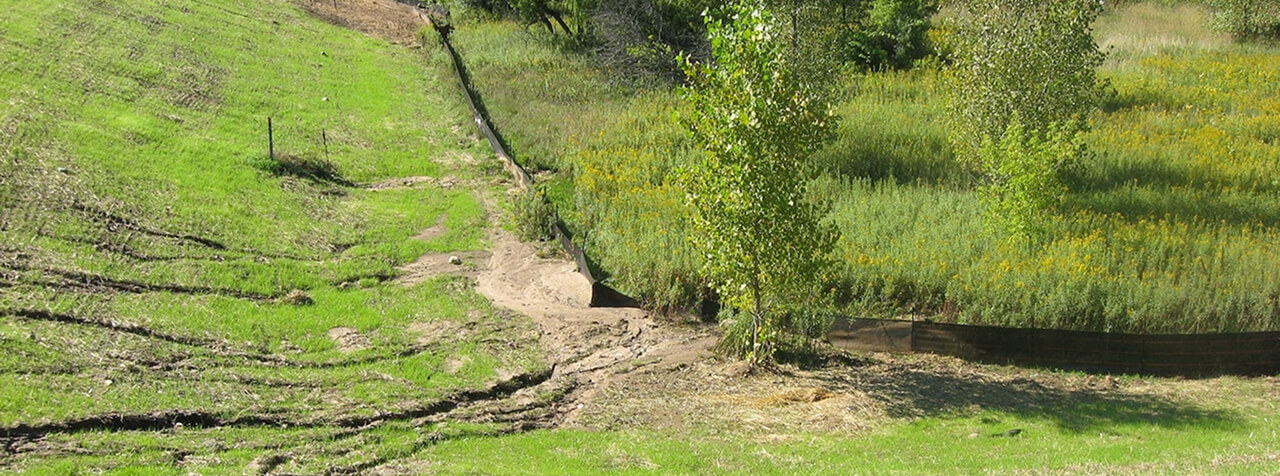
| Erosion and soil | Ground stays covered, so runoff is slower. | Bare ground until it is seeded or built on. |
| Best for | Pasture, view corridors, fuel breaks, trails, fence lines, upkeep. | Building pads, slabs, pools, roads and grading. |
| Our price | $2,000–$5,200 per acre | $3,000–$8,500 per acre (land clearing) |
Sources: TCEQ outdoor burning rules; Texas A&M AgriLife Extension. Last reviewed: September 2026.
AND STAYS CUT.
Ashe juniper, the Hill Country cedar, does not resprout once it is cut below the lowest green limb. Regrowth comes from seedlings, so a mulched stand stays open with light follow-up mowing. Our forestry mulching price for dense cedar is $4,000–$5,200 per acre. The full cedar page covers density, timing and what the job looks like.
Read the brush and cedar clearing page. Source: Texas A&M AgriLife Extension, Texas Parks and Wildlife.
SUBSCRIPTION.
Mesquite, huisache and other resprouters grow back, and seedlings fill in bare ground. An annual maintenance agreement keeps your defensible space intact and your views open on a set schedule.
Prices reviewed: September 2026. Ranges for Austin and Central Texas; your site walk sets the final number. Individual maintenance visits run $2,000–$3,500 per visit.
Your Project. Our Scope.
Three types of buyers hire us for forestry mulching and clearing. Here's how we approach each one.
Pool & Estate Builders
Hit limestone at 18 inches? That's a Hill Country Tuesday. We clear the lot to construction-ready spec, mill rock where it shows, and protect the heritage trees. A drone models the ground surface. Rock, footings and buried lines below the surface are found with test holes, probing, 811 locates and GPR where needed. Your pool dig starts on a cleared pad, not a guess.
See how we work with pool buildersInfill Developers
A heritage tree violation kills your permit timeline. A failed drainage review blows your pro forma. We handle selective clearing around protected trees and rough grading in one mobilization, with before and after photo records your engineer can attach to a city submittal.
See how we work with developersEstate & Ranchette Owners
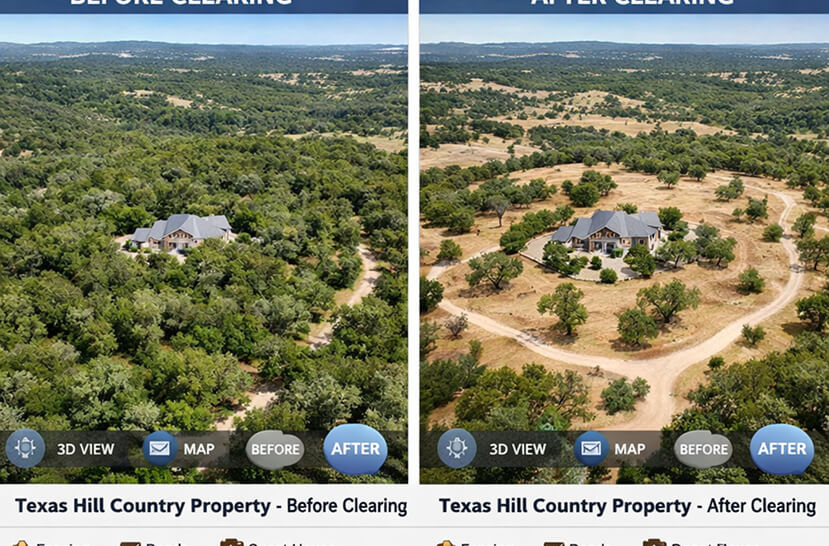
You want a park-like result on your property — not a clear-cut moonscape. Mulch stays on the ground. Topsoil is protected. Desirable trees are flagged before we start. Annual vegetation management is available.
See the estate owners pageEvery Acre Mapped, Mulched
& Verified.
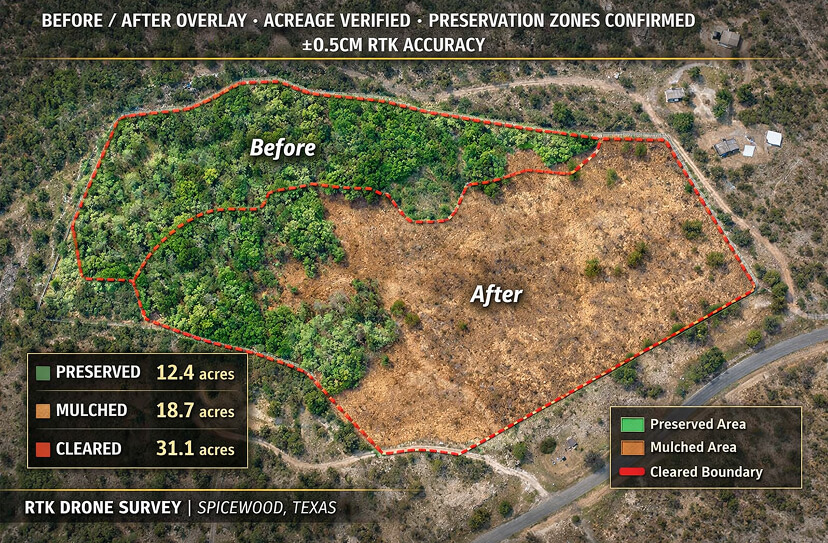
We walk the property before we cut and photograph what we clear. Here's what that means for your property.
Before We Cut
We walk your property with you before the first pass. We note drainage paths, legacy trees and clearing zones, so nothing gets touched by accident. An optional drone scan adds a 3D surface model of the site.
Site Walk FirstPhoto Record
Every job is photographed before and after, so you can see what was cleared, what was kept and what changed.
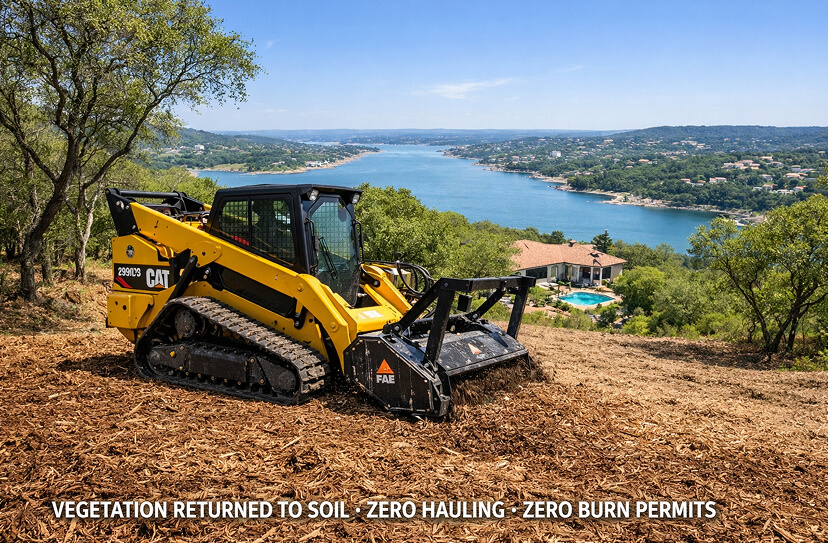
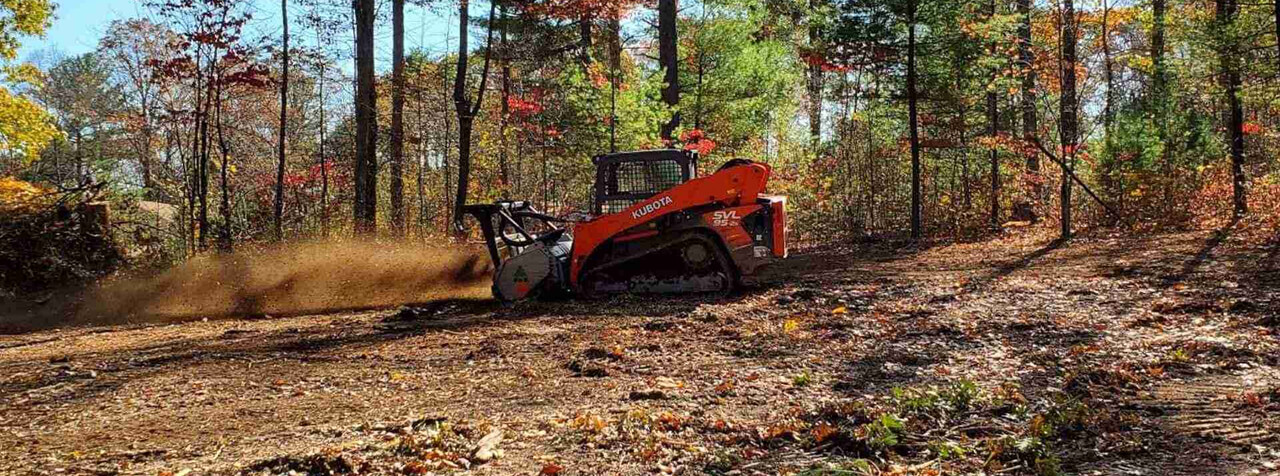
Photo RecordThe CAT 299D3 XE with FAE mulching head leaves a fine mulch layer that's immediately walk-ready — ready for seeding or landscaping.
No Hauling
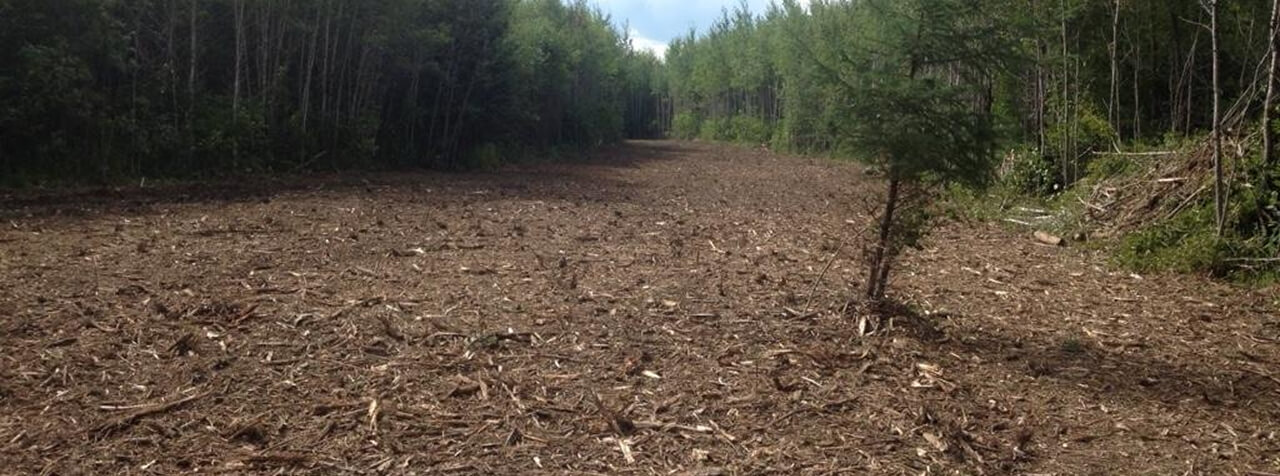
Vegetation is ground on site in a single pass. Nothing is burned, so no burn-ban delays and no smoke. Cleared vegetation is not trucked off, so there are no tipping fees for it.
No BurningProtection
Heritage oaks and specimen trees are flagged at the site walk and protected with exclusion zones before equipment rolls. We clear around what you mark.
Defensible Space
Reduces fuel in the 0–5 ft, 5–30 ft and 30–100 ft home ignition zones described by Texas A&M Forest Service, in one pass. See the Texas wildfire prevention guide.
Fire MitigationEfficiency
One pass, one machine, one operator. No convoy of dozers and dump trucks on your property, and less ground disturbance.
Preserved
The mulch layer stays on the ground and covers the soil, which helps slow erosion. Topsoil is not stripped.
Mulch Stays On SiteMaintenance Plans
Annual defensible space and fence line clearing keeps mesquite and seedlings from reclaiming your property. Fixed pricing and scheduled visits.
Registered
$2M per occurrence / $5M aggregate general liability. Certificate of insurance and additional-insured endorsement provided before work starts. Registered on Avetta and ISNetworld.
Credentials
- Legal name: Clear Ground Land Clearing & Excavation, LLC (Texas LLC)
- Insurance: $2,000,000 per occurrence / $5,000,000 aggregate general liability (THREE, a Berkshire Hathaway company), $1,000,000 commercial auto, and Texas workers' compensation with $1,000,000 employer's liability. Certificate of insurance and additional-insured endorsement provided before work starts.
- Bonding: City of Austin right-of-way bond on file. Performance and payment bonds quoted per project.
- Registered with: City of Austin contractor registration and right-of-way bond · Avetta · ISNetworld · USDOT 8808831
- Safety: Written OSHA construction safety program. Zero OSHA recordable injuries since the company formed in 2026.
- Licensing: Texas has no state license for site-work or general contractors. We carry the insurance, registrations and bond above.
Forestry Mulching Questions
Straight answers on cost, timing, permits and regrowth for forestry mulching in Austin and the Texas Hill Country.
Forestry mulching runs $2,000–$5,200 per acre depending on vegetation density. Light brush is $2,000–$2,800 per acre, moderate stands $2,800–$3,900 per acre and dense cedar $4,000–$5,200 per acre. The site walk sets the final number.
A typical 1 to 5 acre site takes 1 to 5 days, depending on density and terrain. Most jobs start 1–3 weeks after approval.
You do not need a burn permit because nothing is burned. Work inside Austin city limits, removal of protected trees (19 inches or larger) and work near creeks or in a floodplain can still need City approval. We flag what applies at the site walk and prepare the paperwork with you.
Ashe juniper (Hill Country cedar) does not resprout once cut below the lowest green limb, so regrowth is from seedlings. Mesquite, redberry juniper, huisache and shin oak do resprout from the roots. Root extraction handles those species and runs $5,000–$8,000 per acre (dense mesquite to $12,000/acre). Maintenance mowing runs $1,600–$2,400 per acre.
The mulch stays on the ground as a cover layer and stumps stay in the soil. If you need bare, graded ground for a slab, pool or road, that is land clearing, which is priced separately at $3,000–$8,500 per acre.
The site walk, the mulching pass, cleanup and before and after photos. An optional drone scan and 3D surface model of the site is $500–$1,500 per scan. Written quote within 48 hours of the site walk. Maintenance plans run Buffer $2,000 per year, Protection $4,800 per year, Estate $12,000 per year.
Book a site walk. We mark what stays and what goes, then send a written quote by vegetation density.