


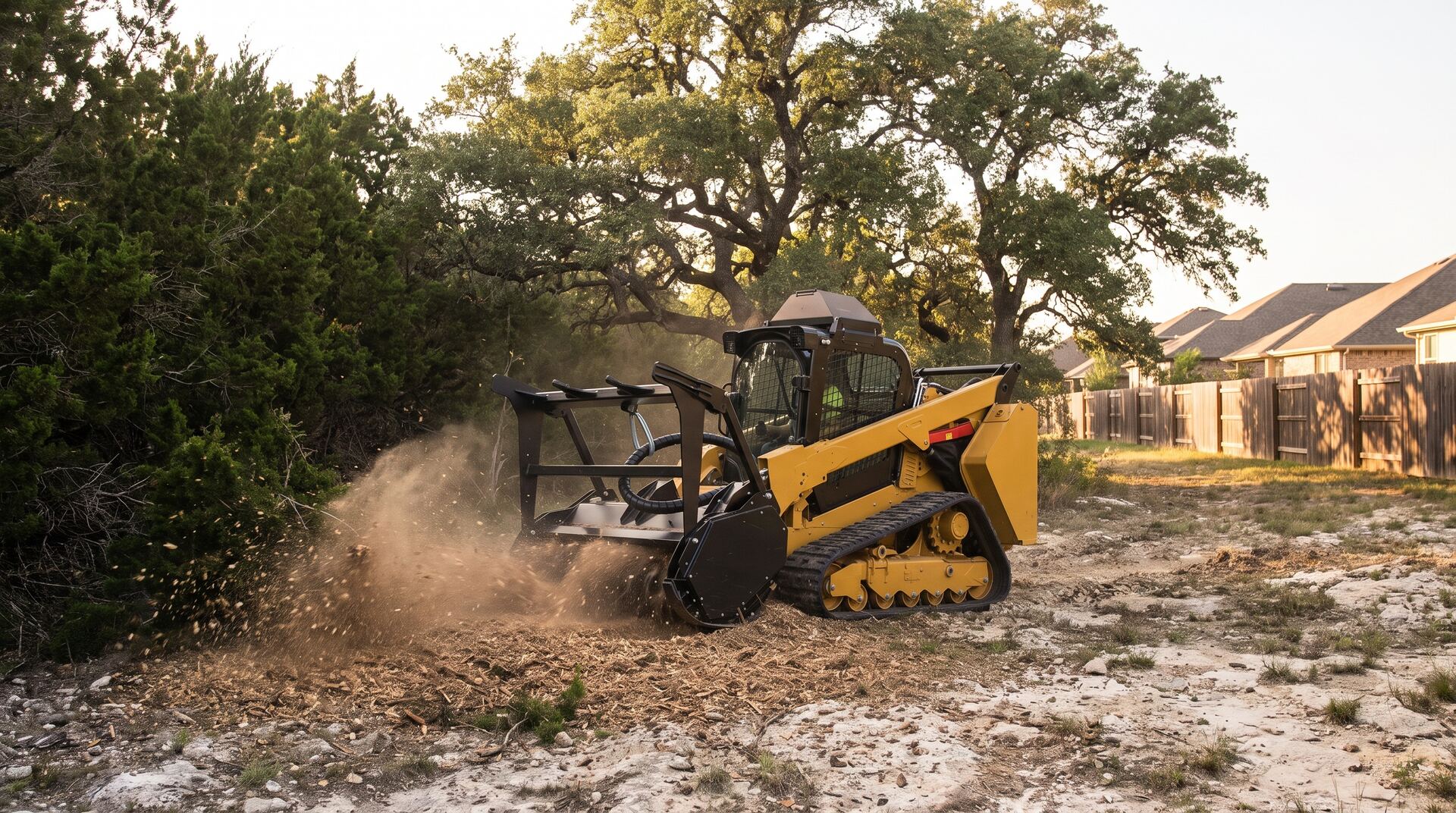
Cedar grows back in your greenbelts every year. We cut it back on a schedule.
Clear Ground runs tracked forestry mulchers and sizes the spread to the acreage. We offer cedar and brush clearing in district greenbelts and along trail edges, outside creek buffers. The mulch stays on the ground. We haul nothing. We burn nothing. We write every proposal so your board can vote on it in one meeting.
Brush returns each year, so we plan the second visit when we plan the first.
Austin, Texas · Central Texas districts · Same-business-day reply
Bring the worst greenbelt on your list. We reply the same business day.
Five ways to cut a fuel break. Mulching is our main work.
A fuel break fails when the wrong tool meets the wrong ground. This table covers the whole menu.
| Tool | What it does | Where it fits | Our part |
|---|---|---|---|
| Mowing (tractor or boom) | Cuts grass and light brush on a cycle. | Open lawns, trail edges and grass fuel. Nothing beats a tractor on grass. | Your grounds contractor keeps it. |
| Hand crew with chainsaws and a chipper | Cuts by hand, then chips or hauls the debris. | Steep banks, rocky ground, tight spots and creek buffers where machines cannot go. | The plan marks where a hand crew fits. |
| Forestry mulching | Tracked machines with drum heads grind cedar and brush where it stands. The chips stay as ground cover. | Cedar thickets on ground flat enough for tracked machines. Shaded fuel breaks and trail edges. | This is our main work. |
| Dozer, pile and burn | Pushes brush into piles to burn or haul. | Large empty tracts with burn permission. It scrapes soil and puts smoke near homes. | Not offered. |
| Herbicide on stumps and regrowth | Kills cut stems so they do not resprout. | Follow-up on invasive species after the cutting. | Your applicator can follow us. |
Other tools win in some places.
Mowing wins on grass, and a hand crew wins on a steep creek bank. A mulcher wins on thick cedar over flat to rolling ground. Most districts end up with all three on one schedule.
We take the cedar. That is the work a mowing crew is least likely to own the equipment for. Read more on our forestry mulching page.
Each proposal gives directors the same five things.
A director reads it once and votes. No one needs a second meeting to find out what a line means.
- A map. Each site is drawn with its acres. We mark the work area and the buffers we stay out of.
- The method. The machines, the cutting heads, what we cut and what stays standing.
- The season. The dates we chose and why, set around oak wilt and nesting.
- The paperwork. Our certificate of insurance naming the district, with the additional-insured endorsement, before work starts.
- One number. No bundle of options and no allowances that float. A written quote comes within 48 hours of the site walk.
- A repeat date. If the district wants a schedule, each site gets a date for the second pass.
Directors approve it, or send it back with a question. Your manager signs one document, not a stack.
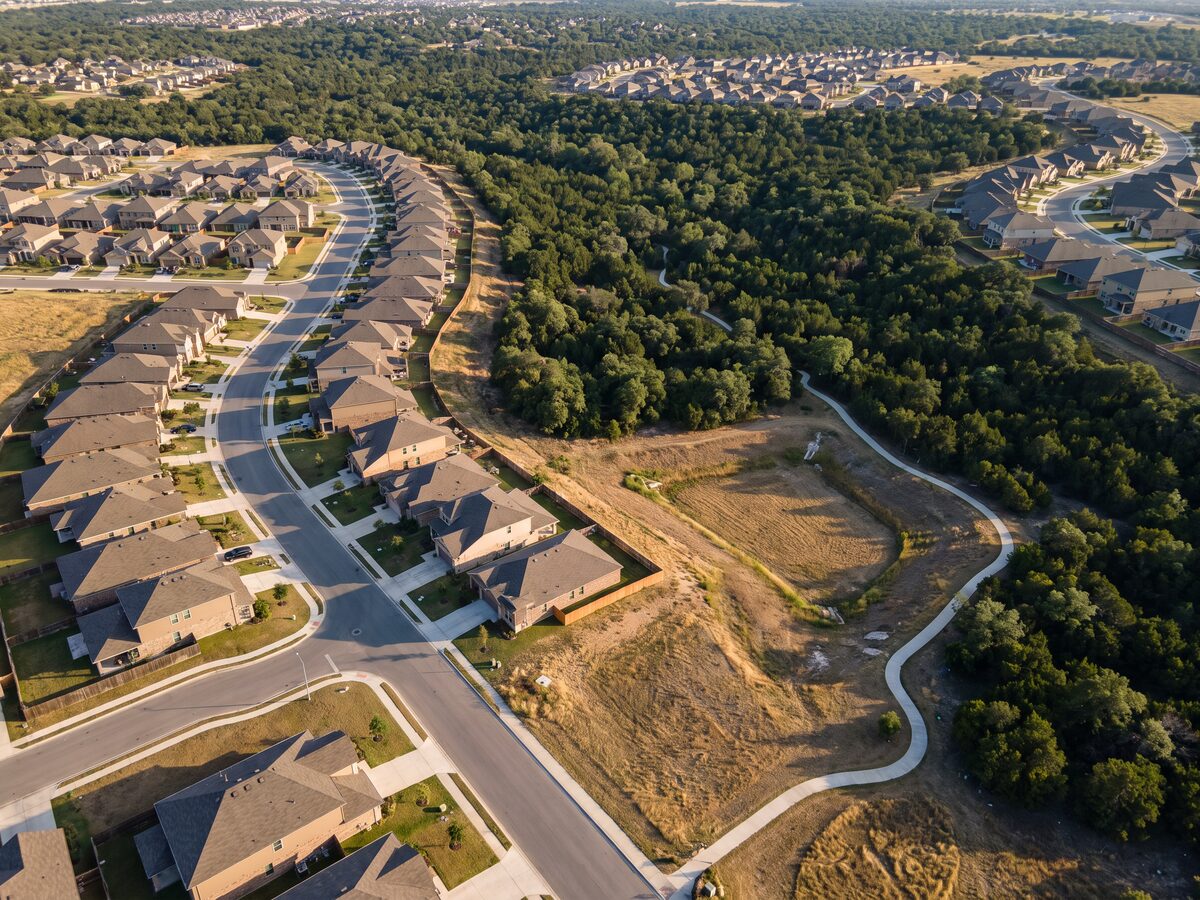
How a greenbelt job runs, phase by phase.
Walk it
first
Your manager and our crew walk the site together. We tie flagging tape on every live oak and any tree the district wants kept. We ask who holds title to the ground, where the creek buffers run and where residents use the trail. You get a written quote within 48 hours of the walk.
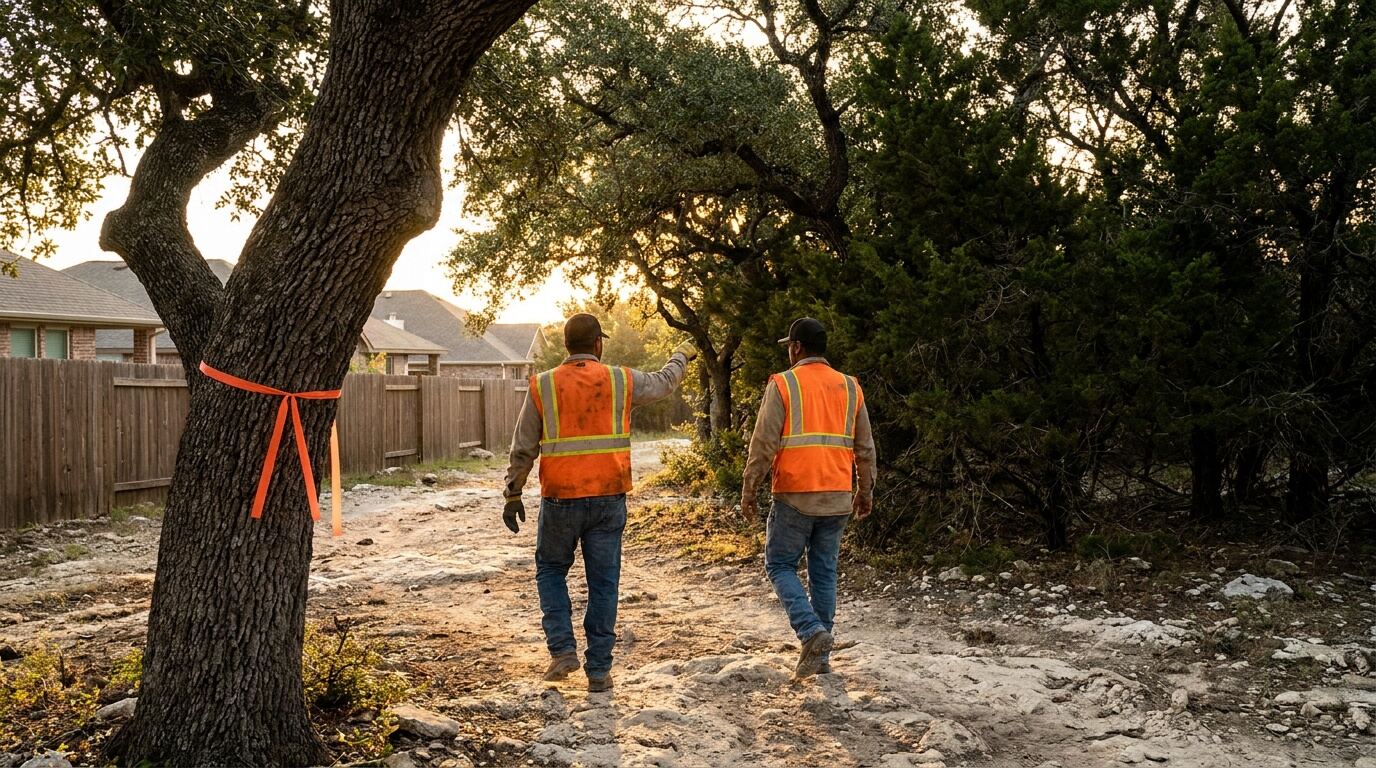
Cut the fuel
in place
Our tracked mulchers work the greenbelt behind the homes, grinding cedar where it stands. We close the section being cut and post the dates at the trail entrances. Our safety manual keeps people 300 feet from any running mulcher. If anyone walks in, the work stops.
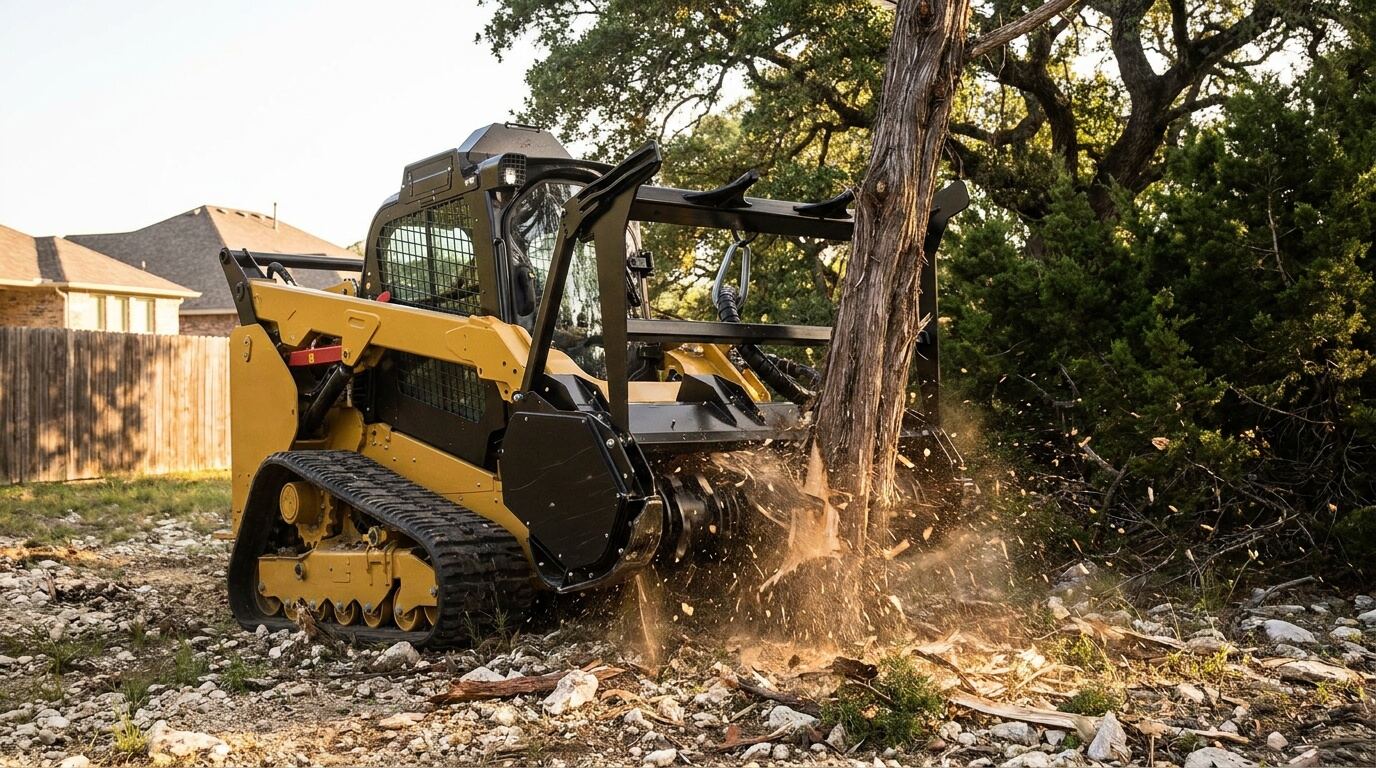
Mulch on the ground,
oaks standing
Mulching leaves a layer of chips on the soil, with track marks where the mulchers crossed. The oaks stay, and so does the shade under them. We drag nothing out, so no logs scar the greenbelt and no trucks use your trails. The cedar ladder that carried fire into the canopy is gone.
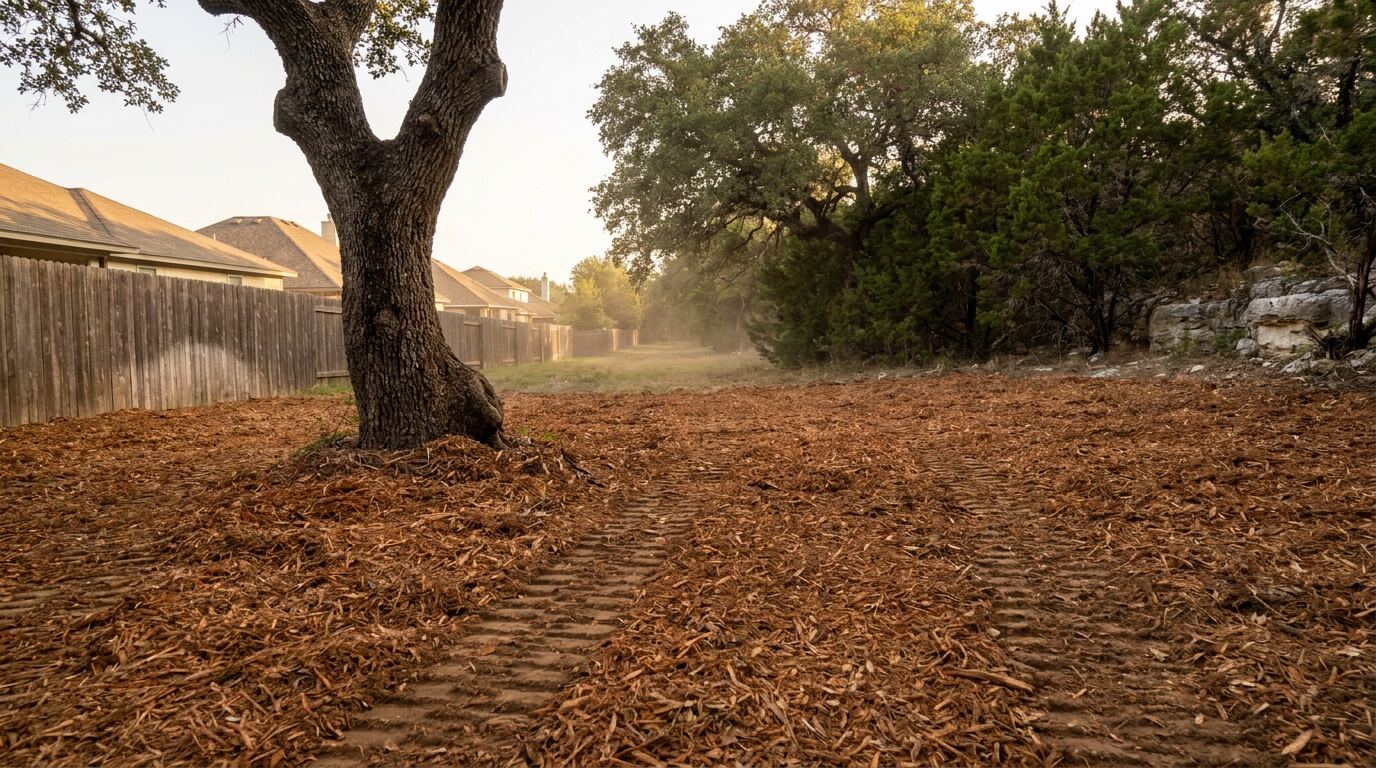
A shaded fuel break
you can see
A shaded fuel break keeps the big trees and thins what grows under them. The canopy shades the ground, so grass and brush come back slower. The cut line follows the map in your proposal. Walk it with your manager and confirm it matches the plan before we leave.
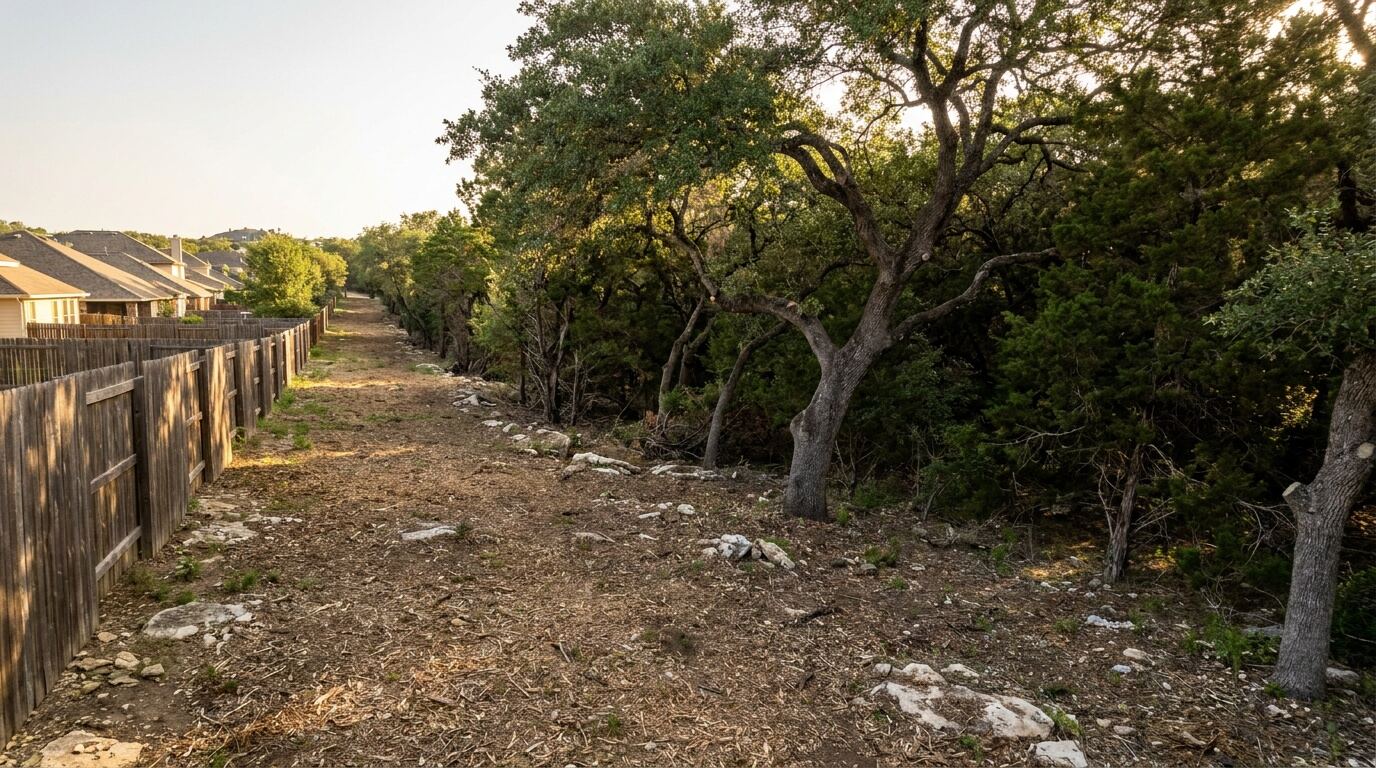
A record,
not a promise
Each site closes with photos of the cleared ground, sorted by phase. Your manager gets the record for the board file, with a note on what we cut and what we left. The note carries the date of the next pass.
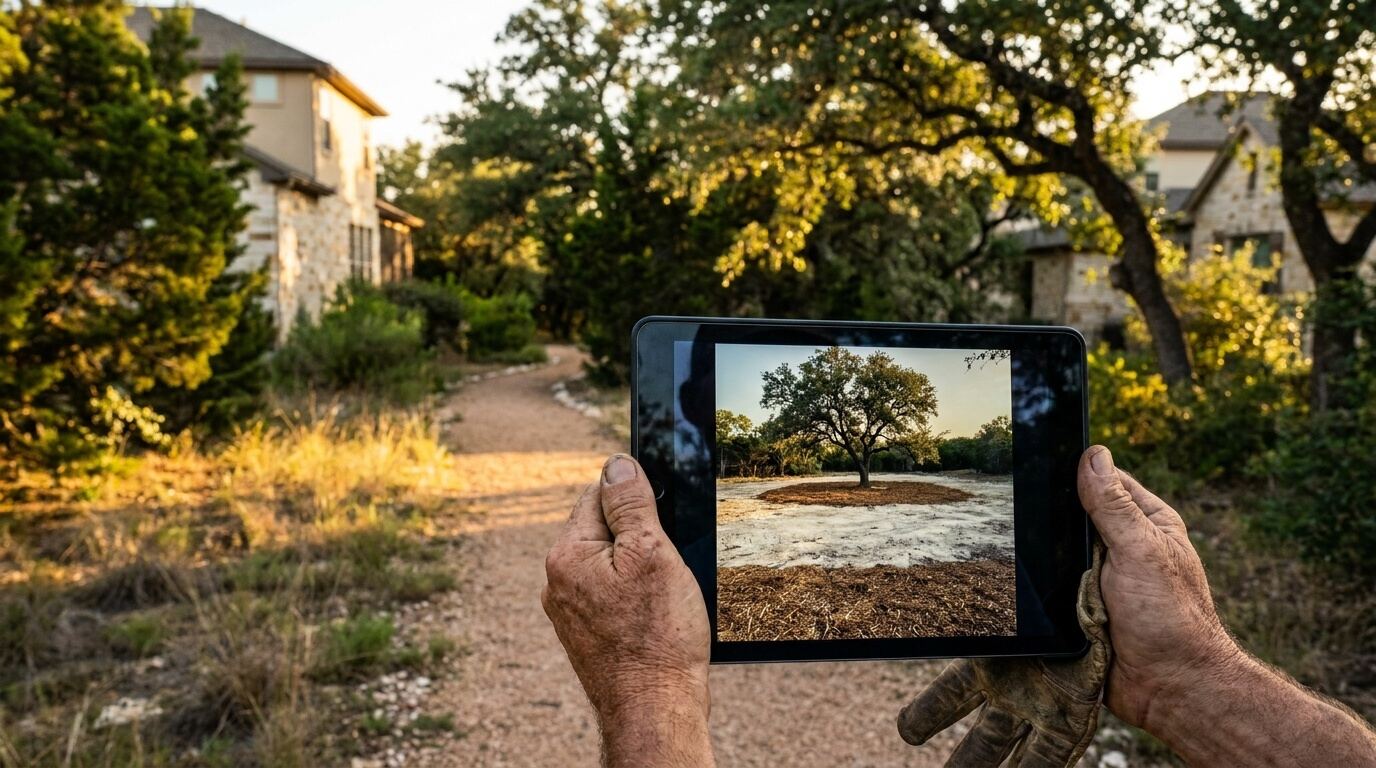
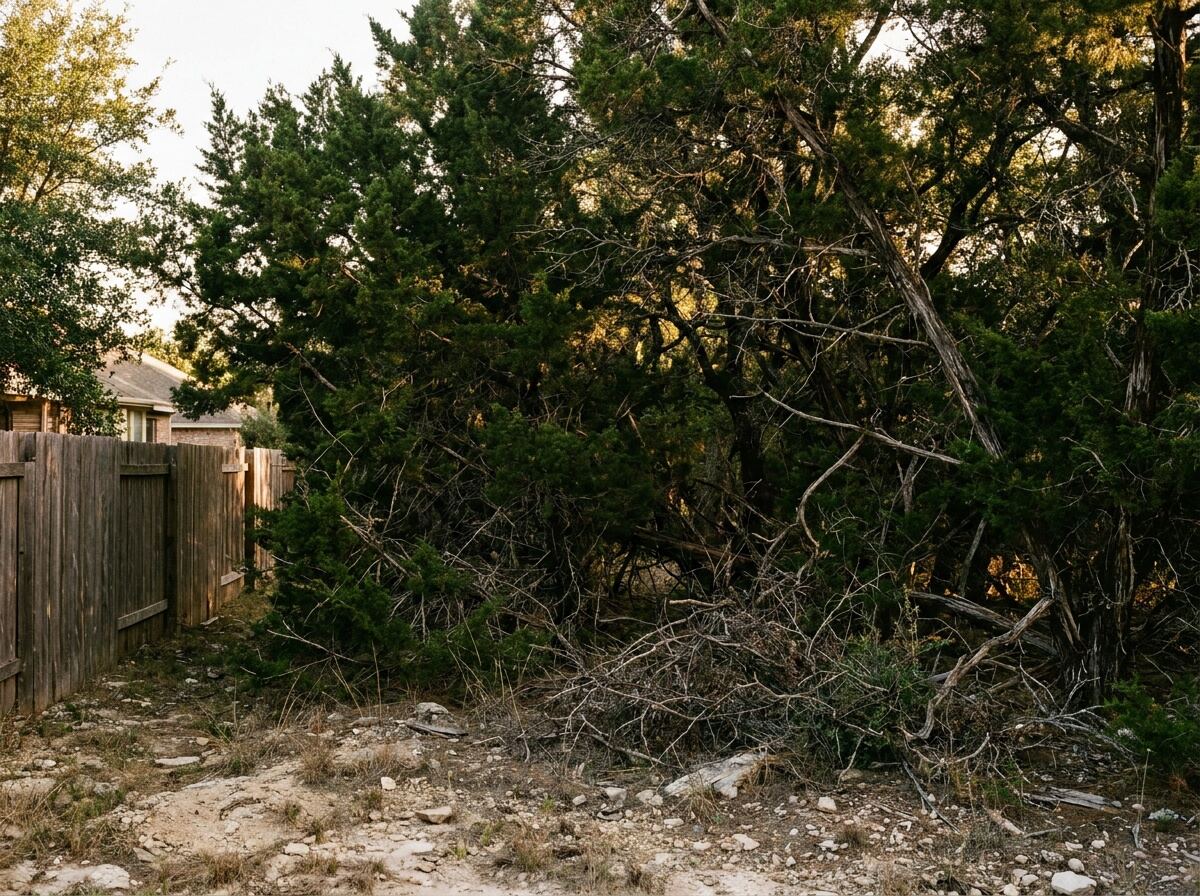
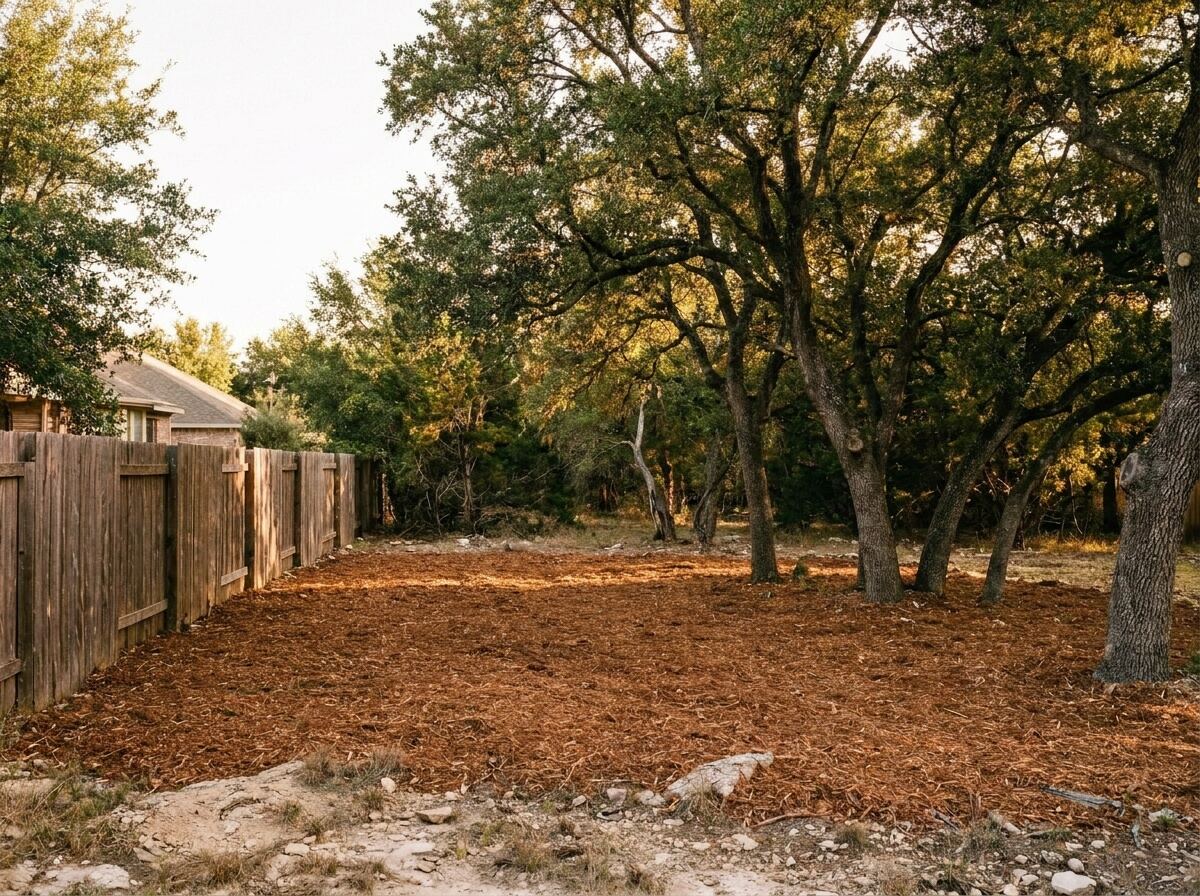
The same greenbelt spot: dense cedar before, open understory after.
Water Code 49.273 sets bid lines for district construction and purchases, and your attorney says whether brush work falls under it.
Your board votes at regular meetings. The general manager or district manager signs. Facilities and parks managers write the scope. Many districts act on next year's money in the fall, so a greenbelt line needs a number before the budget closes.
Your attorney or district manager decides which purchase rule applies, and whether Water Code 49.273 reaches brush work at all. We bid the way you buy.
- No bids. Where the statute applies, a purchase of $25,000 or less does not need competitive bids.
- Three written bids. Where the statute applies, contracts between $25,000 and $150,000 call for written bids from at least three bidders on the same specs.
- Sealed bids. Where the statute applies, contracts above $150,000 are advertised and opened as sealed bids.
- No splitting. A board may not split one job into pieces to avoid the $150,000 advertising line. Plan a multi-site schedule as one purchase.
- Add-on proposals. Some districts buy brush work as an add-on from the company that mows the parks, one board vote at a time. We can sub to that contractor, or your board can bid brush as its own line.
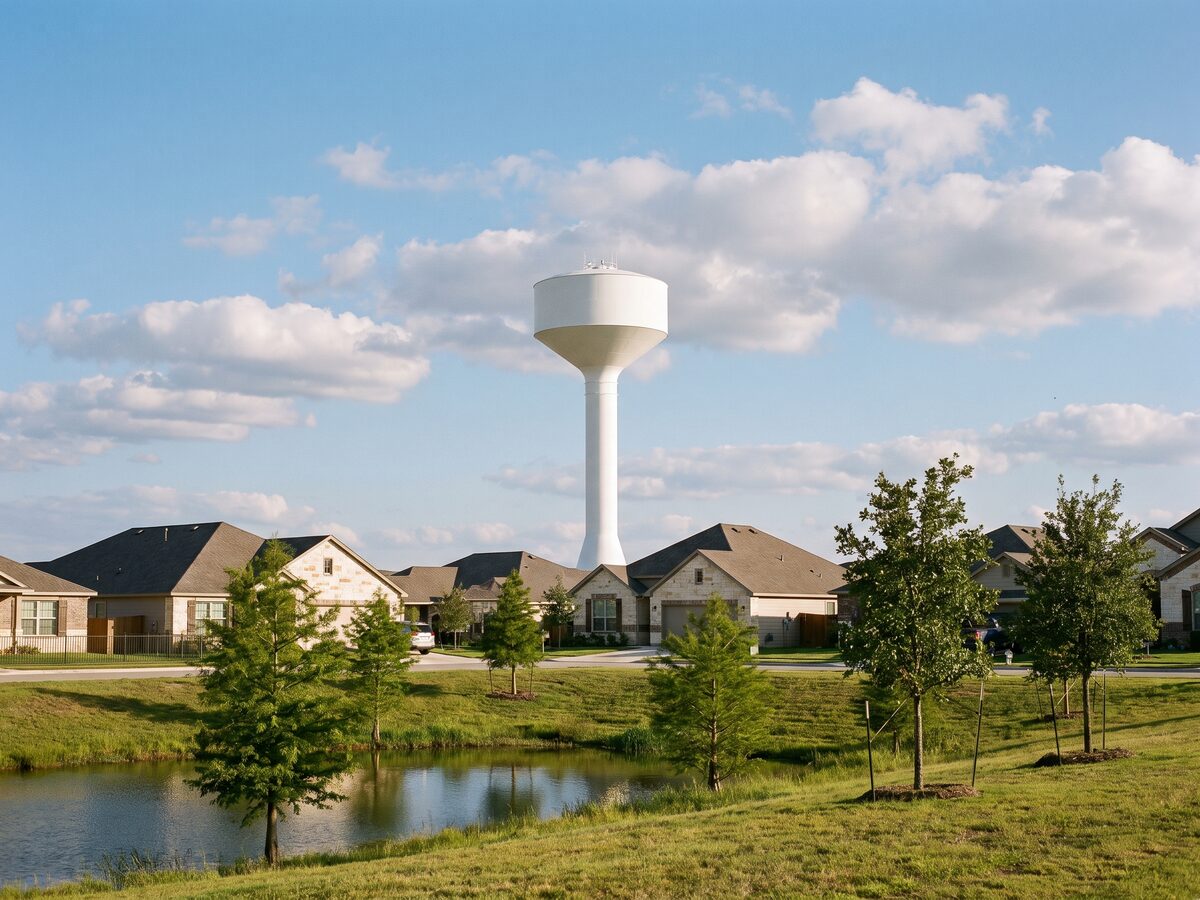
Seasons and our own rules set the calendar, and the work fits between them.
The best clearing window is September through February. Oaks are the reason we manage February with care. A district that sets its fiscal-year budget this fall can book the window before oak wilt season and nesting season close it.
- Oak wilt. Texas A&M Forest Service advises against wounding oaks from February through June. Our rule is no mulcher contact with oaks from February 1 to June 30, and we paint any oak wound the day it happens. Read the Forest Service oak wilt guidance.
- Nesting season. Golden-cheeked warbler and black-capped vireo nesting runs March 1 to August 31. We plan around that whole span.
- Habitat test. Warbler habitat is mature Ashe juniper mixed with oaks. Small juniper, and pure cedar stands with few hardwoods, usually are not habitat. Where a site could be habitat, the U.S. Fish and Wildlife Service says to have its Austin office confirm that before clearing.
- Burn bans. A burn ban targets outdoor burning, and we never burn. Our own rules go further: we stop mulching on red-flag days and in winds over 25 mph, and under an active burn ban we work only with written permission.
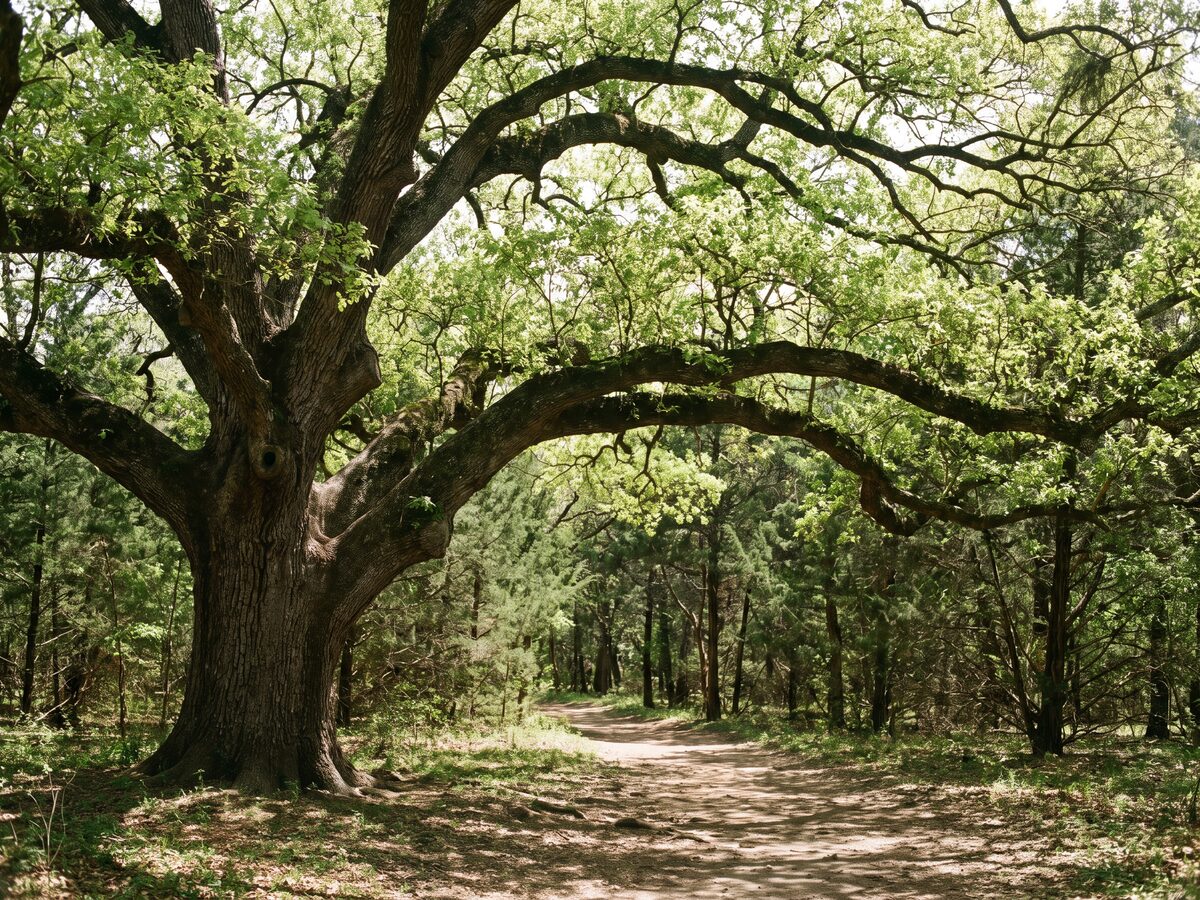
We hold the distance from residents, creeks and power lines in writing.
A greenbelt is somebody's back fence and everybody's trail. The plan says where the mulchers work and when. It names what stays out of reach.
- Who owns it. Check the title first. In some communities the district owns the greenbelt and the HOA manages it by agreement. Title decides who signs. We ask before we write a scope.
- Creek buffers. A watershed ordinance in parts of Central Texas can require agency approval even for hand work near a creek. We map the buffers before we draw the work area and stay outside them unless the agency approves.
- Power lines. We never mulch near energized lines. We leave any tree that can reach a line until the utility clears it.
- Slope. Tracked mulchers do best on ground with little to no slope. Steep or rocky sections may need hand work, and the proposal marks them.
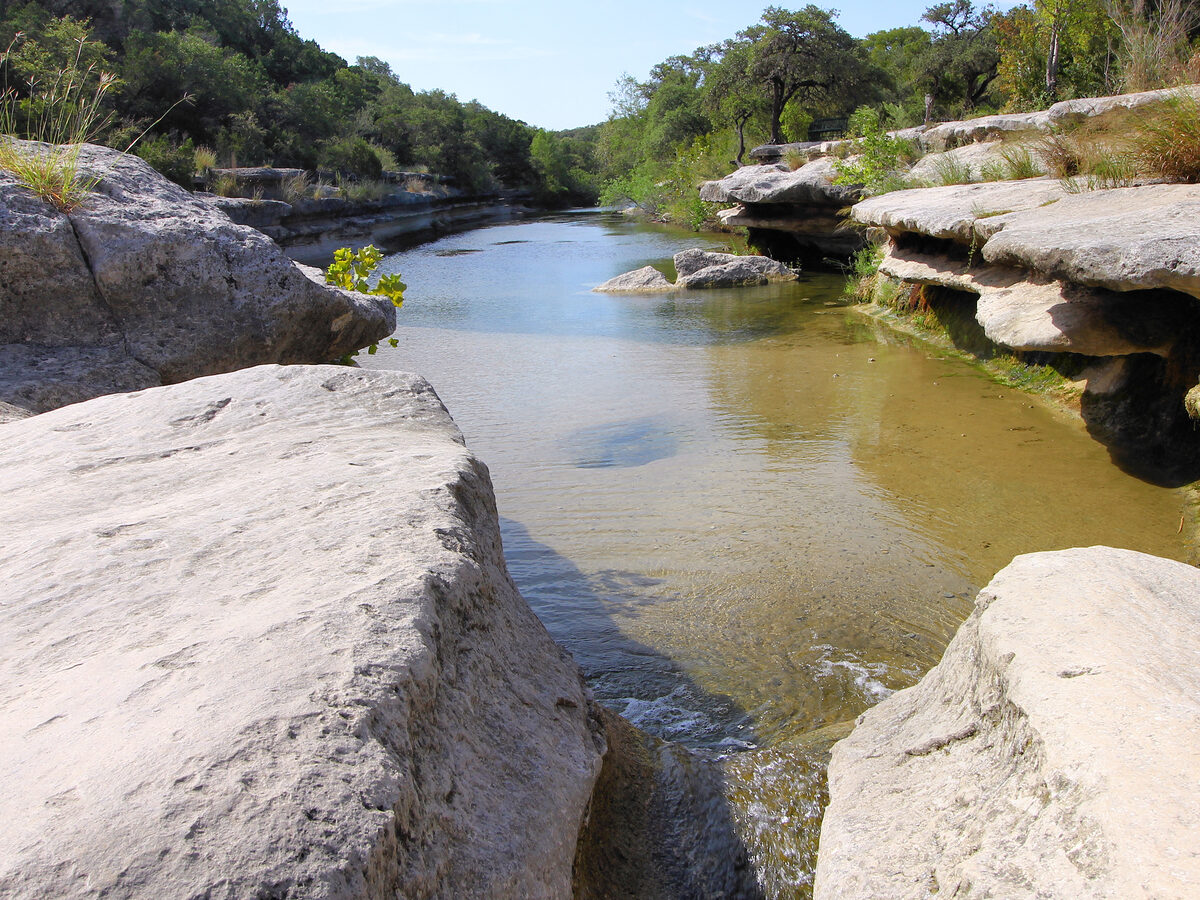
Your manager gets the documents before the first cut.
Districts file vendor paperwork before work starts. Ours is ready on request.
Certificate of insurance
General liability is $2,000,000 per occurrence and $5,000,000 aggregate with THREE, a Berkshire Hathaway company. The $1,000,000 commercial auto policy is with Progressive. The certificate names your district.
Additional-insured endorsement
Sent with the certificate before work starts. If your attorney needs a different holder or wording, tell us early.
Safety packet
Our written safety program and forestry mulching hazard analysis, sent before we mobilize.
Written scope
The map, the method, the season and one number, on a page your board packet can hold.
Bonds and registrations
Bonds go through our broker. Our broker can submit a bid or performance bond to a surety for each project once we have the form, the value and the obligee. Underwriting takes about 30 days and approval is not guaranteed. Tell us which registration your district requires, and we answer in writing.
Photo record
Photos of each site by phase, filed with the closeout note for your board records.
Our grounds contractor already does this. Why add you?
Tracked mulchers are the right tool for a fuel break, and many mowing crews do not own one. We can sub to your grounds contractor, or your board can bid brush work as its own line. Either way, your district keeps one point of contact.
Do we need three bids?
For contracts it covers, Water Code 49.273 calls for written bids from three bidders between $25,000 and $150,000 per contract. Your attorney decides whether brush work falls under it. We follow the paperwork you send, whether that is a bid form, an RFP or a proposal for a board vote.
Who owns the greenbelt, the district or the HOA?
Check the title. In some communities the district owns it and the HOA manages it by agreement. That changes who signs and who approves the scope. We ask who holds title before we write anything.
Does a creek buffer limit the work?
It can. A watershed ordinance may require agency approval before any clearing near a creek, even by hand. We map the buffers first and keep the work area outside them unless the agency approves.
Is there grant money for this?
Texas A&M Forest Service runs a mechanical fuel reduction grant that reimburses landowners. The next application window opens June 1, 2027. Whether a district-owned greenbelt qualifies is not settled in the program's own materials. We will not say it does until the Forest Service says so in writing.
Can you work to a schedule we set?
Yes. Give us the site list and the months. We propose a date for each site inside your windows and plan the repeat visit with the first. See how we handle annual maintenance.
Do residents stay clear of the machines?
Yes. Our safety manual keeps people 300 feet from any running mulcher. We close the section being cut and post the dates at the entrances. If anyone walks in, the work stops.
Who have you done this for?
Cedar clearing in Killeen and a Texas A&M Forest Service grant job in Florence. Ask for a site walk and a plain answer on whether your ground suits tracked mulchers.
Pages written for other buyers.
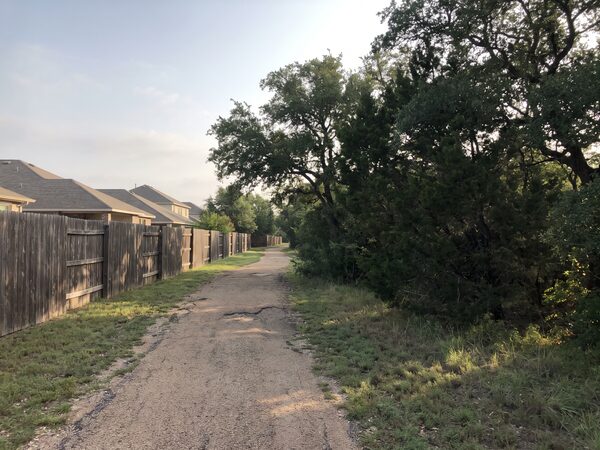
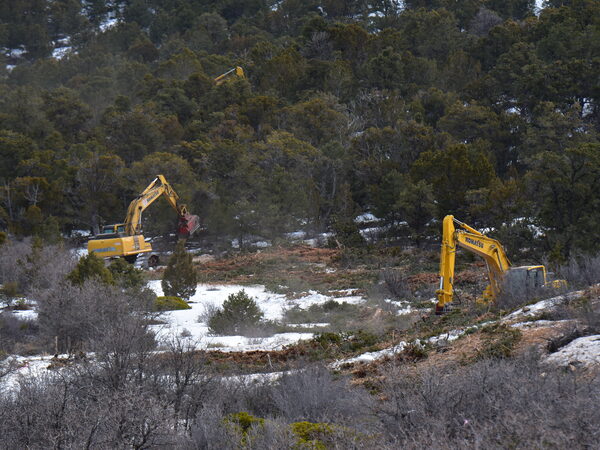
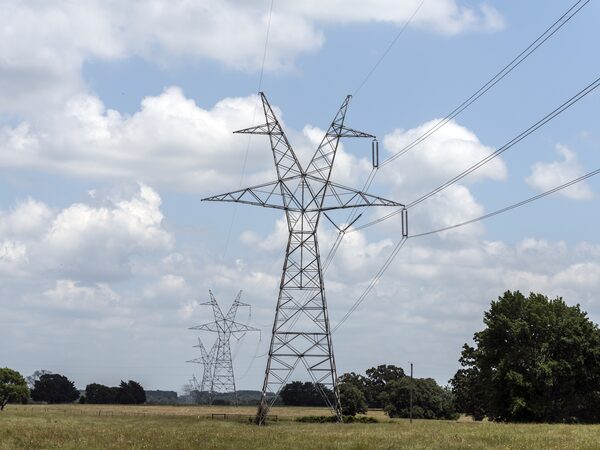
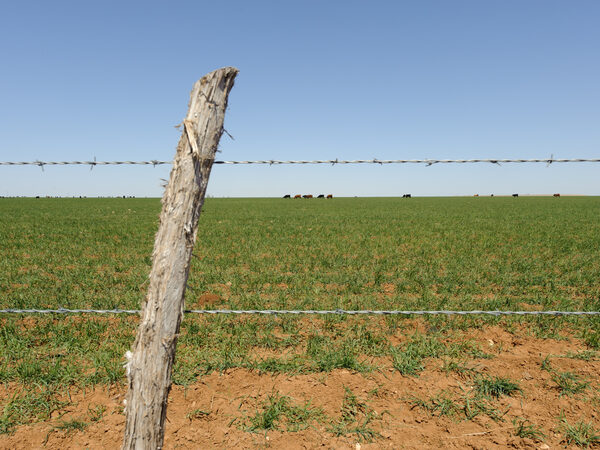
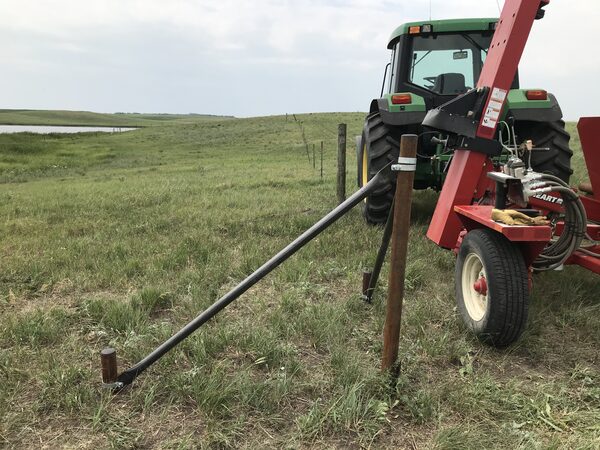
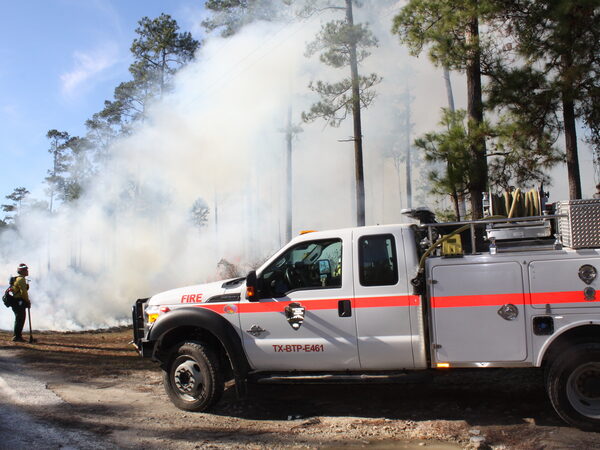
Photo credits
- Bull Creek, Austin: Larry D. Moore, CC BY 4.0
- Balcones Canyonlands NWR: Toniklemm, CC BY-SA 4.0
- Forest Service fuels project: Intermountain Forest Service, USDA Region 4 Photography, Public domain
- Transmission line, Texas: Carol M. Highsmith, Public domain
- Ranch fence, Texas: USDA NRCS Texas, Public domain
- Fence post driver: USFWS Mountain Prairie, Public domain
- Big Thicket prescribed burn: NPS Photo, Public domain
Images marked illustration are computer generated.
Rather just talk
to a person?
(512) 880-8888
Call or text 512-880-8888 · Bring the worst site on your list