


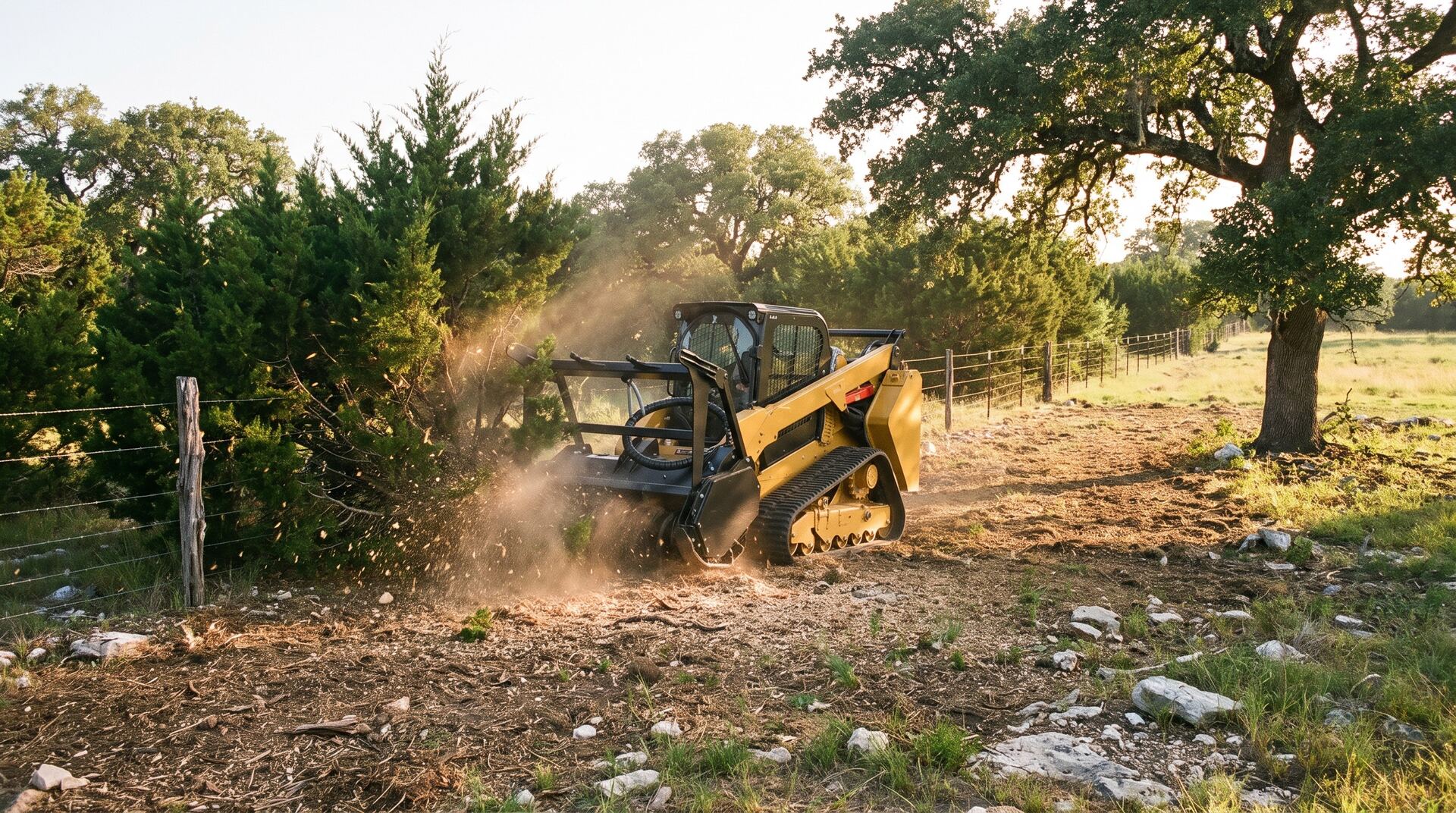
Fence lines and ranch firebreaks cleared to your width, and the mulch stays put.
Clear Ground runs tracked forestry mulchers out of Austin and adds machines for long lines. We cut cedar and brush off ranch fence lines and firebreaks across Central Texas. You set the width and mark the trees to keep. The mulch stays on the ground. Nothing gets burned or hauled. We walk the line with you first and send a written quote within 48 hours.
You can't build fence through a cedar thicket. We clear the line so your fence crew starts on open ground.
Austin, Texas · Central Texas ranches · Same-business-day reply
Tell us the line, the width and the trees to keep. We reply the same business day.
Five ways to clear a fence line. Mulching is our main work.
The right tool depends on the ground and on what the line is for. This table covers the whole menu of fence-line methods.
| Method | What it does | Where it fits | Our part |
|---|---|---|---|
| Forestry mulching | Tracked mulchers grind cedar and brush where it stands. The chips stay on the ground. | Dense cedar and mesquite on a fence line or firebreak. Selective clearing around trees you keep. | This is our work. No burn piles, no hauling. |
| Dozer and burn piles | A dozer blades a line and pushes brush into piles. | Open ground where you want a bladed firebreak. NRCS lists a constructed firebreak as its own practice. | Piles also need a burn window, and a county burn ban can close it. |
| Hand crews with chainsaws and a chipper | People cut by hand and chip or stack the debris. | Steep ground and tight spots tracked machines can't reach. | Hand crews cover ground machines can't reach. |
| Herbicide | A licensed applicator treats stumps and regrowth. | Follow-up after clearing, where brush comes back from the root. | It pairs with mulching, but it is a different trade. |
| Prescribed fire | A trained crew burns the pasture under a written plan. | Large open acreage, with a qualified burn manager and a burn window. | Fire needs the right weather and a burn manager. |
Where a mulcher stops
Tracked mulchers can't trim limbs above the cab. They can't work steep ditch banks. Rock slows them down. A buried rock or stump can stop a mulching head.
That is why we walk the line before we quote. Rock, culverts and buried markers show up on foot first. You hear about them before the work starts.
A clear line, a short list of trees, and nothing left to haul.
You tell us the line and the width. Here is what comes back.
- The width you set. You choose how wide the line runs. We cut to that width and hold it end to end.
- Your keeper trees, standing. You mark the oaks and other trees to save. We flag them with tape and mulch in the pattern you mark.
- Mulch left in place. The chips stay on the ground. We don't build burn piles and we don't haul brush off your ranch.
- A walk before the quote. We walk the line with you first. You get a written quote within 48 hours of the site walk.
- Dated photos of the cleared line. We keep dated photos of each treated area for your file.
- Insurance on paper. We send a certificate of insurance and name you as additional insured before work starts.
- Plain limits. If a section is steep, rocky or under limbs, we tell you before the work.
We clear the line. We don't build the fence. Your fence builder or crew sets the posts and runs the wire. If you are a fence builder, we clear ahead of your crew.
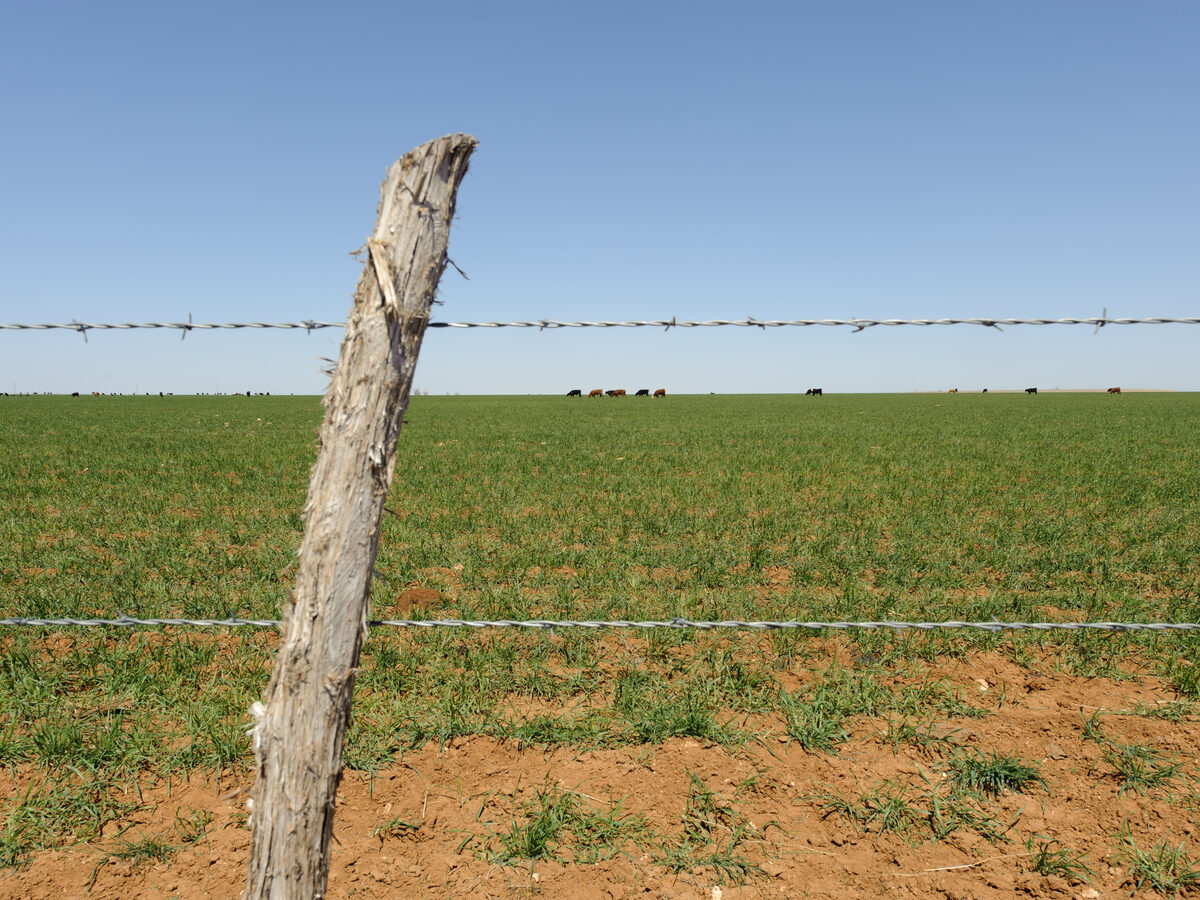
How a ranch line clears, phase by phase.
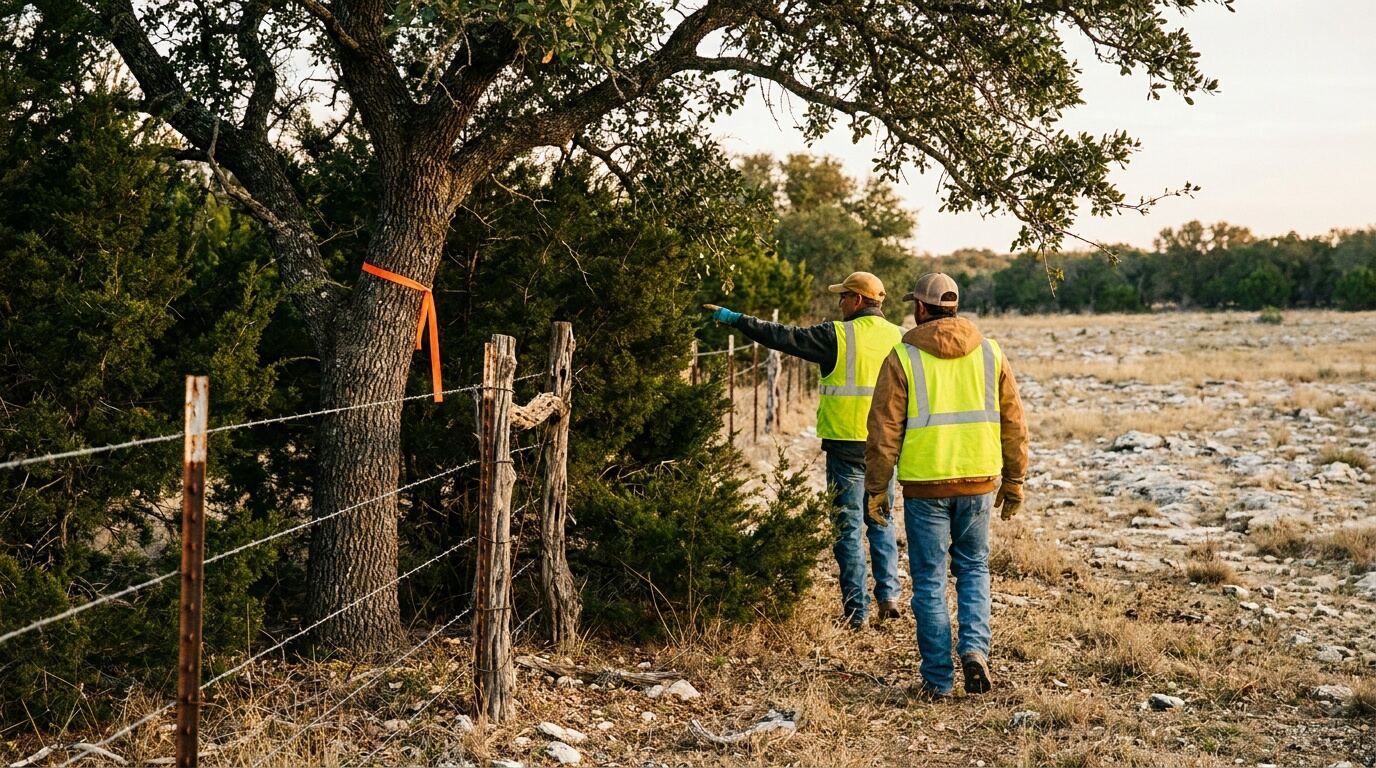
Walk the line
with you
We walk the full line with you at the edge of the cedar. You point out the live oaks and other trees to keep, and we tie flagging tape on each one. We look for rock, culverts, gates and buried markers, and we ask how wide the line should run. You get a written quote within 48 hours of the walk.
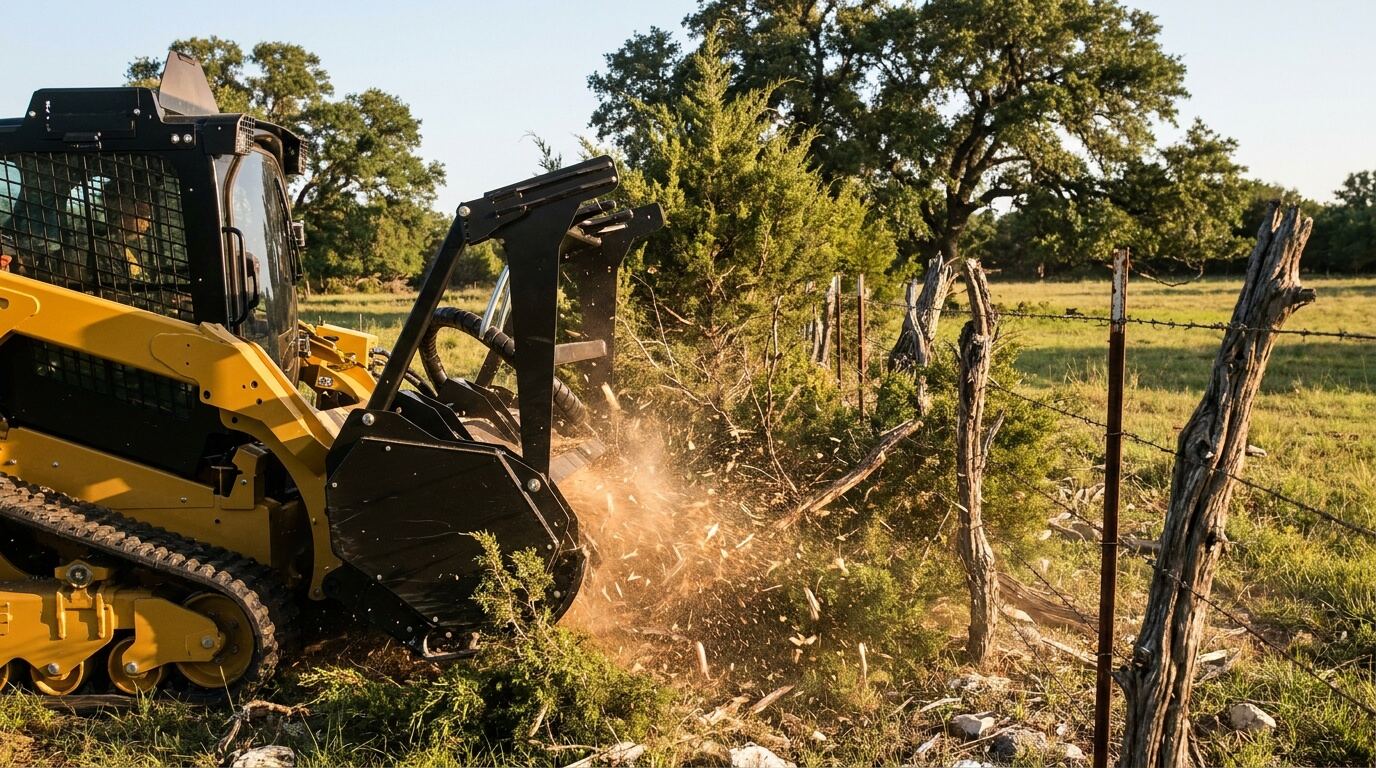
Grind the cedar
where it stands
Our tracked forestry mulchers work down the line. Small cedar and brush go straight into the drum. Trees too big for a mulching head get called out on the walk. We stay off flagged trees. We keep clear of oaks in the oak wilt months, and we paint any oak wound that does happen.
Leave the mulch
where it falls
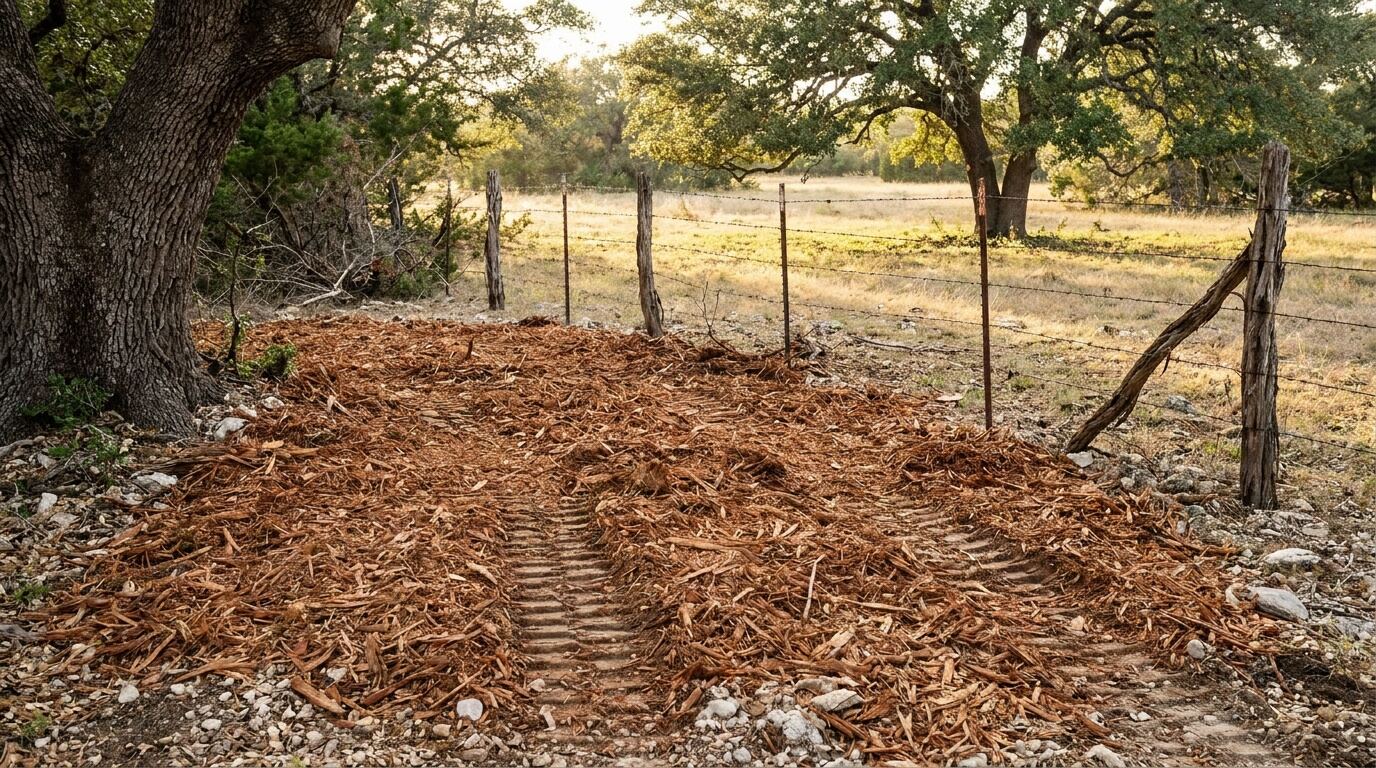
The chips drop on the ground in a layer, with track marks on top and your kept oaks standing in it. The ground stays covered. Nothing gets piled for burning. No trucks haul brush off the ranch. Stumps are cut low and stay in the ground, so the line is a mulched strip, not a bladed one.
Hand over
open ground
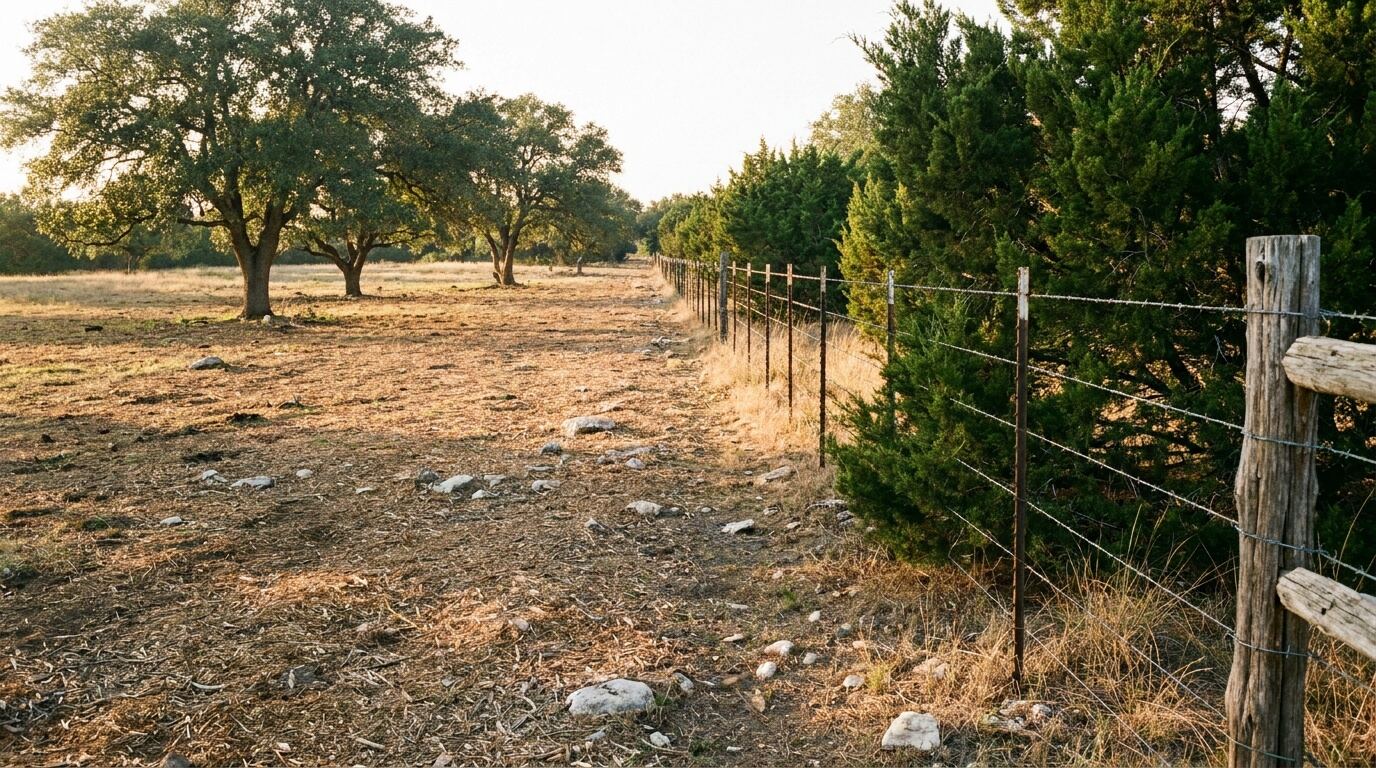
The result is an open line at the width you set, with the trees you kept standing along it. Your fence crew can drive it, set posts and string wire on open ground. For a firebreak, the fuel is gone from the strip. The same line is the one you can mow or spot-treat later.
Close it out
with photos
We keep dated photos of the cleared line, and you can have a copy. If a program is paying for the work, its own inspector takes the program's photos. Ours are our record. Your certificate of insurance is already in your hands.
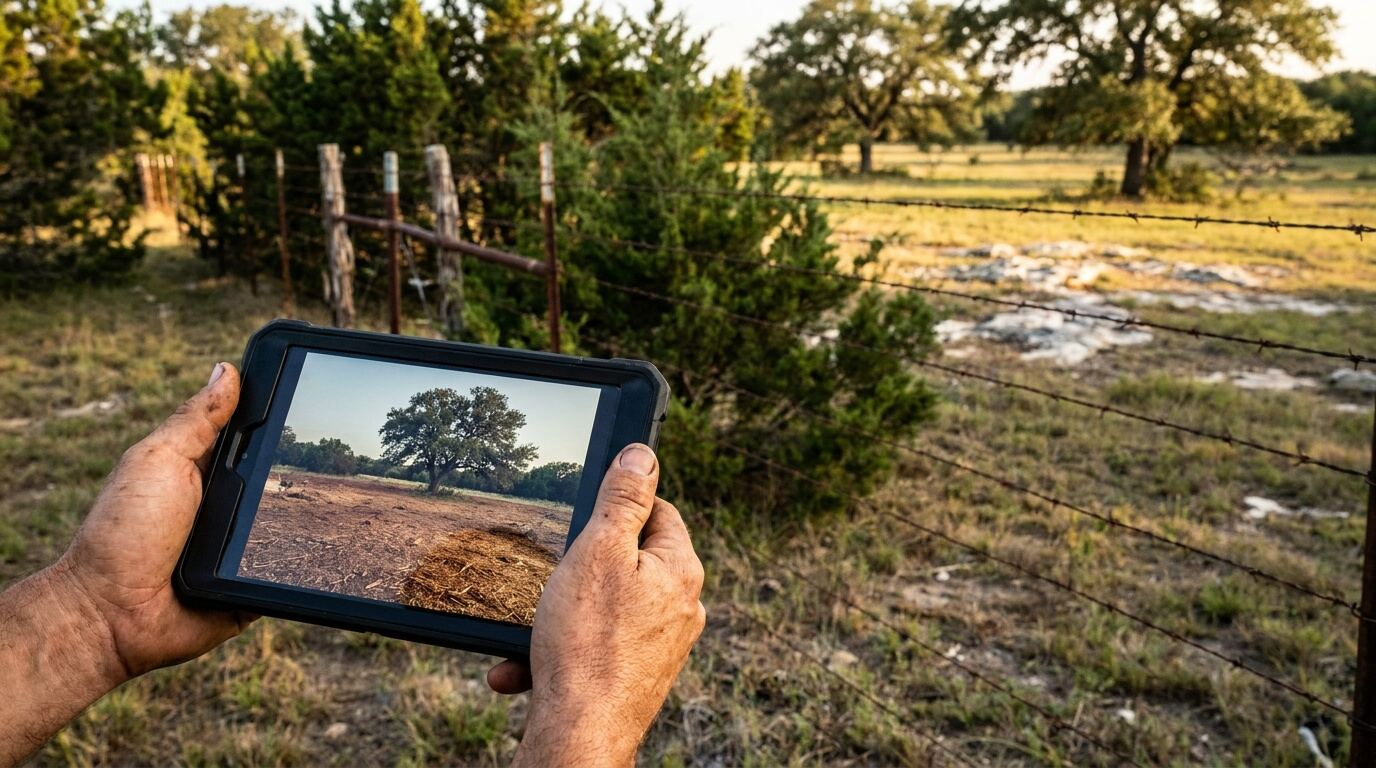
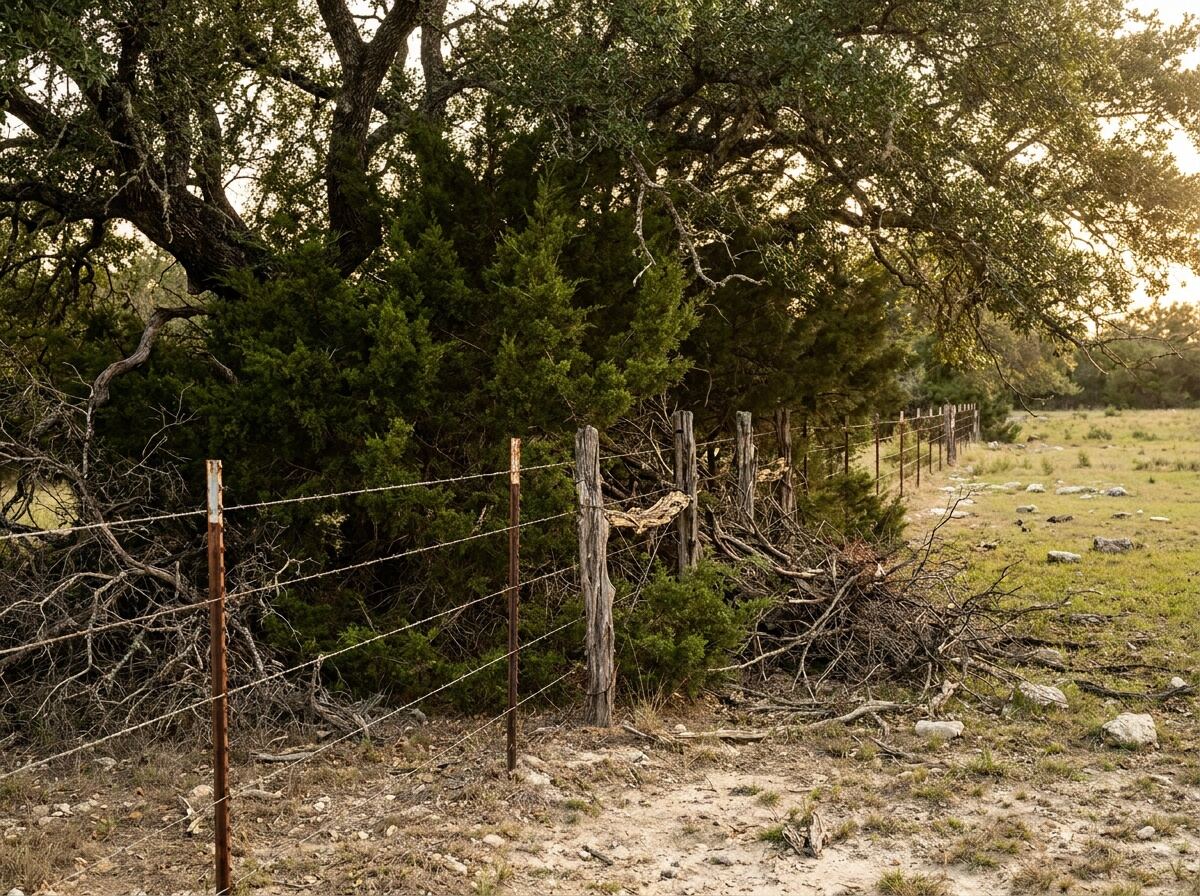
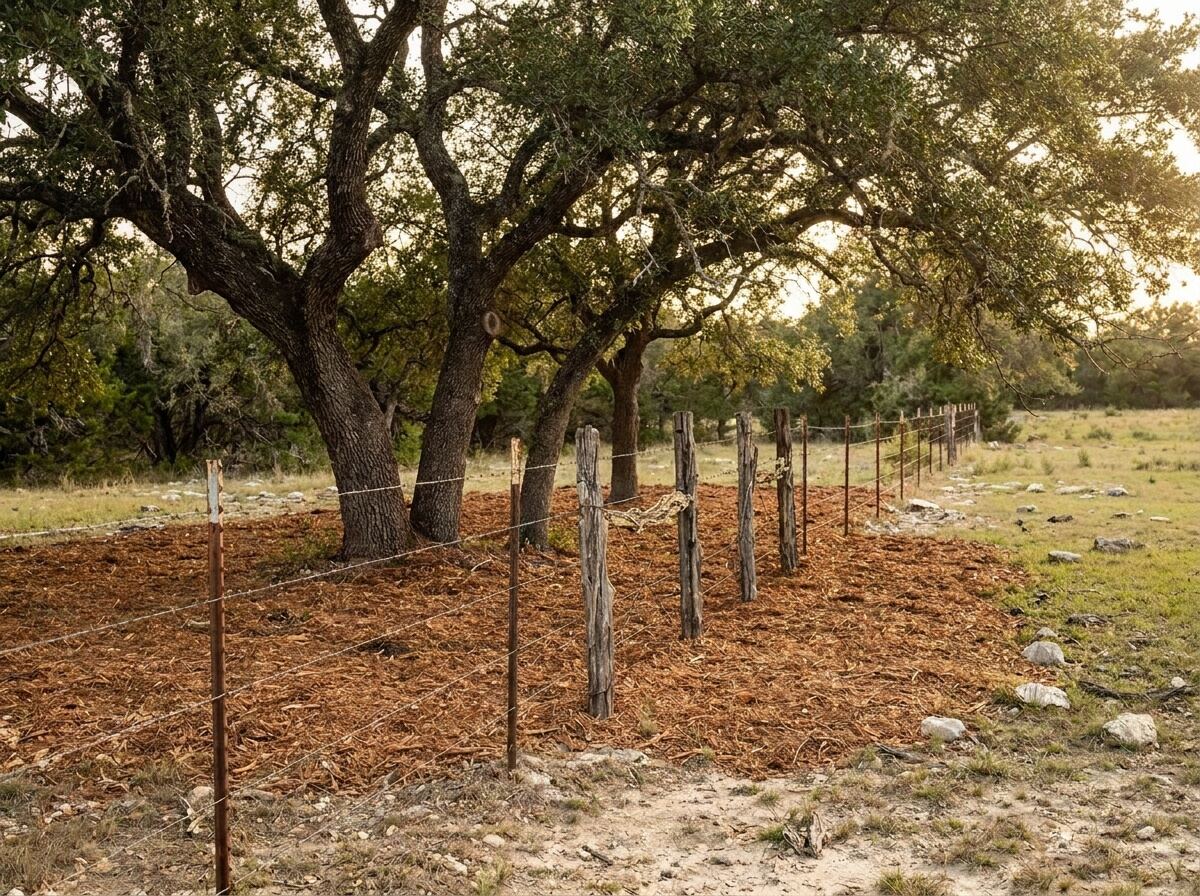
Illustration: the same fence line before and after. Dense cedar before, an open mulched line after.
Brush work counts toward wildlife valuation, as one practice of several.
Texas wildlife management valuation asks for practices from at least three of seven wildlife management activities. Habitat control, which includes brush management, is one of the seven. Brush work alone does not qualify a ranch.
We mulch in the pattern you mark. Your county appraisal district and your wildlife management plan decide what counts. Ask the district before you hire anyone.
Cost-share programs pay the landowner, not us, and each has rules. Get the rules before you cut.
- NRCS EQIP. NRCS takes applications year-round and ranks them against a yearly cutoff, so apply early in the cycle. Brush management, fuel break and firebreak work each have their own NRCS standard. NRCS updates the payment schedule each fiscal year. Ask your local NRCS office which standard your line must meet, and get approval before the work starts.
- Texas A&M Forest Service Mechanical Fuel Reduction grant. It reimburses the landowner after the work. The landowner can't do the work, and the contractor can't be affiliated with the landowner. Work done before the pre-inspection is not reimbursable. We did Texas A&M Forest Service grant work in Florence for a landowner who applied. See our grant page for how the program runs.
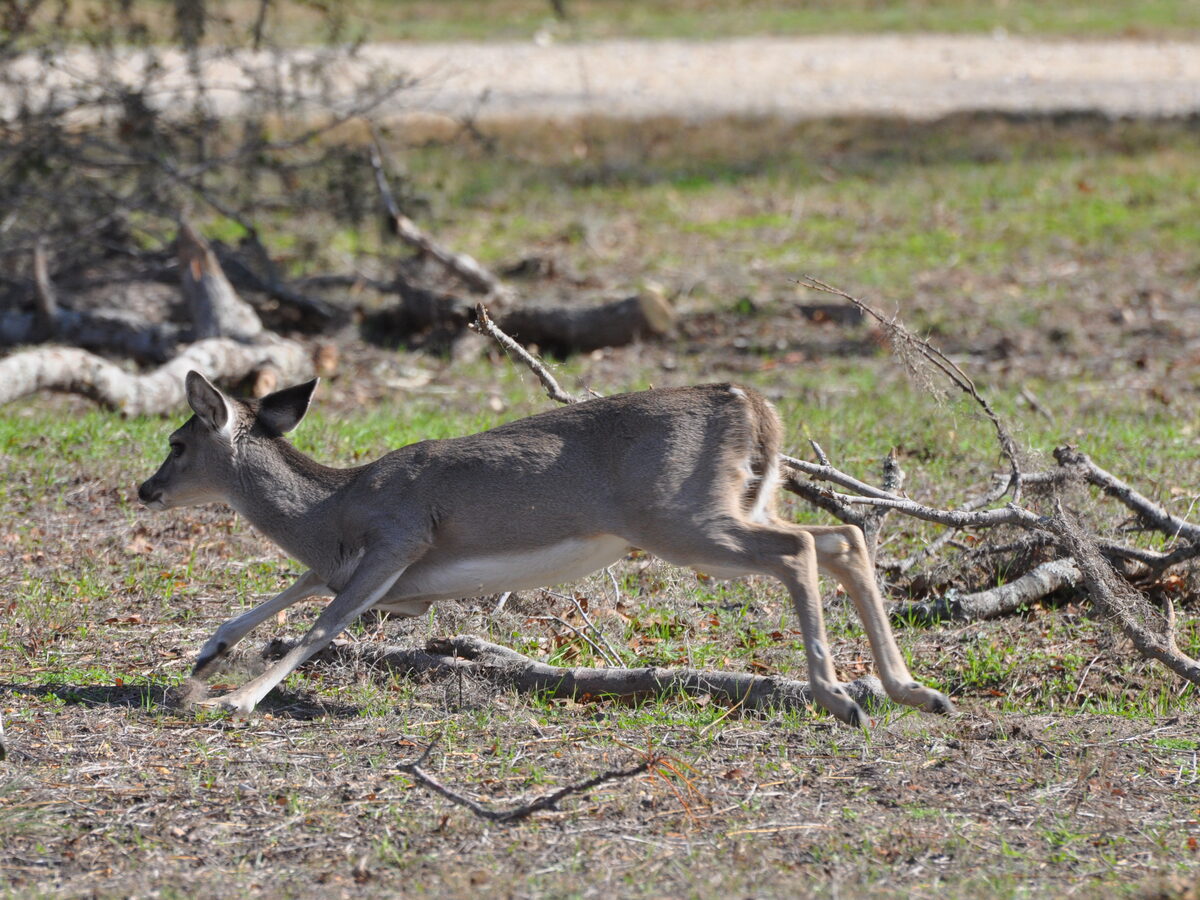
Oak wilt and nesting season set the calendar.
September through February is the best window for cedar work in oak country. Texas A&M Forest Service advises against wounding oaks from February through June, and it lists land and cedar clearing among the ways oaks get wounded. Our rule is no mulcher contact with oaks from February 1 to June 30. Any oak wound gets painted at once, in any month.
Golden-cheeked warbler and black-capped vireo nesting runs March 1 to August 31. We plan around that whole span. Small cedar in open pasture is usually not warbler habitat. Mature juniper mixed with oaks can be. If your land might be habitat, the U.S. Fish and Wildlife Service Austin office should confirm it before anyone clears.
- Burn bans. A burn ban targets outdoor burning, and we never burn. Our own rules go further: we stop mulching on red-flag days and in winds over 25 mph, and under an active burn ban we work only with written permission.
- Power lines. We stay away from energized lines. We leave any tree that can reach a line until the utility clears it.
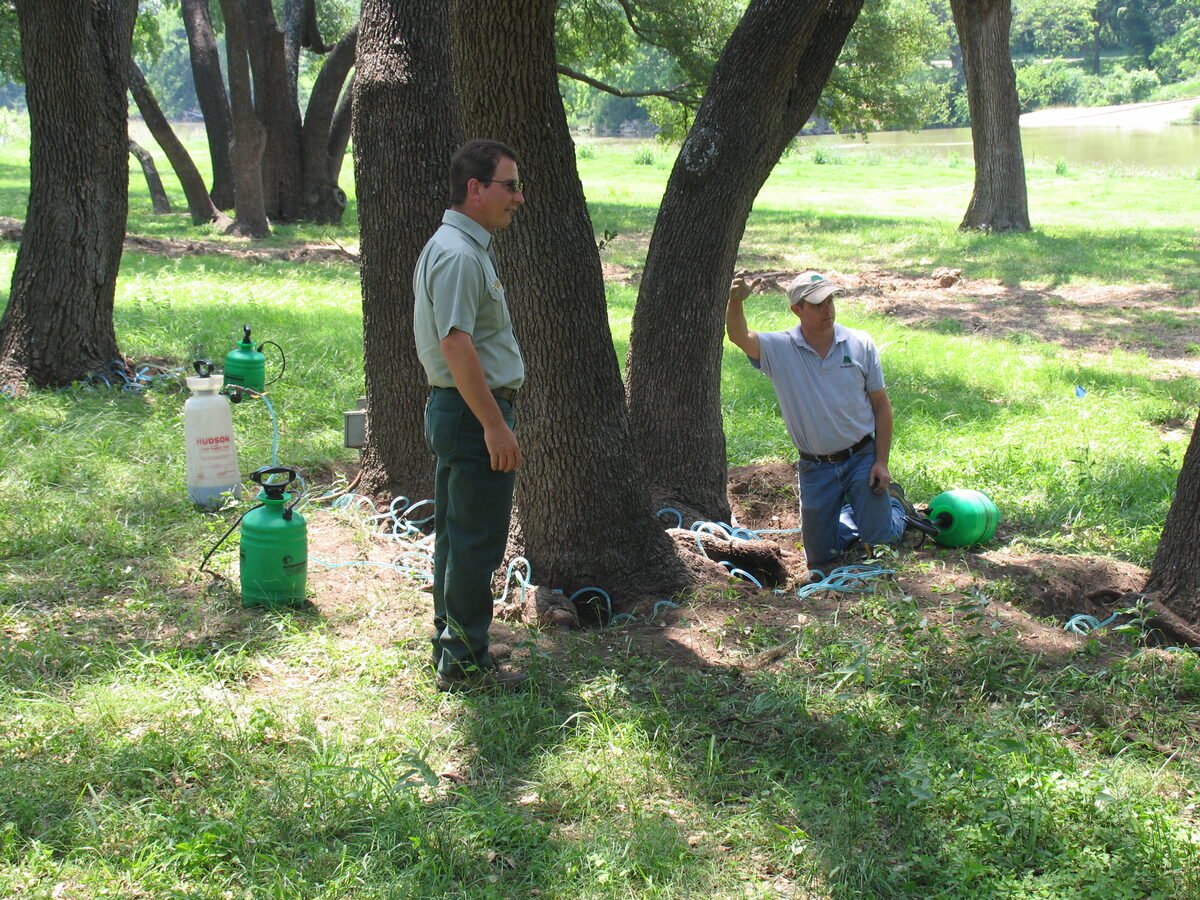
A landowner you send us gets a walk before any quote.
You get the call when a landowner asks who can clear cedar. Here is what we offer your landowners.
If you keep a list of contractors, tell us what you need and we will send it.
- We walk before we quote. Every landowner gets a site walk and a written quote. Nobody gets a number by phone for a line we haven't seen.
- We send insurance on request. A certificate of insurance goes out before work starts, and it names the landowner or the program as additional insured when the contract asks.
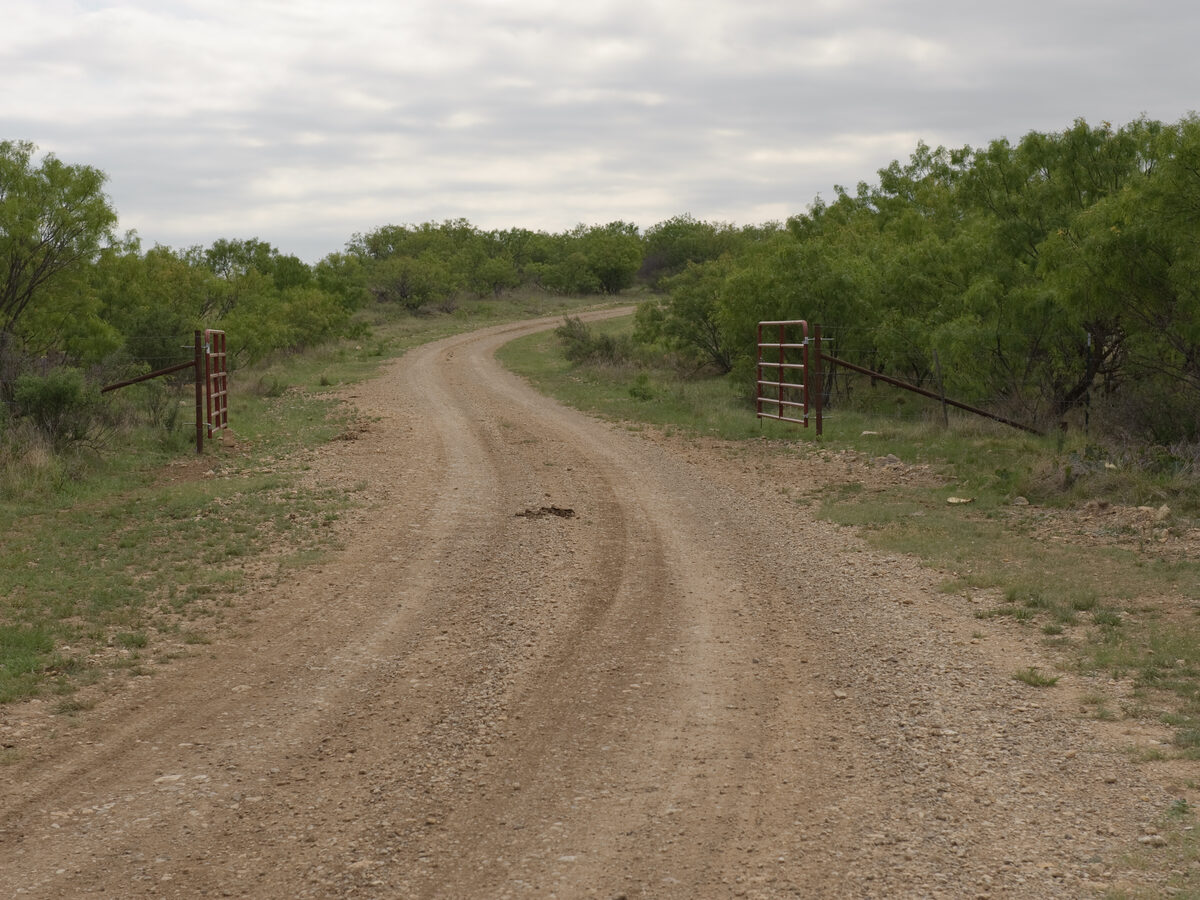
The landowner file stays short, and it stays complete.
Programs ask for records. Here is what we put in your hands.
Certificate of insurance
$2 million per occurrence and $5 million aggregate general liability, plus $1 million commercial auto. Additional-insured endorsement provided before work starts.
Written scope and quote
A written quote within 48 hours of the site walk, with the line, the width and the trees to keep spelled out. A program office will want to see it.
Dated photos
Dated photos of each treated area, for your own file. A program that inspects takes its own photos. Ours are our record.
How fast can you clear a fence line?
It depends on density, rock and how many machines we put on the line. Thin brush goes faster than heavy cedar, and rock slows any head. We walk the line first and quote from what we see.
Do you build the fence?
No. We clear the line. Your fence builder or your own crew puts up the posts and wire.
Can you leave some trees?
Yes. Mark them on the walk, and we flag each one with tape. We mulch around them and leave them standing.
Why not rent a dozer?
Cedar and mesquite resist simple dozing, and a dozer leaves piles that need a burn window or a haul. Bladed firebreaks are a separate scope from our mulched strips. If you want the mulch left on the ground, you want a mulcher.
Will EQIP or the Forest Service grant pay me back?
Only if the program's rules say so. Get your local NRCS office or the Forest Service to confirm the practice and the approval step before any cutting starts. Work done before a program's pre-inspection is not reimbursable.
Do you clear in oak and warbler country?
Yes, on the calendar. September through February is best. Texas A&M Forest Service advises against wounding oaks from February through June. Our rule is no mulcher contact with oaks from February 1 to June 30. If the land may be warbler habitat, the Fish and Wildlife Service Austin office should confirm it before clearing.
Will the brush come back?
Some of it will. Some species sprout from the root. A cleared line needs follow-up by mowing, spot spraying or another pass. The mulched strip makes follow-up easy.
I refer landowners. What should I tell them?
Tell them we walk the line before we quote and send a certificate of insurance before work. Call us or use the form at the top of this page and we will send whatever your list needs.
Pages written for other buyers.
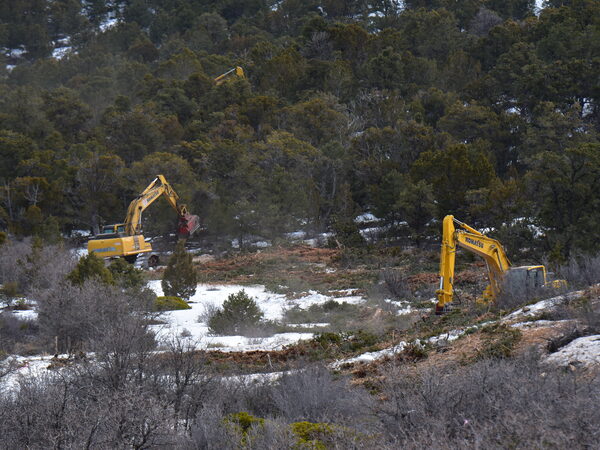
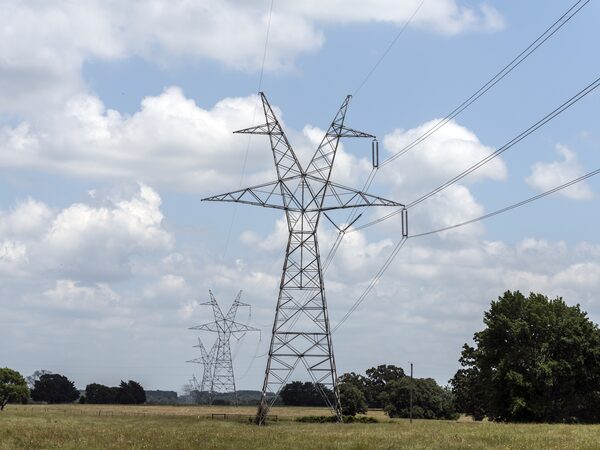
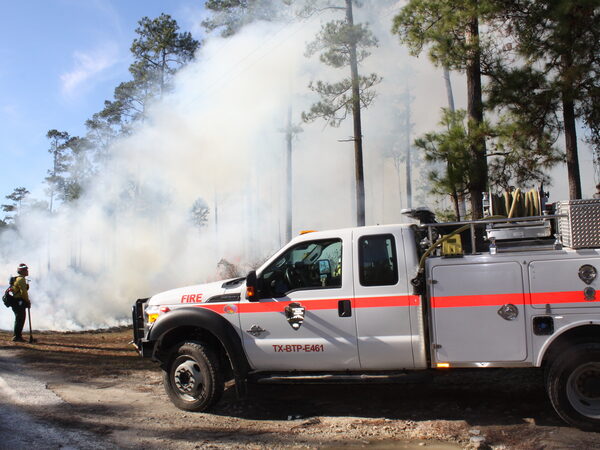
Photo credits
- Ranch fence, Texas: USDA NRCS Texas, Public domain
- White-tailed deer, Texas: USDA NRCS Texas, Public domain
- Oak wilt treatment, LBJ Ranch: NPS Staff, Public domain
- Ranch road, Albany, Texas: USDA NRCS Texas, Public domain
- Balcones Canyonlands NWR: Toniklemm, CC BY-SA 4.0
- Forest Service fuels project: Intermountain Forest Service, USDA Region 4 Photography, Public domain
- Transmission line, Texas: Carol M. Highsmith, Public domain
- Fence post driver: USFWS Mountain Prairie, Public domain
- Big Thicket prescribed burn: NPS Photo, Public domain
Images marked illustration are computer generated.
Prefer to talk
to a person?
(512) 880-8888
Call or text 512-880-8888 · Bring the fence line and the width you want