


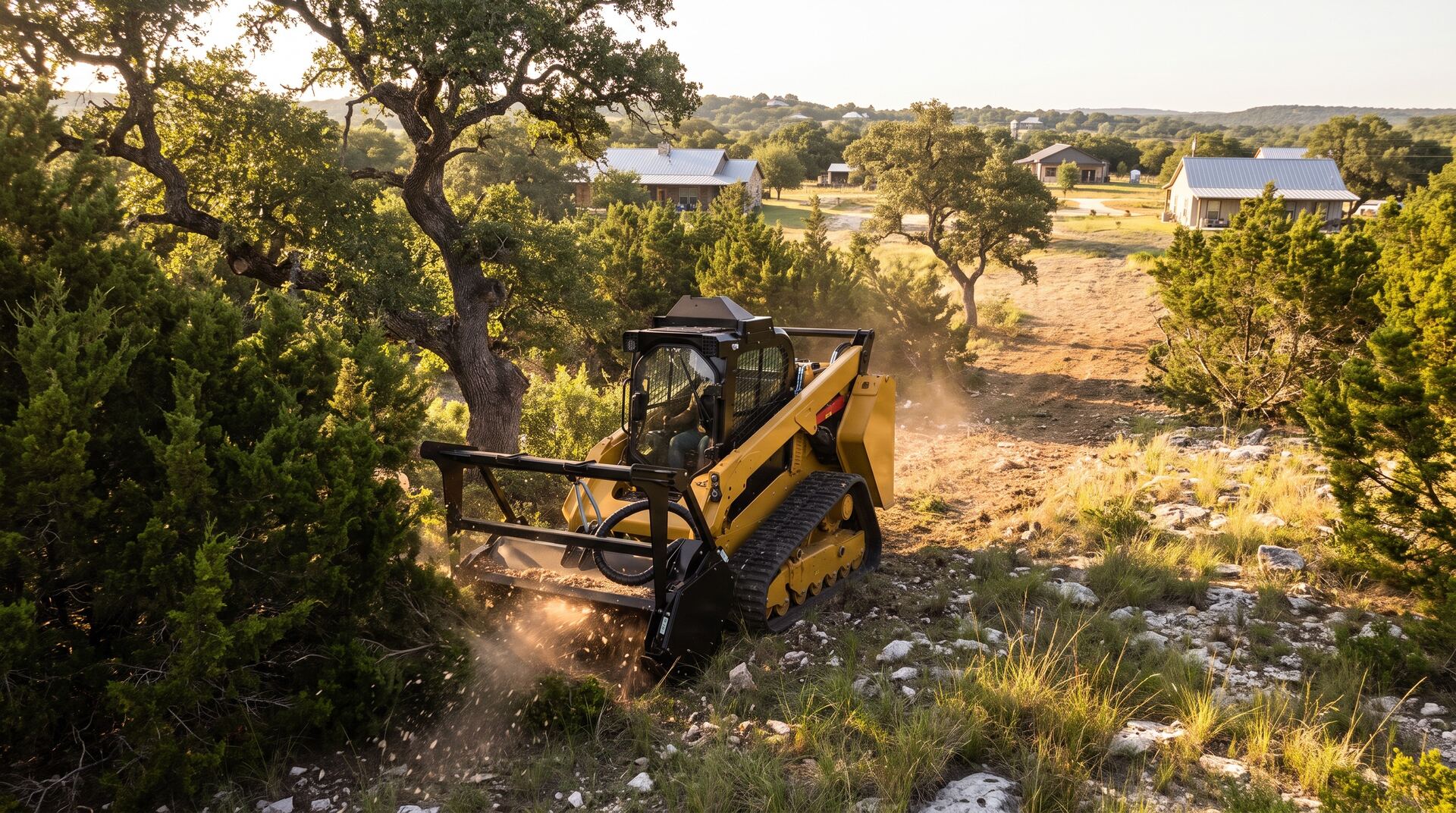
When grant money funds the fuel break, we add machines and work to the grant's rules.
Clear Ground runs tracked forestry mulchers out of Austin. If you hold wildfire grant money, we add mulching capacity for shaded fuel breaks and brush reduction. That covers ESDs, fire departments and fire coalitions. The mulch stays on site. Your grant decides what is eligible, and we work inside those lines.
A funded scope can outrun the crews you have. We add crews and machines by the day or the job.
Austin, Texas · Central Texas · Same-business-day reply
Tell us the grant, the scope and your procurement rules. We reply the same business day.
Four ways to get fuel work done. We add one of them.
A grant holder has more choices than a landowner does. This table shows where our mulchers fit and where your own crew or another trade handles the work.
| Option | What it does | Where it fits | Our part |
|---|---|---|---|
| Contract mulching | A contractor brings tracked mulchers and operators and cuts fuel breaks to your spec. The mulch stays on the ground. | Shaded fuel breaks and brush reduction when the scope is larger than your crew can finish in the work season. | This is our work. We run under your contract or your prime's, or bid your solicitation. |
| Your own crew and equipment | The district buys machines, training and personnel and does the work itself. | Steady, recurring work you want to control. Some awards fund exactly this. | We don't replace it. We add capacity when the scope outruns your crew. |
| Hand crews | People cut and chip by hand. | Tight spots near homes, steep ground and anywhere machines can't go. | Hand crews cover ground machines can't reach. |
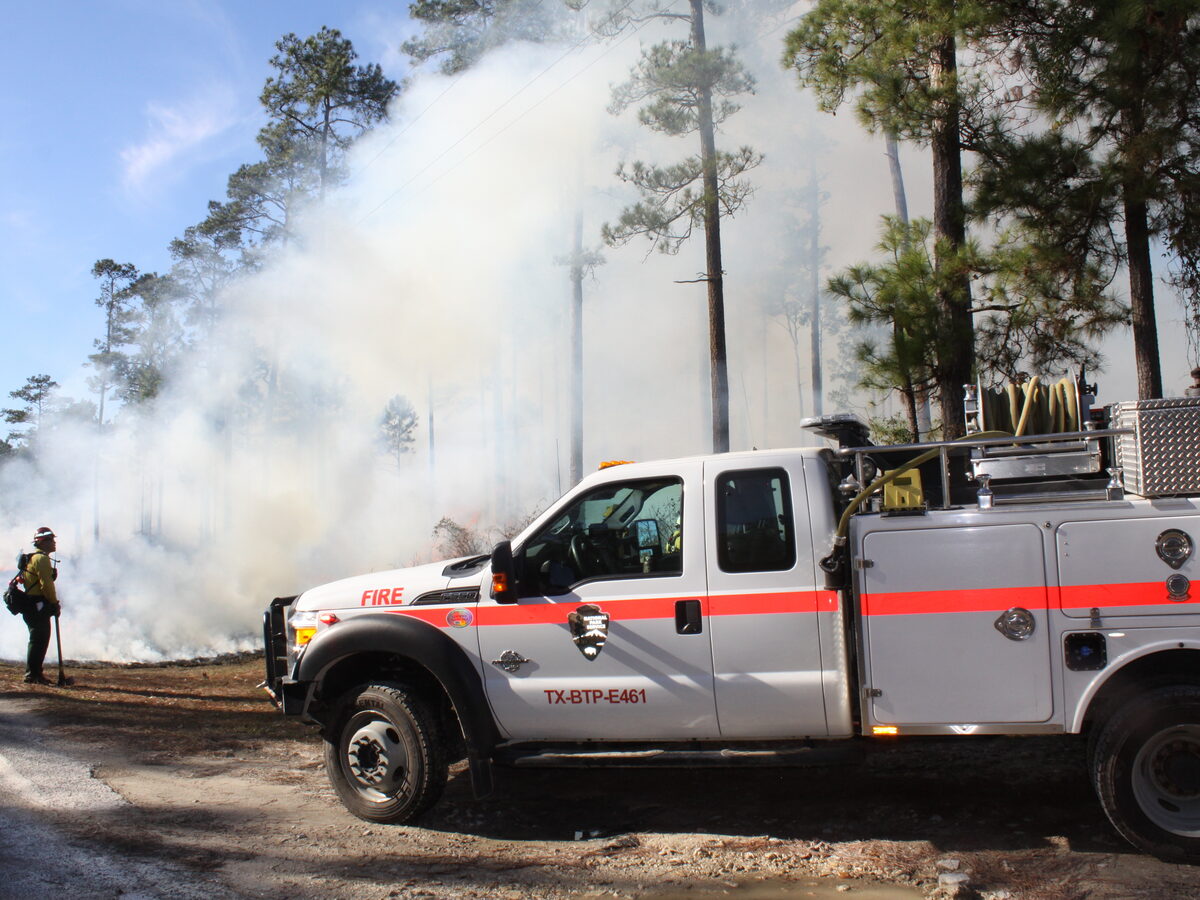
| Prescribed fire | A trained crew burns under a written plan. | Large open acreage with a qualified, insured burn manager and a weather window. | Handled by a qualified burn crew. |
Show us the rules
The program decides who qualifies. Show us the rules, and we tell you plainly whether we can do the work inside them.
Machines, operators and a record, on your terms.
Here is what a grant holder gets when we come on.
- Tracked mulchers and operators. We bring the machines and the people who run them, by the day or the job, sized to the scope.
- Work to your scope. We cut the width and treatment your grant calls for. We read the award terms before we quote.
- Three ways to engage. We run under your contract, under your prime's contract, or bid your solicitation as the prime when the rules allow it.
- A treatment record. We keep dated photos of each treated area and give you the treatment record. Your inspector's photos are the program's. Ours are the contractor's record.
- Insurance on paper. We send a certificate of insurance and name you as additional insured before work starts.
- A fast reply. We answer the same business day. A written quote follows within 48 hours of the site walk.
Tell us what your procurement requires, whether that is a vendor list, SAM.gov registration or a bid packet. We will confirm the details.
How a grant-funded fuel break runs, phase by phase.
Walk it against
the grant terms
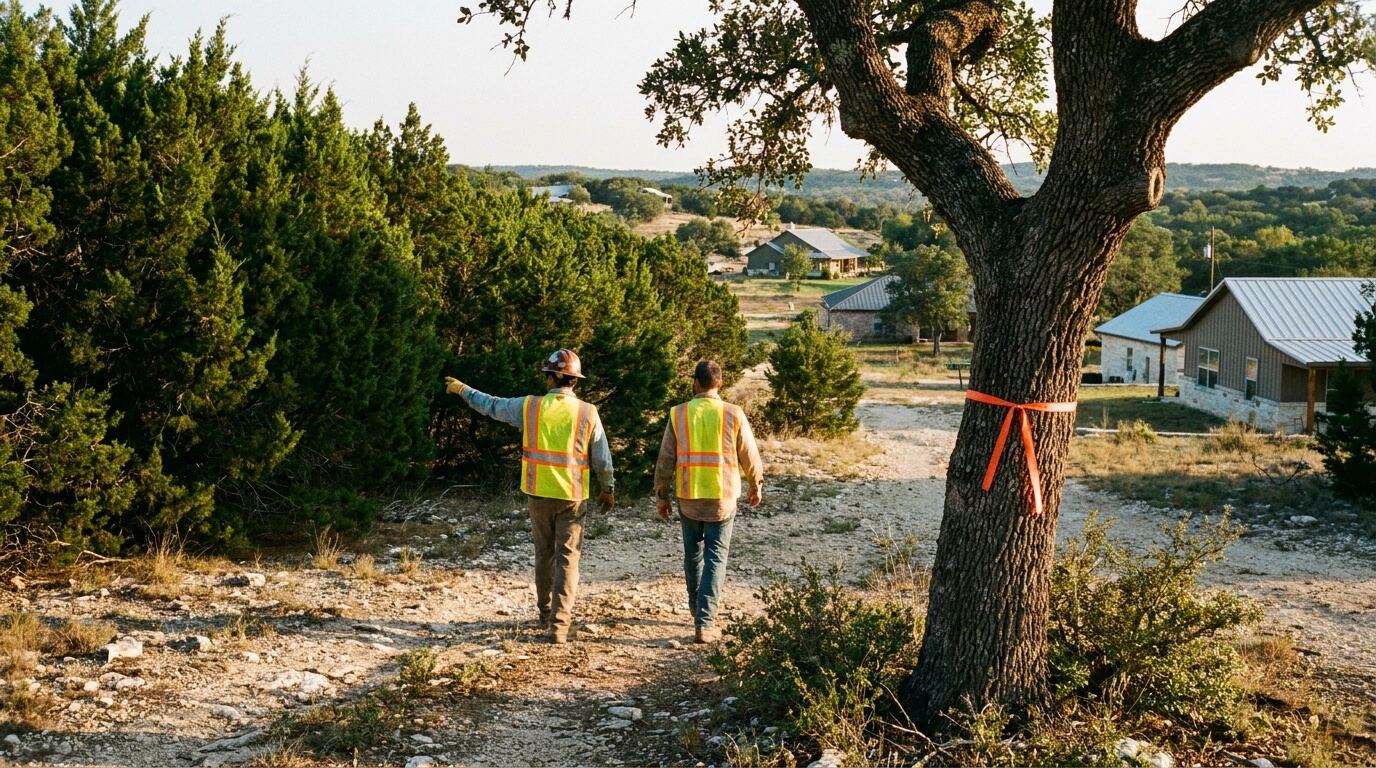
We walk the treatment area with your grant administrator or fire chief. We flag the oaks and other trees the plan keeps. We check for rock, culverts and gates, and we read the scope, the map and any pre-inspection step before we cut. Work that starts before an inspection the program requires may not be paid.
Mulch the fuel
in place
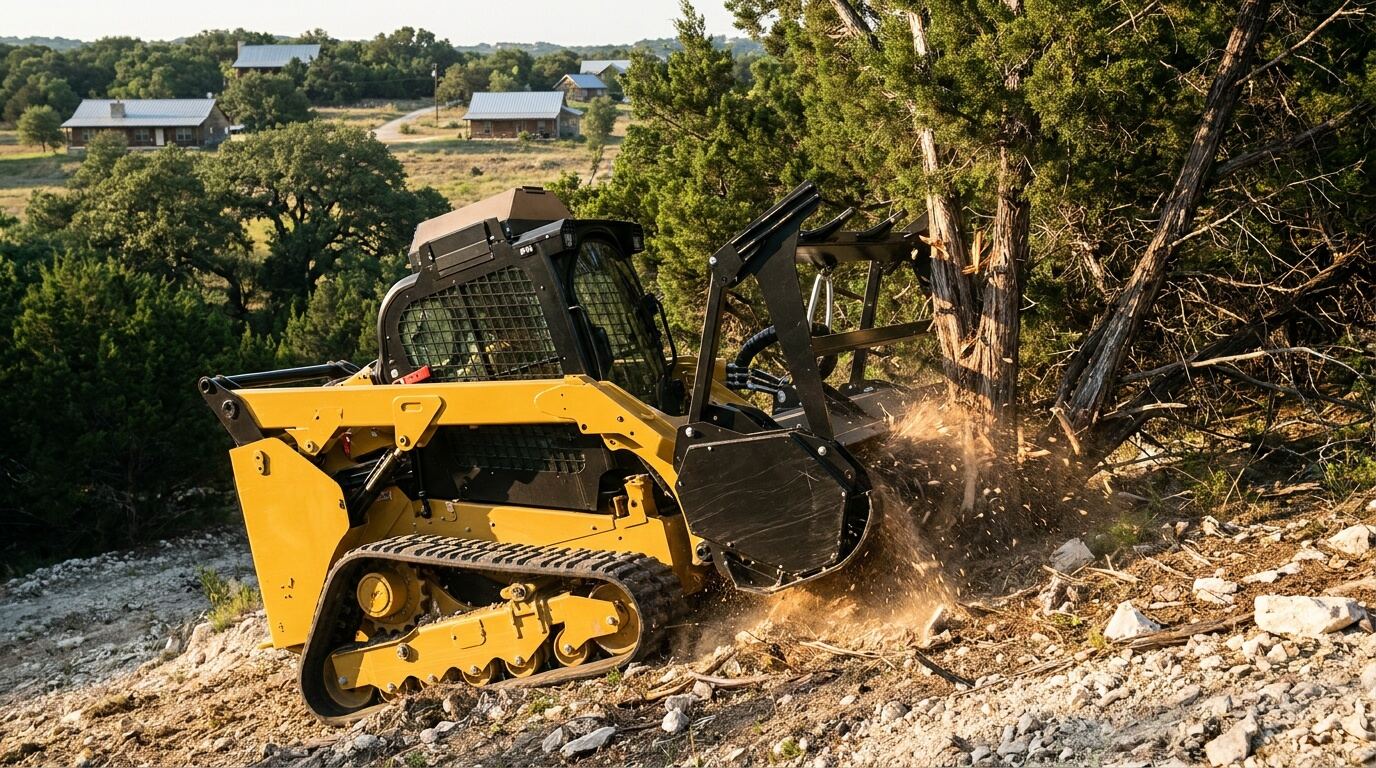
Our tracked forestry mulchers work the treatment strip. Cedar and brush go into the drum. Trees too big for a mulching head are called out on the walk. We stay off flagged trees. In oak country we hold off oak work from February 1 to June 30 and paint any wound at once.
Leave the mulch
on the ground
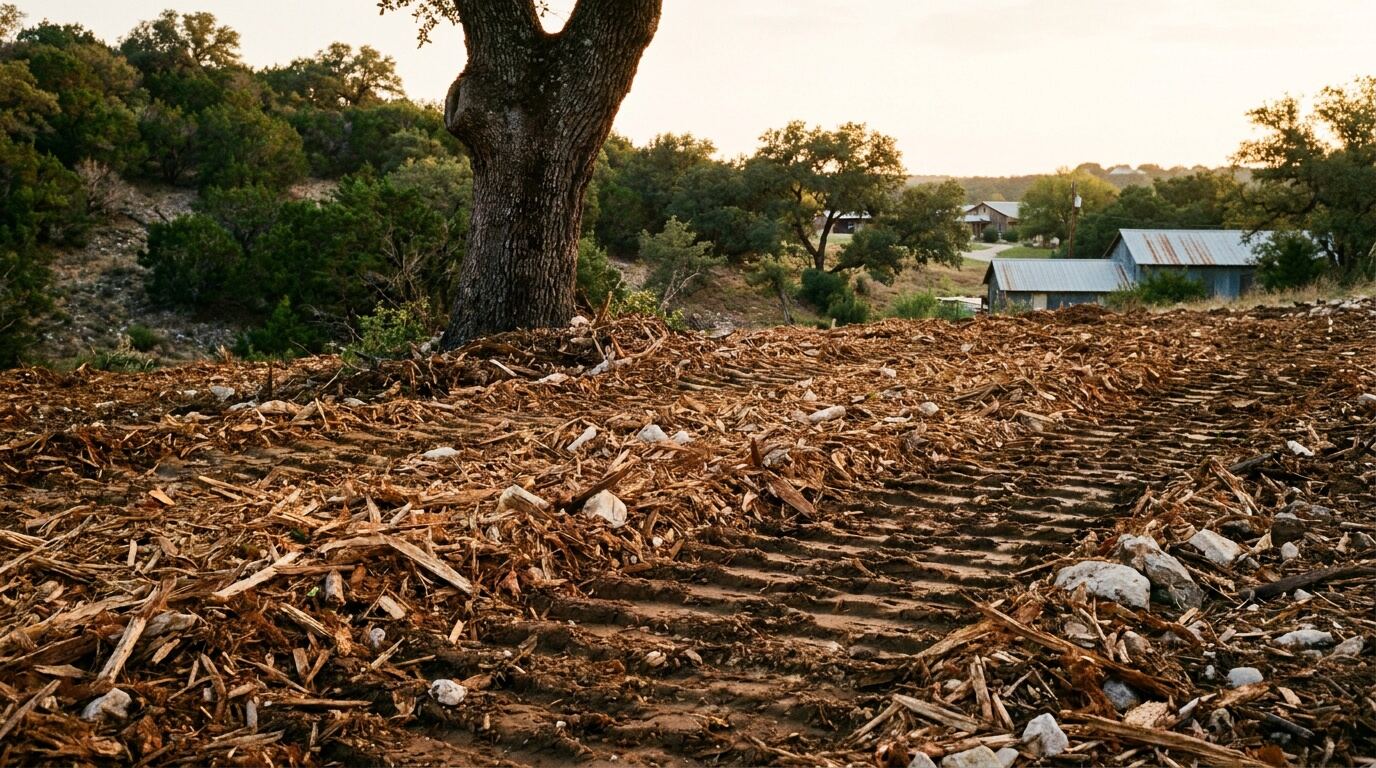
The chips stay where they fall, in a layer over the strip, with a few track marks and the kept trees standing in it. No burn piles. No haul trucks. Stumps are cut low and stay in the ground.
Hand over a
shaded fuel break
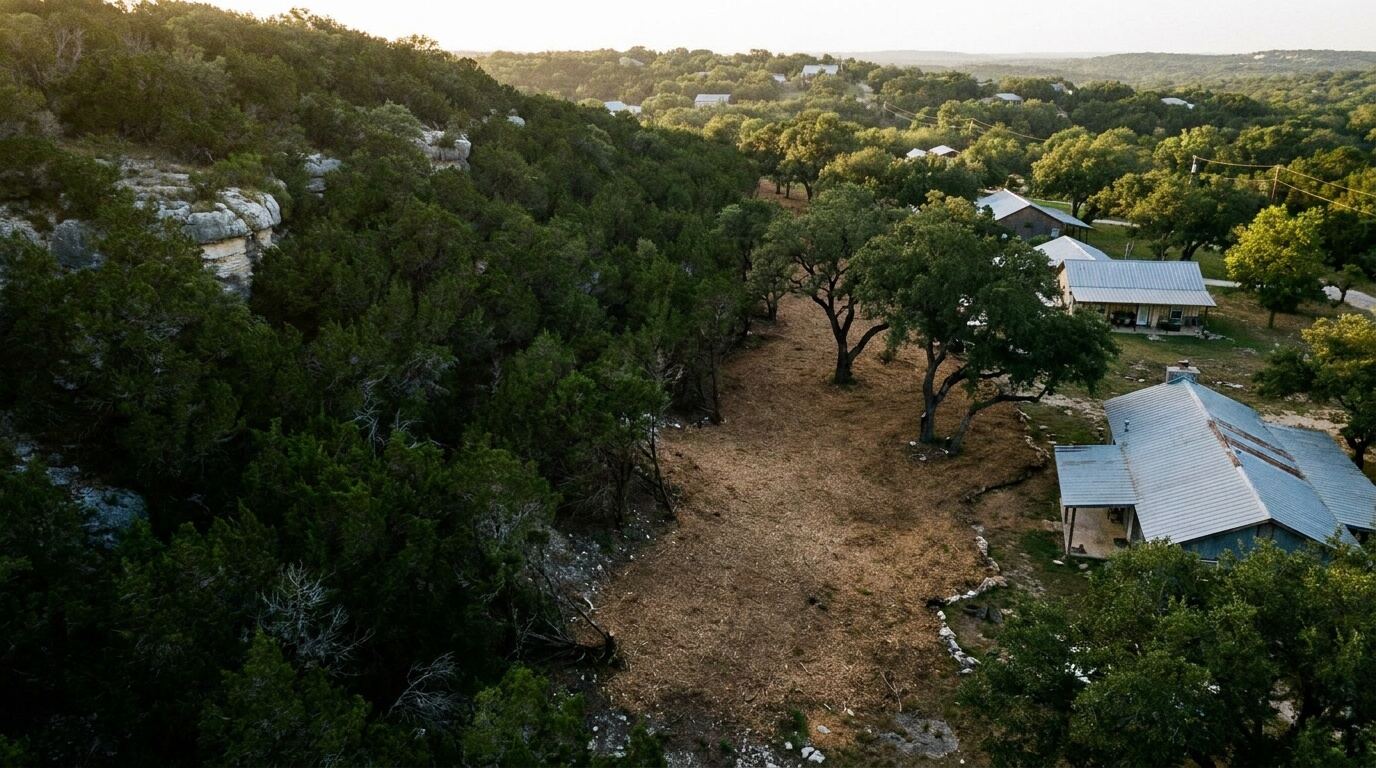
The result is a strip of open ground with the large trees kept and the brush beneath them gone. A shaded break keeps the canopy trees the plan names and takes the fuel under them. Your scope sets the width and how many trees stay.
Close it out
for your file
We hand you the treatment record: dated photos of each treated area and the work completed against your scope. If your program inspects, its inspector takes the program's photos. Ours are the contractor's record. Your certificate of insurance and any additional-insured paperwork were in your hands before the first cut.
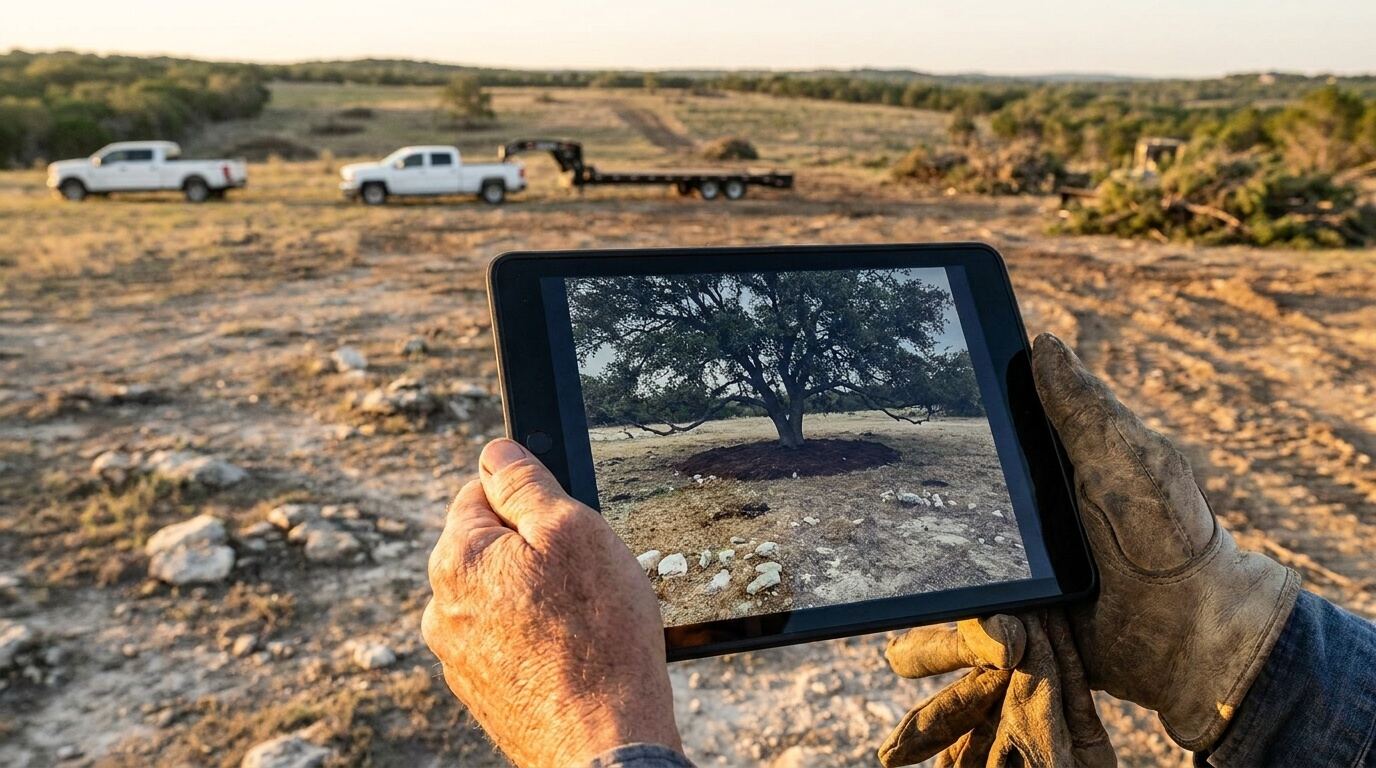
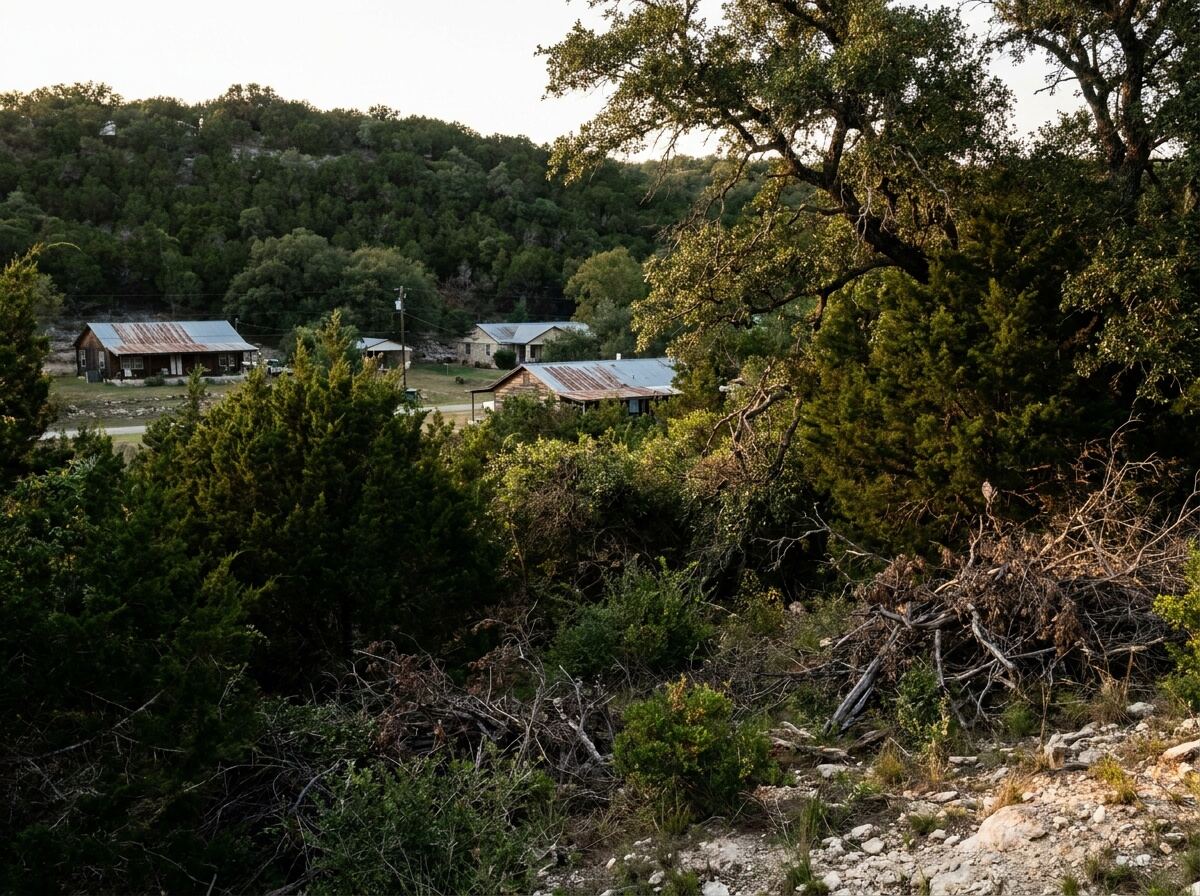
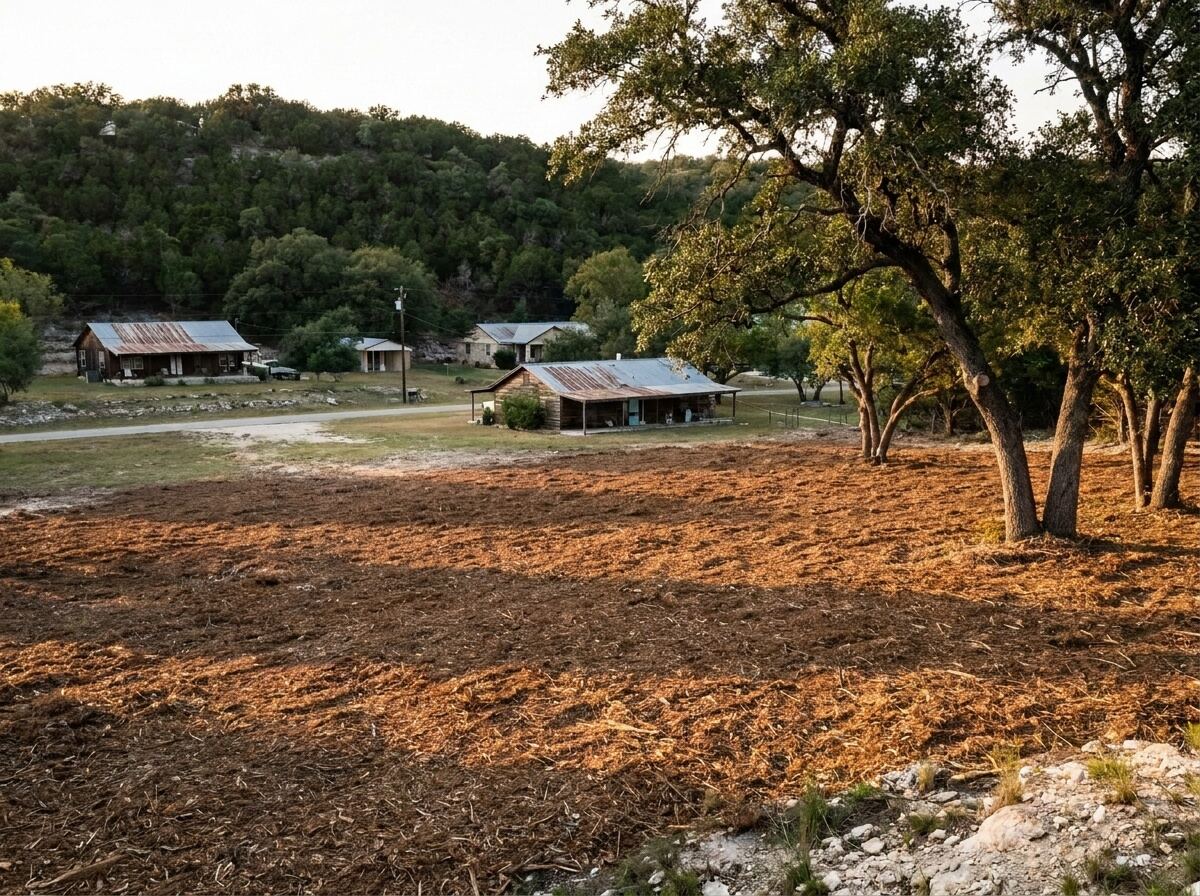
Illustration: the same strip before and after. Dense cedar and brush before, an open mulched fuel break with the large trees kept after.
The grant's rules decide what is eligible, not us.
Who may apply, what work is covered, when work may start and how the work gets bought: your grant says. We work inside those lines.
For federal money, expect formal procurement, not a handshake quote. A federally funded project can ask for a bid packet, a vendor registration and a written scope. State and local rules can add their own steps.
The public projects below show the kind of work fuel-break grants buy.
- Fuel breaks are the work that fits. A FEMA-funded Central Texas county project planned skid-steer mulchers for shaded fuel breaks, with mulch left on the ground and stumps at ground level. Along roads, it planned fuel reduction 15 feet back from the road edge on both sides.
- A Forest Service grant job in Florence. We cleared cedar in Florence under a landowner's Texas A&M Forest Service grant. The landowner applied. We were the hired contractor.
- Where a mulcher stops. It can't trim limbs above the cab, work steep ditch banks or mow grass. Rock slows it. We stay away from energized lines and leave any tree that can reach one until the utility clears it. We walk the area first so you hear that before the quote.
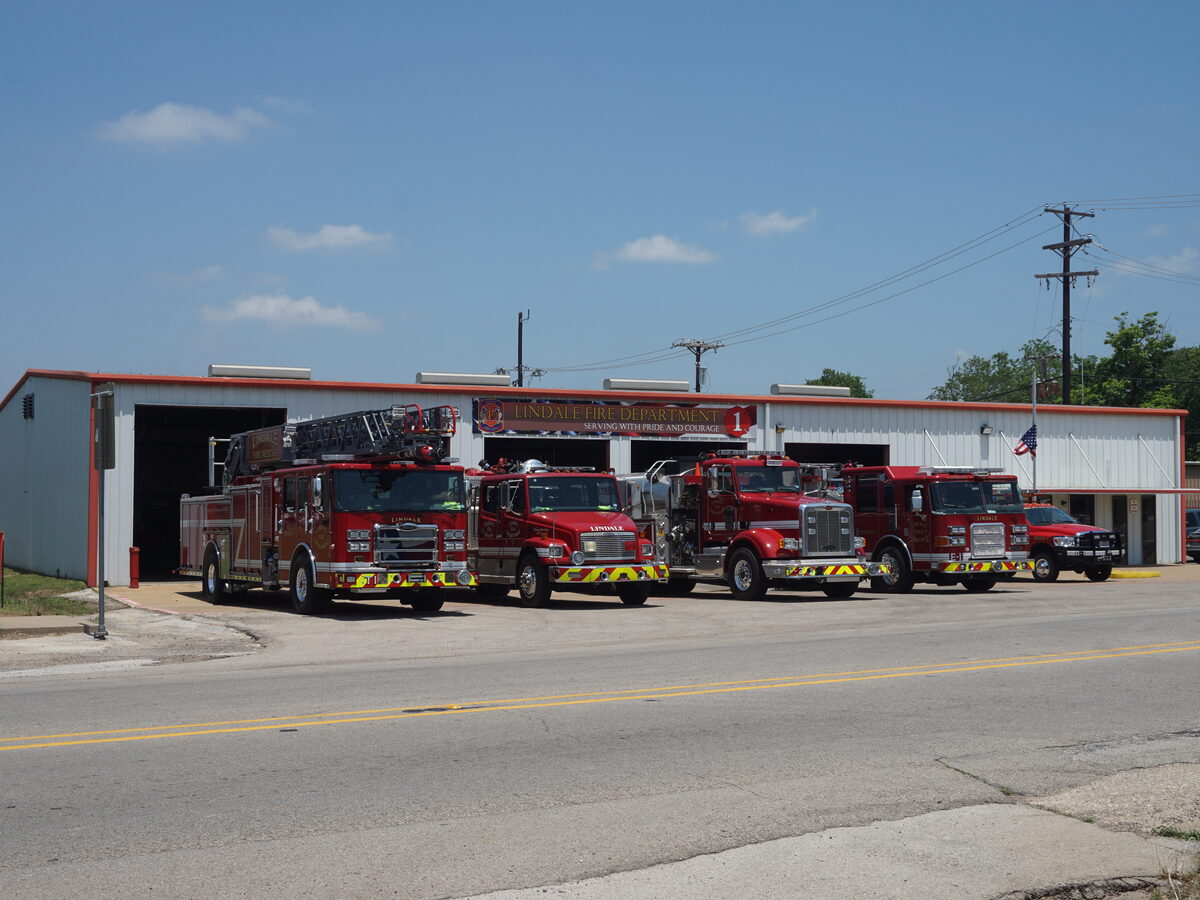
Three kinds of wildfire money show up in our area.
Each program has its own applicant, its own match and its own proof. Read yours before you plan a scope.
- Community Wildfire Defense Grant (USDA Forest Service). Awards run up to $10 million for projects in a community wildfire protection plan less than ten years old. Cost share for implementation is 25%. Local governments, nonprofits including homeowner groups, and others may apply. The applicant needs a SAM.gov registration. Some awards fund the district's own equipment, training and personnel for shaded fuel breaks, which is where a large scope can outrun a district's own crew.
- FEMA hazard mitigation funds through TDEM. Local governments and communities can apply, with a FEMA-approved hazard mitigation plan behind the application. The federal share is 75%. Defensible space and hazardous fuel reduction are eligible activities. Expect federal procurement rules.
- Texas A&M Forest Service Mechanical Fuel Reduction grant. It reimburses the landowner after the work. The landowner can't do the work, and the contractor can't be affiliated with the landowner. Work done before the pre-inspection is not reimbursable. The next window opens June 1, 2027. The program's own pages disagree on whether homeowner groups and public bodies can apply, so confirm that with the Forest Service. See our grant page.
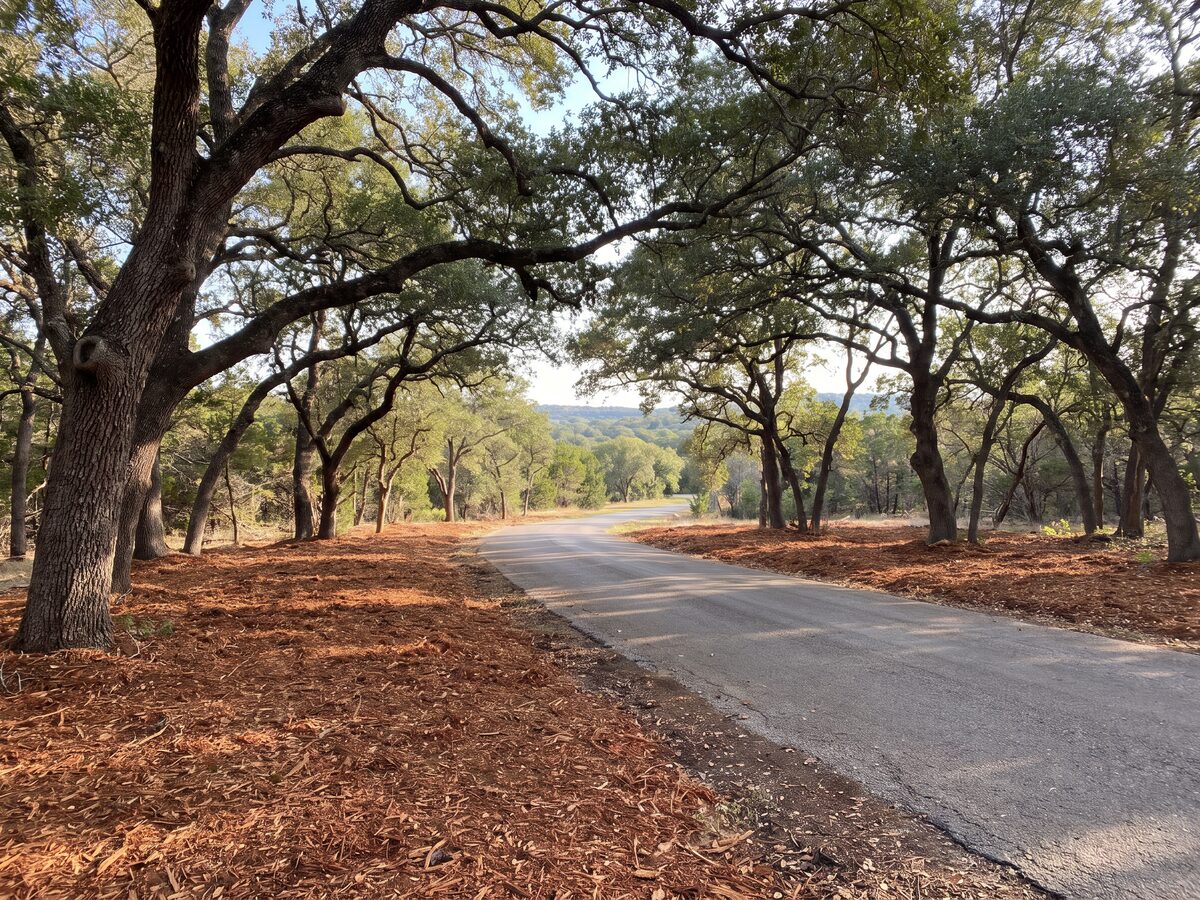
Winter is the work season, and fire weather sets our stop days.
September through February is the best window. Texas A&M Forest Service advises against wounding oaks from February through June. Our rule is no mulcher contact with oaks from February 1 to June 30. Golden-cheeked warbler and black-capped vireo nesting runs March 1 to August 31. We plan around that whole span. Small cedar in open ground is usually not warbler habitat. Mature juniper mixed with oaks can be.
A burn ban targets outdoor burning, and we never burn. Our own rules go further: we stop mulching on red-flag days and in winds over 25 mph, and under an active burn ban we work only with written permission.
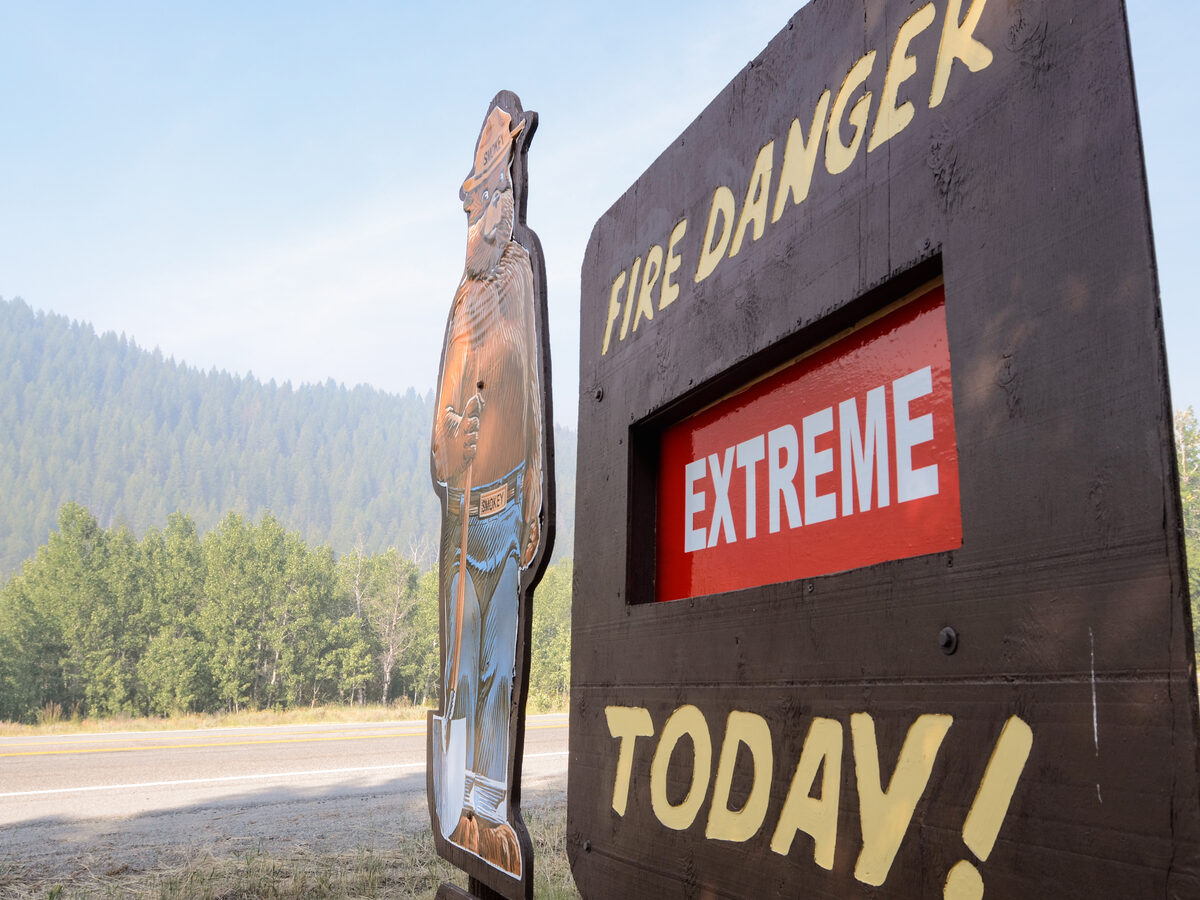
Grants run on records, so we keep them.
Here is what lands in your file.
Certificate of insurance
$2 million per occurrence and $5 million aggregate general liability, plus $1 million commercial auto. Additional-insured endorsement before work starts.
Written scope and quote
A written quote within 48 hours of the site walk. We can also give you a written scope of work to support an application you are writing.
Dated photos and treatment record
Dated photos of each treated area and a record of the work against your scope. The program's inspection photos stay the program's.
Procurement answers
Send us your vendor list, registration or bid packet requirements. We confirm how we meet them before you commit.
Do you hold approved status under CWDG or the Forest Service grants?
Those programs set their own rules, and we work to them. Send us the terms, and we tell you whether we can do the work inside them.
Will the grant pay for your work?
Only if the grant's rules cover it. Check your award terms and your program officer before you sign anything with us.
Can you write our grant application?
Writing the application is the applicant's job. We can give you a written scope of work to support it.
What registration do you need from us, or we from you?
Tell us what your procurement requires, whether a vendor list, SAM.gov or a bid packet. We confirm how we meet it before you commit.
Do you hold a Firewise credential?
No contractor can. Firewise USA recognizes communities, not contractors. We build to the Firewise defensible-space standard, and your community's committee handles recognition.
Do burn bans stop you?
A burn ban targets outdoor burning, and we never burn. Our own rules go further: we stop mulching on red-flag days and in winds over 25 mph, and under an active burn ban we work only with written permission.
We already have a contractor and our own crew. Why call you?
Good. If your scope is bigger than your crew can finish this winter, we run under your contract or your prime's, by the day or the job.
Do you carry insurance?
Yes. $2 million per occurrence and $5 million aggregate general liability, and $1 million commercial auto. We send a certificate and name you additional insured before work.
Pages written for other buyers.
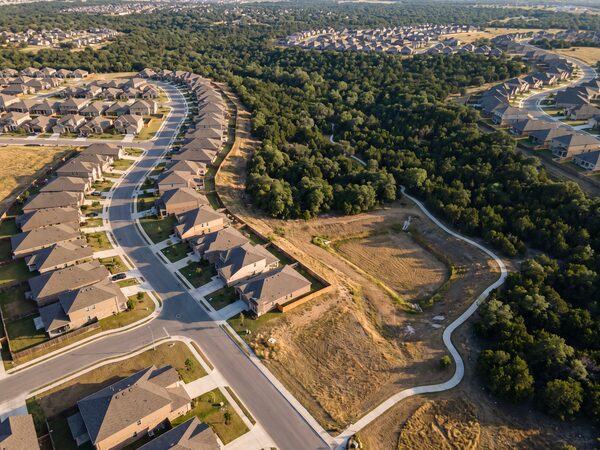
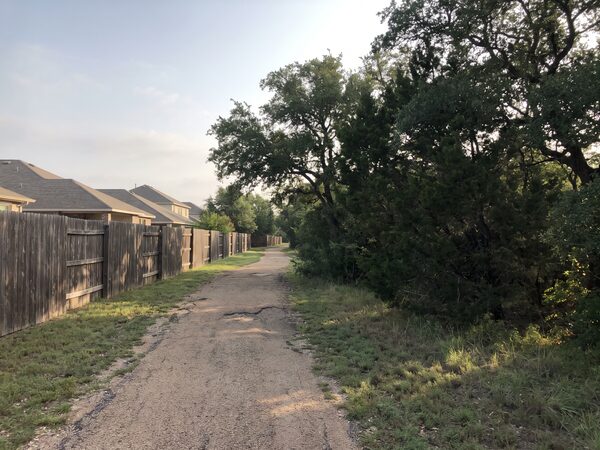
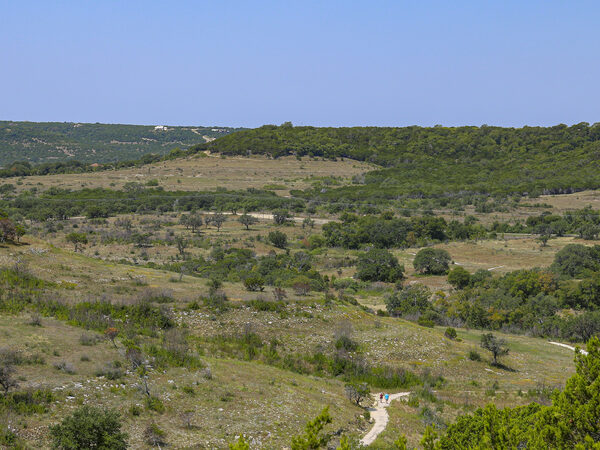
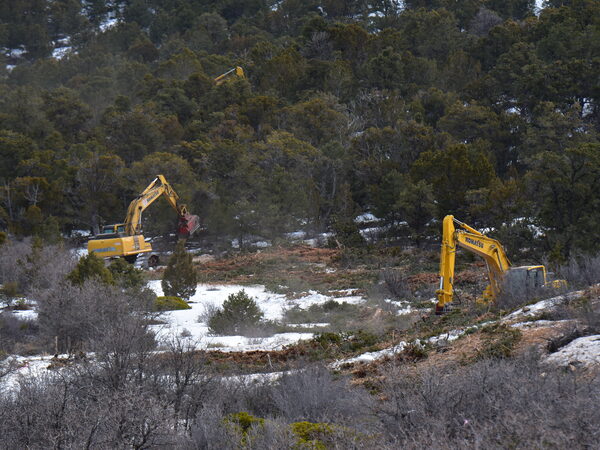
Photo credits
- Big Thicket prescribed burn: NPS Photo, Public domain
- Lindale volunteer fire station: Michael Barera, CC BY-SA 4.0
- Fire danger sign: U.S. Department of Agriculture - Lance Cheung, CC BY 2.0
- Balcones Canyonlands NWR: Toniklemm, CC BY-SA 4.0
- Forest Service fuels project: Intermountain Forest Service, USDA Region 4 Photography, Public domain
- Transmission line, Texas: Carol M. Highsmith, Public domain
- Ranch fence, Texas: USDA NRCS Texas, Public domain
- Fence post driver: USFWS Mountain Prairie, Public domain
Images marked illustration are computer generated.
Bring the grant terms.
We will read them.
(512) 880-8888
Call or text 512-880-8888 · Ask for 15 minutes on your fuel-break scope