


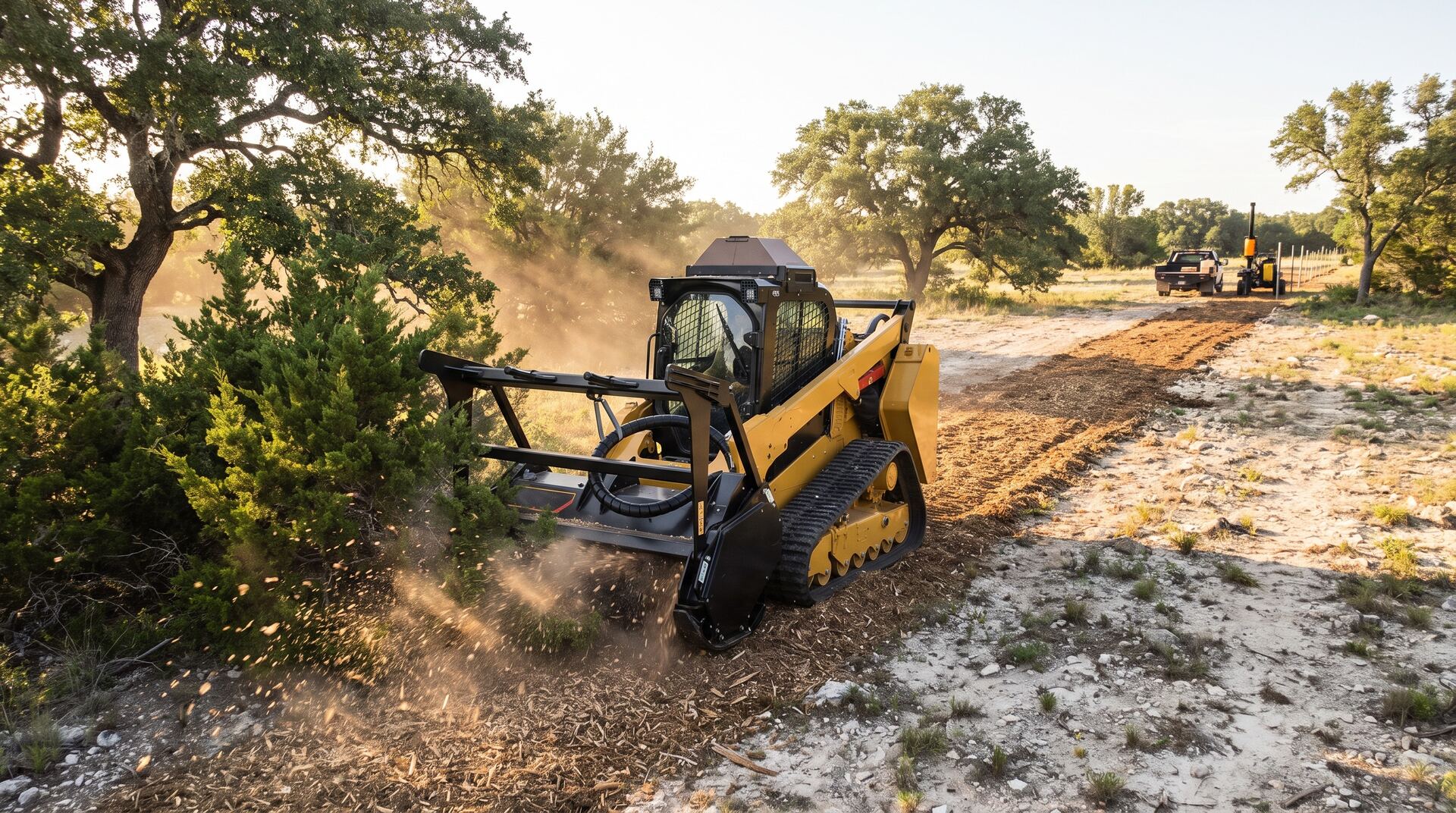
You build the fence. We clear the line ahead of your crew.
Clear Ground runs tracked forestry mulchers out of Austin and adds machines for long lines. We cut cedar and brush off ranch and game-fence lines to the width you need, and the chips stay on the ground. You show up to a line you can stake and string.
Sub us under your contract, or let the landowner hire us direct. Either way the fence stays yours.
Austin, Texas · Central Texas · Same-business-day reply
Length, width and cedar density. We answer the same business day.
Five ways to get a line cleared. Each wins somewhere.
Ranch and game-fence jobs often start in cedar. When the line is thick, your crew clears before it builds, or it waits on someone who will. Here is what each choice does.
| Option | What it does | Where it wins | Our part |
|---|---|---|---|
| Your crew, by hand | Chainsaws and a skid steer clear the line. | Light brush and short lines, where your crew has the hours. | Good for that. When the line is thick, call us for the worst stretch. |
| Dozer and burn piles | A dozer pushes the brush into piles. The piles get burned or hauled. | Open ground and big runs, where burning is allowed. | Cedar and mesquite resist simple dozing, and our chips stay put. |
| Tractor brush cutter | A rotary cutter on a tractor shreds grass and light brush. | Open pasture with small stems. | Grass lines are a different job from cedar and brush. It stops where the cedar gets thick. |
| Excavator with a mulching head | A boom reaches over fences and down steep banks. | Ditch banks, steep ground and limbs overhead. | Tell us early if your line has any of that, and we plan the right machine for it. |
| Clear Ground tracked mulchers | Tracked loaders with forestry mulching heads cut cedar and brush where it stands. The mulch stays. | Thick cedar on flat to rolling ground, cleared ahead of your crew. | Yes. Under your contract by the job, or direct to the landowner. |
The fence stays yours
We clear the line; your crew builds the fence.
That is why a fence builder can bring us in without losing the fence job. If you bring us in, the customer is yours.
You get a line you can stake and string. Your crew starts building.
We clear to your flags and hand the line back. Here is what comes with that.
- The line, cleared to your width. We cut cedar and brush to the width you flag, along the line you stake. Gates and access points get cleared too.
- Keepers left standing. Tell us which trees to save. We flag them at the walk and mulch around them.
- Chips left on the ground. No hauling and no burn piles. The mulch lies where it falls, and you set posts through it.
- A walk before we mobilize. Rock, culverts and buried markers change a day. The walk finds them first.
- Insurance for your crew's site. We send a certificate of insurance naming you as additional insured before work starts.
- Photos at closeout. We send the job photos, so your landowner sees a cleared line before your crew arrives.
- A written quote after the walk. We send it within 48 hours of the site walk, per job.
Rock, culverts and buried markers are the usual surprises. We walk the line first so they show up on foot, not under a mulching head.
From your flagged line to the handoff, five steps.
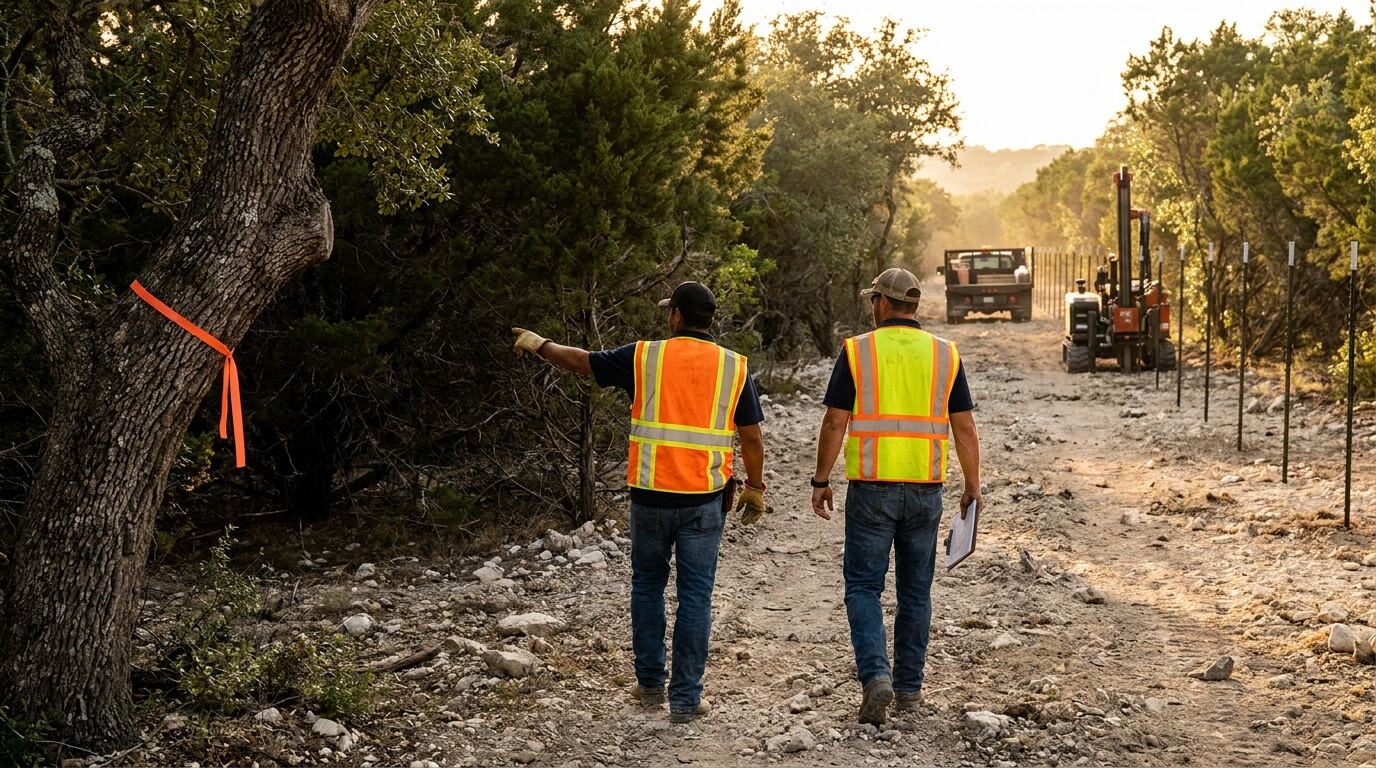
Walk the line
with your crew boss
Your crew boss walks the flagged line with us. You show the width, the gate or access points and the trees to save. We tie flagging tape on every live oak that stays. We look for rock, culverts and buried markers. We ask where the mulch can lie and where the landowner wants nothing touched. Then we write down the length and the cedar density.
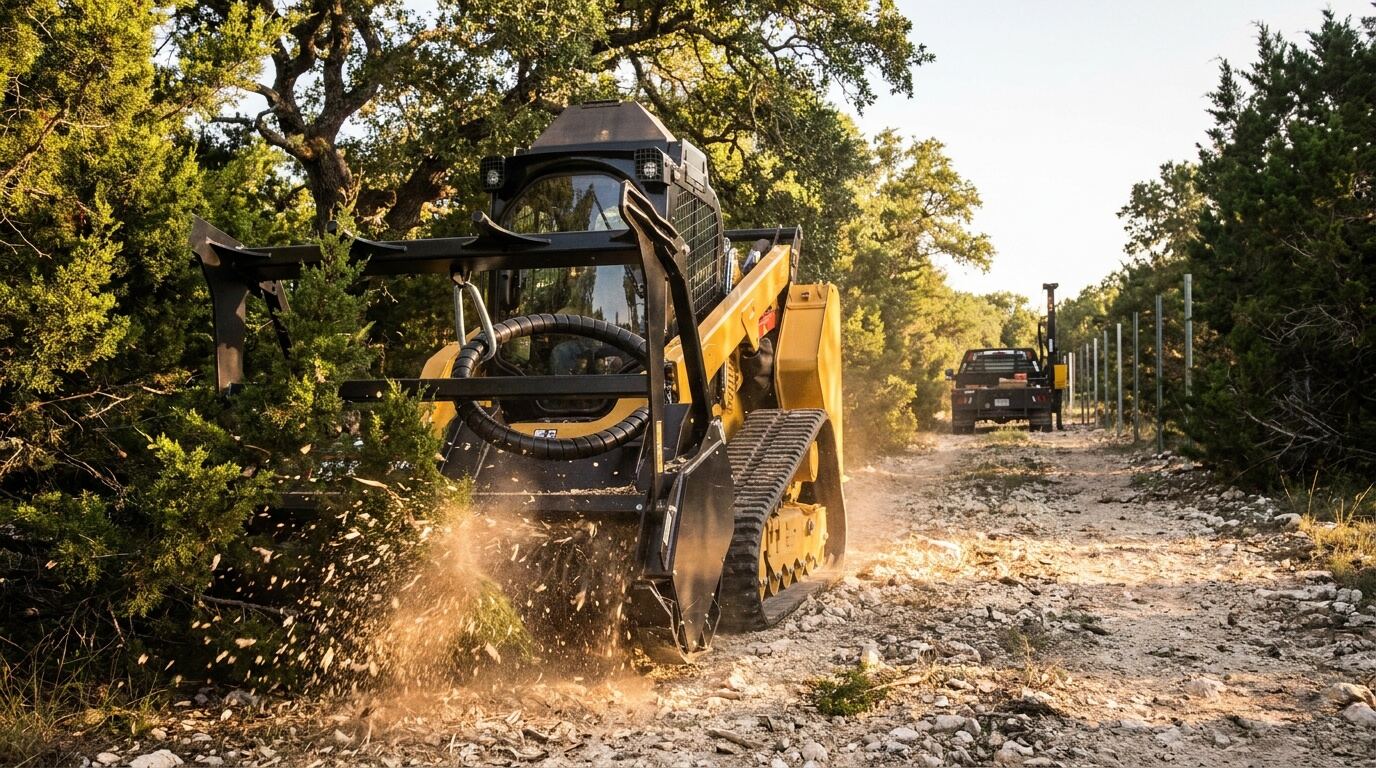
Grind the cedar
down the line
Our operators work down the flagged line, cutting to the width you set. Trees too big for a mulching head are called out on the walk. Nobody else comes near a running head, and work stops if someone walks in. Oaks stay untouched in the oak wilt window. We touch no tree that can reach a power line until the utility clears it.
The chips stay
on the ground
Cut cedar becomes a layer of chips on the ground. Track marks show where the mulchers ran, and the kept oaks stand clear. Nothing gets burned and nothing gets hauled. Set your posts through the chips. Roots stay in the ground, so expect your auger to find some. The cover keeps bare soil from showing along the whole run.
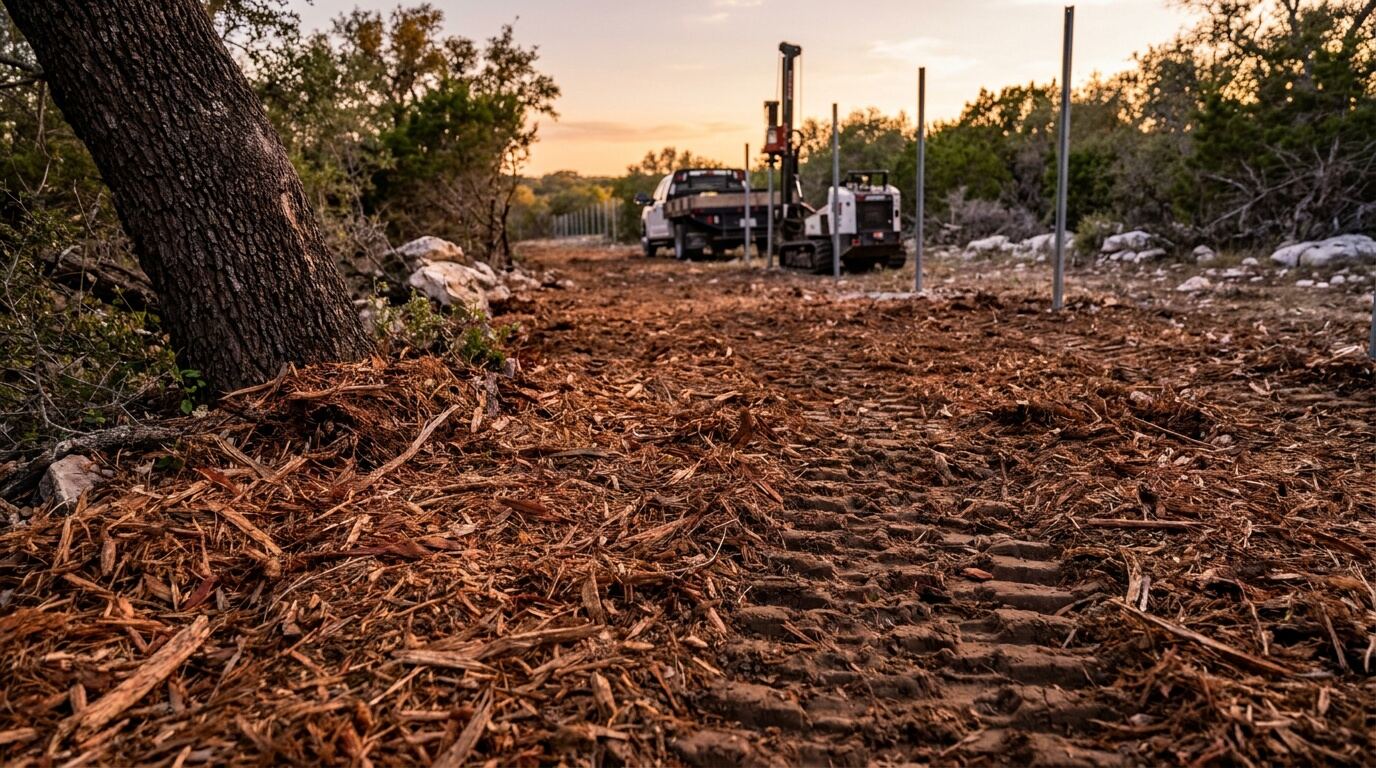
A straight, open line
ready to stake
We walk the cleared line end to end with your crew boss. The width holds, the gates are open, and the keepers stand. If a stretch needs another pass, we make it before we demobilize. We mark where we stopped, so your crew knows where the line is ready. Then your crew can start staking and stringing.
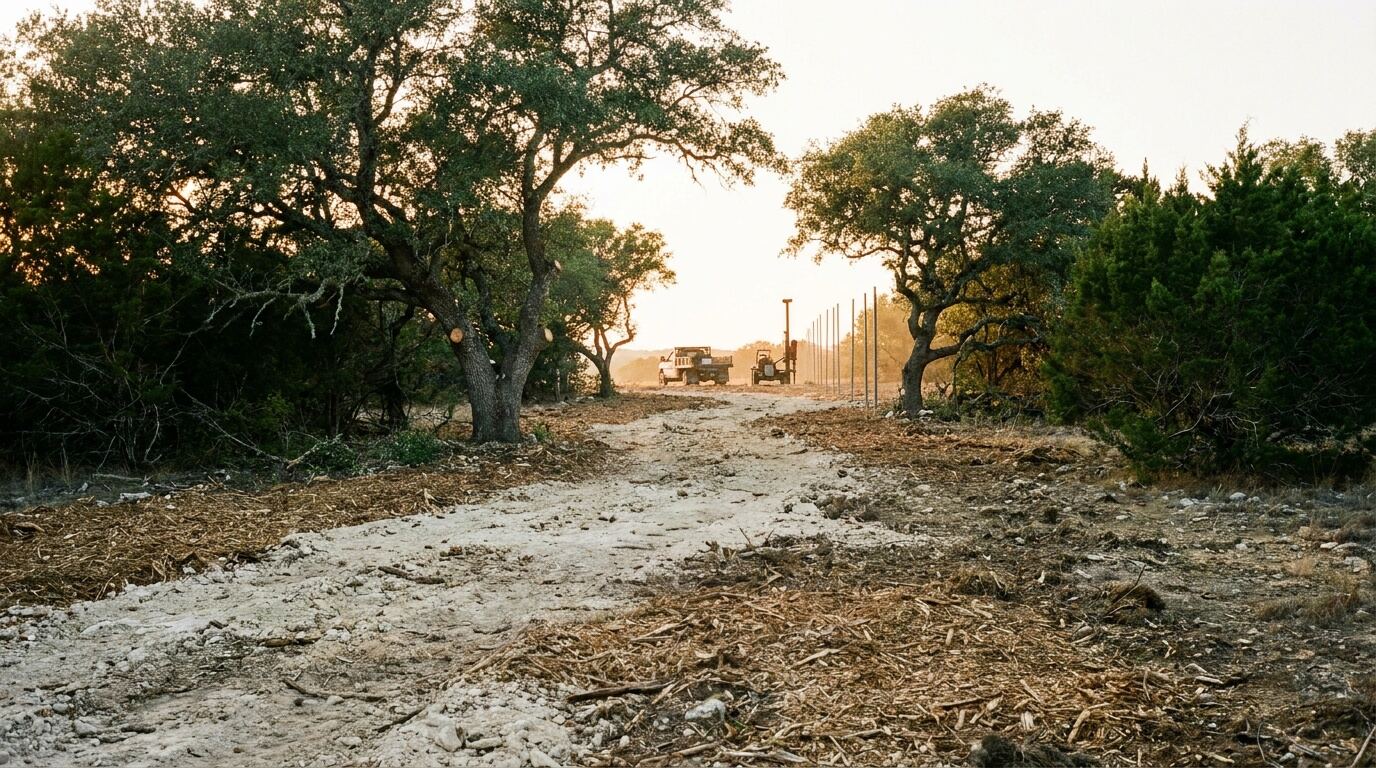
Photos and handoff
to you
We send the photo set from the job, with a wide shot of the finished line. You can open it on a tablet in the truck and forward it to your landowner. Our invoice goes to whoever hired us, you or the landowner. Your crew starts on a line you can see end to end.
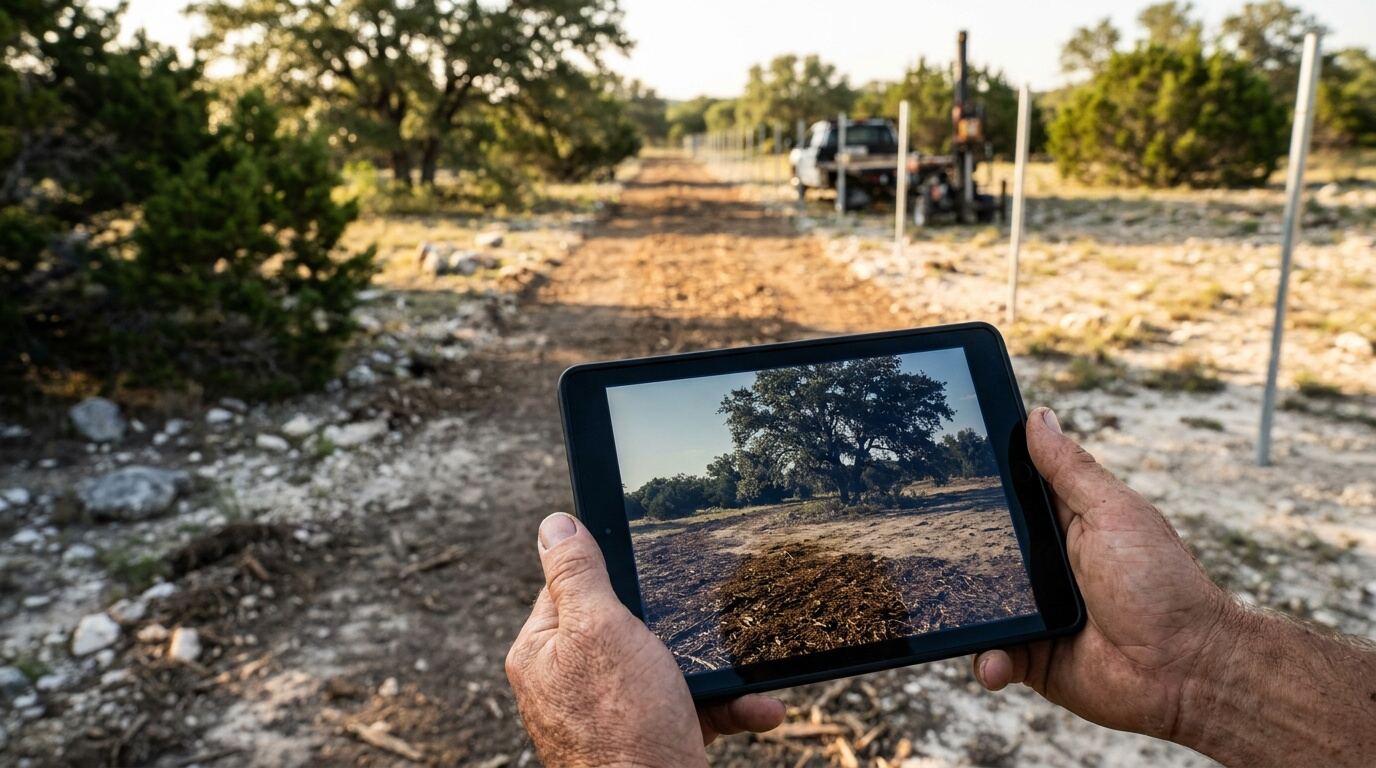
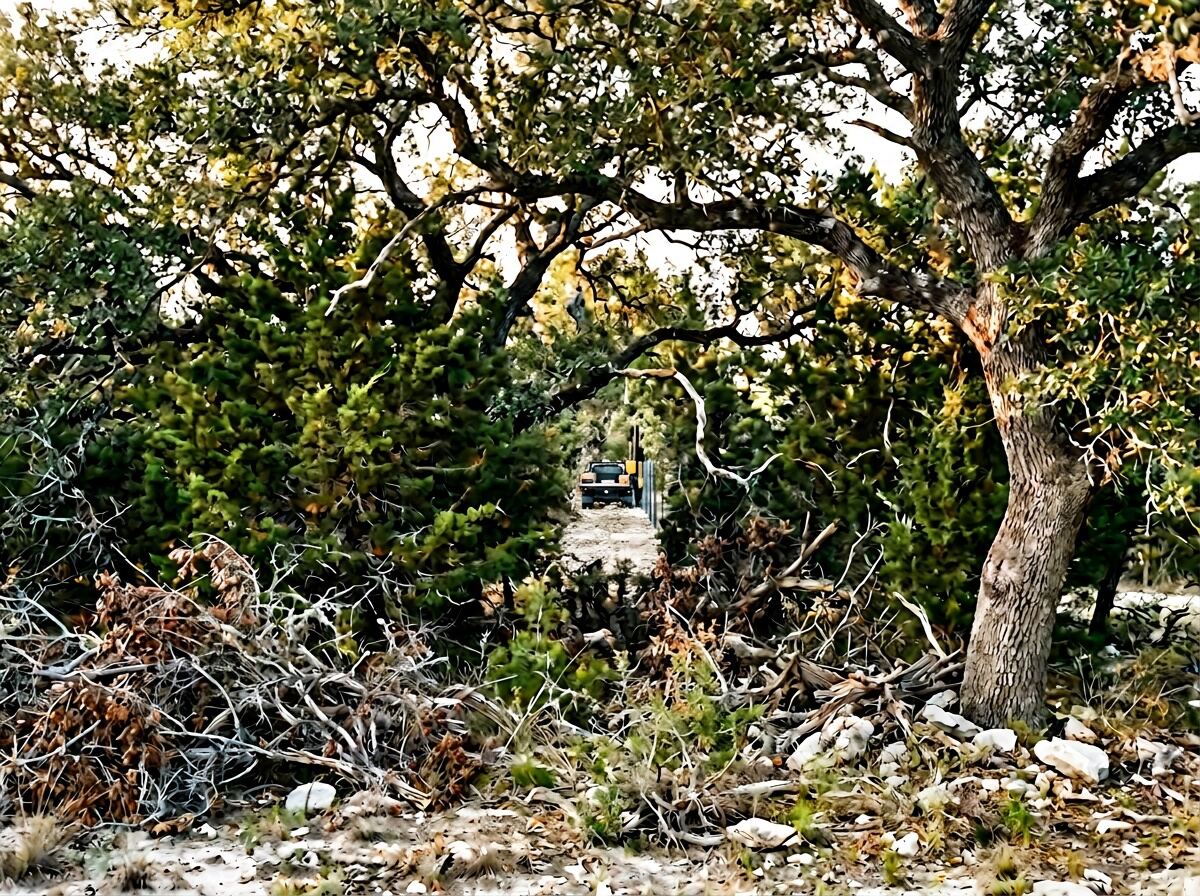
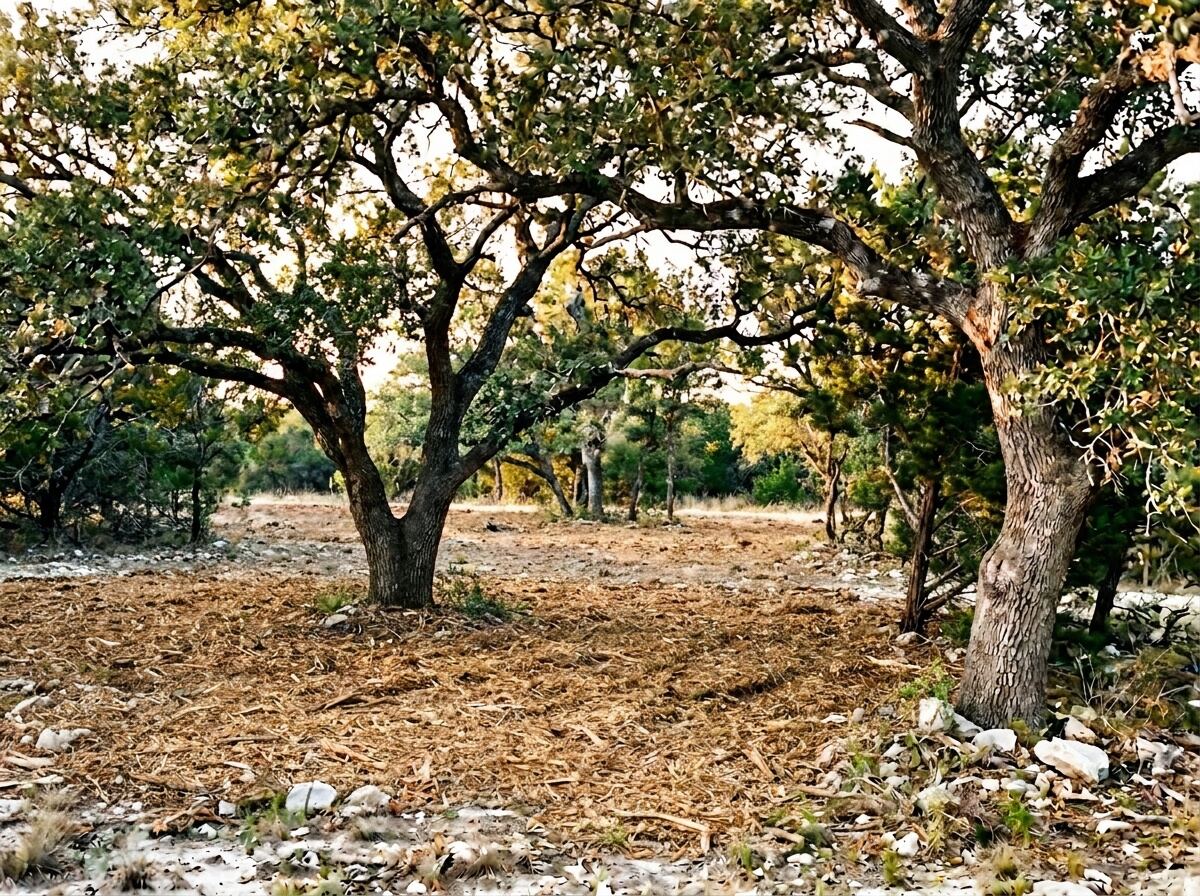
The same fence line, before and after. Dense cedar comes down to an open line with a layer of chips.
There are two ways to work together, and the fence stays yours. Pick what your customer prefers.
Most ranch fencers are small shops. The owner or the crew boss decides, so one call settles it.
- We sub under you. You hold the landowner contract. We run mulchers and operators on your line by the job, and we bill you.
- The landowner hires us direct. We clear. You start when the line is ready. You keep the fence contract.
- What we need from you. The flagged line, the width, the gate or access points and the trees to save. Tell us where the mulch can lie. Send the length and the cedar density, or let us walk it.
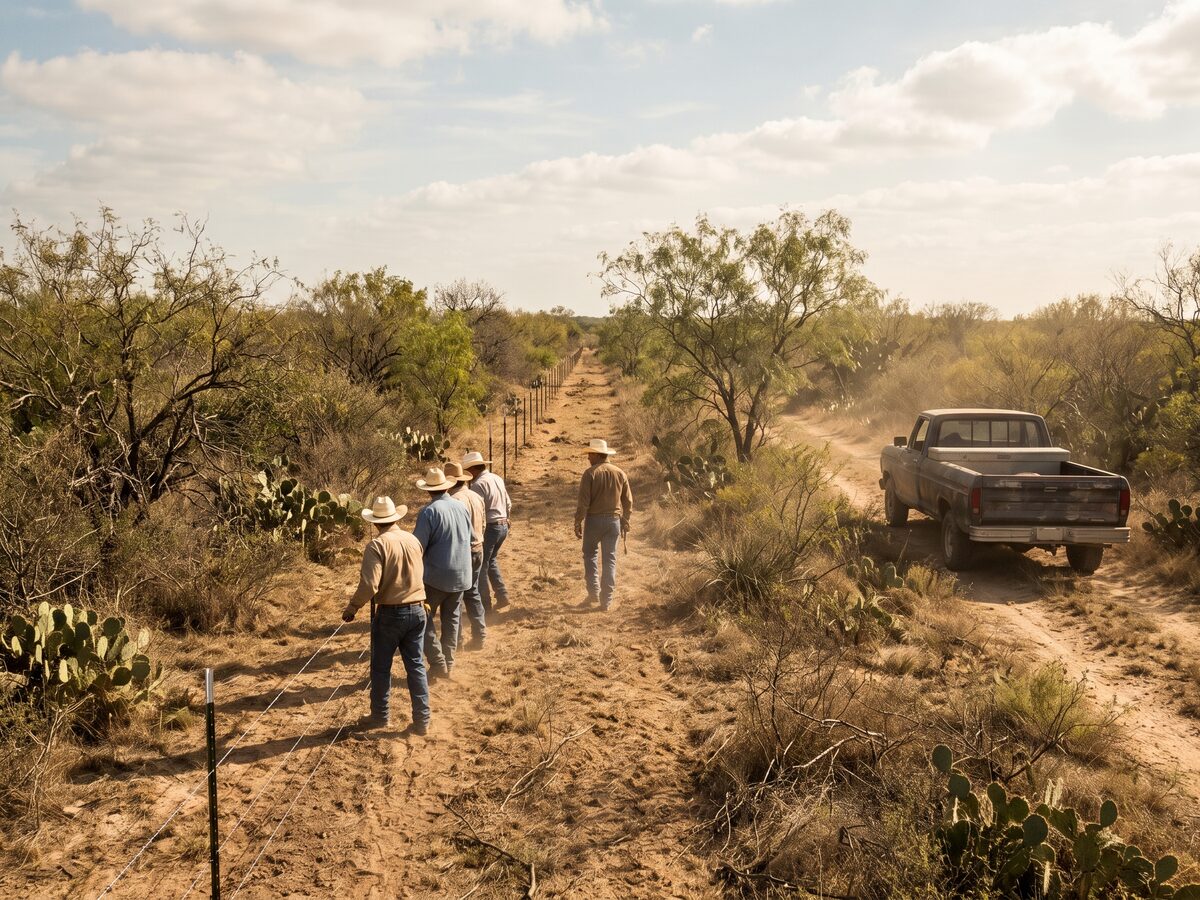
Every machine has limits, and a fence line finds them. Tell us early.
A tracked loader clears flat to rolling ground well. Here is where it stops.
- Steep ditch banks. They need an excavator or a boom. Tracked loaders work best on ground with little to no slope.
- Limbs over the cab. A tracked loader cannot trim them.
- Live lines. We stay away from energized lines. We touch no tree that can reach a power line until the utility clears it. Texas bars people and equipment within 6 feet of a high-voltage overhead line unless the utility first arranges a clearance.
- Rock and buried markers. A rock, a culvert or a buried marker can stop a mulching head. The walk finds most of them.
- Your boundary. We clear to your flags. The boundary is the landowner's call.
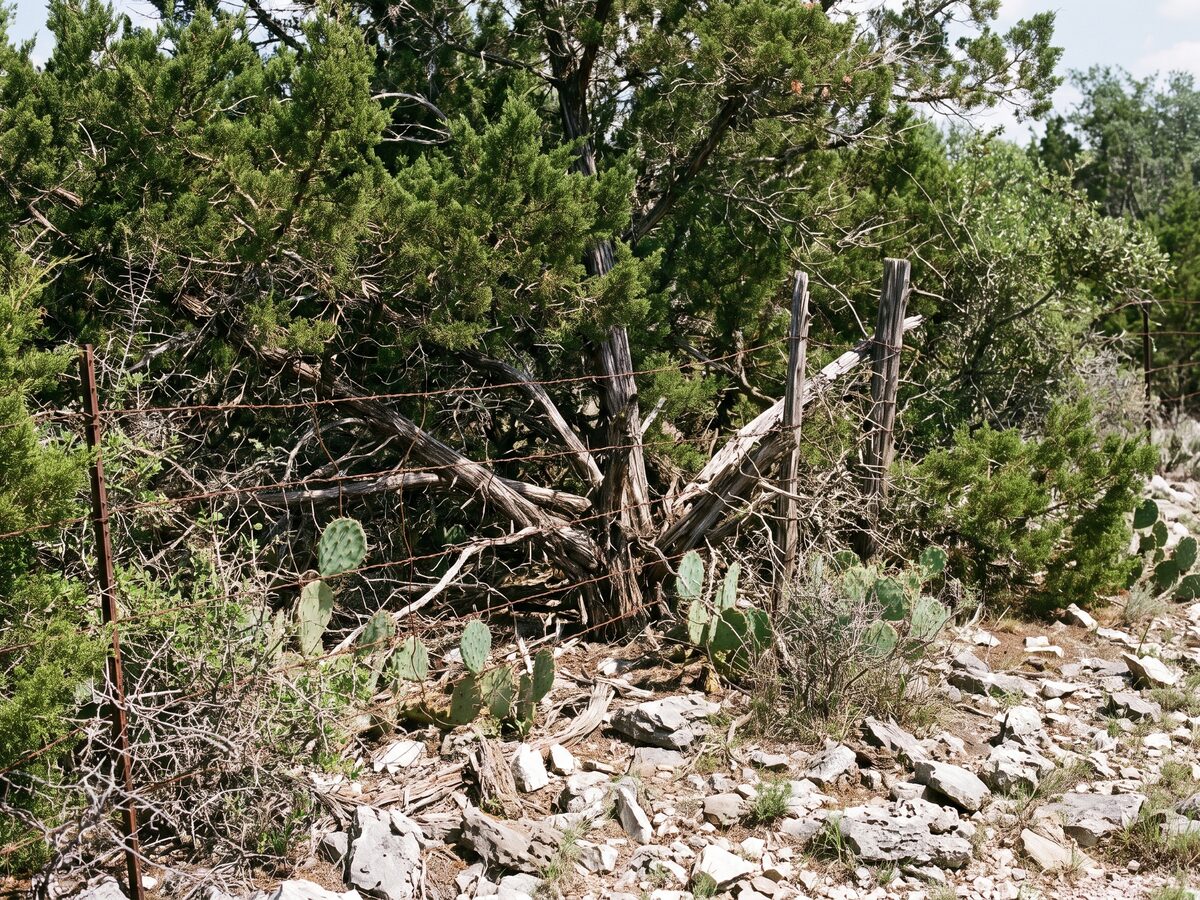
Oak wilt and nesting move your start date, and grants add rules. Check both before anyone starts.
September through February is the best clearing window. Texas A&M Forest Service advises against wounding oaks from February through June. Our rule is no mulcher contact with oaks from February 1 to June 30. See the Texas A&M Forest Service oak wilt guidance.
Golden-cheeked warbler and black-capped vireo nesting runs March 1 to August 31. We plan around that whole span. Small cedar in open pasture is usually not warbler habitat. If a line runs through mature juniper and oak, the Austin office of the U.S. Fish and Wildlife Service should confirm it before clearing.
- Texas A&M Forest Service grants. The mechanical fuel reduction grant requires a contractor not affiliated with the landowner. The landowner cannot do the work. Work before the pre-inspection is not reimbursable.
- NRCS cost-share. The USDA program pays fence and brush management as separate practices. Payment goes to the landowner after NRCS checks the work. Ask the local office before anyone starts.
- Wildlife valuation. Landowners with a wildlife management plan often want selective, patterned clearing, not a blanket cut. Flag the keepers so we clear what the plan calls for.

Insured for your crew's site. Certificate on request.
Your landowner may ask who is on the line. These are the documents we send.
Certificate of insurance
We name you as additional insured on the certificate before work starts.
General liability
$2 million per occurrence and $5 million aggregate, with THREE, a Berkshire Hathaway company.
Commercial auto
$1 million commercial auto liability.
Photo set
Job photos at closeout, so your landowner sees what was cleared.
Written quote
Per job, within 48 hours of the site walk.
Who owns the customer?
If you bring us in, the customer is yours. We clear the line and leave.
How do you price?
After we see the line. We quote per job in writing within 48 hours of the walk. Send us the length, the width and the cedar density, or let us walk it.
Do you clear game-fence lines?
Yes, the clearing. We take the cedar and brush off the line, and your crew builds.
What if the landowner wants grant money?
Program rules decide what a grant pays. Some programs bar the landowner from doing the work and require a contractor unaffiliated with the landowner. Ask the program before anyone starts.
I clear it myself. Why call you?
Fine. Many lines are light enough for your crew. When one is too thick, call us. Tell us the worst line you have had, and we tell you if we fit.
What about stumps and roots under my posts?
Roots stay in the ground, so expect your auger to find some. Rock, culverts and buried markers are the other surprises. We walk the line first to find them.
Can you stay ahead of my crew?
Tell us your crew's start. We work back from it. We tell you yes or no on the call, and we promise no date until we have yours.
What if the line runs through oaks or possible habitat?
We say so at the walk. Texas A&M Forest Service advises against wounding oaks from February through June, and our rule is no mulcher contact with oaks from February 1 to June 30. Nesting runs March 1 to August 31. We plan around that whole span.
Pages written for other buyers.
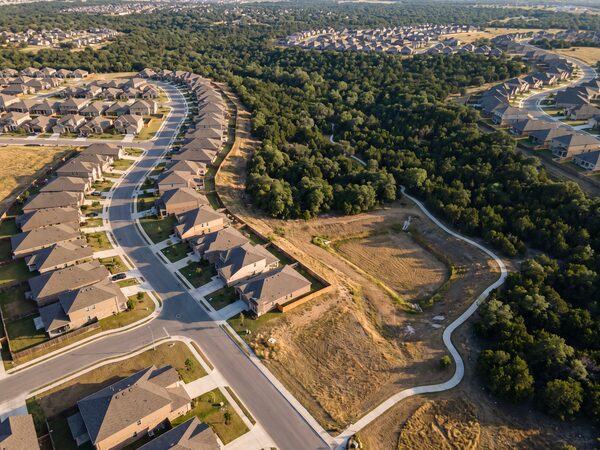
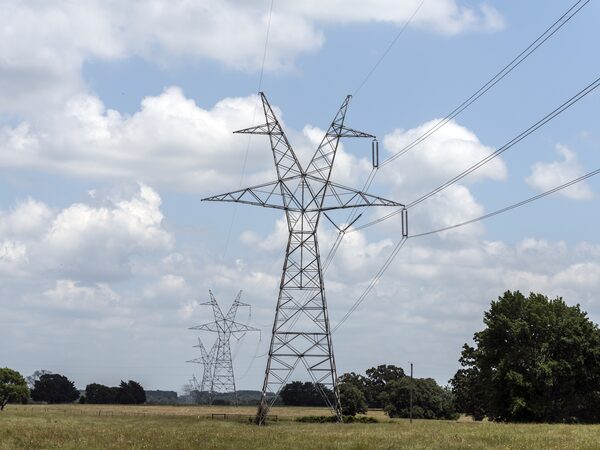
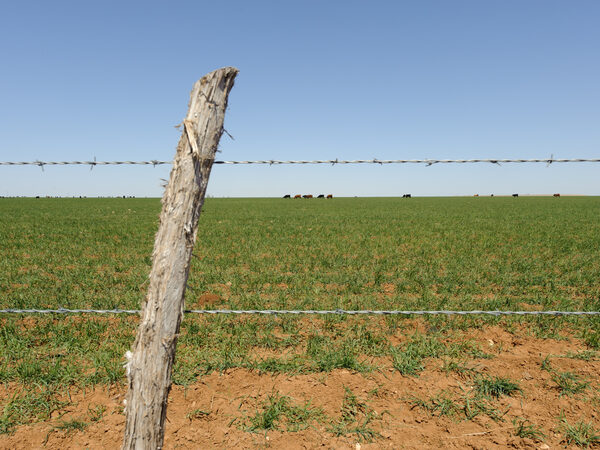
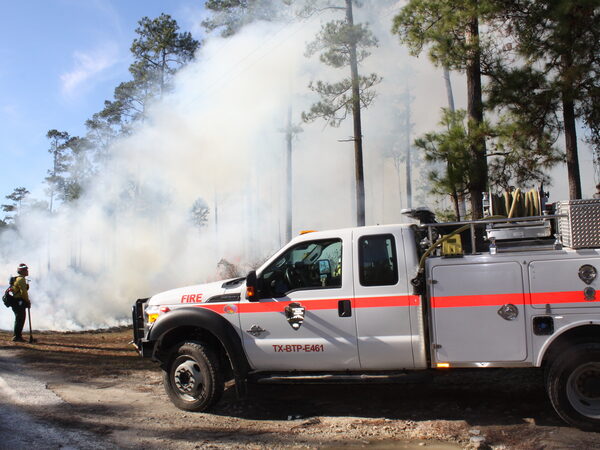
Photo credits
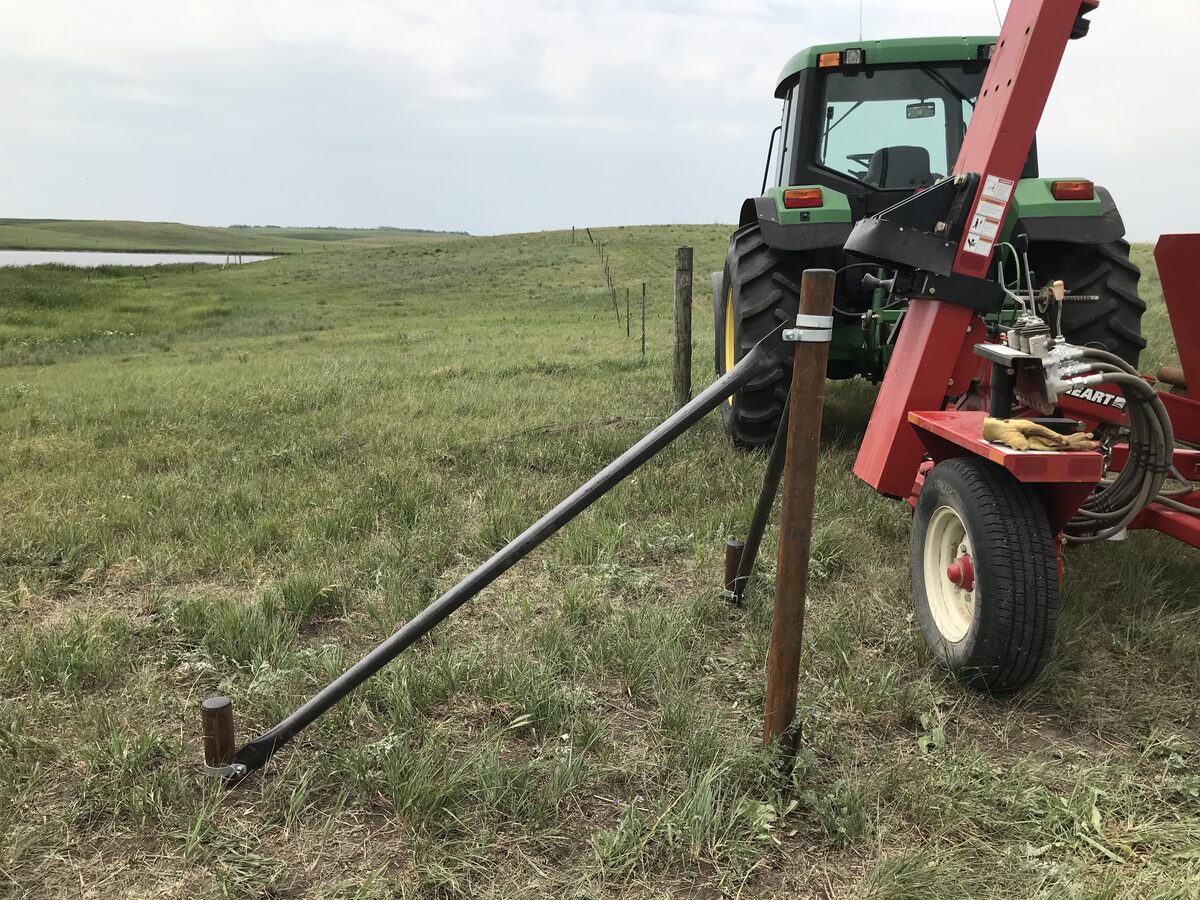
- Fence post driver: USFWS Mountain Prairie, Public domain
- Balcones Canyonlands NWR: Toniklemm, CC BY-SA 4.0
- Forest Service fuels project: Intermountain Forest Service, USDA Region 4 Photography, Public domain
- Transmission line, Texas: Carol M. Highsmith, Public domain
- Ranch fence, Texas: USDA NRCS Texas, Public domain
- Big Thicket prescribed burn: NPS Photo, Public domain
Images marked illustration are computer generated.
Rather just talk
to a person?
(512) 880-8888
Call or text · 512-880-8888 · Tell us about the next line you are bidding.