


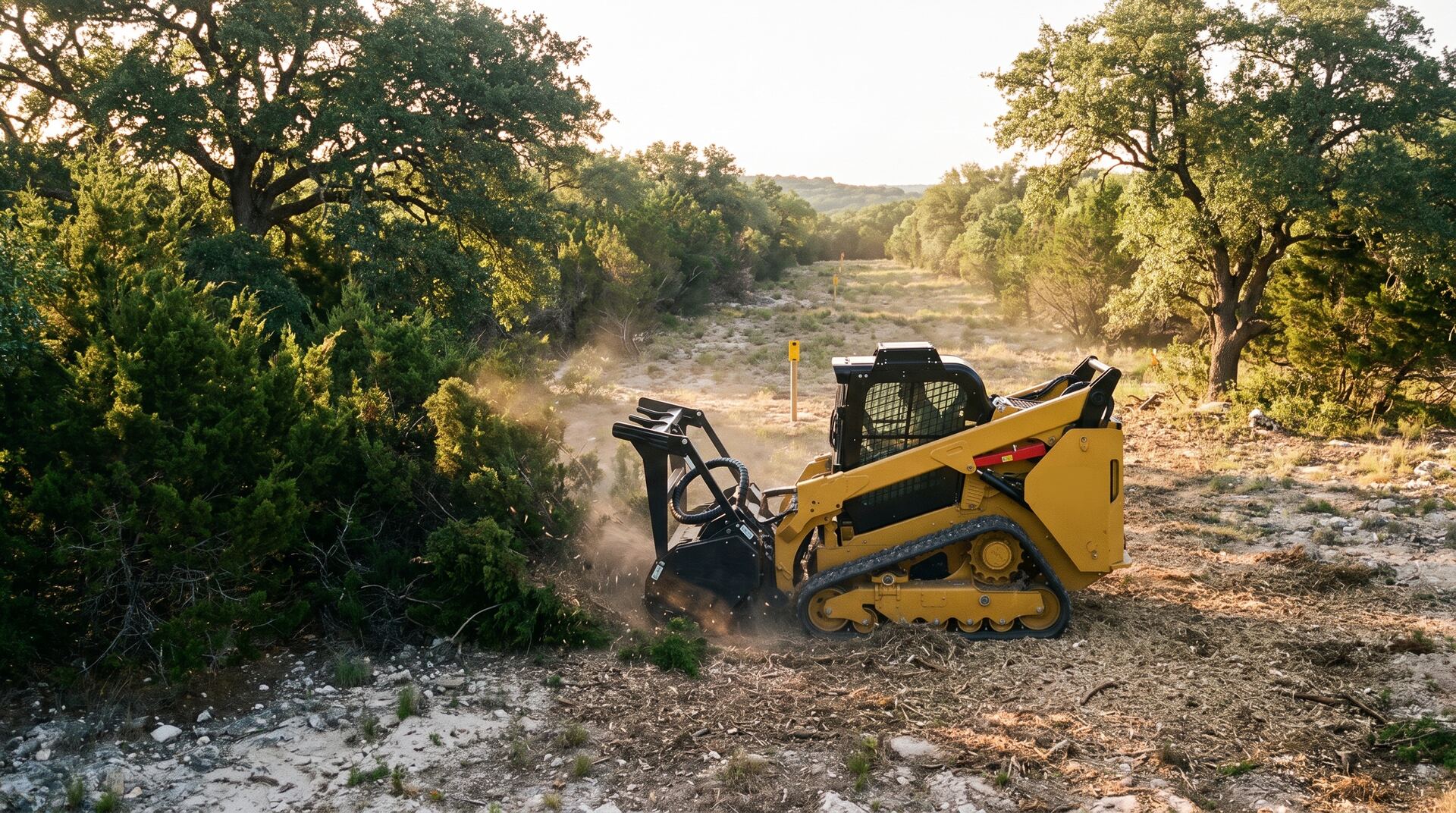
Where the right-of-way is too thick to mow, we mulch it.
Clear Ground runs tracked forestry mulchers out of Austin and scales with partner and rental fleets for long rows. We offer right-of-way clearing for electric, pipeline and water-line owners: the cedar and brush a mower cannot get through. The mulch stays on the row. Energized line clearance goes to line crews qualified under OSHA 1910.269, and mowing, spraying and hi-rail go to their own crews. We clear and mulch the ground work around them.
Read the table below before you call. It shows what we do and what we leave to other crews.
Austin, Texas · Central Texas · Same-business-day reply
Tell us the worst span and where it sits. We answer the same business day.
Five tools work a right-of-way. We run tracked mulchers.
Each tool has a job. Routine upkeep belongs to mowers, line crews and herbicide. We take the work those tools skip.
| Tool | What it does | Where it fits | Our part |
|---|---|---|---|
| Batwing and boom mowers | Tractors cut grass and light brush on a cycle. Booms reach limbs and banks. | Routine upkeep. State mowing contracts call for 75 to 100 acres a day. | Routine upkeep stays with your mowers. |
| Line-clearance crews | Bucket trucks, chippers and aerial cutting by qualified crews near energized conductors. | Any tree that can reach a wire. | Your crews do that work, and they should. |
| Herbicide and hi-rail cutters | Spray stumps and regrowth. Rail-mounted cutters work railroad corridors. | Regrowth control and rail corridors. | Regrowth control and rail corridors stay with your herbicide and rail crews. |
| Dedicated mulching tractors | Larger carriers with more hydraulic flow, built for long runs of right-of-way. | Long open spans and the upkeep cycle on transmission. | They suit a long open run. We take tight spans and long rows. |
| Clear Ground tracked mulchers | Our tracked forestry mulchers, plus larger forestry mulchers from partner and rental fleets on long rows, cut cedar and brush where it stands. The mulch stays on the row. | Overgrown spans, first-time clearing, wildfire-plan clearing and easements a mower cannot reach. | Yes. Direct, or as a sub under your tree or clearing contractor. |
When to call us
Mowing keeps a clean row clean. We fit where the row got away from the cycle. After we cut it back, your mowers can hold it.
You get a cut-back row, mulch on the ground and paperwork you can file.
Here is what a span looks like when we finish, and what your risk manager gets.
- A row your crews can maintain. We cut cedar and brush back to the width your plan calls for. Your mowers can hold it from there.
- Mulch left on the row. No hauling and no burn piles. The ground stays covered, and you pay for no haul-off.
- Trees near the line left for the utility. We mulch no tree that can reach a conductor until the utility clears it. You tell us where the lines run.
- Work to your rules. Locates, inspectors, gate codes, access and limits on the row. Send them and we confirm in writing what we will do.
- Insurance on file. A certificate of insurance naming you as additional insured, plus our safety packet, before work starts.
- Photos at closeout. We send the job photos so you can file them with the span.
- Direct or under your contractor. We bid to you. We also run as a sub to your contractor on cedar and brush sections.
We send a written quote within 48 hours of the site walk. We do not quote a span we have not seen.
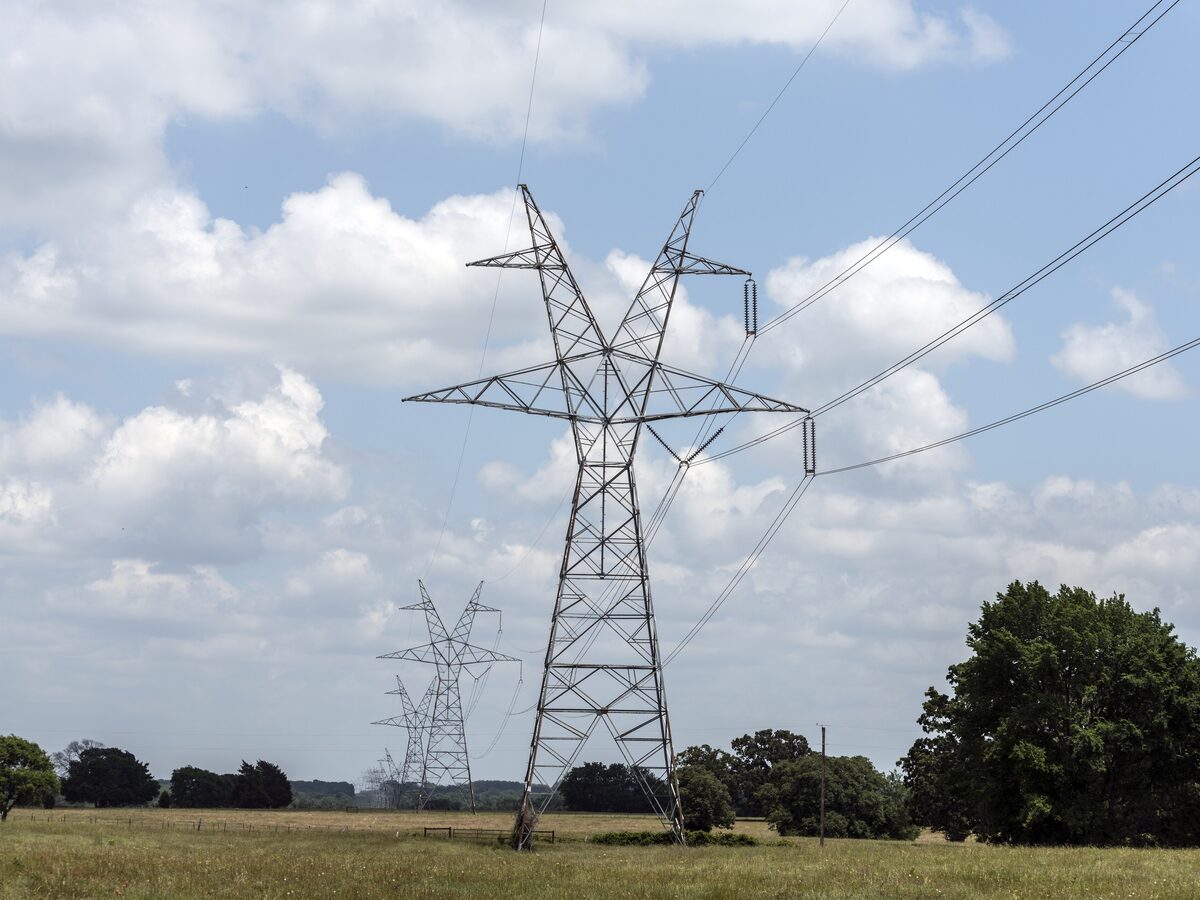
From the worst span to the closeout photos, five steps.
Walk the worst span
with your people
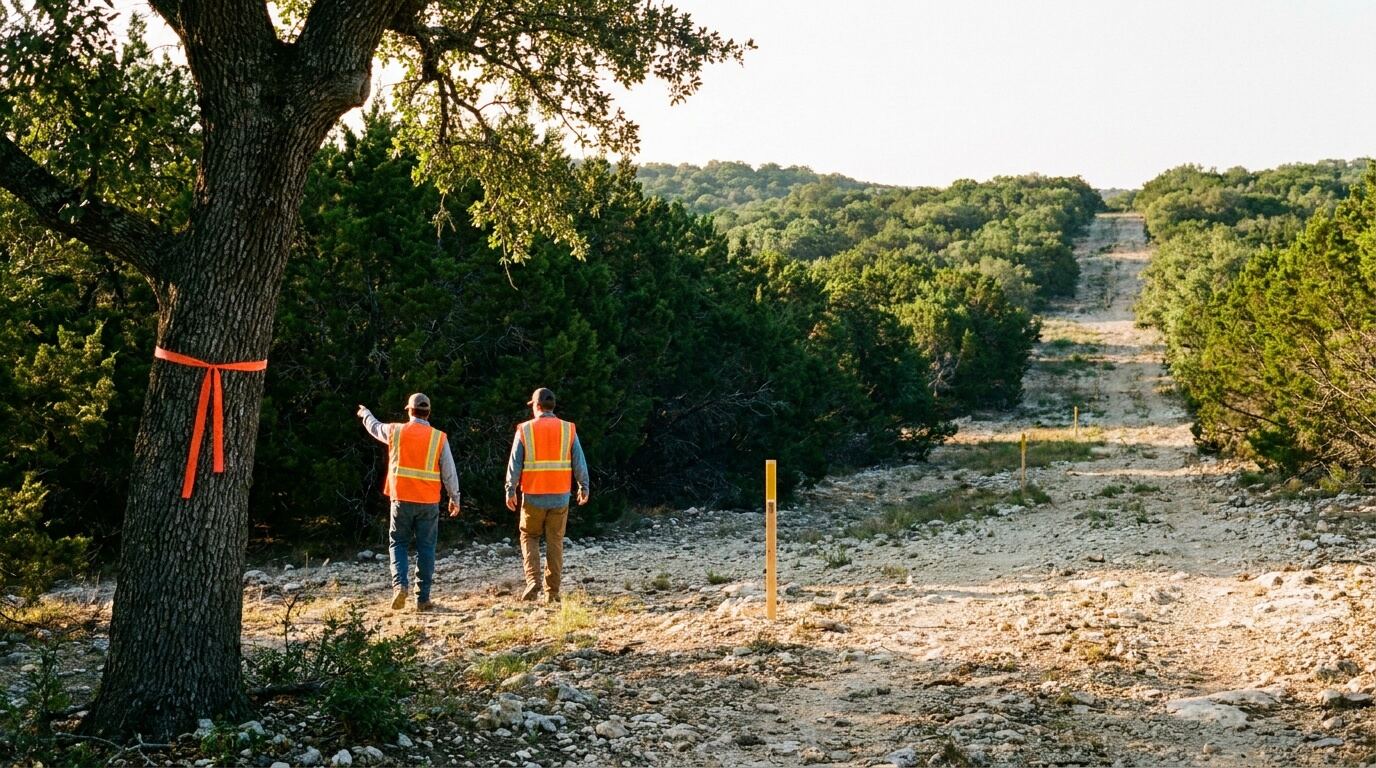
A vegetation manager or inspector walks the span with us. You show the row limits, the lines overhead, the gates and any buried line. We flag trees to keep. Any tree tall enough to reach a conductor goes on a list for the utility to clear first. We look for rock, culverts and markers, because they change a day. We leave with the width, the length and the rules.
Grind the cedar
and brush
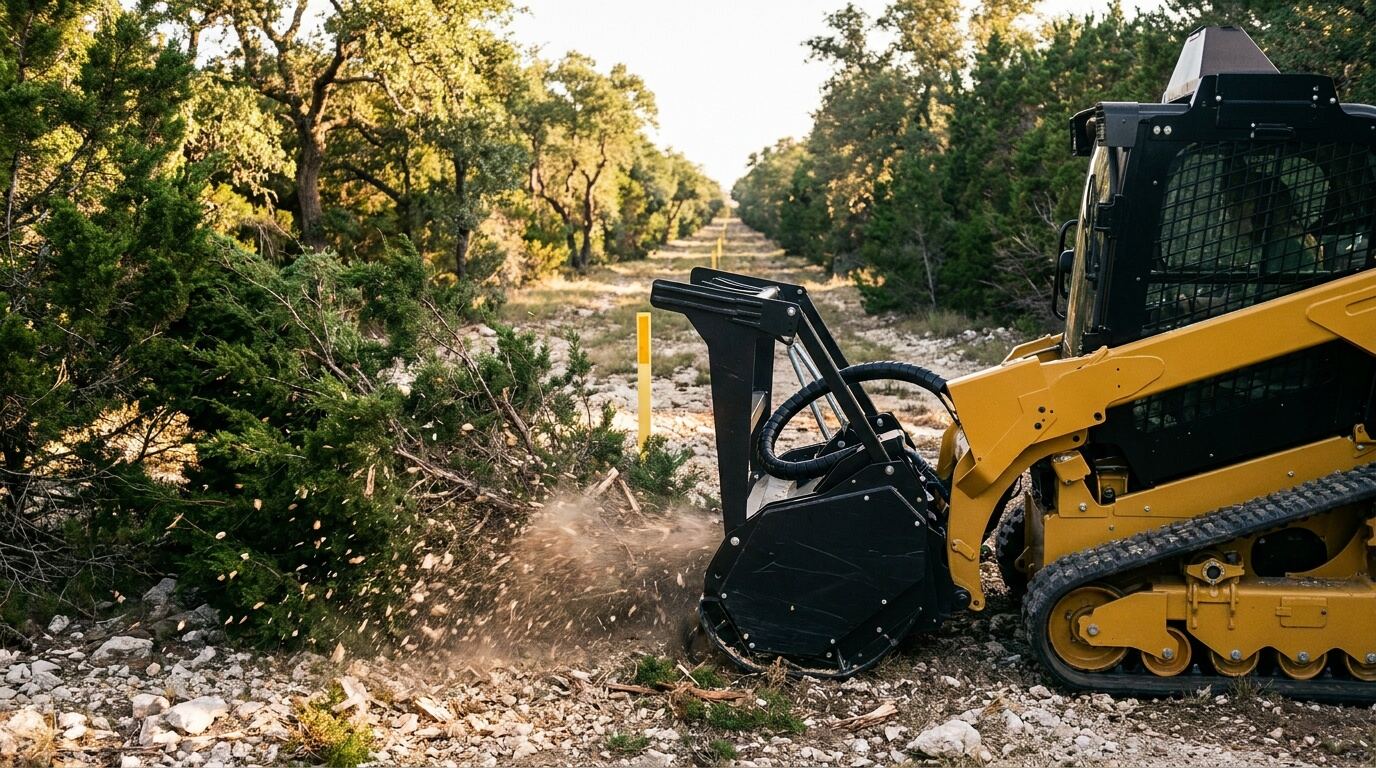
Our operators work the row away from energized lines. Any tree that can reach a conductor waits for the utility. Trees too big for a mulching head are called out on the walk. Nobody else comes inside the working zone while the heads run. Work stops if someone walks in. Oaks stay untouched in the oak wilt window.
The mulch stays
on the row
Cut wood turns into a layer of mulch on the soil. We haul nothing and burn nothing. The ground stays covered, which helps keep soil from washing off the row. Tracks leave marks and kept trees stand clear. One transmission co-op's filed procedure describes machine cutting this way: it grinds the vegetation into chips that are left on the ground.
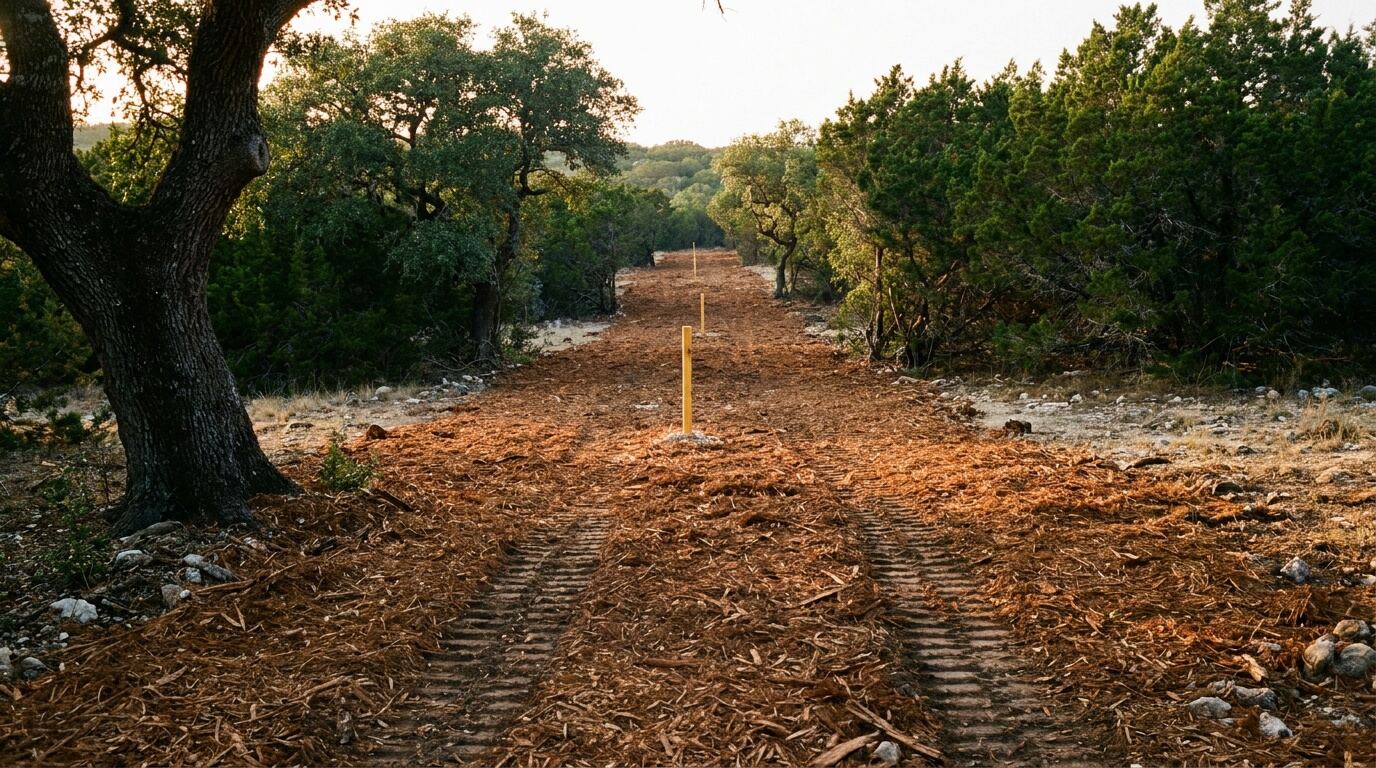
Walk the open row
end to end
We walk the finished span with your inspector. The row is open to the width in the plan, and the keepers stand. If a stretch needs another pass, we make it before we leave. Then your mowers, your crews and your herbicide program can take the row back over. We stay out of the upkeep cycle.
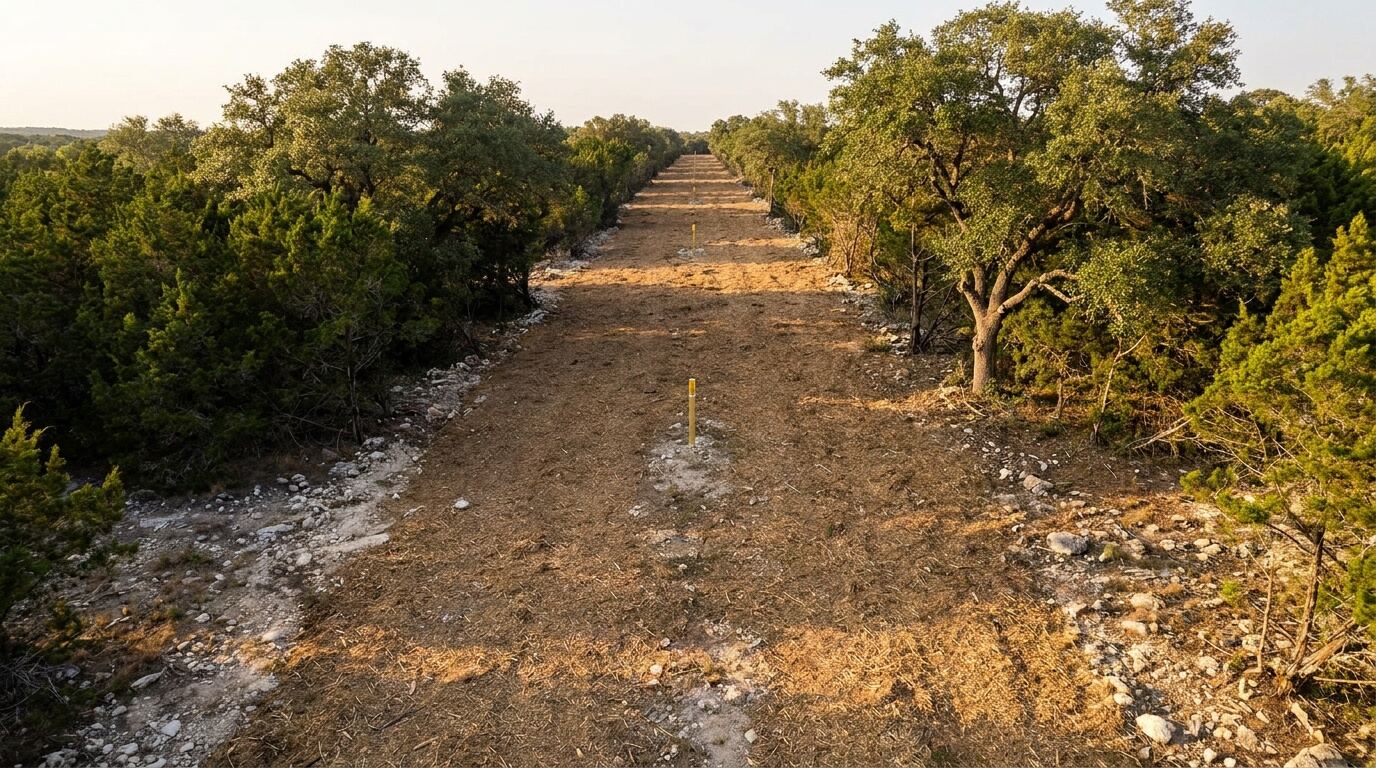
Photos for the span
file
We send the photo set from the job, with a wide shot of the finished ground. Your vegetation manager can open it on a tablet at the walk-through and keep a copy for the span record. Our invoice names the span and the dates. Your file shows what changed, and when.
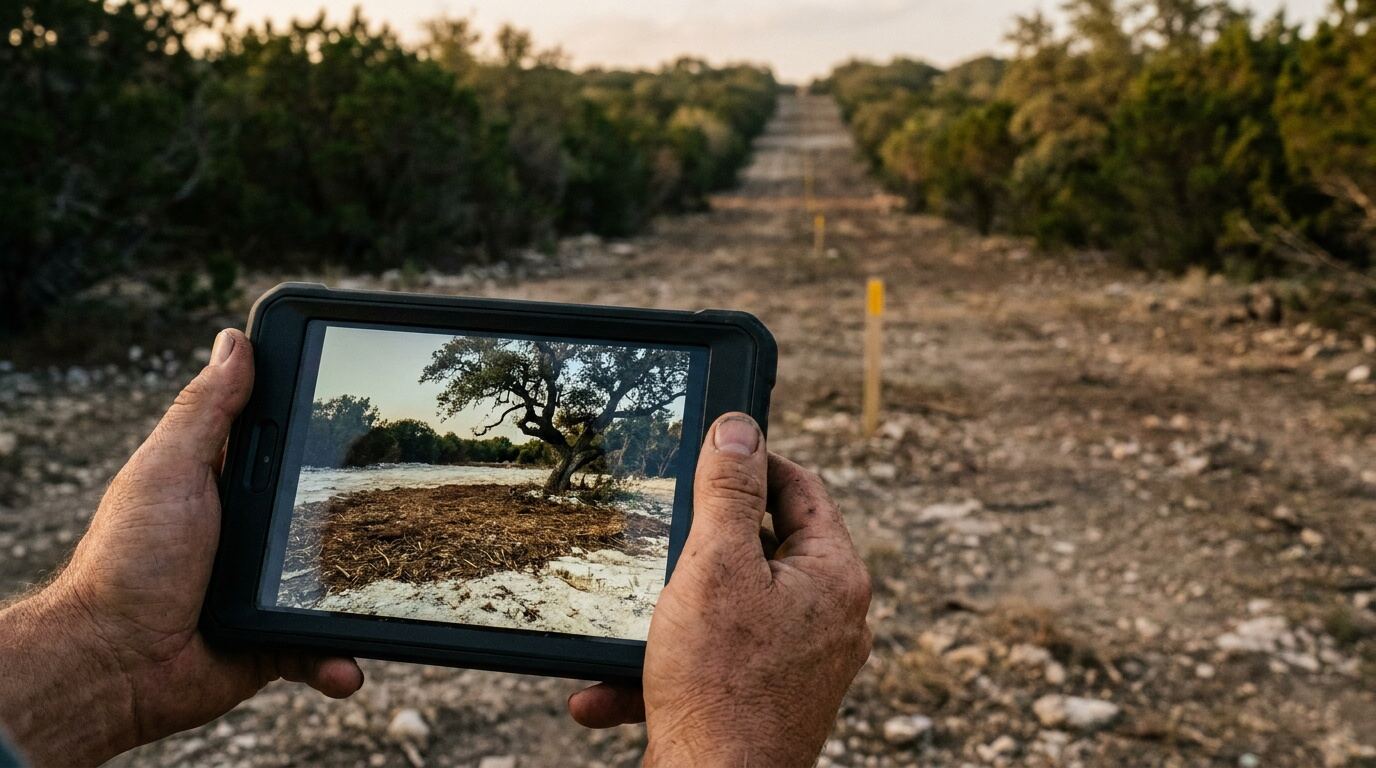
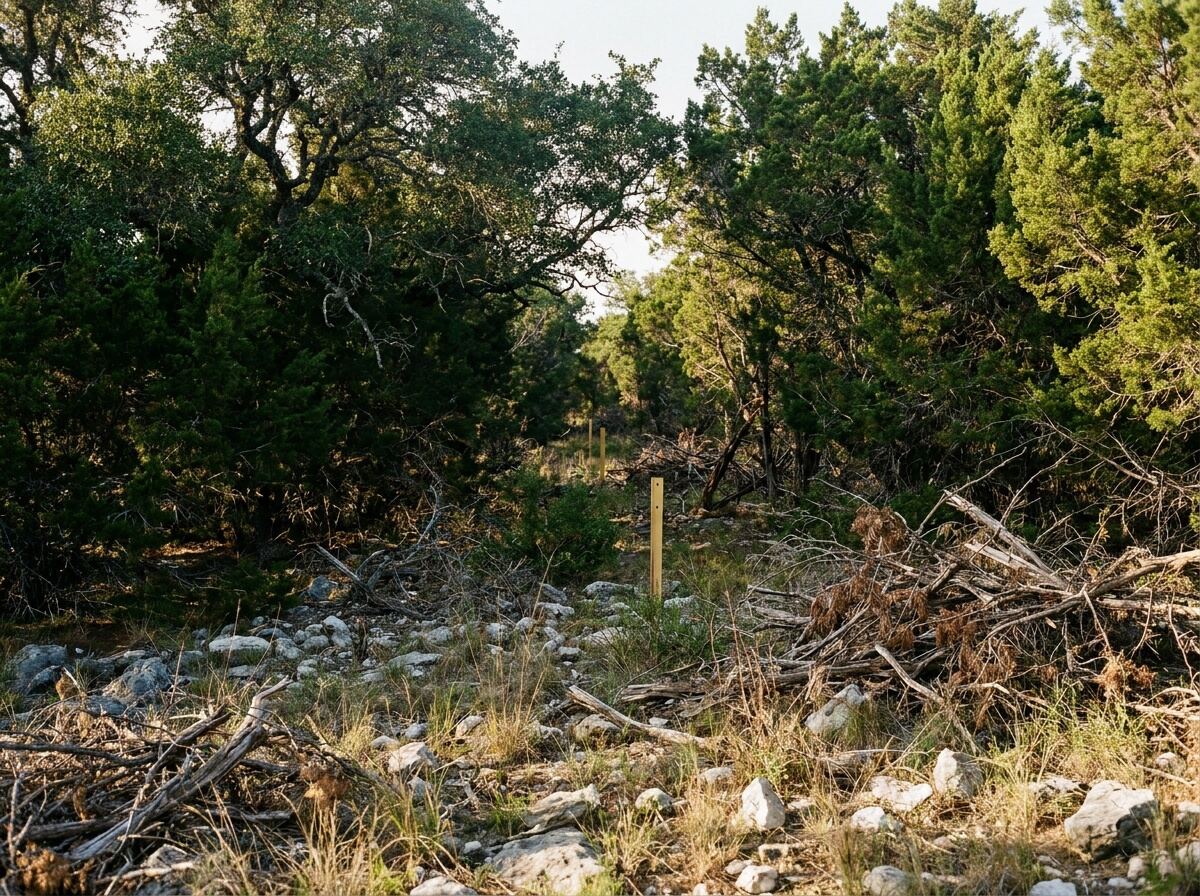
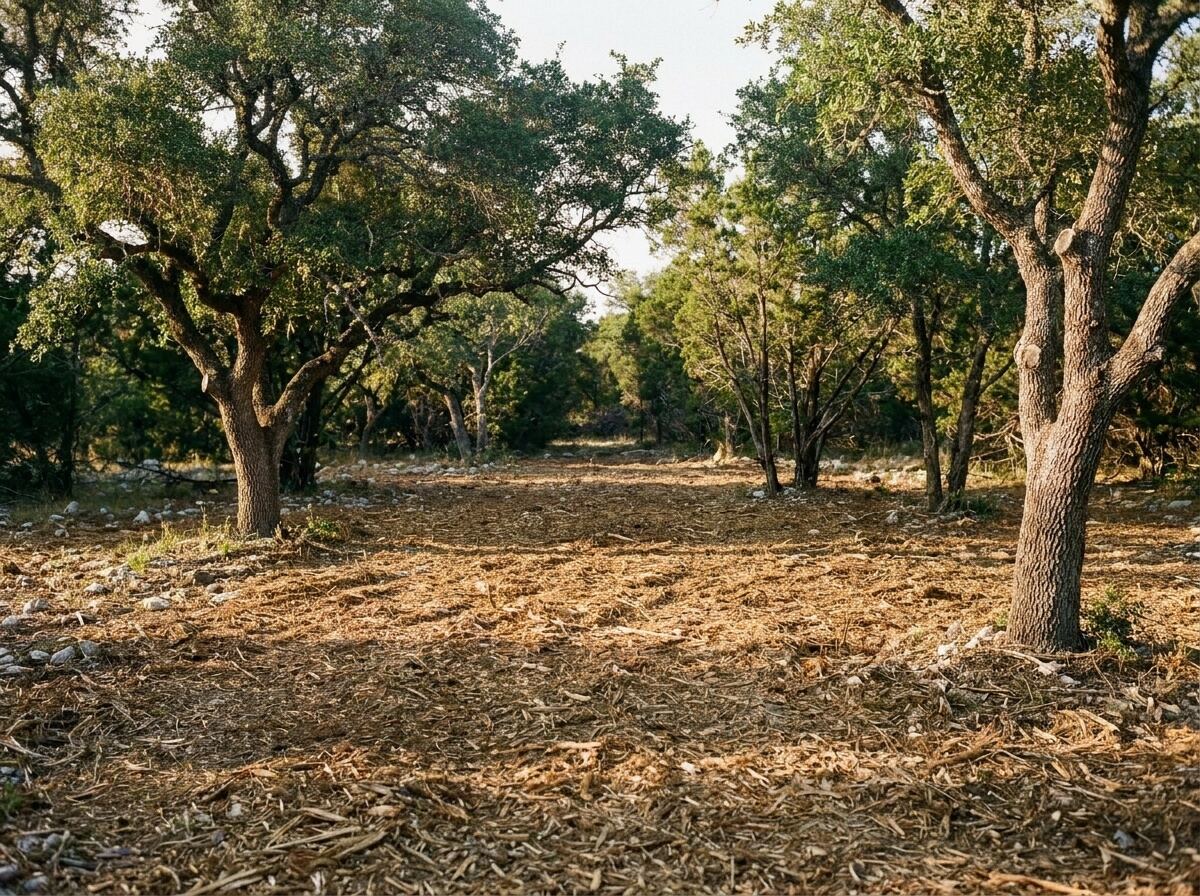
The same span, before and after. Dense cedar comes down to an open row with a layer of mulch.
Four kinds of right-of-way work fit our mulchers. The rest goes to your crews.
Utilities buy this work two ways. Some run bid portals or a procurement desk. Others hire through a tree or clearing contractor. We work either way.
- Overgrown spans. Growth outran the cycle and the mower cannot get through. We cut it back to a row your crews can maintain.
- First-time clearing. A new line, pipe or water main needs the row cut before the spread arrives. We take the cedar and brush sections, as a sub to the clearing contractor.
- Wildfire-plan clearing. Electric utilities and co-ops in wildfire risk areas now file plans with the Public Utility Commission under House Bill 145. The rule calls for a detailed vegetation management plan, re-approved every three years. Fuel along the line is part of that plan. The plan is yours to file. We do the cutting it calls for.
- Easements a mower cannot reach. Thick cedar and brush on flat to rolling ground. Some co-ops name mulchers and hydro-axes as the preferred tool for brush and small trees.
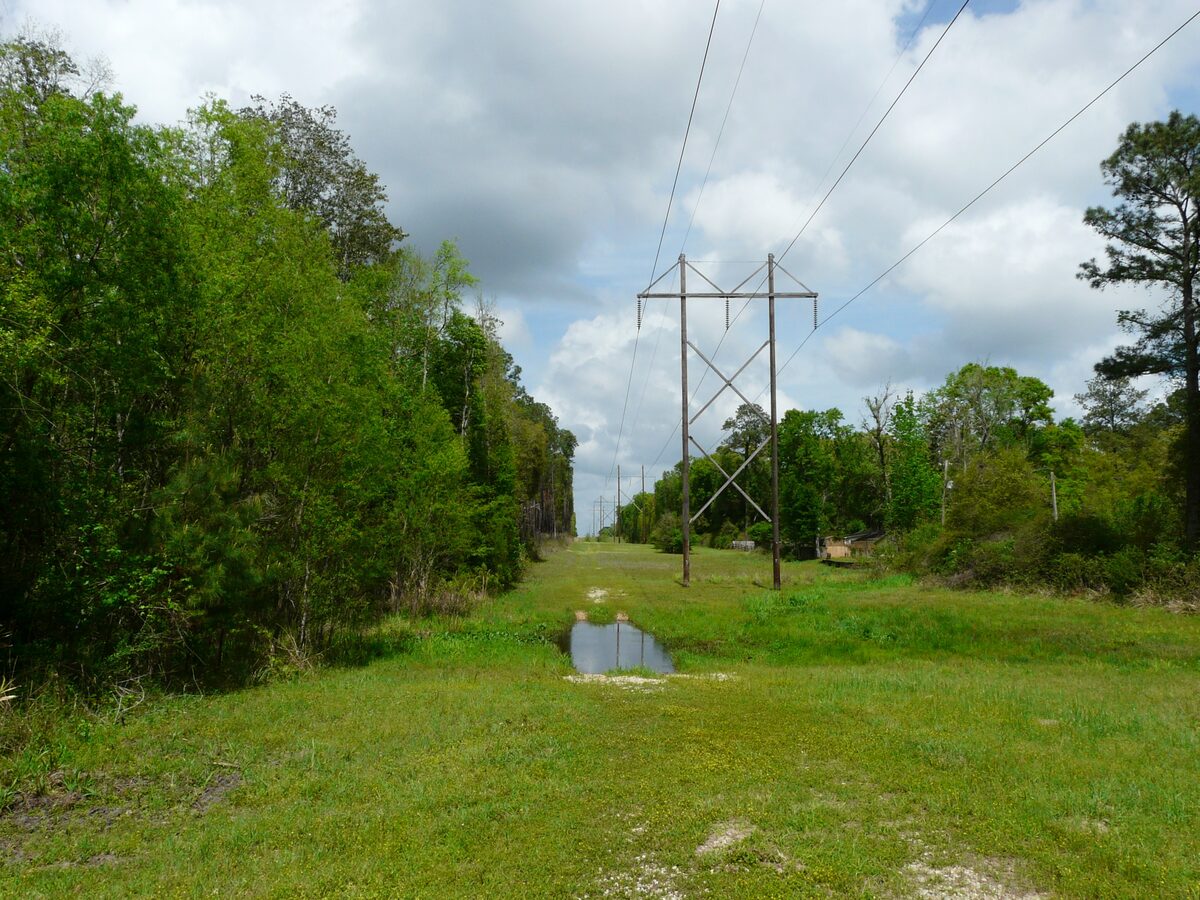
We stay away from energized lines, and the rule covers the tree. Not only the equipment.
Texas law bars people and equipment within 6 feet of a high-voltage overhead line unless the utility first arranges a clearance. See Health and Safety Code Chapter 752. The ANSI Z133 standard sets a 10-foot hazard zone for lines of 50 kV or less.
Both limits apply to the tree. A 20-foot cedar pushed toward a line breaks them. So our rule is simple. We mulch no tree that can reach a line until the utility clears it.
- Distribution work. Trimming near live wire belongs to qualified line-clearance crews. We do not compete with them.
- Over a pipeline. We expect to work to the operator's rules: an 811 locate, and often their inspector on site. Tell us what yours are.
- Where a mulcher stops. It cannot trim limbs above the cab. Steep ditch banks and deep channels need an excavator or a boom.
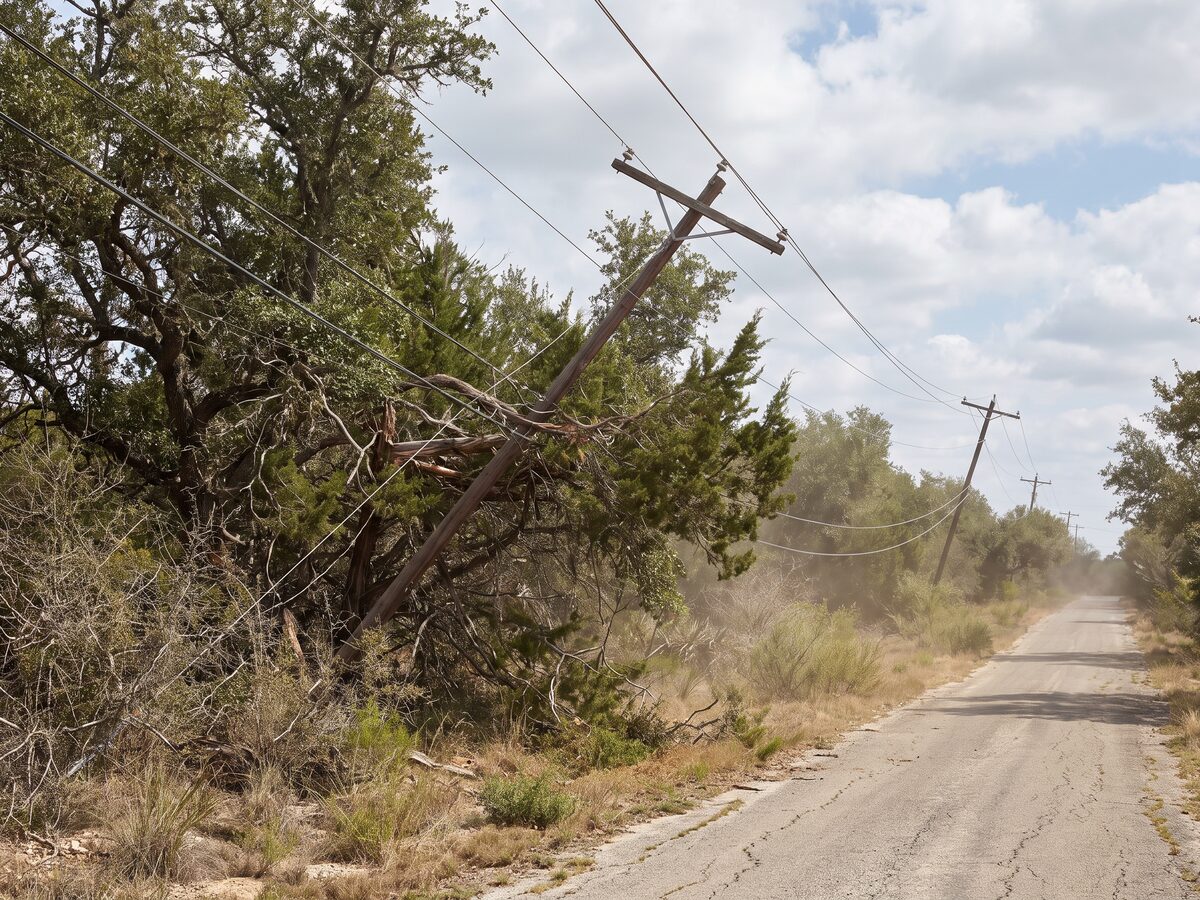
Winter is the clearing season, and oak wilt and nesting season shape it. We schedule around both.
September through February is the best window in Central Texas. Texas A&M Forest Service advises against wounding oaks from February through June. Our rule is no mulcher contact with oaks from February 1 to June 30. See the Texas A&M Forest Service oak wilt guidance.
Golden-cheeked warbler and black-capped vireo nesting runs March 1 to August 31. We plan around that whole span. Some utilities have biologists review work for protected species. If your row runs through mature juniper and oak, we say so before we start.
- September through January. Clears both oak wilt and nesting.
- February. Clears nesting, but not oak wilt.
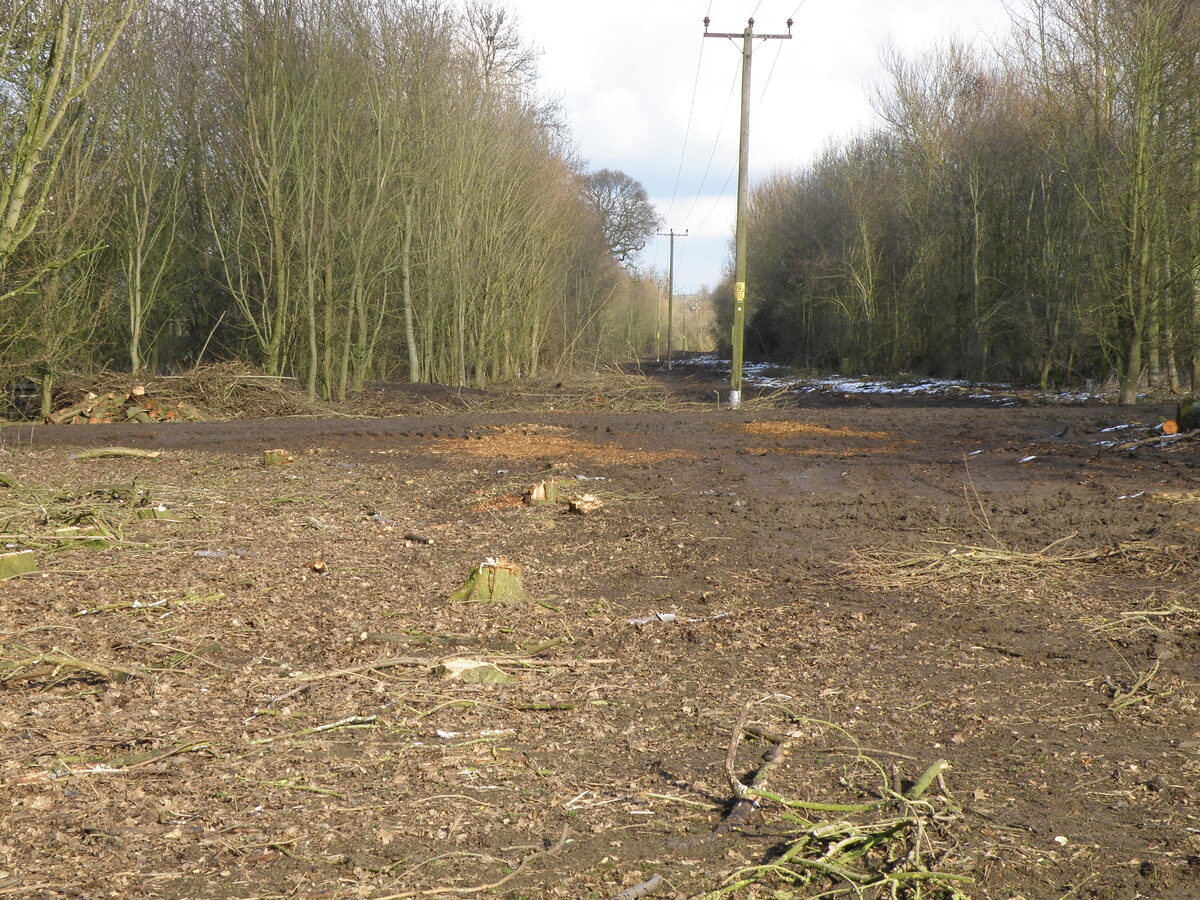
Your risk manager can file what we send. Before we mobilize.
Send your vendor requirements first. We answer in writing, line by line.
Certificate of insurance
We name you as additional insured on the certificate before work starts.
General liability
$2 million per occurrence and $5 million aggregate, with THREE, a Berkshire Hathaway company.
Commercial auto
$1 million commercial auto liability.
Safety packet
It goes out with the certificate before work starts.
Your row rules
Send your vegetation spec, locate rules and inspector requirements. We confirm in writing what we will do.
Photo set and invoice
Photos from the job, and an invoice that names the span and the dates.
Do you work near live lines?
We stay away from energized lines. At the walk, any tree that can reach a conductor goes on a list for your line-clearance crews. We mulch it only after the utility clears it.
Do you mow our right-of-way?
Mowing runs on tractors with batwing and boom mowers, and they are the right tool. We take the span the mower cannot get through, and your mowers hold it after.
Do you sub to our tree contractor?
Yes. We add tracked forestry mulchers to your contractor on thick spans, by the day or the job. We also bid direct.
Do you work over a pipeline?
We work to the operator's rules on locates, inspectors and limits on the row. Send them early. We confirm in writing what we will do.
Will you spray the stumps?
Regrowth control stays with your herbicide program and your licensed applicator.
What do you need to quote?
A walk of the worst span, or a map and photos. We send a written quote within 48 hours of the walk.
Does your work count toward our wildfire plan?
The plan is yours to write and file. If it calls for cleared fuel along a line, we do the cutting. We make no claim about what the Commission will accept.
Does leaving the mulch on the row cause a problem?
A transmission co-op's filed procedure describes chips left on the ground. If your spec asks for removal on a span, tell us at the walk and we confirm in writing.
Pages written for other buyers.
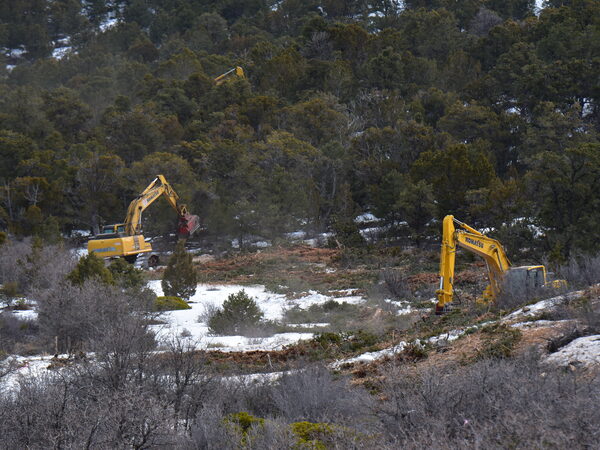
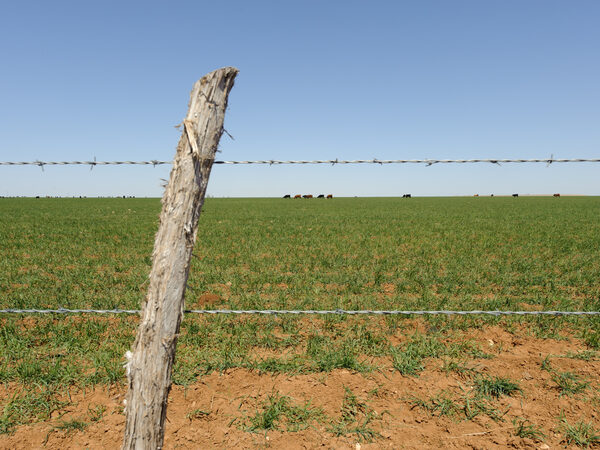
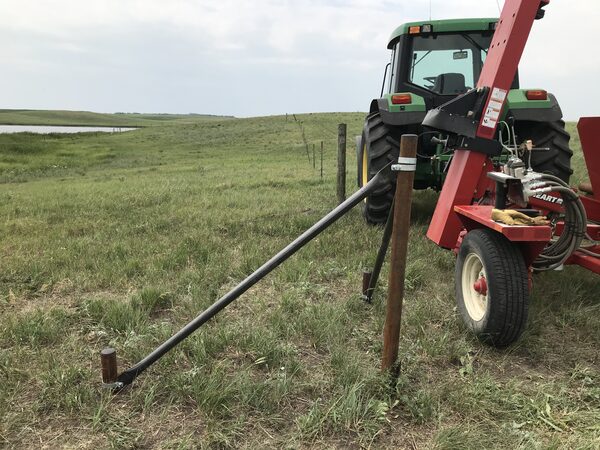
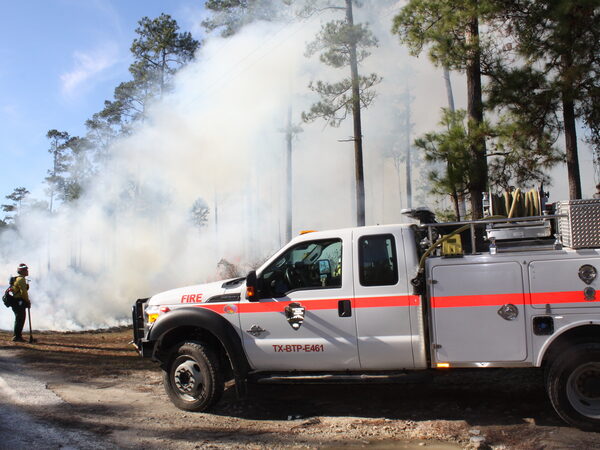
Photo credits
- Transmission line, Texas: Carol M. Highsmith, Public domain
- Power line corridor: The Bushranger, CC BY-SA 4.0
- Winter right-of-way clearing: Michael Trolove, CC BY-SA 2.0
- Balcones Canyonlands NWR: Toniklemm, CC BY-SA 4.0
- Forest Service fuels project: Intermountain Forest Service, USDA Region 4 Photography, Public domain
- Ranch fence, Texas: USDA NRCS Texas, Public domain
- Fence post driver: USFWS Mountain Prairie, Public domain
- Big Thicket prescribed burn: NPS Photo, Public domain
Images marked illustration are computer generated.
Rather just talk
to a person?
(512) 880-8888
Call or text · 512-880-8888 · Ask for 15 minutes on your overgrown spans.