WE BREAK WHAT'S IN THE WAY. AND PROVE WHAT WE MOVED.
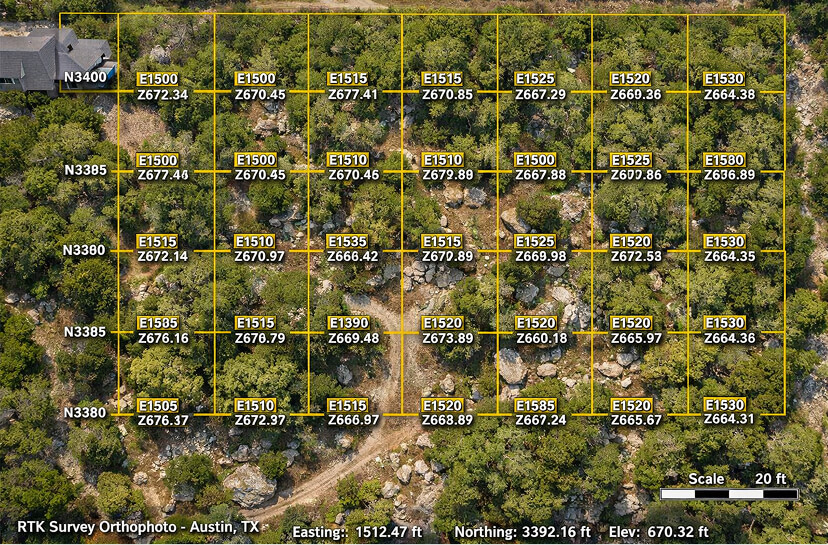
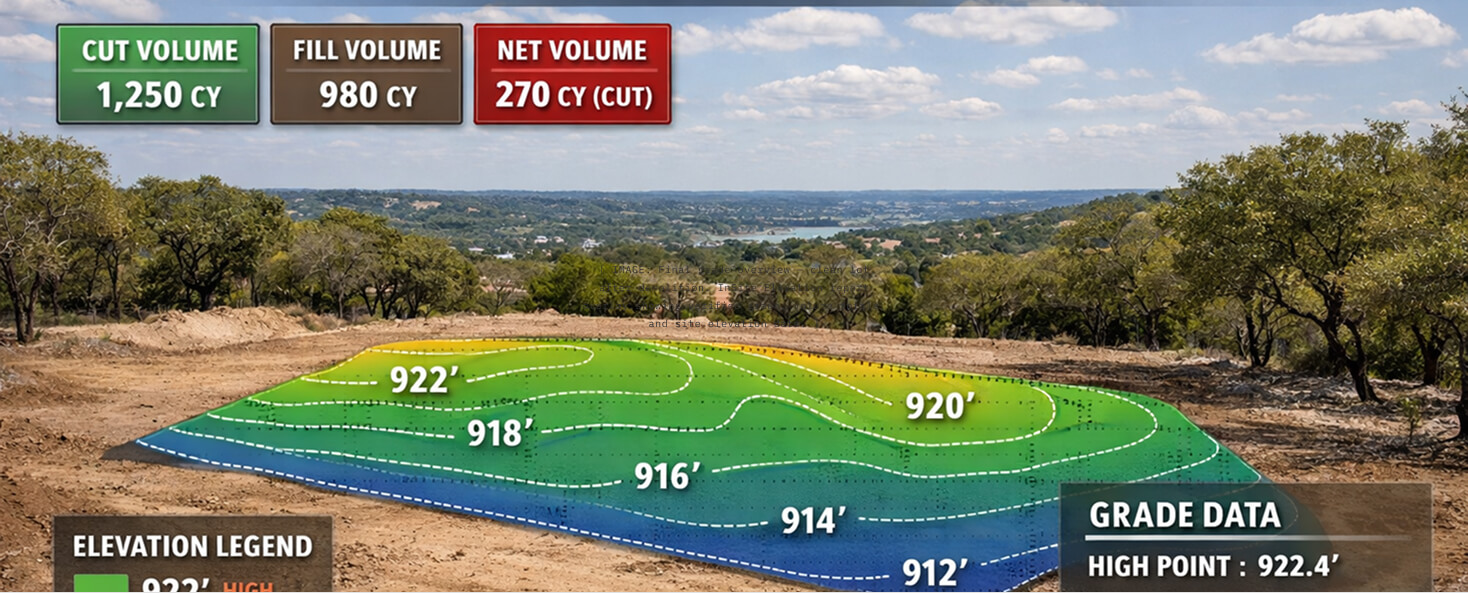
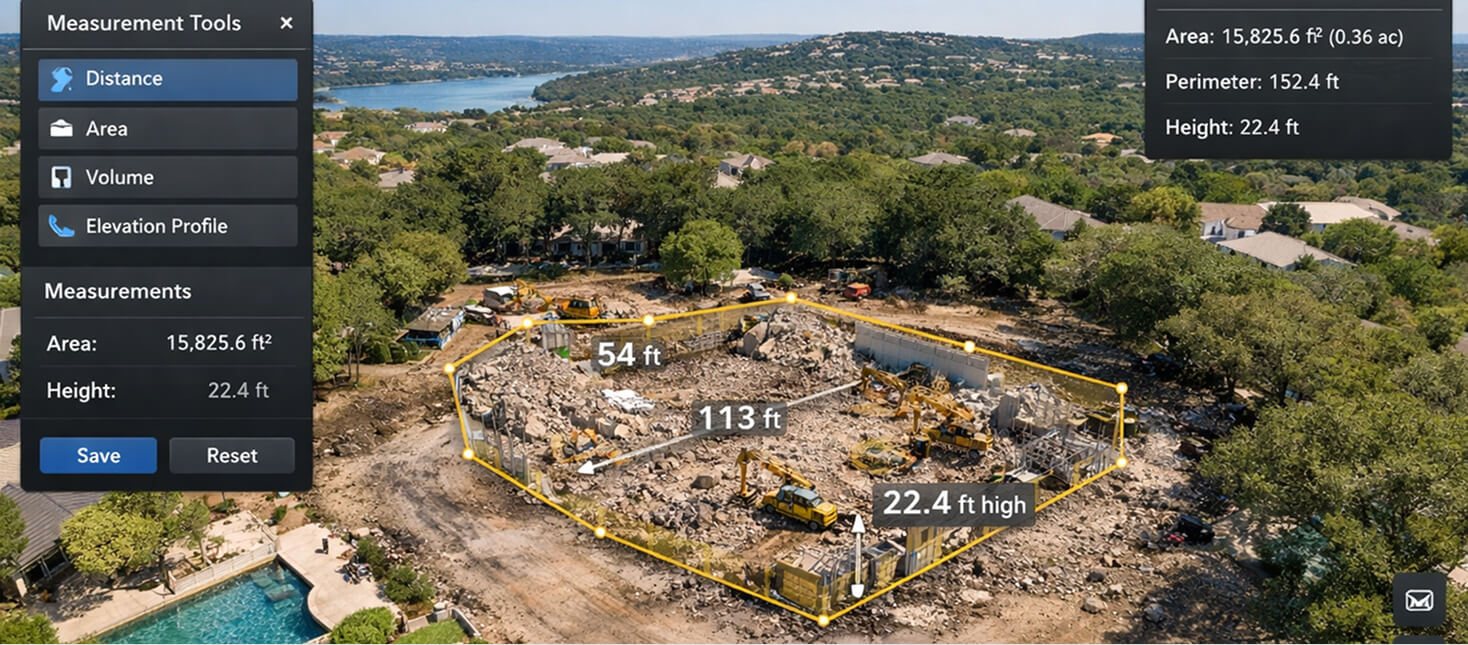
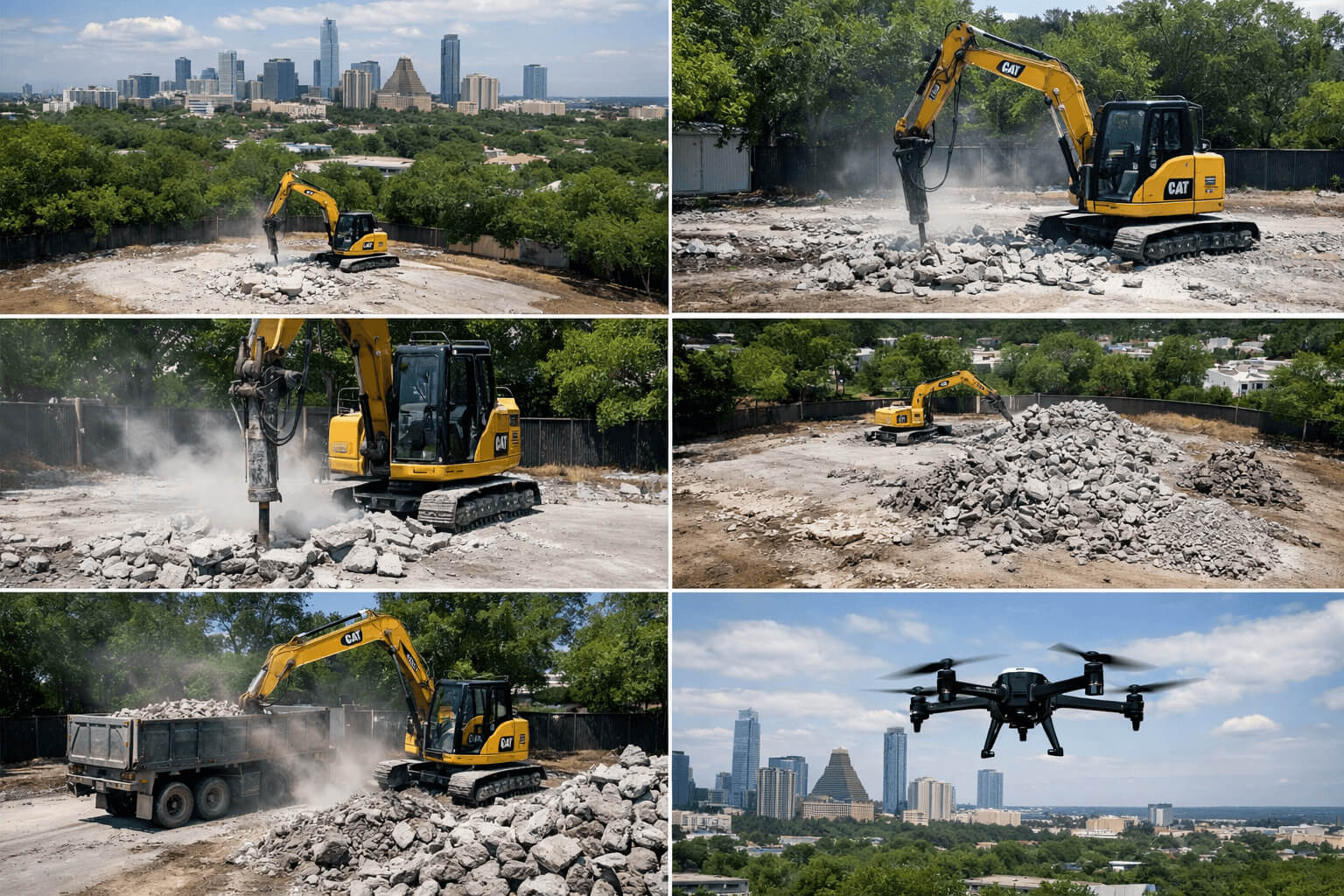
Rock demolition. Concrete removal. Slab demo. Hydraulic hammer precision on Austin's toughest geology — documented to centimeter accuracy with RTK survey-grade digital twins.
Book a Site Scan Get Site Prep Quote
PRECISION REMOVAL.
VERIFIED RESULTS.
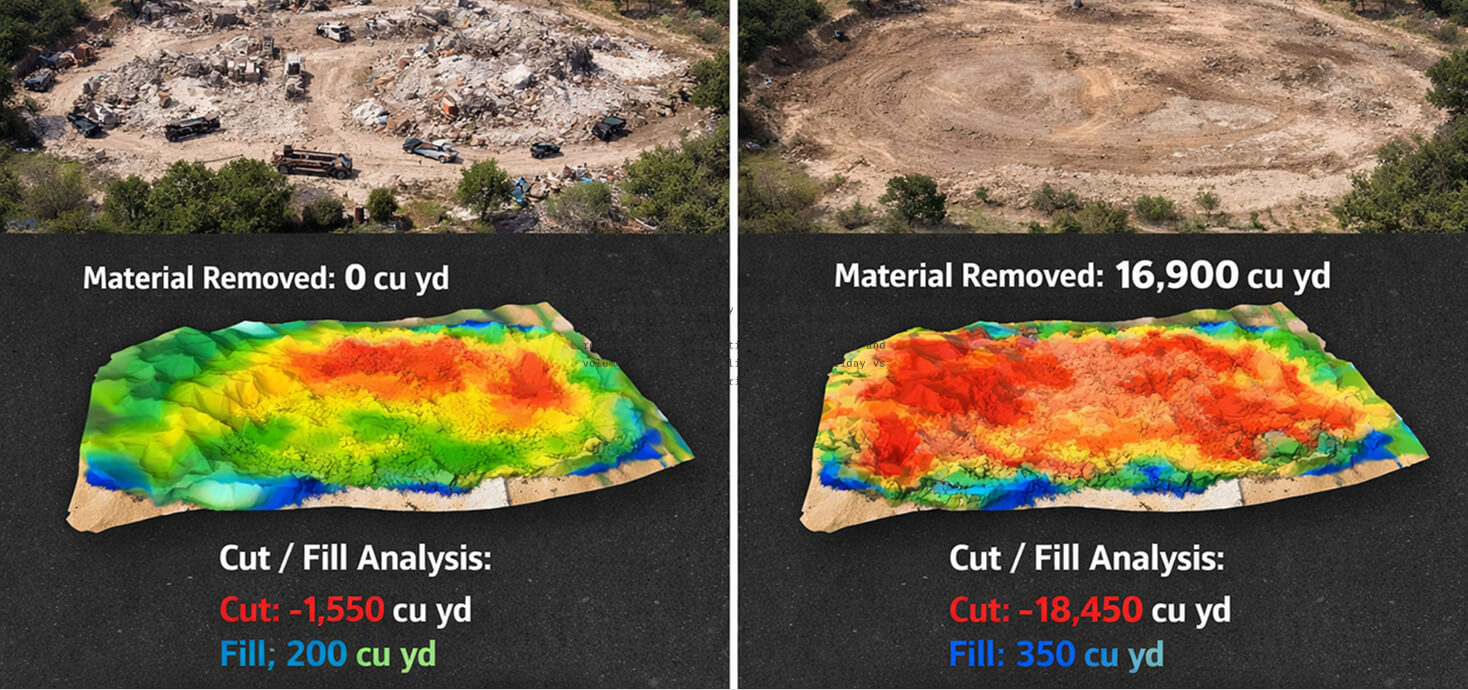
Demolition is the controlled removal of rock, concrete, and hardscape that stands between raw ground and your next phase of construction. When the job is done, you get clean, verified grade — documented with survey-grade RTK data that proves every cubic yard was accounted for. No guesswork. No disputed yardage. Just the data that lets the next phase begin on schedule.
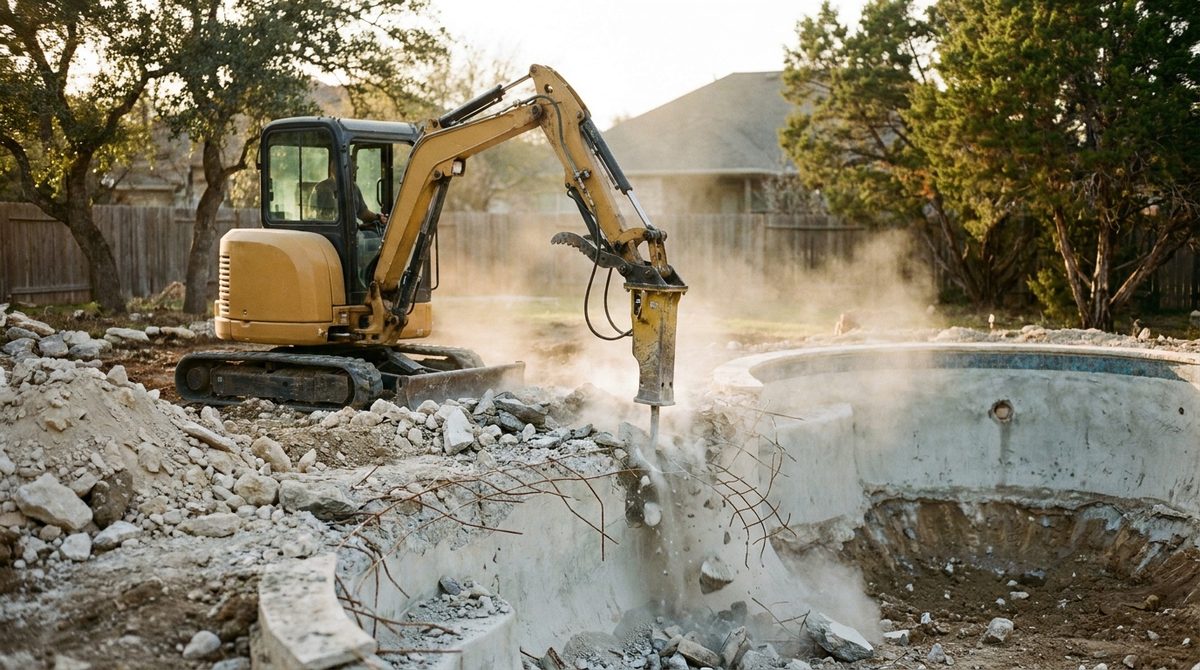
Pool Demolition
Single inground pool removal — gunite, fiberglass, or vinyl liner. Shell broken, steel separated, backfill compacted. Pairs naturally with site prep for pool builders installing a replacement or infill developers clearing existing lots.
BACKFILL COMPACTION · GRADE VERIFICATION
Concrete & Slab
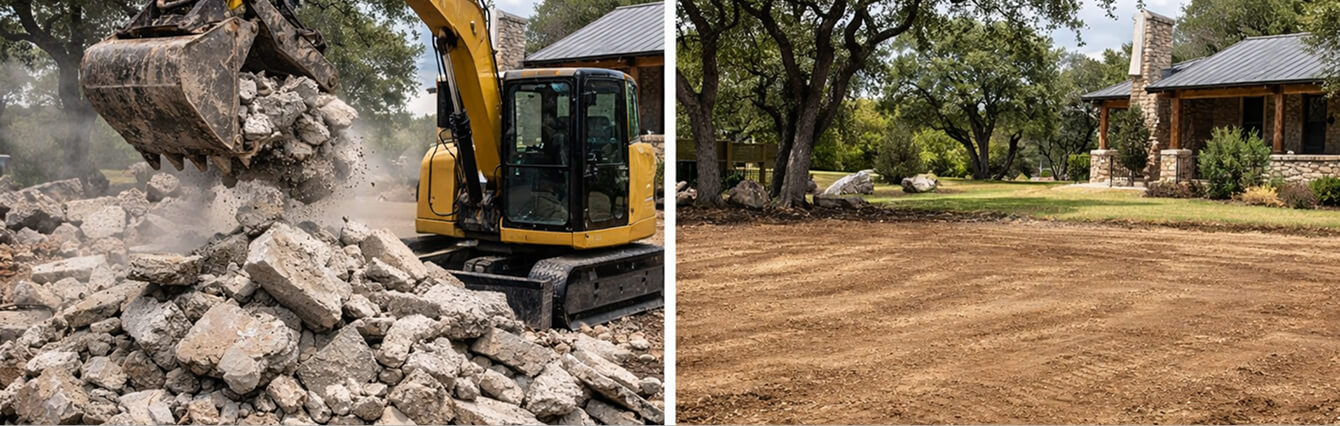
Removal
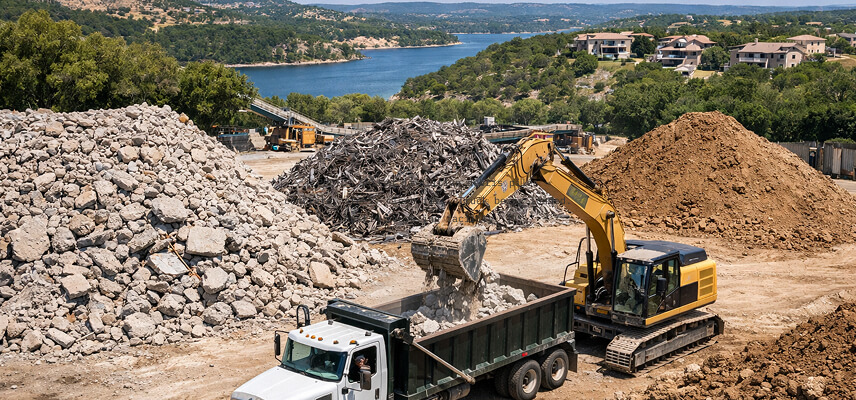
Complete removal of existing concrete — driveways, patios, sidewalks, slabs, and old foundations. Broken, loaded, and hauled or crushed on-site when feasible. Every square foot documented: RTK scans before and after confirm exact material volume removed and final grade achieved.
ON-SITE CRUSHING WHEN FEASIBLE · C&D RECYCLING
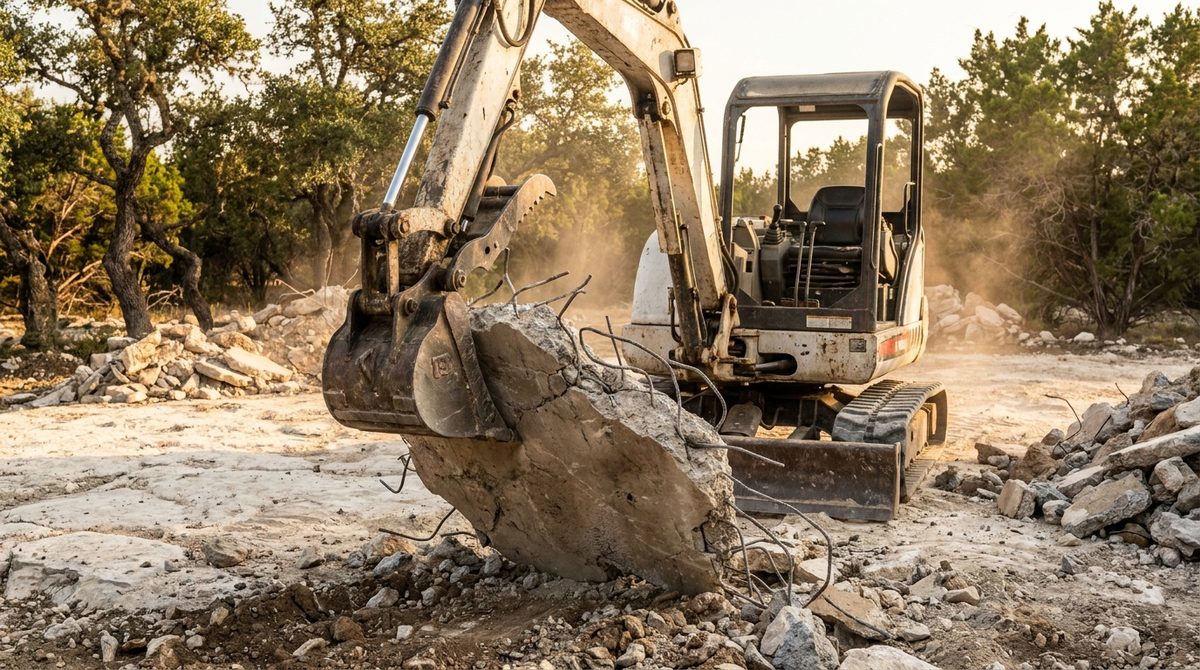
Foundation Removal
Per-structure foundation extraction — pier and beam or slab-on-grade. Pairs with infill development pipeline where existing foundations must be removed before new construction begins. Material sorted on-site for recycling compliance.
MATERIAL SORTING · AUSTIN C&D COMPLIANCE
Rock & Boulder
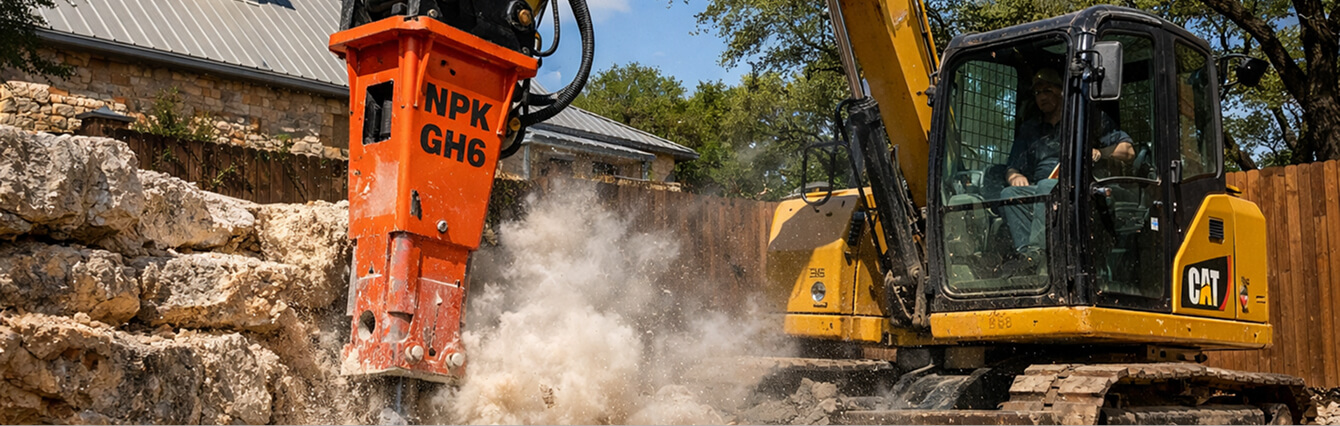
Demolition
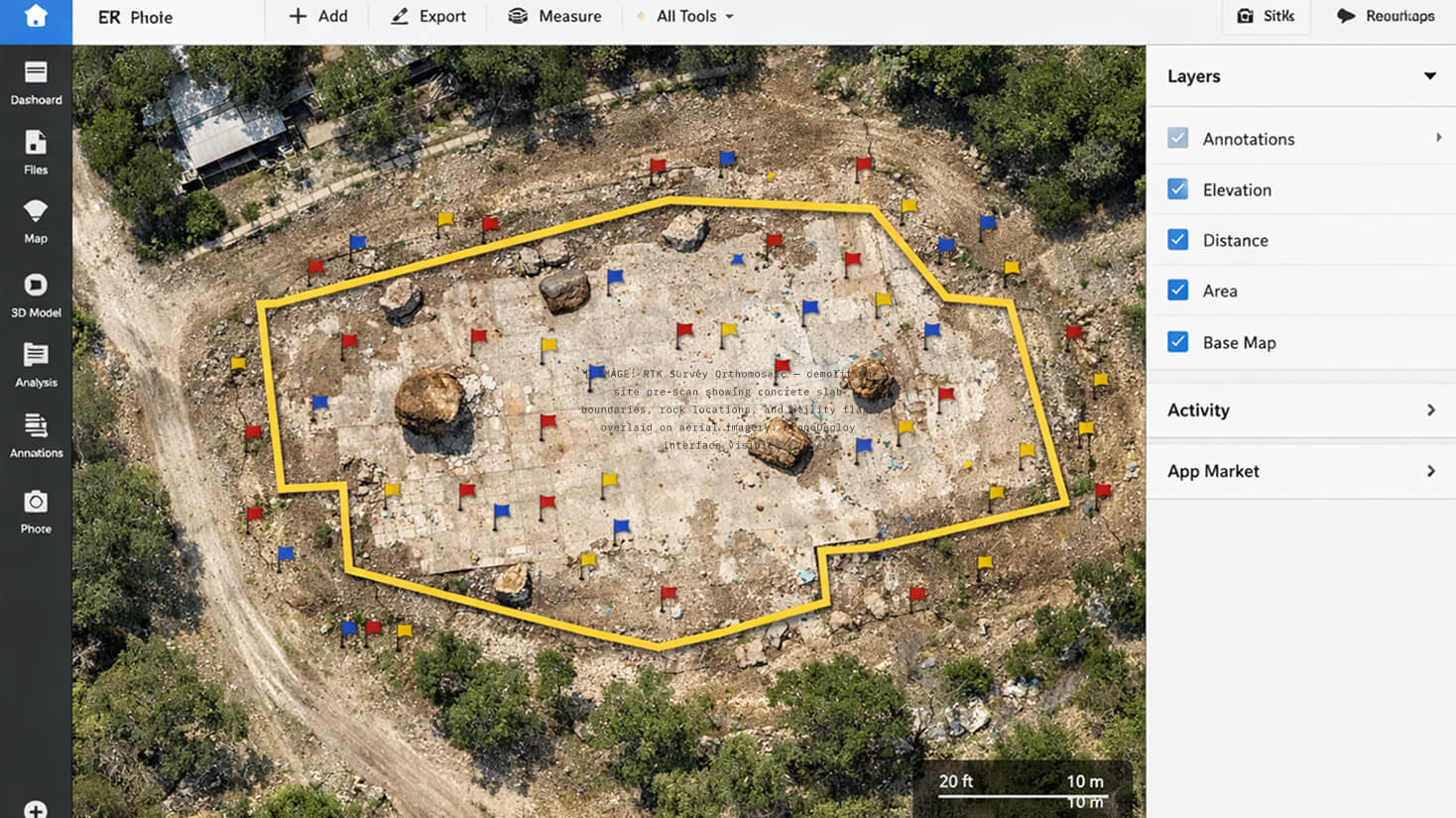
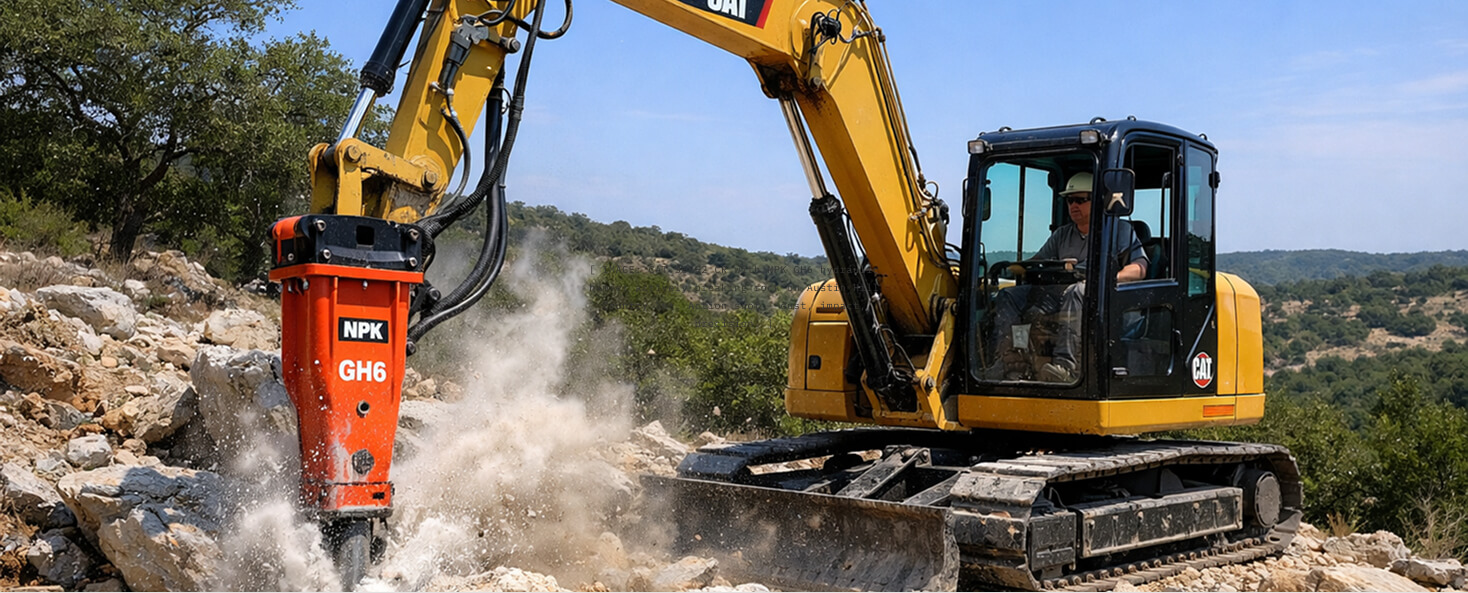
In-situ hydraulic rock breaking using an NPK GH6 hammer mounted on the CAT 308E2 CR. Limestone shelves, embedded boulders, and subsurface rock formations broken to spec without overexcavation. The RTK pre-scan locates rock before iron arrives — so every hit is planned, not discovered.
CAT 308E2 CR CARRIER · ±0.5CM PRE-SCAN
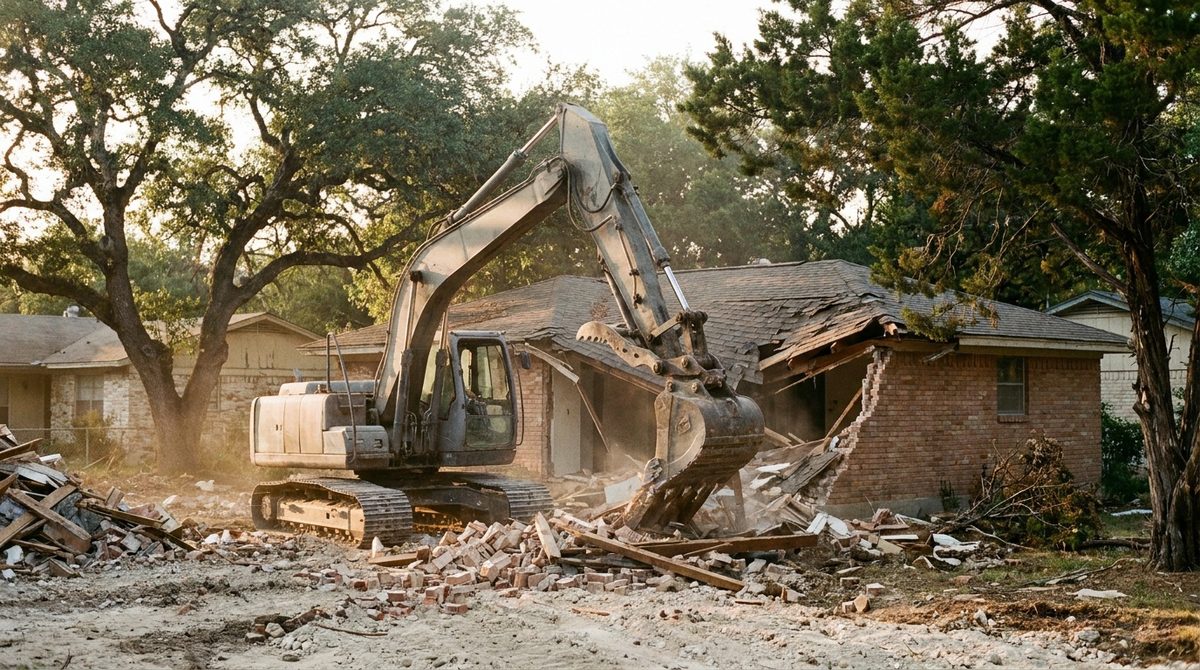
House Demolition
Full residential teardowns for rebuilds, inherited houses, and infill lots. Structure removed top-down and sorted as it falls, every load ticketed, slab quoted as its own line, and the lot graded, scanned, and documented before your builder mobilizes. Bundles with site prep for one-mobilization teardown-to-pad.
TOP-DOWN SORTED · $9,000–$25,000+ · ~$5–12/SF
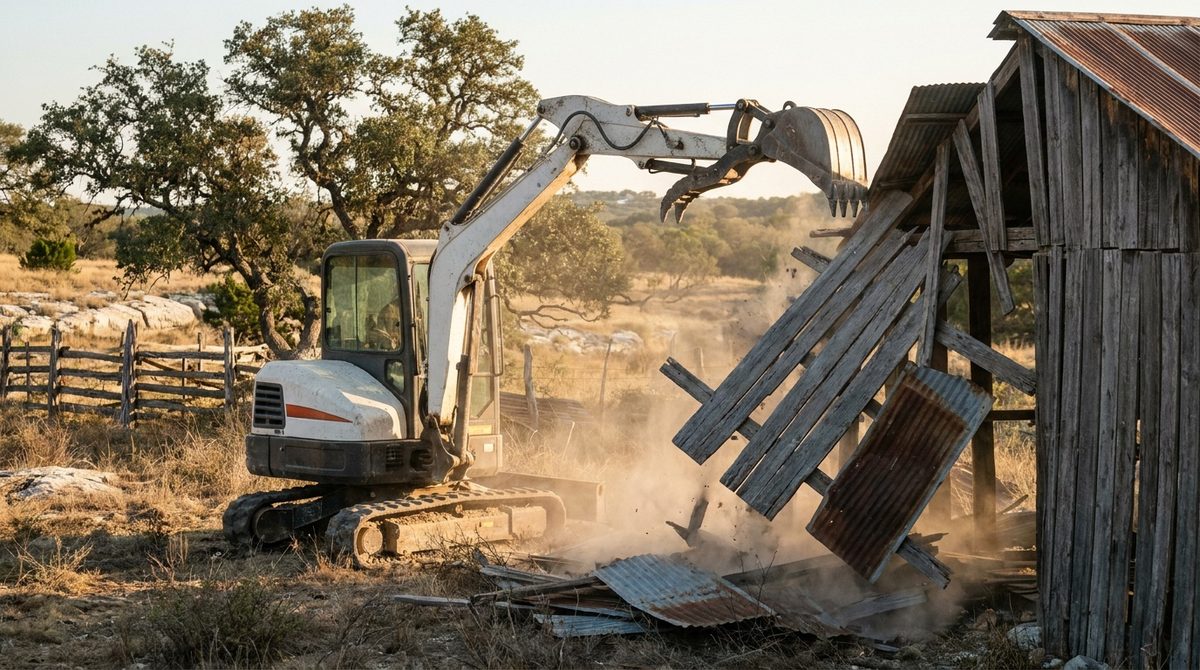
Garage, Shed &
Barn Demolition
Detached garages, sheds, carports, and old barns or pole barns taken down, sorted, and hauled — metal recycled, wood hauled, nothing buried. Slab and footing removal as an add-on on the same mobilization. Mini excavator for gate and tight-lot access; CAT 308E2 CR for barns on ranch land.
METAL RECYCLED · SLAB ADD-ON $4–8/SF
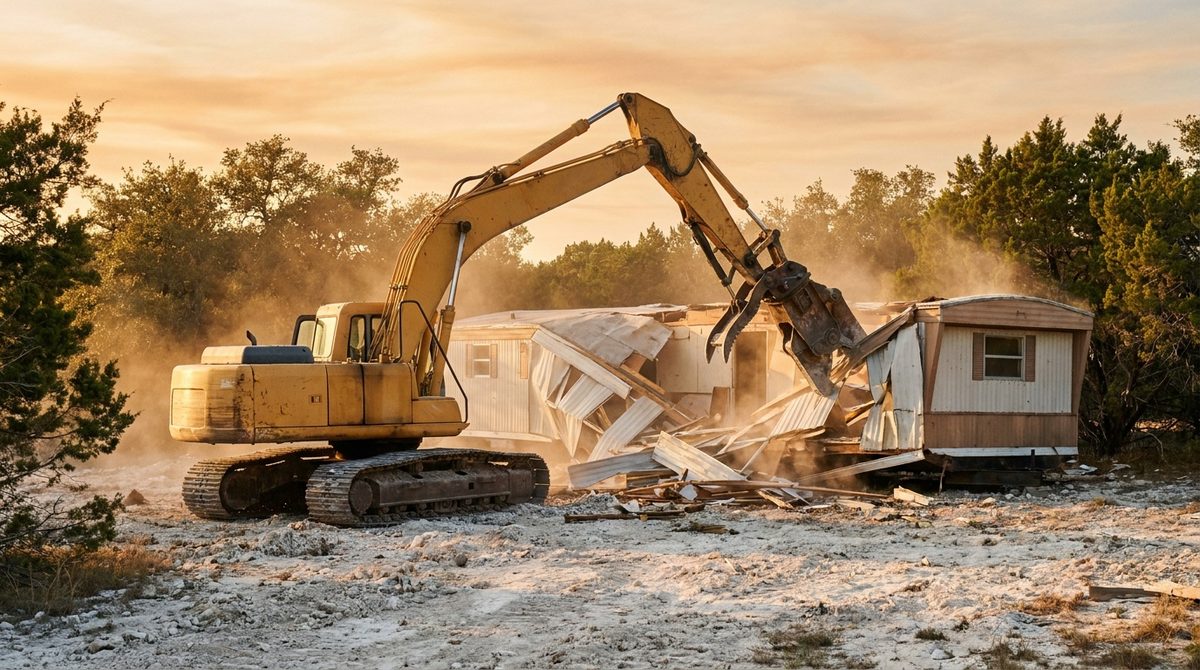
Mobile Home
Demolition
Single-wide and double-wide manufactured homes dismantled on site — not dragged down the road — then hauled and recycled. Piers and tie-downs pulled, skirting and plumbing out, utilities capped and flagged, pad graded and scan-verified for the next home or the next build. Rural lots, estates, and park pull-outs.
PIERS & ANCHORS PULLED · PAD GRADED · ±0.5CM SCAN
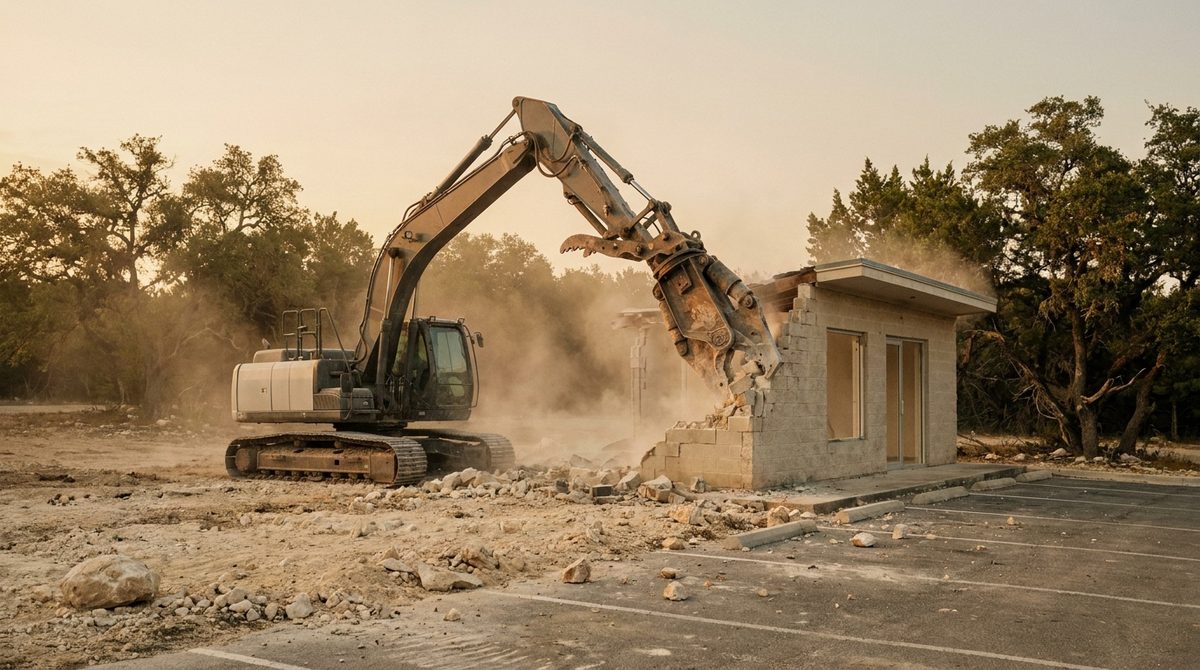
Commercial
Demolition
Light commercial teardowns for GCs, developers and property owners — single-story retail, shop, office and warehouse buildings on steel frame, CMU block or slab-on-grade. Fixed price per structure before mobilization, weekly RTK volume reports the lender can read, every load ticketed, C&D diversion documented, and the slab and asphalt handled in sequence on the same mobilization.
WEEKLY RTK VOLUME REPORTS · LOAD TICKETS · C&D DIVERSION
What will demolition
on your site cost?
Get a 2026 price range for Austin & Hill Country demolition in 60 seconds. Pricing pulled directly from our published rate card — every estimate verified by a free pre-demo RTK site scan before work begins.
- Pre-demo RTK site scan
- Material volume tracking
- 3D Digital Twin delivery
- C&D recycling documentation
Planning estimate only. Final pricing requires a pre-demo RTK site scan. Adjacent structures, material density, and lot access conditions may shift price within the published range. Quote turnaround: 48 hours.
KNOW THE COST
BEFORE THE HAMMER DROPS.
Every ClearGround demolition project starts with an RTK drone scan that maps your site to centimeter accuracy. That scan produces an exact scope — and an exact price. The ranges below reflect typical Austin residential and light commercial projects.