


COMMERCIAL DEMOLITION IN AUSTIN, TEXAS
Clear Ground demolishes light commercial buildings in Austin and Central Texas: single-story retail, office, shop and warehouse. Expect $6–$12 per sq ft for the structure (light commercial; most buildings $15,000–75,000+). The slab and paving are priced on their own lines. Asbestos survey and abatement come first, and Texas requires a DSHS notice 10 working days before demolition.
Steel frame, CMU block, slab-on-grade. Part of our Austin demolition services. We walk the site, price the structure, ticket every load and hand the pad to your GC ready to build.
Book a Site Walk
THE BUILDING COMES DOWN IN DAYS.
THE PAPERWORK TAKES WEEKS.
We take down light commercial buildings at the scale most Central Texas GCs, developers and owners need: a vacant single-story retail box, a metal shop, a dated office, a light steel-frame warehouse. The building comes down to the slab. Then the slab, footings and asphalt come out in sequence, and the pad is rough-graded for whatever comes next. We sort materials as they fall and ticket every load. The price is set per structure before we mobilize.
We stop at light commercial. No high-rise, plant or heavy industrial work. Asbestos survey and abatement are the owner's separate scope and happen before demolition. If you do not have an abatement contractor yet, we can point you to one.
Texas requires a DSHS notice 10 working days before demolition
The Texas Department of State Health Services (DSHS) requires written notification before demolition of public and commercial buildings, at least 10 working days ahead (25 TAC Chapter 296). The operator files it: the owner or the contractor of record for the demolition. We say in the quote who files on your job. Start at www.dshs.texas.gov/asbestos.
Asbestos survey and abatement happen before demolition. If the survey finds asbestos, the start date moves behind the abatement.
Last reviewed: September 2026. Not legal advice; confirm the current rule with DSHS.
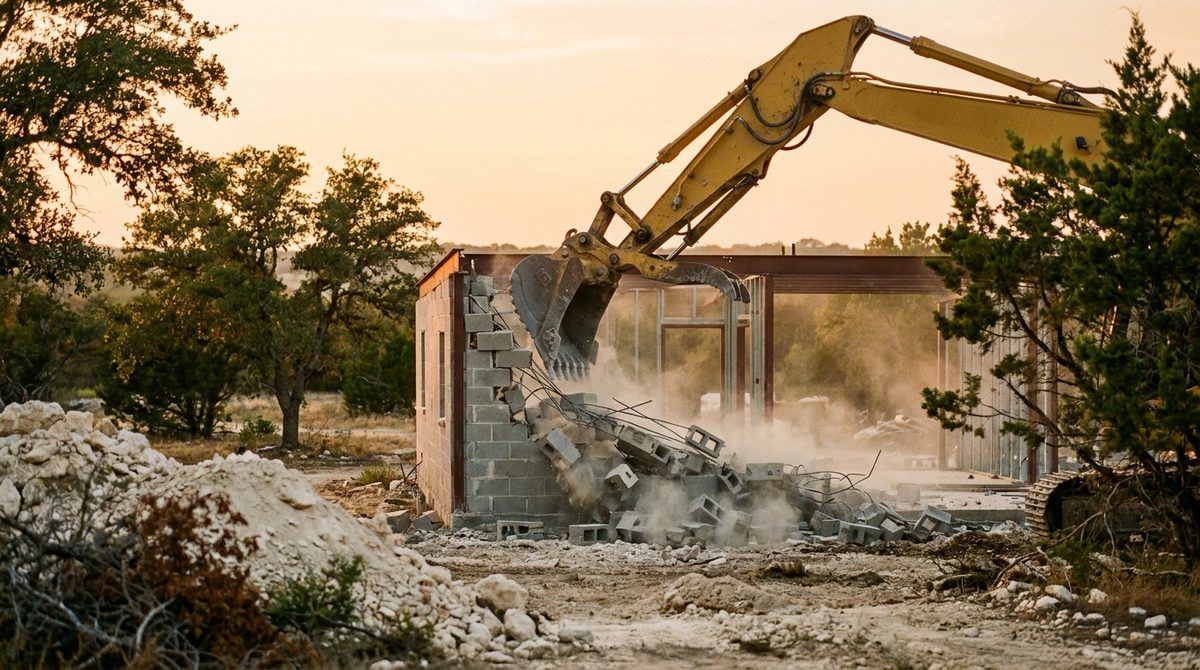
Strip & Office
CMU block, brick veneer or stucco over block on a slab-on-grade, with a bar-joist or wood-truss roof and storefront glazing. Roof structure dropped inside the walls, block pulled with the thumb, masonry and steel sorted as they come down. Parking lot and slab handled after the structure is on the ground.
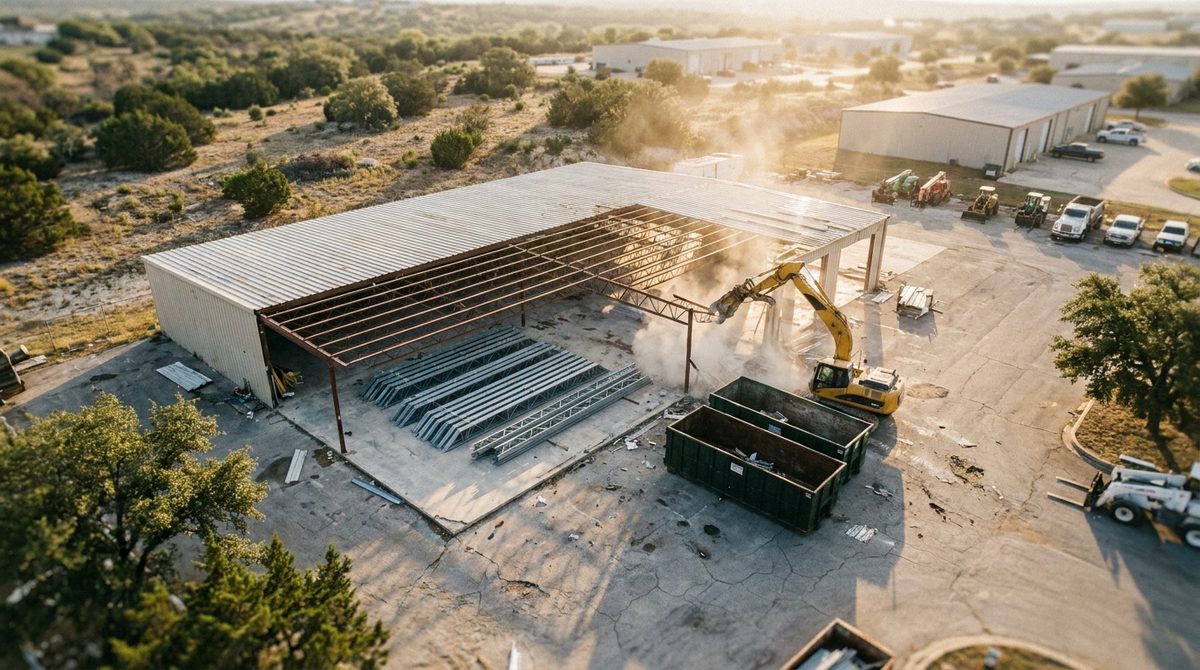
Shop & Metal Building
Pre-engineered metal buildings and light steel-frame warehouses: red iron, purlins, girts and panel skin. Skin stripped, frame dropped bay by bay, steel bundled and sent to the recycler by weight. The weight tickets show what left the site.
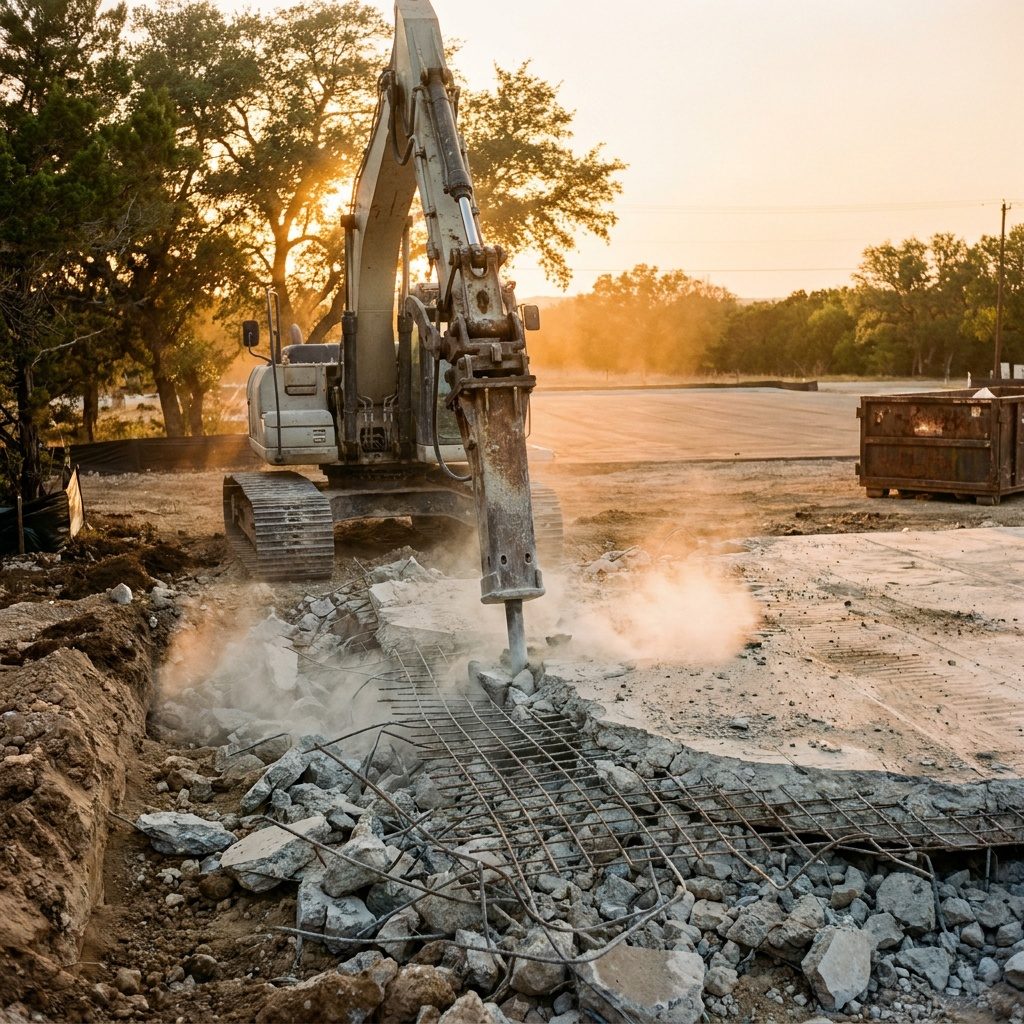
& Asphalt
The part the low bid leaves for the next guy. Slab-on-grade broken and hauled to C&D recycling, footings and grade beams broken out with the hydraulic hammer, asphalt peeled and base recovered. Priced per square foot on its own line so you can see what the pad costs versus the building.
ONE MOBILIZATION,
FROM STANDING BUILDING TO BUILDABLE PAD.
On a commercial teardown the building is rarely the whole job. Survey, abatement, the DSHS notice and utility disconnects come first and are the owner's side. Then the structure, then the slab and paving, then the pad. We carry the sequence from the first strike through site prep and pad prep, so your GC inherits one handoff instead of three contractors pointing at each other. A pool or a limestone shelf where the new footprint goes is its own line item. See rock & boulder demolition. We scope both on the same visit.
Asbestos survey and any abatement are done first. The DSHS notice goes in 10 working days before demolition. Utilities are disconnected at the source through the utility and owner. We schedule around all of it.
→This page. Sequenced take-down, materials sorted as they fall, every load ticketed.
→Concrete & slab removal and foundation removal for the footings and grade beams, then the parking lot. Priced per square foot, not folded into a lump.
→Rough grade to target, then building pad prep or land clearing for the rest of the parcel. Load tickets and recycling records go to your GC.
COMMERCIAL DEMOLITION COST
PER SQUARE FOOT. PRICED PER STRUCTURE.
Expect $6–$12 per sq ft for the structure (light commercial; most buildings $15,000–75,000+). The slab, footings and asphalt are priced separately per square foot, so the building and the pad are two visible numbers, not one lump. The site walk confirms footprint, slab area, paving area, access and haul distance, then the price is set per structure before we mobilize. Run a first-pass number in the demolition calculator or read the demolition cost guide.
| Service | Unit | Range | Typical timeline |
|---|---|---|---|
| Single-story structure (retail, office, shop, warehouse) | sq ft | $6–$12 (light commercial; most buildings $15,000–75,000+) | Days on site. The DSHS notice needs 10 working days before demolition. |
| Slab, footings and grade beams | sq ft | $4–$8 | Adds days; area, thickness and rock set it |
| Asphalt and paving | sq ft | Quoted after the site walk | Adds days; area sets it |
| Extra haul-off (contents, junk) | job | $1,000–$3,500 | Hauling the demolition debris is included |
| Drone topo and volume report (optional add-on) | scan | $500–$1,500 | Optional. Not part of the base price. |
Prices reviewed: September 2026. Ranges for Austin and Central Texas; your site walk sets the final number.
Ranges reflect typical Central Texas light-commercial work. The final price depends on structure type and square footage, slab thickness and reinforcement, paving area, access, haul distance and rock. Every proposal states scope, schedule and price. Survey, abatement, the DSHS notification fee if any, utility disconnect fees and any owner-side permits or approvals are not included.
HAND OVER THE TICKETS.
We walk the structure and confirm the frame type, slab and footing layout, paving area and access. We confirm the survey, abatement clearance and DSHS notice are on file, or who is filing them. The proposal is a price per structure with the slab and asphalt as separate per-square-foot lines. Written quote within 48 hours of the site walk.
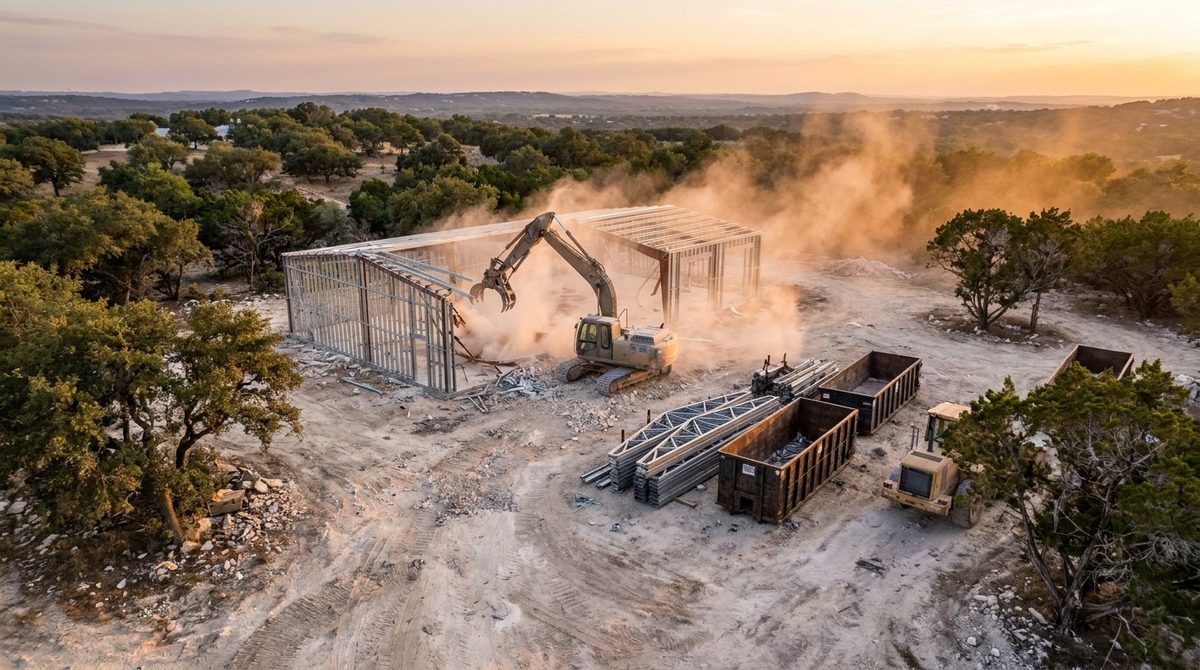
Roof structure comes down inside the walls. Steel frame is dropped bay by bay with the hydraulic thumb, and CMU block is pulled in courses, not pushed over into the parking lot. The hydraulic hammer is reserved for what needs it: thick slab, footings and grade beams. Steel, concrete, block and wood are sorted as they come down. Water is on the dust. Nothing is burned and nothing gets buried on site.
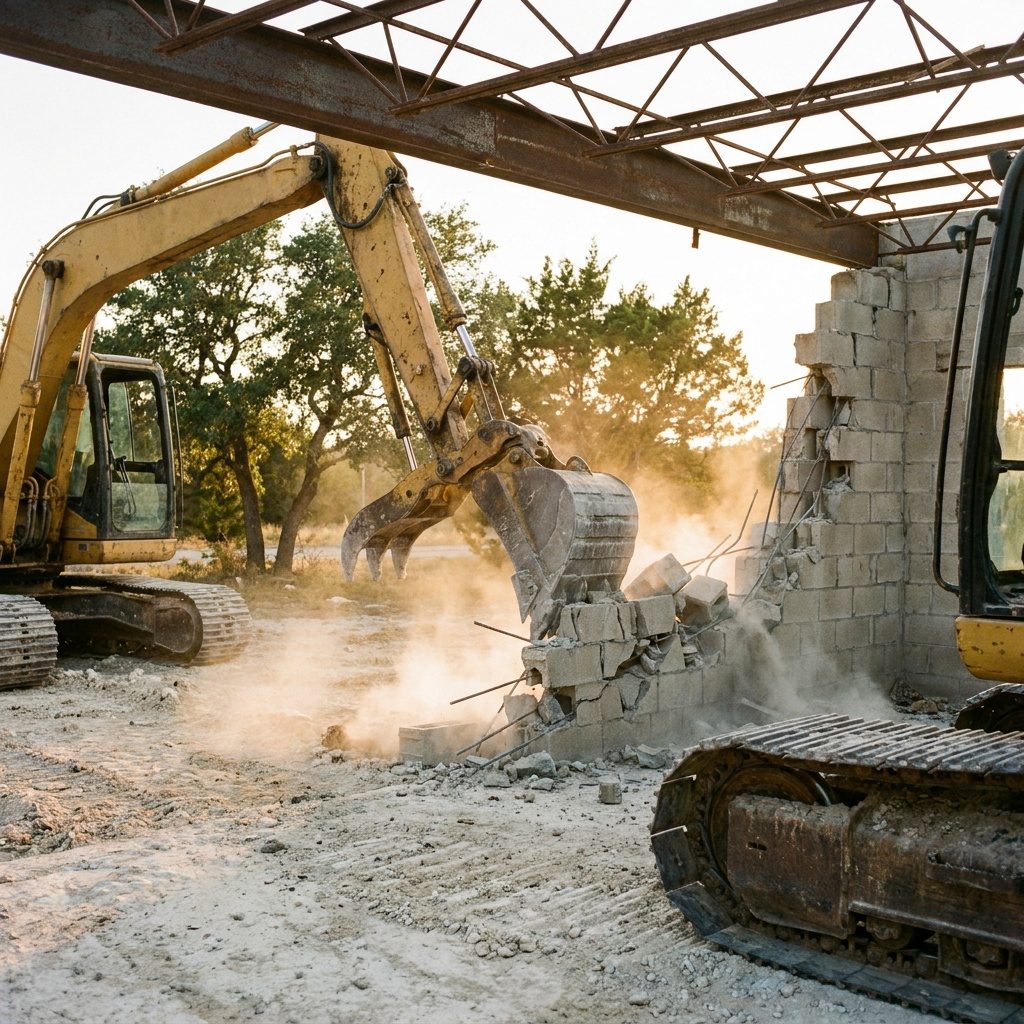
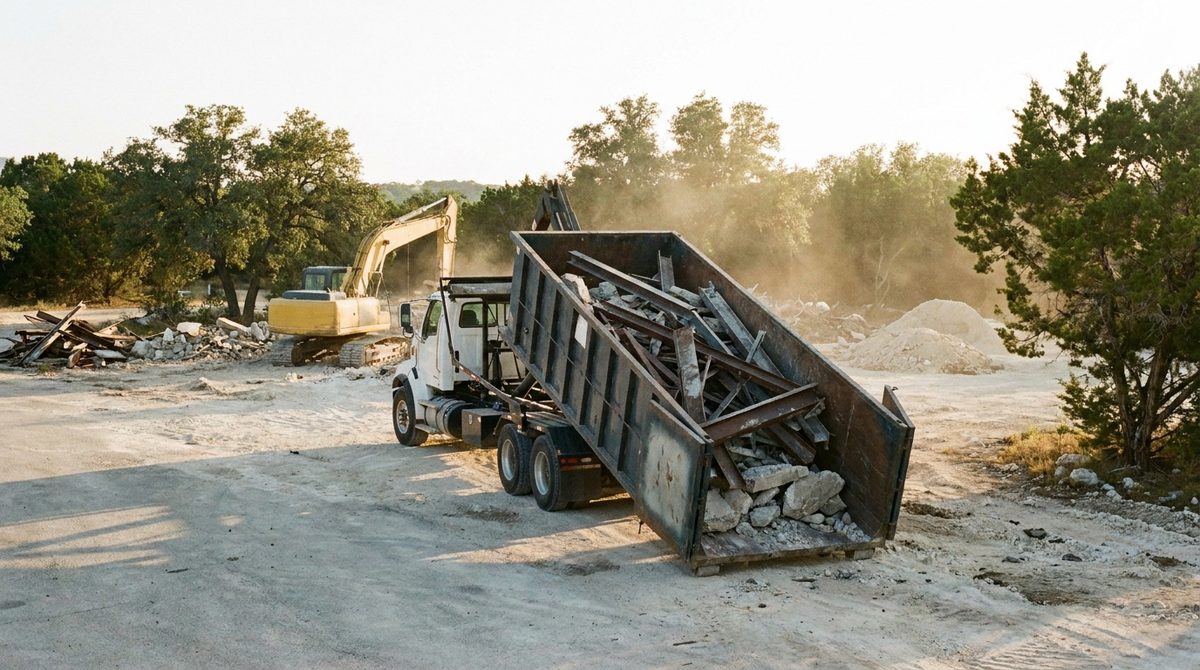
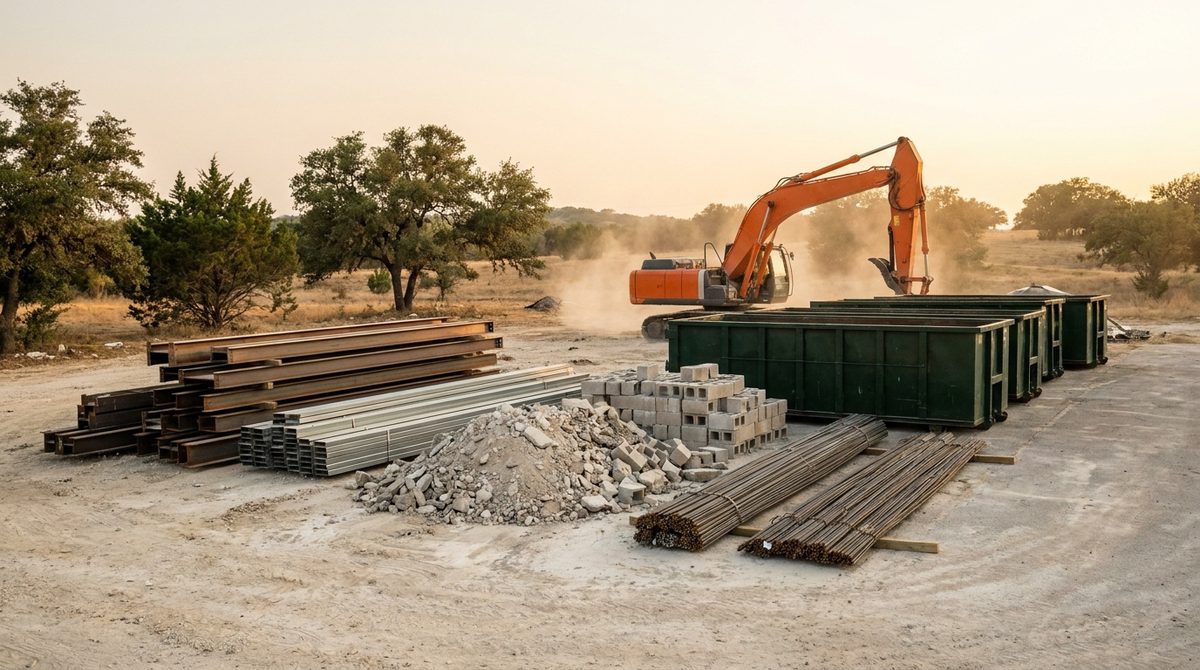
Steel is bundled and weighed at the recycler. Concrete and block go to C&D recycling. Asphalt goes to a recycler. Wood and roofing are separated. Each load leaves with a ticket, so the yardage on your invoice matches paper you can check. If you want a measured volume report, a drone topo scan is available as a priced add-on ($500–$1,500 per scan).
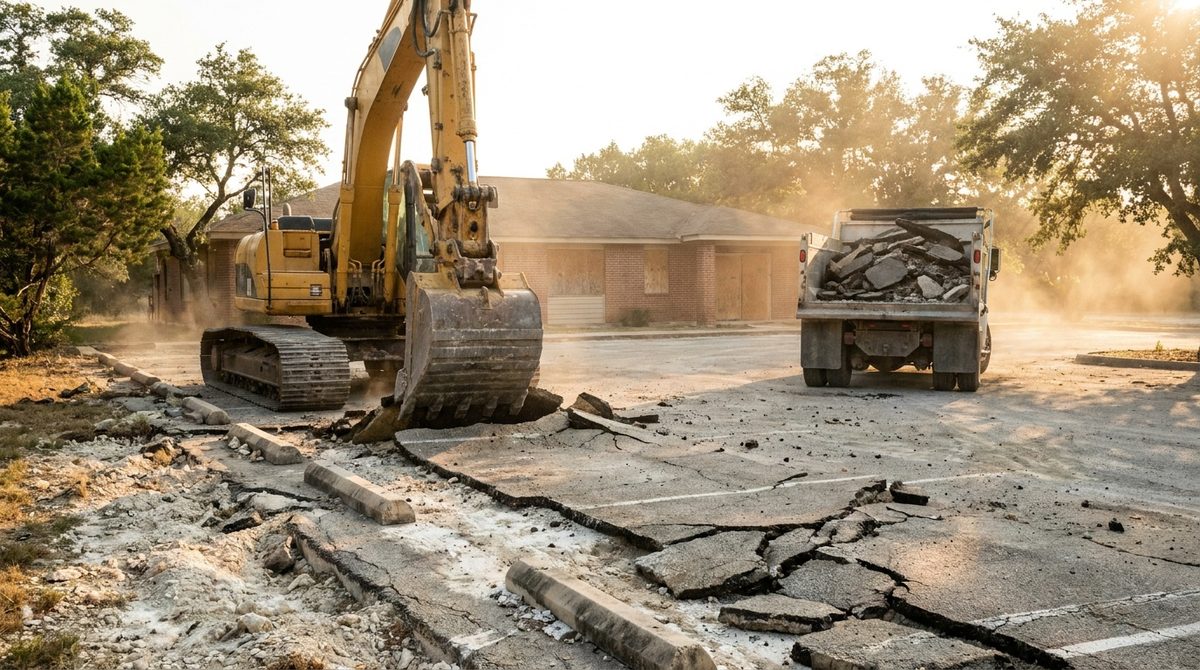
With the structure on the ground, the slab is broken and loaded for C&D recycling. Footings and grade beams are hammered out, not left as a surprise for the excavation crew. Asphalt is peeled, the base course recovered for reuse where it meets spec, and curbs and wheel stops hauled. On-site utility lines are cut after the utility disconnect and capped by a licensed trade, and we flag and photograph the stubs, and the pad is rough-graded to the target elevation from your civil plans.
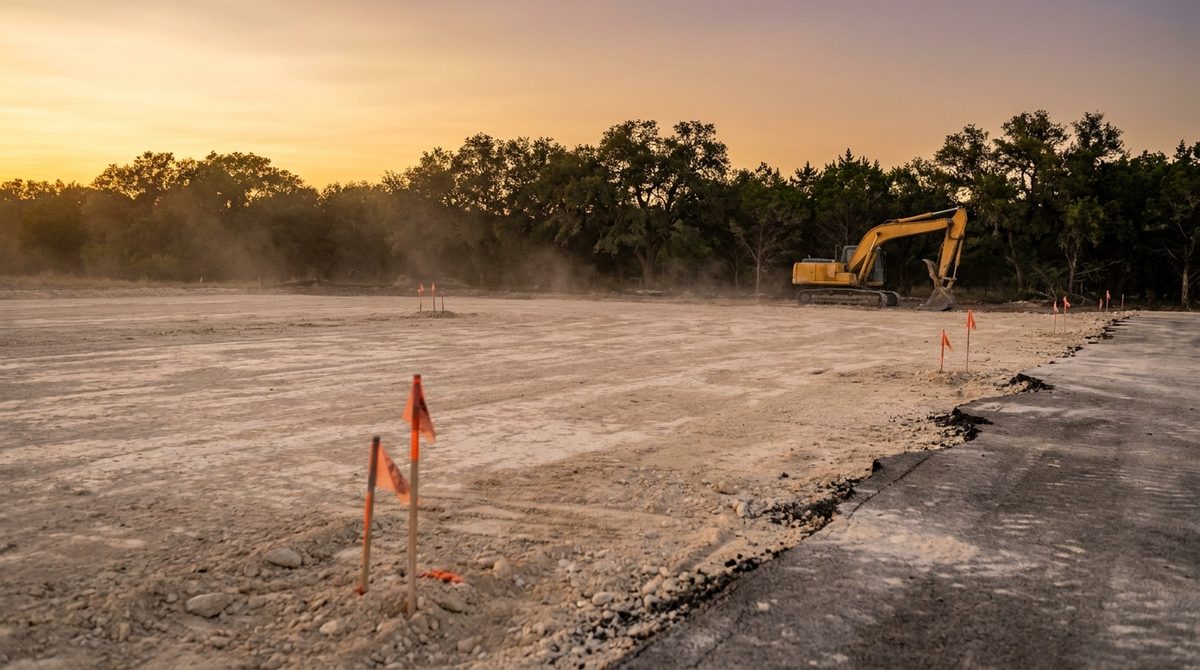
You get the load tickets, the steel weight tickets and a C&D recycling summary by material. That is what a GC needs for the closeout binder and what an owner keeps on file when the parcel sells. The next trade starts from a graded pad.
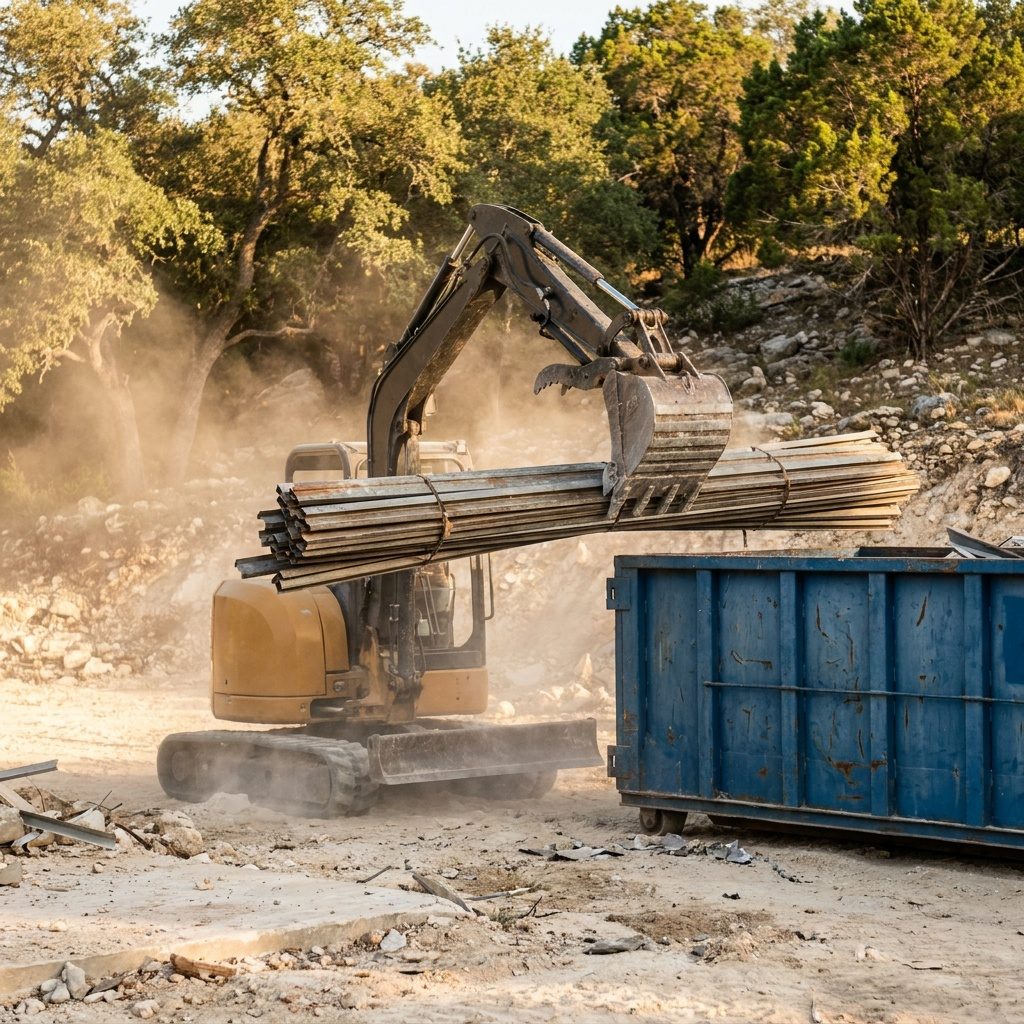
The thumb pulls steel frame, block walls and roof structure and bundles steel into roll-offs. A compact carrier keeps the work inside the property line on tight lots with a neighbor's wall, a live drive aisle or a sidewalk a few feet away.
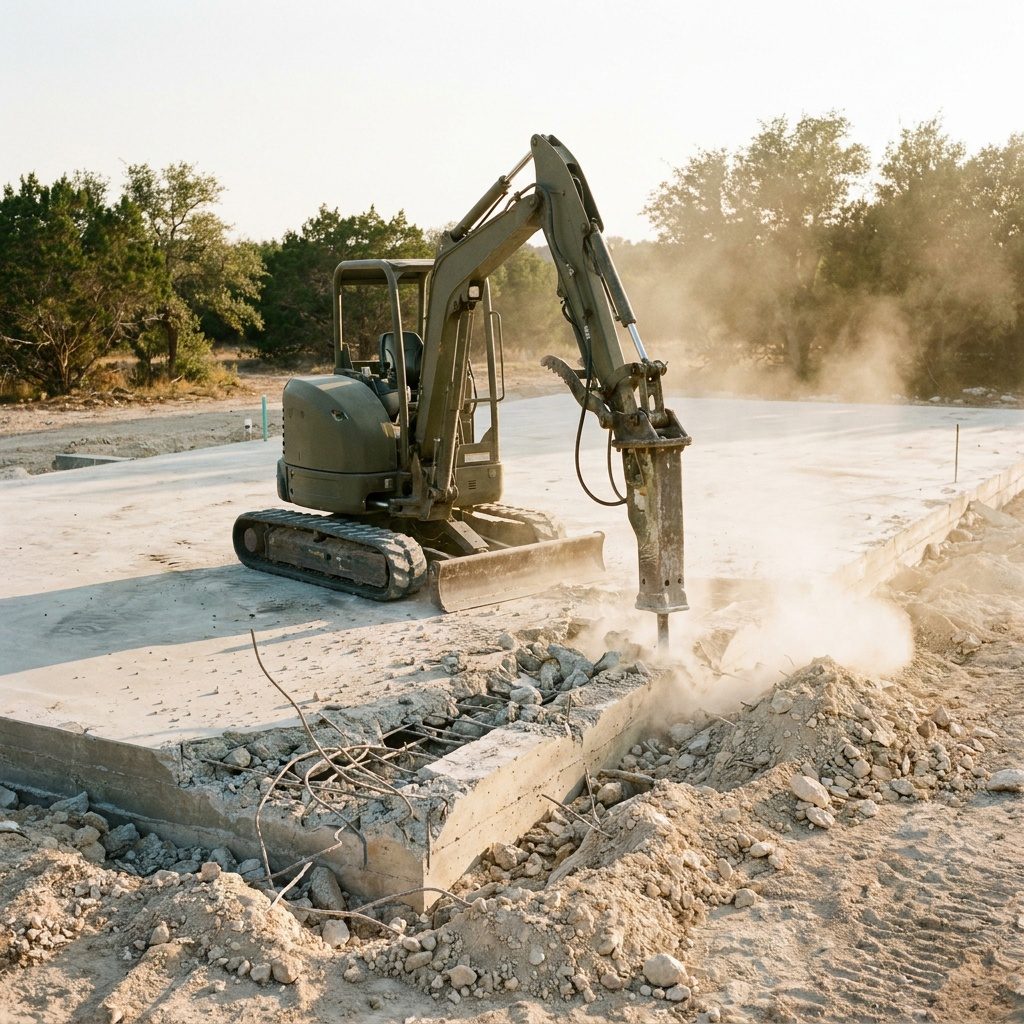
Used where the work needs it: thick reinforced slab, footings, grade beams and the limestone shelf that shows up under many Hill Country pads. Thumb and bucket handle the rest.
- CAT 305.5E2 mini excavator with hydraulic hammer
- Kobelco SK75 excavator with 1,500 lb hydraulic hammer
- Ram 3500 dually and Diamond C equipment trailer
Dozers, larger excavators and compaction equipment are rented locally when a job needs them.
EVERY LOAD TICKETED.
EVERY TON ACCOUNTED FOR.
A commercial building is mostly steel, concrete and masonry by weight, and all three have a recycling stream. We sort as the structure comes down. Steel is bundled and sent to the recycler by weight. Concrete and block are broken to haul size and sent to C&D recycling. Asphalt is recycled. Wood and roofing are separated. We do not publish a diversion percentage, because it depends on the building. The tickets on your job are the number.
A Pad You Can Build On.
You need the building gone on the date in the schedule, the slab and paving out with it, and no footing left for your excavation sub to find. We price the slab and paving on their own lines, ticket every load and hand over the paperwork for your closeout binder. Plan the start around the survey, abatement and the 10-working-day DSHS notice.
Talk to Us About Your SchedulePaperwork the Lender
Doesn't Have to Ask For.
Load tickets and C&D recycling by material in one place, ready for the draw request and the due-diligence file. If the teardown feeds a redevelopment, the same crew carries it through site prep. See how it works for infill developers.
See the Developer JourneyA Vacant Building Is a Liability.
A Clean Pad Is an Asset.
An empty retail box or shop costs you insurance, taxes and risk every month it stands. We tell you what it will cost to take down, what has to happen first (survey, abatement, the DSHS notice, disconnects, permits) and what is left when we leave.
Book a Site WalkExpect $6–$12 per sq ft for the structure (light commercial; most buildings $15,000–75,000+). Slab and footings run $4–$8 per sq ft on their own line. Hauling the demolition debris is included; extra haul-off (contents, junk) is $1,000–$3,500 per job. Asphalt is quoted per square foot after the site walk.
Texas requires written notification to the Department of State Health Services at least 10 working days before demolition of public and commercial buildings (25 TAC Chapter 296). The operator files it: the owner or the contractor of record. We say in the quote who files on your job, and the details are at www.dshs.texas.gov/asbestos.
The owner does, as separate scope. The survey and any abatement happen before demolition, and the start date follows the abatement clearance. We do not do abatement, and we can point you to a contractor who does.
Light commercial means single-story retail, offices, shops, metal buildings and light steel-frame warehouses on a slab-on-grade. We do not do high-rise or multi-story structural work, plant or heavy industrial demolition, tank removal or environmental remediation.
We check whether your address needs a demolition permit and say so in the quote. Where one applies, we pull it or coordinate with whoever holds it. Platting, site development permits and utility account closures stay with the owner or GC.
They come out after the structure is on the ground, each on its own per-square-foot line. The slab is broken and loaded for C&D recycling. Asphalt is peeled and hauled to a recycler, and the pad is rough-graded to your civil plans. If you want the slab left in place for now, we will price it both ways.
Most single-story structures come down in days once we are on site, and the slab, footings and paving add days. Most jobs start 1–3 weeks after approval, but on a commercial building the survey, abatement and the 10-working-day DSHS notice set the earliest date.
All demolition services in one place: residential, commercial, concrete, pool and rock.
View Hub →Slab, sidewalks, curbs and paving broken and hauled to C&D recycling. $4–$8 per sq ft.
View Service →Footings, grade beams and piers broken out before the next trade.
View Service →Motel, apartment or residential pool on the property? $30,000–$59,000 per pool.
View Service →Full residential teardowns for rebuilds and infill lots. $9,000–$25,000 per house.
View Service →Single- and double-wide dismantle, haul and recycling, piers pulled, utilities capped, pad graded.
View Service →From cleared parcel to a building pad, with the same crew.
View Service →Every service range in one place.
View Pricing →Run a first-pass number for your building.
Open Calculator →COMMERCIAL TEARDOWN ON THE SCHEDULE?
WALK IT WITH US FIRST.
Book a site walk. You get a price per structure with the slab and asphalt on their own lines, and a straight answer on what has to happen first: survey, abatement and the 10-working-day DSHS notice.
Book a Site Walk(512) 880-8888 · Austin & Central Texas · Insured: $2M per occurrence / $5M aggregate general liability · The Ground, Verified.