


Your client picked the design. Your crew hit rock at 18 inches.
Now the timeline is blown and the homeowner is calling. We eat limestone for breakfast.
Pool excavation for pool builders in Austin, TX.
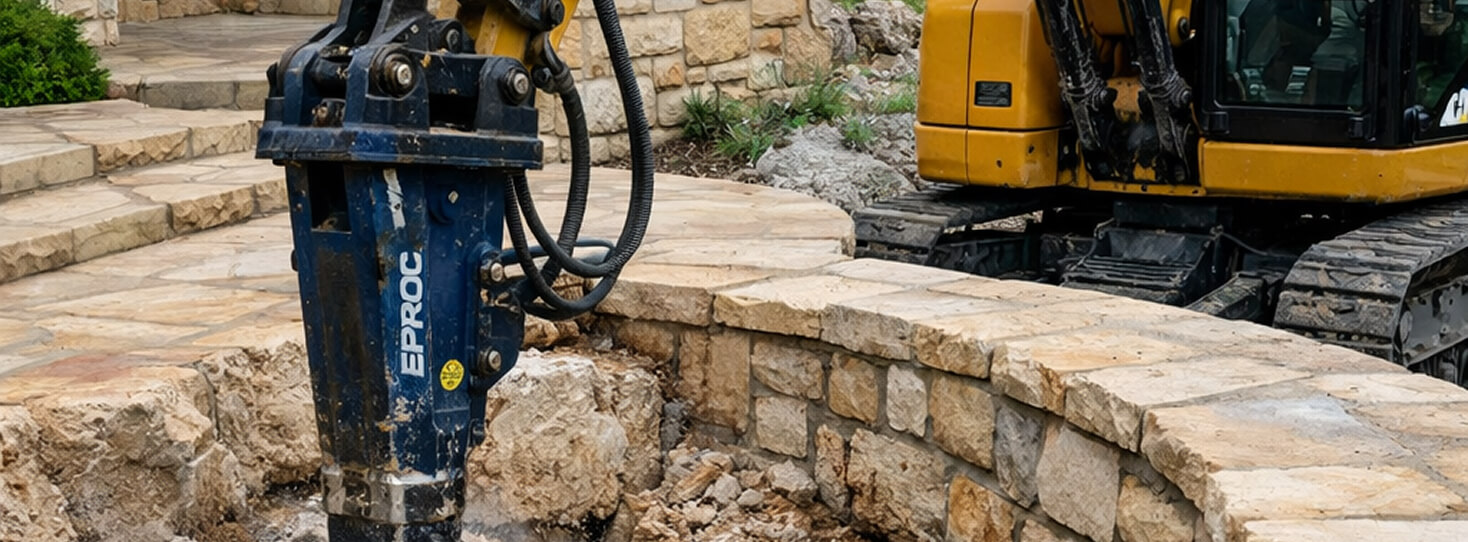
Excavator with hydraulic hammer. A rock-milling head is rented for the job when the rock calls for it. Test holes and probing find the rock before we mobilize.
Clear Ground digs pool shells for pool builders in Austin and the Hill Country, including limestone and caliche. Shell excavation runs $4,500–$28,000 per pool depending on size, rock and access. Most jobs start 1–3 weeks after approval. Includes excavation to your builder's spec and haul-off of spoil. Optional: drone scan and 3D surface model of the site, $500–$1,500 per scan.
Hill Country builds
break contractors.
You don't need us to tell you Austin's geology is unforgiving. You've watched timelines evaporate, rental equipment fail, and homeowners lose confidence — all because nobody probed the ground before the first bucket moved.
Your standard excavator breaks teeth on flint limestone that nobody probed. The rental company won't cover the damage. The homeowner's custom pool is now three weeks behind and you're eating the overrun.
Without knowing what's under the surface, every quote is a guess. Guess low and you lose money on rock removal. Guess high and you lose the bid. You need test holes or probing before you price the job.
Premium builds in Lakeway and Westlake mean excavating within feet of existing foundations, retaining walls, and neighboring structures. Standard equipment creates liability you can't afford on a high-end pool project.
One partner from scan to shell.
Most pool builders juggle a clearing crew, an excavation sub, and a grading crew — and pray they communicate. Clear Ground handles the entire ground phase with a single mobilization and a single handoff.
We walk the site for grades, access and drainage. Rock depth comes from test holes and probing before a single bucket moves. Optional: drone scan and 3D surface model of the site, $500–$1,500 per scan.
Vegetation removed. Stumps grubbed. Rock can be milled on site. Site cleared to construction-ready grade with heritage trees protected.
Mini excavator or Kobelco SK75 with a hydraulic hammer. Shell excavation through limestone, with hammer size matched to the distance from existing structures.
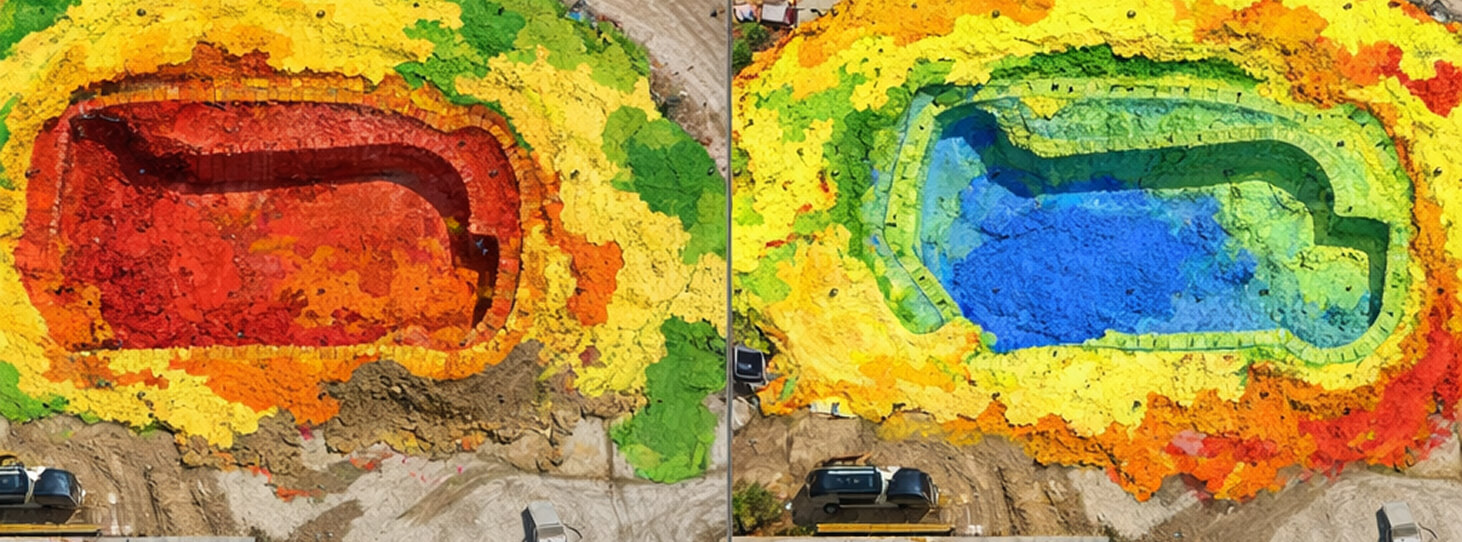
Around the pool shell. Cut/fill verified to plan with RTK. Drainage modeled. Grade confirmed before the next trade arrives.
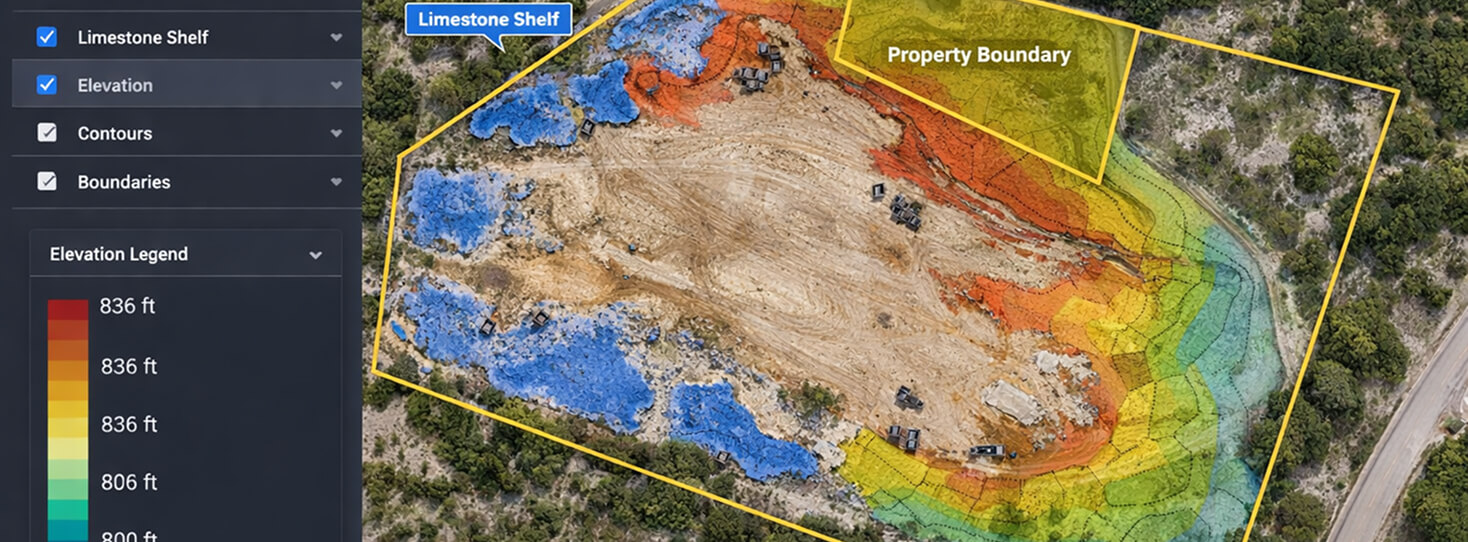
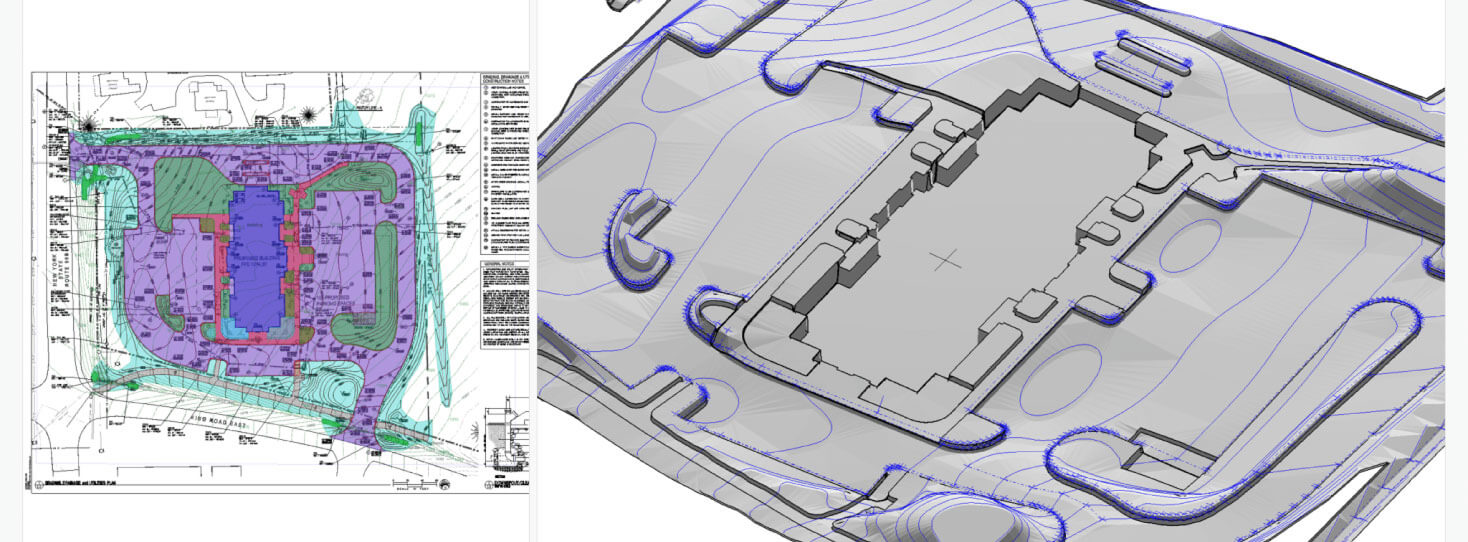
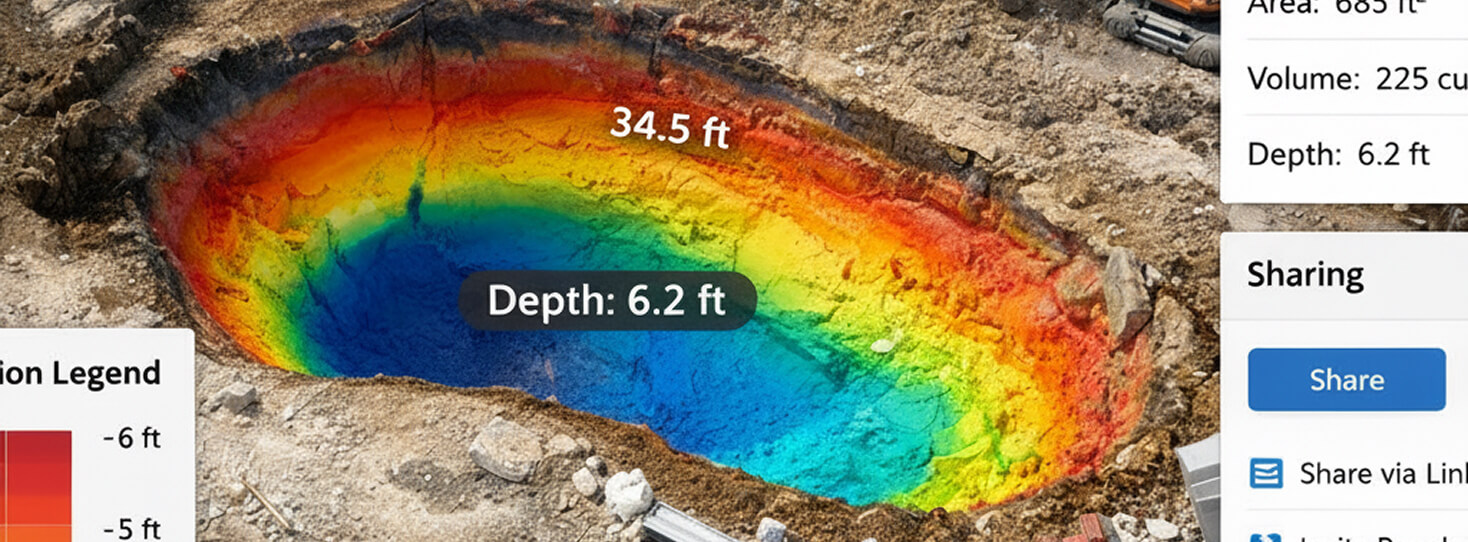
Georeferenced 3D model processed in Pix4D. Shareable with your client, your engineer, or your GC. Measurable.
At any phase of your pool build
get a clear record of your site
We walk it
before we dig.
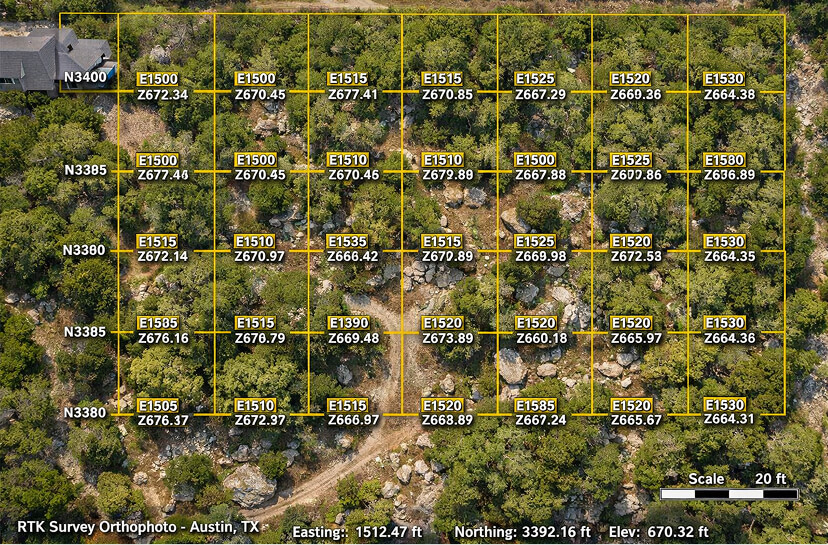
We walk the grades, access and drainage lines before your crew shows up. A drone models the ground surface. Rock, footings and buried lines below the surface are found with test holes, probing, 811 locates and GPR where needed. An optional drone scan gives you a surface model (RTK-corrected drone photogrammetry, checked against ground points on site).
What changes when you
walk it before you dig.
Before you break ground, you see the site surface in 3D and we probe for rock. A drone models the ground surface. Rock, footings and buried lines below the surface are found with test holes, probing, 811 locates and GPR where needed. Your bid rests on measured surface data and test holes, not hope.
Rock can be milled on site, which cuts hauling and disposal. Milled rock used as structural backfill needs your engineer's approval. Where it is not approved, it stays as non-structural fill or leaves the site.
Premium builds in Lakeway and Westlake mean working within feet of existing foundations and retaining walls. We size the hammer to the rock and the distance, and you or your engineer can set vibration limits before we start.
Your homeowner gets a shareable 3D model of their completed excavation. Your engineer gets verified grades. Cut/fill quantities and final grades are documented.
Iron built for Hill Country rock.
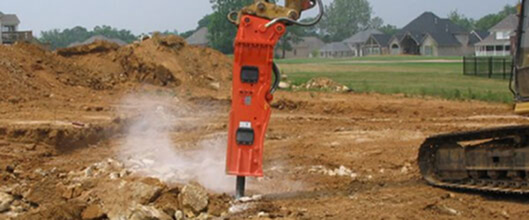
When the geology fights back. Flint limestone, blue rock, and ledge formations that stop standard excavation. Hammer size is matched to the rock and the distance from adjacent structures.
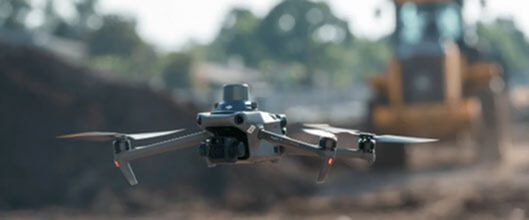
Mapping-grade surface data, not consumer drone footage. RTK positioning, checked against ground points on site. Point clouds, orthomosaics and 3D models processed in Pix4D for as-built documentation.
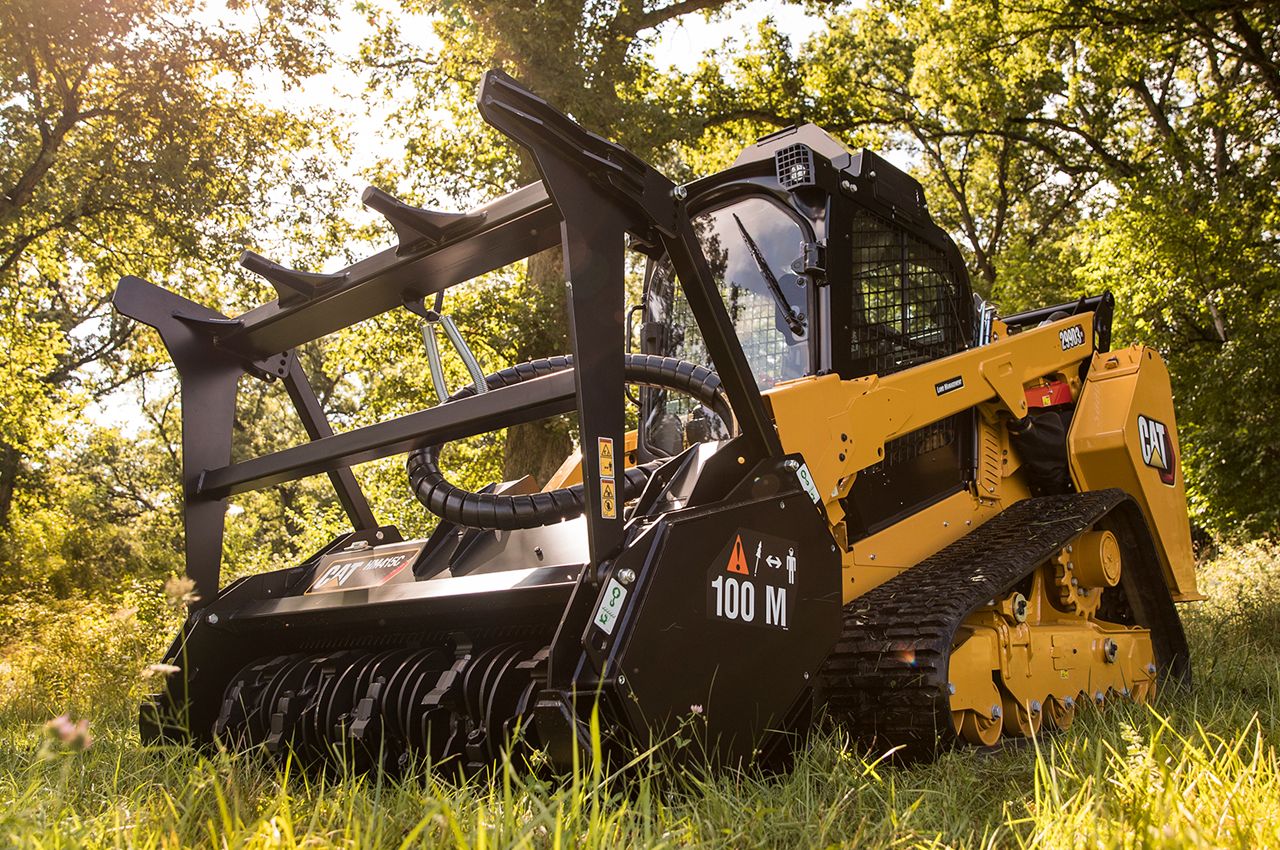
Carries the FAE forestry mulching head. Clears vegetation ahead of excavation. See forestry mulching. Dozers, larger excavators and compaction equipment are rented locally when a job needs them.
Pool excavation pricing
| Service | Unit | Range | What moves it |
|---|---|---|---|
| Pool shell excavation | per pool | $4,500–$28,000 | Size, shape, rock, access, haul-off |
| Rock excavation, rippable caliche to hard limestone | per cubic yard | $35–$90 | Rippable rock at the low end, hammer work at the high end |
| Drone scan of the site, standalone | per scan | $500–$1,500 | Site size; typically 2–3 business days after the flight |
Prices reviewed: September 2026. Ranges for Austin and Central Texas; your site walk sets the final number.
Your client has a pool to remove instead? See pool removal.
Frequently asked questions
How much does pool shell excavation cost?
$4,500–$28,000 per pool, depending on size, shape, rock and access. See the pool shell excavation page for the size table.
How do you deal with limestone and caliche?
Excavator with hydraulic hammer for hard rock, ripping or milling for rippable rock. Rock work is priced per cubic yard, $35–$90 per cubic yard.
Can you tell us where the rock is before we quote?
Not from the air. A drone models the ground surface. Rock, footings and buried lines below the surface are found with test holes, probing, 811 locates and GPR where needed. We can scan the surface before the dig and probe or test-hole the pool footprint.
Can milled rock be used as structural backfill?
Only with your engineer's approval. Without it, milled rock is non-structural fill or leaves the site.
How close can you dig to existing structures?
We size the hammer to the rock and the distance. Tell us your engineer's vibration limits before we start.
What do we get at handoff?
A georeferenced as-built model and cut/fill quantities. Our drone scans measure surfaces, quantities and grades. They are not a boundary survey or a sealed survey by a licensed surveyor, and a drone cannot see below the ground surface.
Walk the site before you bid.
The site walk is free. We walk qualifying pool projects in Austin and the Hill Country with you. No obligation. If you want to work together after that, we'll talk.
Optional: a georeferenced orthophoto and surface model of your pool site, $500–$1,500 per scan, typically 2–3 business days after the flight. Rock depth is confirmed with test holes on site.
Book Your Free Site Walk