


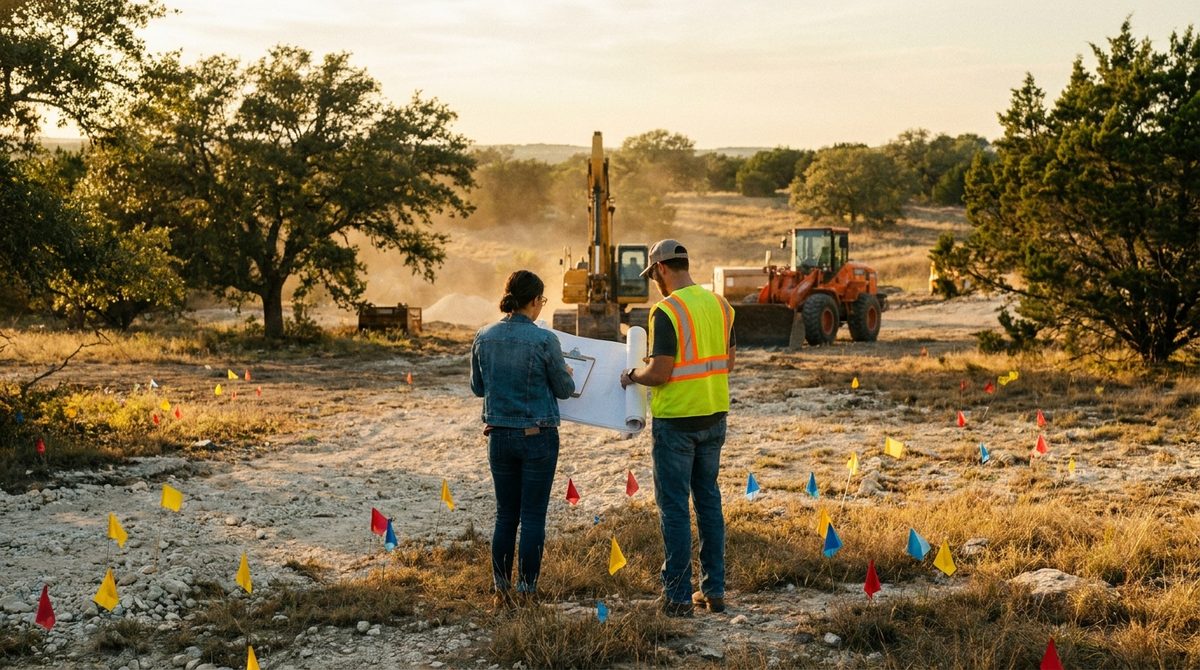
Hiring the right contractor is the first step. But what happens before they arrive matters more than most homeowners realize. A well-prepared site means fewer delays, lower costs, and a project that starts moving the moment your contractor shows up — instead of stalling on things that could have been handled the week before.
// In This Guide
// 01 Four Steps to Take Before Any Excavation
These apply to every project — new foundation, pool, addition, or site prep. Skip any one of them and you're adding cost or risk to your project before a single bucket of dirt has moved.
Call 811 — Before Anything Else
811 is the national call-before-you-dig hotline. One call triggers local utility companies to come out and mark all underground lines on your property — gas, electric, water, sewer, and telecom. The process typically takes 2–3 business days, so call early. Don't let this be the thing that delays your start date.
Hitting an unmarked utility line is dangerous, and in most states you are legally responsible for the damage if you failed to call 811 first. This is not optional.
Clear the Work Area
Remove anything in and around the dig site that could be damaged or block access — vehicles, patio furniture, portable fencing, stored materials, and any ground-level debris. Think beyond the footprint of the excavation itself: equipment needs a clear path to get in, maneuver, and get out.
If you have landscaping, irrigation heads, or outdoor lighting near the work zone, flag or photograph them before work begins. What isn't marked is at risk.
Know Your Property Lines
Before any digging begins, confirm exactly where your property ends. Excavating beyond your line — even by a few feet, even by accident — can result in legal disputes with neighboring property owners and project stoppages that are expensive to resolve.
Your property survey is the place to start. If you don't have it, check with your county assessor's office or the title company from your closing. If your lines are genuinely unclear, a licensed surveyor can stake them before work begins.
Understand Your Permit Requirements
Most excavation projects require a permit — and the requirements vary by city and county. Foundation digs, major grading, and utility trenching almost always need one. Check with your local building department before work begins, not after.
Unpermitted excavation creates real downstream problems: it can complicate a future home sale, create issues with insurance claims, and block future construction permits on the same property.
In Austin and Salt Lake City, permit processing times can add days to weeks depending on project type. Factor this into your timeline from the start.
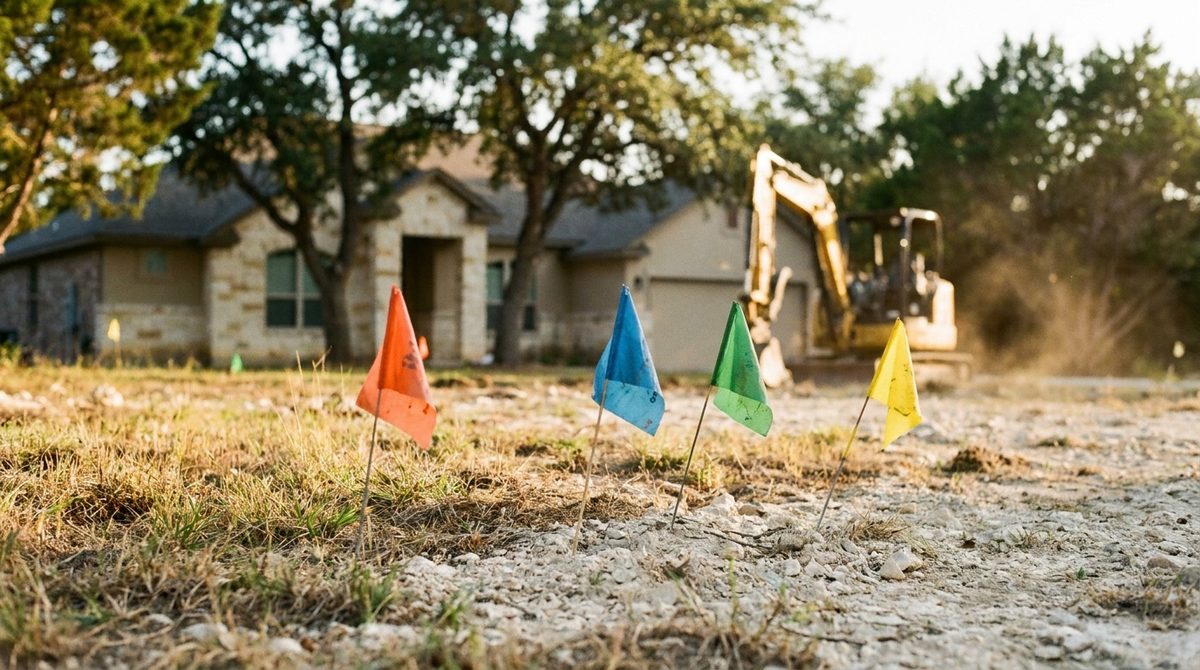
"A prepared site gives your contractor everything they need to get to work immediately. Every hour of delay at project start costs more than an hour of prep work the week before."
— ClearGround, Austin TX · Salt Lake City UT
Not sure what your project will require? We can walk you through permit requirements, utility coordination, and site prep specific to your area — before you commit to anything.
Talk to ClearGround →// 02 What Prep Looks Like by Project Type
The four steps above apply to every excavation project. But the details shift depending on what you're building. Here's what to focus on for each common project type.
Foundation Excavation
Have your engineer's grade specifications finalized before digging begins. Changes to foundation dimensions after excavation has started are among the most expensive corrections on any project — they require re-digging, re-forming, and sometimes re-permitting.
Site Clearing and Pad Preparation
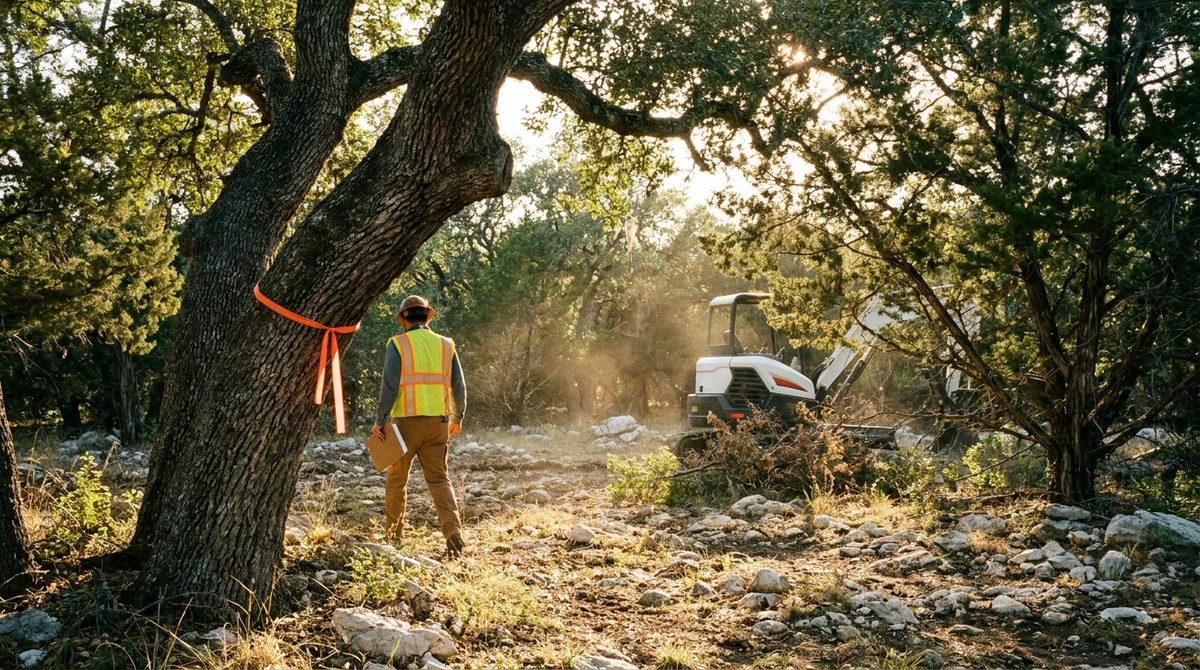
Walk the full site before your contractor arrives and physically flag every tree, plant, or landscaping feature you want preserved. Once clearing begins, anything not marked is at risk. This is especially critical in Austin, where Heritage Tree Ordinance violations can stop a project and carry significant penalties.
Utility Trenching
Know exactly where your utility lines need to run before any trenching begins. Changes to trench routes mid-project are among the most avoidable cost overruns in excavation — the planning work takes a fraction of the time and money of correcting a misplaced trench.
Pool Excavation
In areas with limestone or caliche bedrock — common across Austin's Hill Country — confirm whether a rock hammer and rock mill will be required. This affects both timeline and cost significantly, and your contractor should be able to give you a site-specific assessment before work begins.
// 03 Pre-Excavation Checklist
Use this before your contractor arrives. If any item is unchecked on mobilization day, you're at risk of a delay.
Before Your Contractor Arrives
- Called 811 at least 3 business days before start date
- Utility lines have been marked by local utility companies
- Work area cleared of vehicles, furniture, and ground-level debris
- Equipment access route is clear from street to dig site
- Irrigation heads, outdoor lighting, and landscaping near site are flagged or photographed
- Property lines confirmed via survey or municipality
- Required permits applied for (or confirmed not required by building department)
- Engineer specifications finalized (foundation projects)
- Trees and plants to be preserved are physically flagged on site
- Final utility routing confirmed with relevant trades (trenching projects)
// Frequently Asked Questions
Do I need to call 811 before excavation?
Yes — always. 811 is the national call-before-you-dig hotline that triggers utility companies to mark underground lines on your property. In most states, you're legally responsible for any utility damage if you failed to call first. Allow at least 3 business days for lines to be marked before your project starts.
What permits are typically required for excavation?
Requirements vary by city and county. Foundation excavation, major grading, and utility trenching almost always require a permit. Check with your local building department before work begins. In Austin and Salt Lake City, permit timelines should be factored into your overall project schedule.
How do I find my property lines before excavation?
Start with your property survey, which is often available from your county assessor or the title company from your home purchase. If your lines are unclear or in dispute, a licensed surveyor can physically stake them before work begins. Don't rely on fence lines or assumed boundaries — they're frequently inaccurate.
What happens if I skip the permit for excavation?
Unpermitted excavation can create serious complications down the road — difficulty selling your home, complications with insurance claims, and blocked permits on future construction on the same property. The permit process exists to protect you, not just to create paperwork.
// Ready to Start Your Project Right?
We'll Help You Get
the Ground Ready.
ClearGround works with homeowners across Austin and Salt Lake City to make sure every project starts on solid footing — permits, site assessment, and RTK documentation included.
Get a Free Site AssessmentServing Austin, TX · Salt Lake City, UT