


Utility & Drainage Trenchingin Austin & Central Texas
Clean trench. Tight depth. · 811 called before every dig
We trench for water, sewer, storm drain, electrical, gas and low-voltage lines for builders, plumbers, electricians and owners in Austin and Central Texas, typically $5–$40 per linear foot (depth and rock drive the price). Most runs take one to three days. Price includes bedding and compacted backfill.
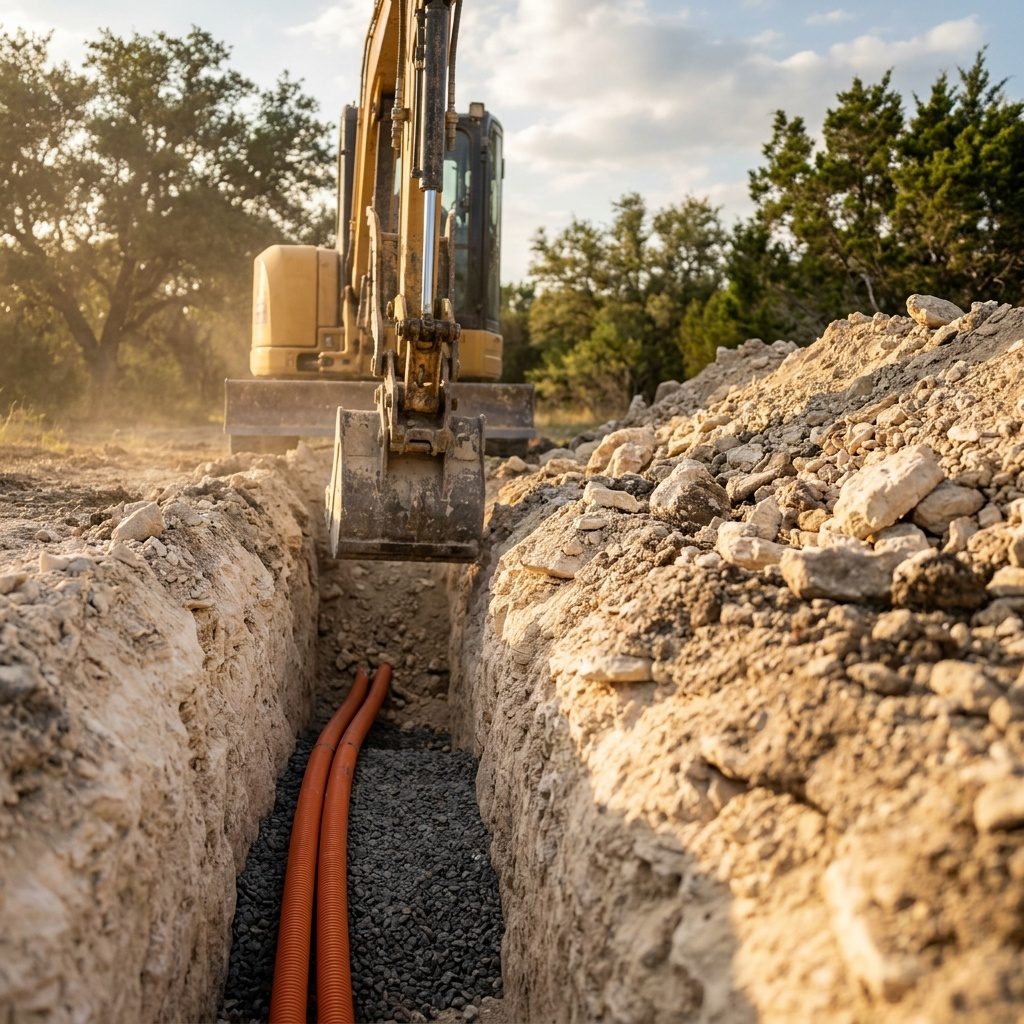
Water, sewer, storm, electrical, gas. We dig to the depth your spec requires, hand off a clean trench and backfill with compacted material. Rock trenching is available where limestone or caliche is at trench depth.
What utilities do we trench?
Six types, one crew.
Every utility runs at a different depth, needs different bedding and has different inspection requirements. Your plans and your utility or city set the spec. We dig to it.
Potable Water
Service line and main extensions. Trench depth per your utility's or city's spec. Sand bedding below and around pipe, compacted native backfill above.
Sanitary Sewer
The deepest standard residential utility — slope-dependent depth means the far end of a long run can hit 8–10 feet. We calculate grade requirements before digging so the trench bottom is right, not "close enough." Clean-out access maintained.
Storm Drainage
French drains, box culverts, catch basin connections, and perforated pipe runs for drainage management. Slope calculated from civil plan. Aggregate backfill per drainage spec — not standard compacted fill that blocks flow.
Electrical Conduit
Service laterals, sub-panel feeds, outdoor lighting runs, and EV charging conduit. Depth follows NEC 300.5. Bedding and warning tape per code. Narrower trench width — we use the right-sized bucket to keep disturbance minimal on finished landscapes.
Natural Gas
Service line extension and reroutes for new construction and additions. We trench to spec and coordinate with your gas sub for backfill sequencing. The gas line inspection has to happen before we close the trench.
Conduit & Low Voltage
Fiber, coax, and data conduit runs for new construction and site improvements. Usually the shallowest utility, often combined with electrical trenching on the same run to avoid two mobilizations when both are needed.
How do we handle 811?
We call before we dig
on every job.
Texas law requires a call to 811 at least 2 business days (48 hours, excluding weekends and holidays) before digging. We call 811 before every job. If marks aren't confirmed, we don't dig. A locate lowers the risk of a strike; it doesn't remove it, and we can't guarantee none. See Texas811.
What does trenching include?
Trench to backfill, one scope.
Trench Excavation to Depth
Machine cut to specified depth and width. We use the right bucket size for the utility type — not a wide bucket that overcuts a narrow conduit run. Trench walls kept clean for inspection.
Rock Trenching
West of the Balcones Fault, limestone and caliche are near the surface and show up in utility trenches. We bring an excavator with a hydraulic hammer for rock at trench depth. We flag rock likelihood during site walk so it's in the budget before your plumber is scheduled.
Bedding + Pipe Zone Prep
Sand or aggregate bedding placed and screeded to specified grade before your plumber or electrician installs pipe. Initial backfill to the pipe zone placed and hand-compacted before mechanical compaction begins. We don't dump fill on top of freshly laid pipe.
Compacted Backfill + Grade Restore
Mechanical compaction in lifts above the pipe zone — not a single dump-and-roll pass. Surface grade restored to match adjacent area. Pavement, landscaping, and hardscape restoration quoted separately if required — we don't do it without flagging the cost upfront.
How does a trenching job run?
Locate to grade-restored handoff.
Quote + Run Confirmation
We quote from your utility plan or site diagram — trench route, depth, utility type, and backfill requirements. If you don't have a formal plan, we'll walk the route with you and confirm before quoting.
811 Locate, At Least 2 Business Days Out
Called right after quote approval. We schedule mobilization around locate confirmation. All marks are photographed before we touch the ground.
Trench Excavation
Machine cut to depth and width per spec. Marked lines are exposed by hand or potholing before machine digging near them. The hydraulic hammer goes to work when rock is at trench depth. Trench walls clean and plumb for inspection.
Bedding + Pipe Installation Window
Bedding material placed and graded to pipe invert elevation. We stage clear for your plumber, electrician, or gas contractor to install and inspect. We coordinate the sequence — nobody's waiting on the wrong trade.
Compacted Backfill + Grade Restore
Lift-by-lift compaction above the pipe zone. Grade restored to adjacent surface level. Before backfill we take GPS-tagged photos of the open trench with the pipe or conduit in place, and send them when we finish. That is a photo record, not a survey.
What does utility trenching cost?
$5–$40 per linear foot
Trench pricing runs $5–$40 per linear foot (LF) and is driven by depth, length, utility type, rock and backfill. The table shows example runs. Each total divided by its length falls inside that range; short runs sit near the top because mobilization is spread over fewer feet.
| Example Run | Length | Conditions | Estimated Total | Per Linear Foot |
|---|---|---|---|---|
| Water Service Line | 75 LF | Soil | $1,800–$2,900 | $24–$39 per LF |
| Sanitary Sewer Lateral, standard depth | 100 LF | Soil, standard depth | $2,500–$4,000 | $25–$40 per LF |
| Storm Drain / French Drain | 150 LF | Soil, aggregate backfill | $3,200–$6,000 | $21–$40 per LF |
| Electrical Conduit | 150 LF | Soil; depth per NEC 300.5 | $2,000–$4,500 | $13–$30 per LF |
| Pool Equipment Pad Trench | 45 LF | Any | $1,000–$1,800 | $22–$40 per LF |
| Commercial Site Utility | 350 LF | Mixed conditions | $4,500–$14,000 | $13–$40 per LF |
| Deep Sewer (over 6 ft) | Site-specific | Trench box or shoring, rock, dewatering | Quoted after site walk | Above $40 per LF. Depth, shoring, rock and grade control push it past the standard range. |
| Rock in the Trench | Per cubic yard | Limestone or caliche at trench depth | $35–$90 per cubic yard | Added to the soil trench price. Rippable $35–$45 per cubic yard; hammered $65–$90 per cubic yard. |
Prices reviewed: September 2026. Ranges for Austin and Central Texas; your site walk sets the final number. See all pricing or use the excavation calculator.
Sources: electrical burial depths from NFPA 70, National Electrical Code, section 300.5; excavation call rules from Texas811; trench protective systems from OSHA. Last reviewed: September 2026.
Who do we trench for?
GCs, pool builders and the trades.
One Sub for the Whole Trench Scope
We handle excavation, bedding prep, and compacted backfill — your plumber and electrician step in for install, then we close the trench. One coordination point instead of three separate subs and a compaction contractor.
Equipment Pad + Plumbing Trench
Pool equipment trench from shell to pad is one of the most skipped items in pool excavation — and one of the most common sources of schedule delay. We run it at the same time as the shell dig. Quoted with the shell, already on site.
The Trench Is Ready When You Arrive
We coordinate mobilization so the trench is open, bedding is set, and the pipe zone is clean when your crew shows up. Backfill is sequenced around your inspection.
Trenching questions
Tell Us the Run.
We'll Give You the Number.
Utility type, approximate length and depth. That's all we need for a quote range. The site walk confirms it.
Austin & Central Texas · $2M per occurrence / $5M aggregate general liability
Austin & Central Texas · Insured · Written quote within 48 hours of the site walk
Rather talk to a person? (512) 880-8888