


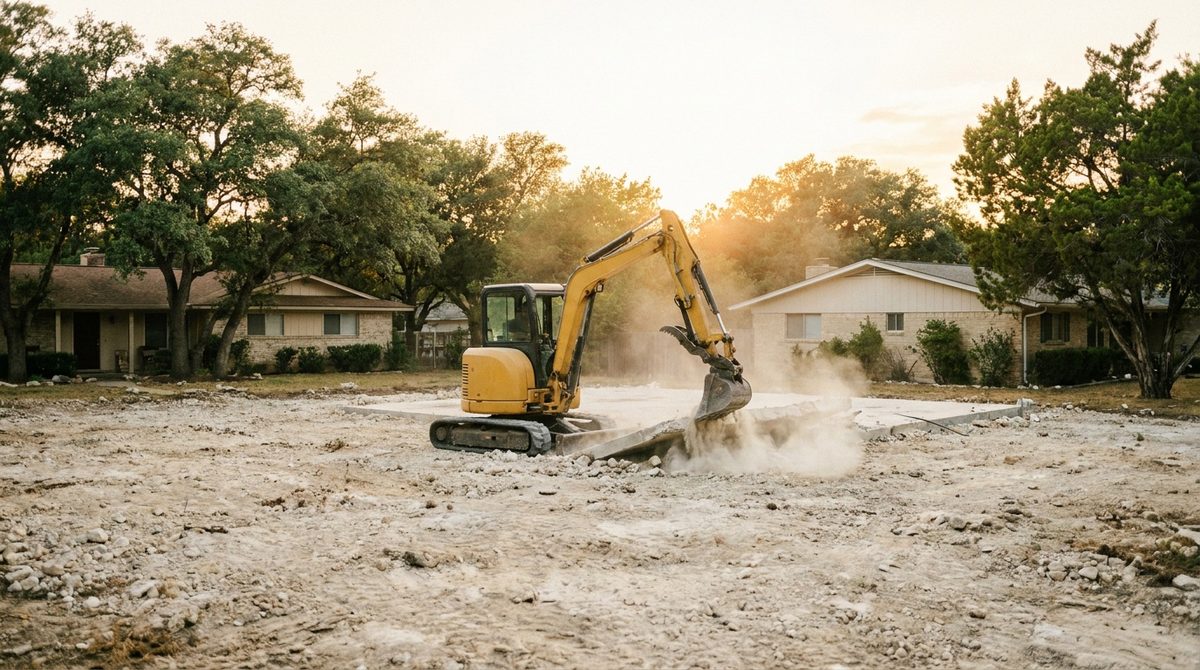
Demolition is the starting point of every project — whether you're tearing down an old structure, clearing a site for new construction, or removing concrete before a rebuild. Understanding the process before work begins means smarter planning, more accurate budgeting, and no delays caused by things you didn't know to ask about.
// In This Guide
// 01 What Residential Demolition Actually Is
Residential demolition is the controlled removal of structures, surfaces, and materials to prepare a site for what comes next. The key word is controlled. Demolition isn't about tearing things down indiscriminately — it's about removing what needs to go, in a way that sets up every phase that follows.
Common residential demolition projects include full home and structure teardowns, garage and outbuilding removal, concrete driveway and patio removal, old foundation removal before a new build, and pool demolition and removal.
// 02 The Demolition Process: What to Expect
Every demolition project moves through four distinct phases. Here's what each one involves — and where the most common mistakes happen.
Site Assessment
Before any work begins, your contractor should visit the property in person — not quote over the phone. A thorough site assessment identifies what needs to come down, what needs to stay, which utilities require disconnection, and what permits the project will need.
Skipping the site assessment turns a straightforward demolition into a complicated one. A contractor who quotes without seeing the site is either guessing or leaving room to adjust once they're already on your property.
Permits and Utility Disconnection
Most demolition projects require a permit, and all utilities — gas, electricity, water, sewer — must be properly disconnected before any structure comes down. This isn't optional paperwork. It's what keeps your property, your neighbors, and your crew safe.
A contractor who skips permitting or utility disconnection creates real liability. If something goes wrong on an unpermitted demo, your insurance may not cover it.
Demolition
The actual removal of structures and material from the site. Method and equipment vary depending on what's being removed and what needs to stay intact around it — a full home teardown looks different from concrete slab removal. The right equipment for your lot matters as much as the right equipment for the work.
Debris Removal and Site Clearing
Once demolition is complete, all debris is removed and the site is cleared and ready for the next phase — whether that's excavation, foundation work, or new construction. A clean handoff isn't just about appearance. It's what keeps your project on schedule.
"Every project we take ends with a clean handoff — the site is ready for what comes next, documented, and permitted. The contractor who follows us doesn't inherit a mess."
— ClearGround, Austin TX · Salt Lake City UT
// 03 Types of Demolition
Not all demolition is the same scope. Here's a breakdown of the most common types residential property owners encounter — and what each one actually involves.
Full Structure Demolition
The complete teardown of an existing structure — everything comes down to grade. Requires heavy equipment, permits, full utility disconnection, and a defined debris removal plan before work begins.
Concrete Demolition
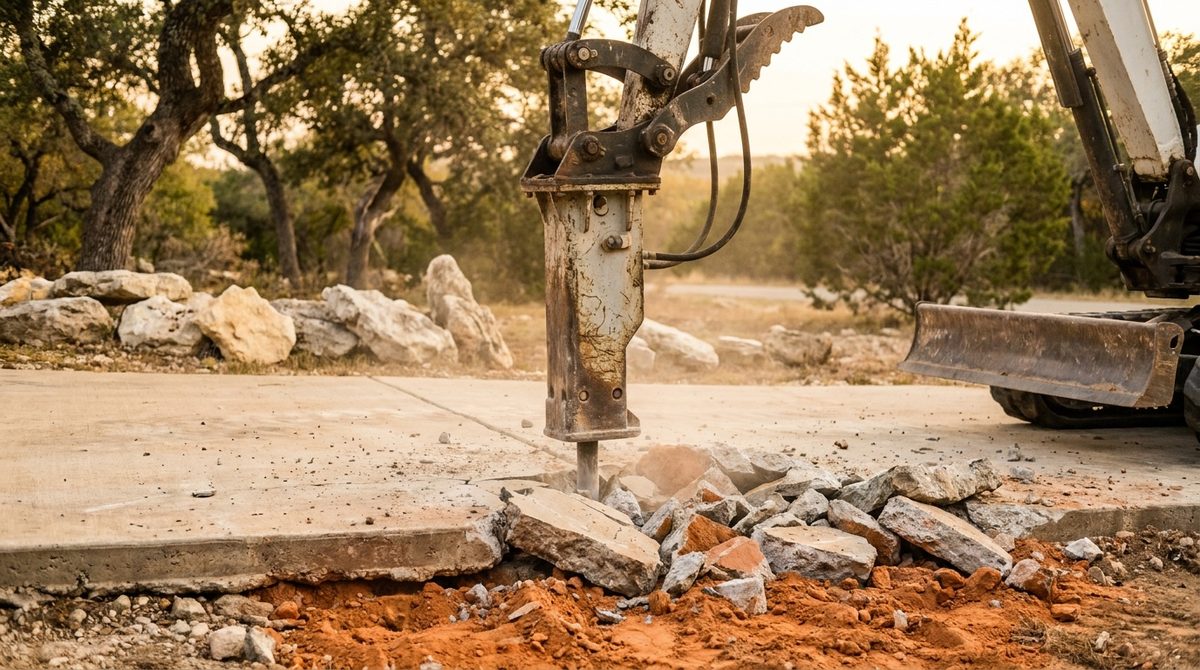
Removal of driveways, patios, slabs, and foundations. Requires hydraulic breaking equipment and careful debris removal to avoid damage to surrounding areas. In areas with thick reinforced concrete, rebar extraction adds time and cost.
Foundation Removal
Extraction of old slabs, footings, piers, and buried masonry after a teardown — or on a lot that was cleared years ago. Located with an RTK scan, broken with hydraulic breakers, hauled off, and the void backfilled and compacted so the next foundation goes on verified ground.
Pool Demolition
Removal of an inground pool shell — gunite, fiberglass, or vinyl — along with the deck and coping, followed by engineered backfill in compacted lifts. Full removal keeps the lot buildable, and the documentation matters as much as the digging when the property is sold.
// 04 What Affects Demolition Cost
Demolition cost isn't one-size-fits-all. These four variables drive most of the price variance you'll see across quotes on the same project.
Not sure what your demolition will cost? We assess every site before quoting — no phone estimates, no surprises on billing day.
Get a Site Assessment →// 05 What to Look for When Hiring a Demolition Contractor
These three criteria separate a contractor who protects your project from one who creates problems once work has started.
Experience With Your Specific Project Type
Full home teardowns, concrete removal, and pool demolition are different scopes requiring different equipment and skills. A contractor who specializes in one doesn't necessarily excel at the others. Ask specifically for references from projects similar to yours in type, not just in size.
A Detailed Scope of Work
Your quote should specify exactly what is being demolished, how debris will be handled and disposed of, what permits are required and who pulls them, and what the site will look like at completion. A vague quote is a quote that will change — and it usually changes after work has started and you have limited leverage.
Proper Licensing and Insurance
Demolition carries real liability. Confirm that your contractor is licensed to operate in your state and carries both general liability insurance and workers' compensation before any work begins on your property. If something goes wrong on an uninsured job, that liability lands on you.
Before You Sign — Demolition Quote Checklist
- What is being demolished, specifically — structures, concrete, foundation, or all of the above
- How debris will be handled: sorted on-site, hauled off, or repurposed
- Whether haul-off is included in the quote price or charged separately
- What permits are required and who is responsible for pulling them
- Utility disconnection: who coordinates and who confirms it's done
- What the site condition will be at project completion (cleared to grade, ready for excavation, etc.)
- Whether a hazmat assessment is needed for older structures
- Contractor's license number and proof of general liability + workers' comp insurance
// Related See Demolition in Context
Demolition rarely happens in isolation. See how it fits into full project scopes for pool builders and infill developers.
Pool Deck Demo + Shell Excavation
How ClearGround handles demo and excavation together for Hill Country pool projects — including limestone rock work and RTK documentation.
See the pool builder page →Demolition on Tight Austin Lots
Foundation removal, structure teardown, and heritage tree protection on 50×100 infill lots — one mobilization, clean handoff to your foundation contractor.
See the infill developer page →// Frequently Asked Questions
What is residential demolition?
Residential demolition is the controlled removal of structures, surfaces, and materials to prepare a site for the next phase of construction. It includes full teardowns, concrete removal, old foundation removal, and pool demolition.
How much does residential demolition cost?
Cost depends on the size and scope of the project, the materials involved (older structures may require hazmat handling), debris disposal, and local permit costs. A full home teardown costs significantly more than concrete slab removal. Always confirm what's included in the quote — especially debris haul-off.
Do I need a permit for demolition?
Most demolition projects require a permit. Requirements vary by city and county. A local contractor will know exactly what your project requires. Unpermitted demolition can create complications for future construction permits and insurance claims.
What's the difference between full demolition and concrete demolition?
Full demolition is the complete teardown of a structure down to grade. Concrete demolition removes slabs, driveways, patios, and foundations — often the last step after a teardown, or a standalone job when only the flatwork is coming out.
What happens after demolition is complete?
After debris is removed and the site is cleared, the project moves to the next phase — typically excavation, foundation prep, or new construction. A well-scoped demolition job ends with a clean, documented handoff so the next contractor can start without inheriting problems from the previous phase.
// Ready to Start?
Scoped. Permitted.
Clean Handoff Guaranteed.
ClearGround handles residential demolition across Austin and Salt Lake City — every project is assessed on-site, permitted correctly, and executed with a clean handoff to whatever comes next.
Get a Free Site AssessmentServing Austin, TX · Salt Lake City, UT