


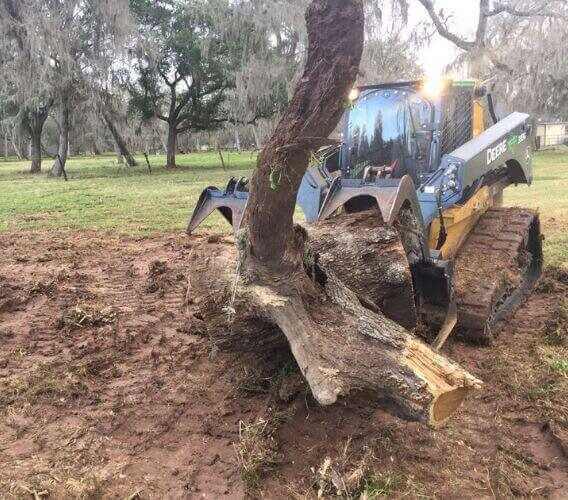
Tree mulched. Root crown pulled. For the species that resprout after cutting.
Tree Mulching & Root Extraction in Austin & the Texas Hill Country
Root extraction mulches the tree, then pulls the root crown of species that resprout after cutting: mesquite, redberry juniper, huisache and shin oak. It is for ranch and estate owners in Austin and the Texas Hill Country. It runs $5,000–$8,000 per acre (dense mesquite to $12,000/acre), typically 0.5–3 days, with the site walk and cleanup included.
The Difference Between
Cutting and Extracting
Our other mulching scopes cut above grade and leave the roots. Forestry mowing, forest clearing and field and brush clearing all work that way. That is enough for Ashe juniper, which does not resprout once cut below the lowest green limb. It is not enough for mesquite, redberry juniper, huisache and shin oak, which resprout from the root crown. Root extraction pulls the crown so those plants do not send up new stems.
Cut. Then Mow. Repeat.
Cut. Then Pull the Crown.
Which Trees Grow Back.
And Which Ones Don't.
Extraction only earns its cost on trees that resprout. Check your species before you pay for it.
| Species | Resprouts after cutting? | What that means |
|---|---|---|
| Honey mesquite | Yes | New stems from the root crown. Extraction is where it pays. |
| Redberry juniper | Yes | Resprouts from the base. Extraction pays. |
| Huisache | Yes | Resprouts from the root crown. Extraction pays. |
| Shin oak | Yes | Resprouts from roots and base. Extraction pays. |
| Ashe juniper (Hill Country cedar) | No, once cut below the lowest green limb | Regrowth is from seedlings. Mulching alone works; extraction does not add value. |
Sources: Texas A&M AgriLife Extension and Texas Parks and Wildlife Department on brush species. See AgriLife Extension and TPWD. Last reviewed: September 2026.
Not Sure What You Have?
We identify the species at the site walk. If your stand is mostly Ashe juniper, we will tell you that mulching is the right scope and point you to brush and cedar clearing. If it is mesquite, huisache, redberry juniper or shin oak, extraction is worth pricing. Even then, a stand of large plants can resprout from roots we miss, and seedlings still arrive. Some follow-up mowing is normal.
Six Scenarios Where
Extraction Wins
Extraction costs more per acre than mowing or mulching. It makes sense when the trees resprout and you want to stop paying for the same acre every year.
Mesquite land on annual mowing where the owner wants to stop the recurring cost. Extraction turns a yearly expense into a one-time project. The break-even math is below.
Improved pasture or hay ground with mesquite that keeps resprouting. Pulling the crowns gives grass a fair start.
Ranch land where mesquite, redberry juniper and shin oak dominate. Cost-share may be available to agricultural producers; see the EQIP notes on the ranch page.
Sites where resprouting stumps and crowns would interfere with grading, foundations or landscaping. Grubbing to bare dirt is land clearing, priced separately.
Estate owners who do not want mesquite or huisache resprouting through plantings, lawn or hardscape.
Where resprouting brush keeps rebuilding fuel near a home, pulling crowns cuts the yearly upkeep. Home ignition zones are covered in the Texas wildfire prevention guide.
Three Steps.
Two Machines.
The tree is mulched first, then the crown is pulled, then the ground is put back. Photos before and after show the result at the surface. They cannot show below ground, so we check each pulled location on the ground.
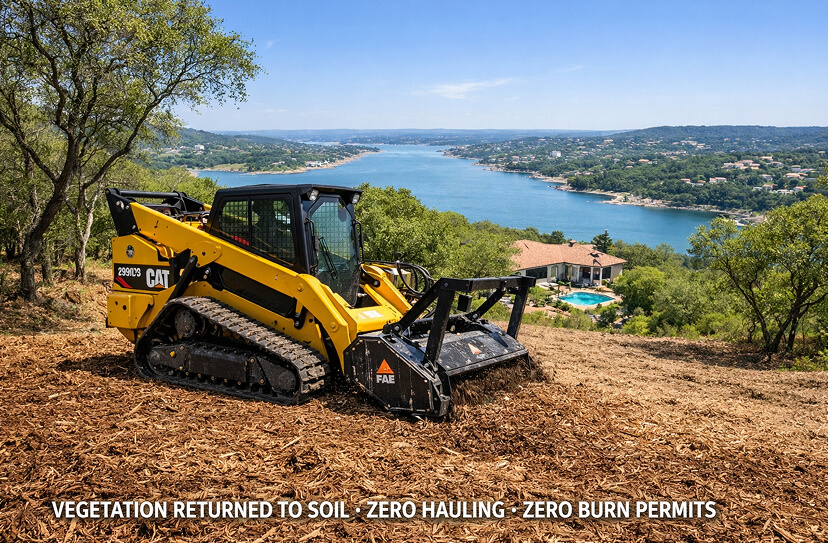
The CAT 299D3 XE with FAE mulching head grinds the trunk and canopy into chip-level mulch. Nothing is burned and nothing is trucked off.
Disposition: mulched in place
Equipment: CAT 299D3 XE + FAE head
An excavator digs around each root crown and pulls it. The crown is where resprouting starts, so removing it is the point of this scope. Rock near the surface can limit how much comes out, and the operator makes the call location by location.
Equipment: excavator (rented larger units when needed)
Result: resprouting source removed
Holes are filled and the surface is dressed with the mulch. The ground is ready for seeding, fencing or the next phase. Deep lateral roots on large mesquite may still send up growth, which follow-up mowing handles.
Surface: mulched
Follow-up: light mowing as needed
Mulcher Above.
Excavator Below.
Root extraction uses two kinds of machine. The mulcher handles the tree. The excavator handles the crown.
Our Kobelco SK75 excavator digs around each crown and pulls it. It is a compact machine that gets into tighter ground near fences, creeks and rock. Dozers, larger excavators and compaction equipment are rented locally when a job needs them.
The 299D3 XE is a compact track loader. It runs the FAE mulching head through the trunks and canopy fast and leaves chip-level mulch on the ground.
On projects that combine mulching and extraction, the mulcher goes first and the excavator follows in the designated zones.
The Root Extraction Process —
Documented
Species, Density, Soil.
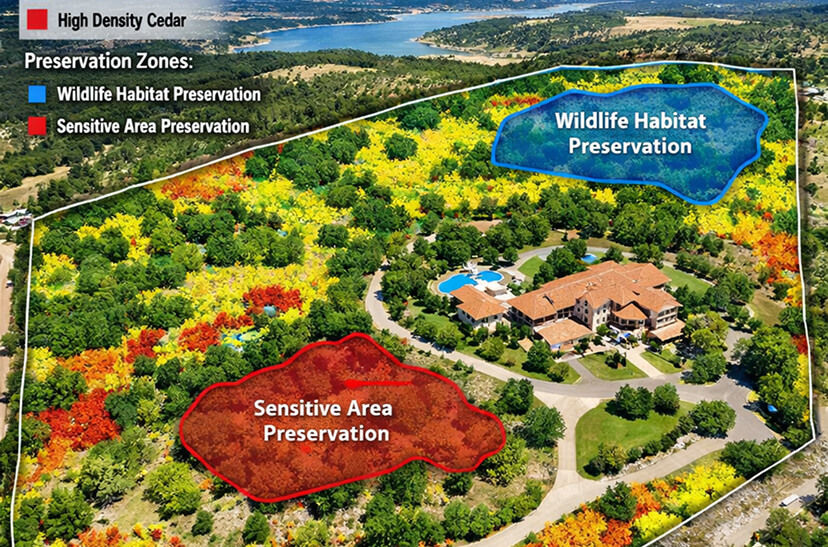
We walk the property with you and identify the species. We note tree density by zone, drainage features and access constraints on foot. Extraction zones and mulch-only zones are defined, along with any trees you want kept.
If the stand is mostly Ashe juniper, we say so and recommend mulching only.
Canopy Removed. Surface Opened.
The CAT 299D3 XE with FAE head mulches the trees in the sequence set in the plan. Preserved trees stay where you marked them. Nothing is burned and nothing is trucked off.
Crowns Pulled.
An excavator works through the extraction zones, pulling the root crown of each resprouting plant. Where rock limits the dig, the operator records it so we know where follow-up mowing is likely.
Coverage Confirmed.
After the work we walk the extraction zones with you and compare the finished surface to the plan and the before photos. The walk confirms the crowns are out. Photos show the surface only, not what is below ground.
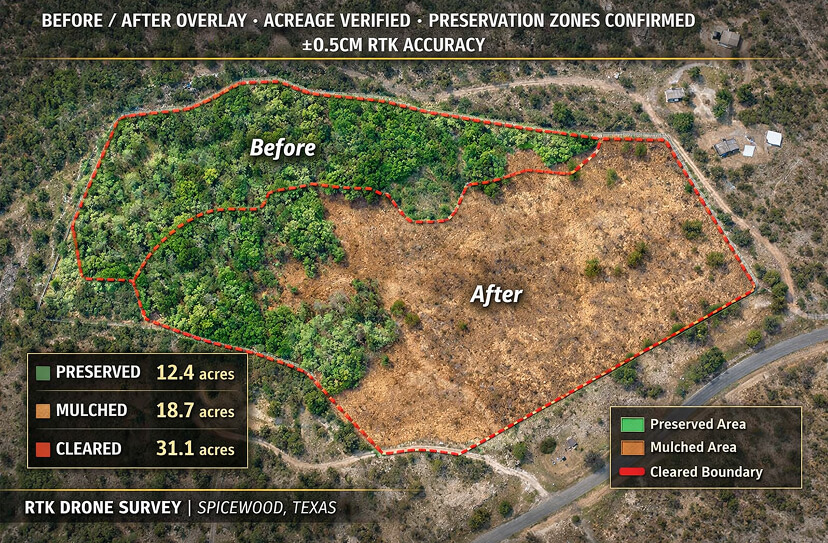
Before and After.
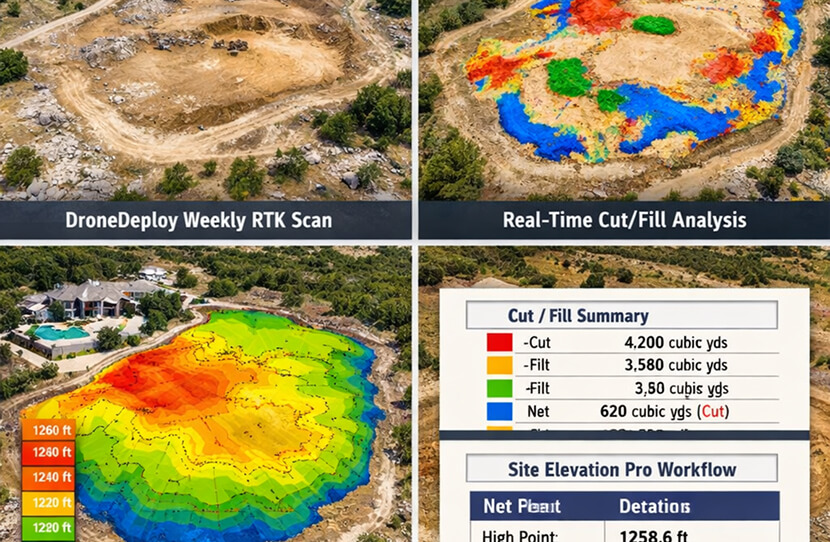
You get before-and-after photos of the property. They are a visual record, not a boundary survey, and they serve as the baseline for any follow-up mowing. An optional drone scan adds a 3D surface model of the site, $500–$1,500 per scan.
Book a Site Walk
and Get a Written Quote.
We walk the property, identify the species, mark what stays and quote by density. Written quote within 48 hours of the site walk. No obligation.
Root Extraction.
Austin & Hill Country.
Brush mulched in place, with the ground left open.
Root Extraction
Pricing — Central Texas
Root extraction is priced per acre by tree density, species, trunk size and soil. The mulching and the extraction are quoted together as one scope.
| Scope | Equipment | Duration | Range |
|---|---|---|---|
| Tree Mulching & Root Extraction | 299D3 XE + FAE, excavator | 0.5–3 days | $5,000–$8,000 / acre |
| Dense Mesquite Stands | 299D3 XE + FAE, excavator | 2–5 days | to $12,000 / acre |
| For comparison: mulching only, moderate to dense | 299D3 XE + FAE | 1–5 days | $2,800–$3,900 moderate, $4,000–$5,200 dense / acre |
| For comparison: maintenance mowing | 299D3 XE + FAE | 0.5–1 day | $1,600–$2,400 / acre / visit |
Pricing includes operator, fuel and machine time. Rocky soil near the surface limits how much of a crown comes out and slows the work. Bare-dirt grubbing and grading is land clearing, priced separately. See pricing and the land clearing calculator.
Prices reviewed: September 2026. Ranges for Austin and Central Texas; your site walk sets the final number.
When Does Extraction Beat Mowing?
Mowing runs $1,600–$2,400 per acre per visit. Extraction runs $5,000–$8,000 per acre once. Dividing the extraction price by the mowing price, the best case is $5,000 ÷ $2,400 = 2.1 years, and the slow case is $8,000 ÷ $1,600 = 5.0 years, assuming one mowing visit a year. Dense mesquite at up to $12,000 per acre takes longer to pay back.
This is a rough guide, not a promise. It only holds for species that resprout, seedlings still need occasional follow-up, and if you would not mow every year the payback is longer. For Ashe juniper, extraction never pays because it does not resprout. We run the numbers for your property at the site walk.
Root Extraction
Clients
Owners choose extraction after years of mowing the same resprouting brush, or when a next use needs it gone.
Property owners who have mowed mesquite every year and want to stop paying for the same acre. Extraction turns a recurring expense into a one-time project.
Landowners converting brush country to improved pasture or hay, where mesquite resprouts compete with grass. Producers may qualify for NRCS cost-share; see the ranch page.
Builders who need resprouting brush gone before grading, foundations or landscaping. Grubbing to bare dirt is land clearing; extraction is the lighter option when the ground does not need to be bare.
Why Clear Ground
for Root Extraction
We identify what you have before quoting. If it is Ashe juniper, we tell you extraction will not add value and recommend mulching.
The work happens below grade, so we walk the extraction zones after and record where rock limited the dig. Photos show the surface only.
The 299D3 XE mulches. An excavator pulls the crowns. Larger excavators are rented when a job needs them.
Crowns and mulch stay on the property. No haul trucks and no burn piles.
We compare extraction against years of mowing using this page's prices and your quote. It is a rough guide and we say so.
Photos show the surface before and after. They are not a survey.
$2,000,000 per occurrence / $5,000,000 aggregate general liability (THREE, a Berkshire Hathaway company), $1,000,000 commercial auto, and Texas workers' compensation with $1,000,000 employer's liability. Certificate of insurance and additional-insured endorsement provided before work starts. Registered on Avetta and ISNetworld.
Root Extraction
Questions
Book a Root
Extraction Walk
We walk the property, identify the species, check density and soil, and send a written quote. If extraction will not pay for your trees, we say so. No obligation to proceed.