


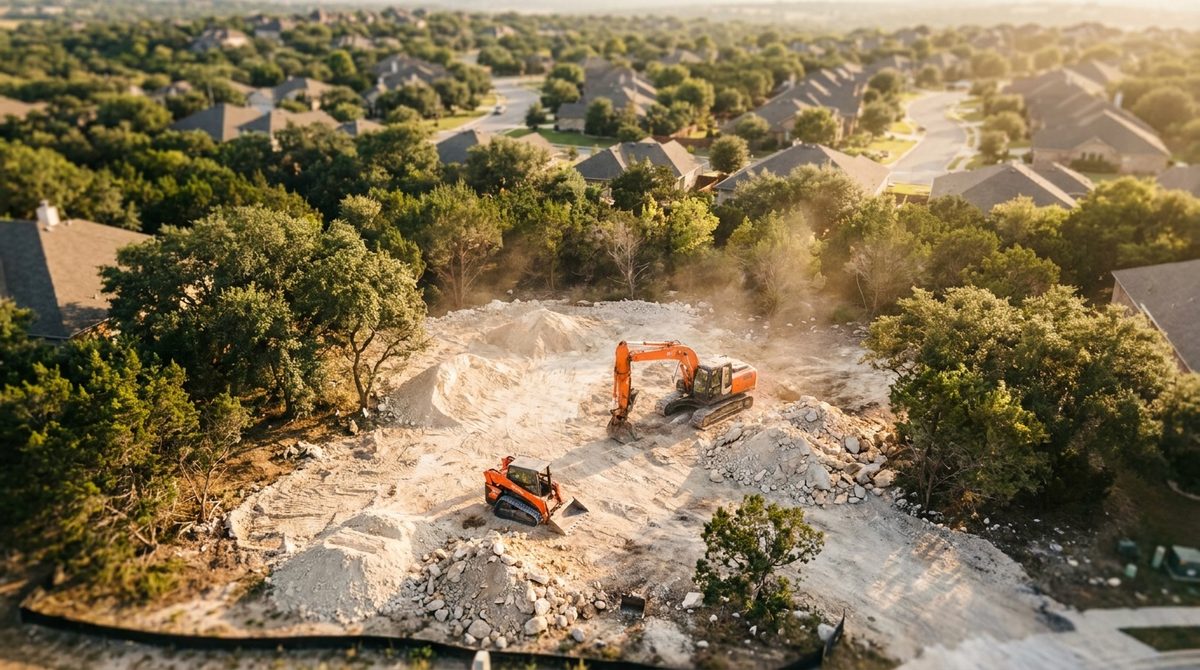
When homeowners search for excavation companies near them, the most common next move is to collect a few bids and pick the lowest number. It feels smart. It's usually not. In excavation, who you hire has a direct impact on your timeline, your budget, and what happens the moment digging begins — and price alone can't account for what's actually under your lot.
// In This Guide
⚠ Common Mistake
Comparing excavation bids by price alone treats all ground conditions as equal. They aren't. The cheapest bid rarely accounts for your specific soil, rock depth, or drainage patterns — the things that blow budgets and timelines once work begins.
// 01 Why Local Experience Is the Most Important Variable
The biggest unknown in any excavation project isn't the equipment or the crew size. It's the ground. Soil composition, rock depth, drainage behavior, and lot access are all hyperlocal — they vary not just by city, but by neighborhood and sometimes by street.
A contractor who has worked extensively in your area has encountered your ground conditions before. That prior experience isn't just comfort — it translates directly into more accurate quotes, fewer mid-project surprises, and a faster path from start to finish.
Soil Composition
Sandy, clay-heavy, caliche, or limestone — each behaves differently under load and requires different equipment and approach. Local contractors have already figured this out for your area.
Rock Depth
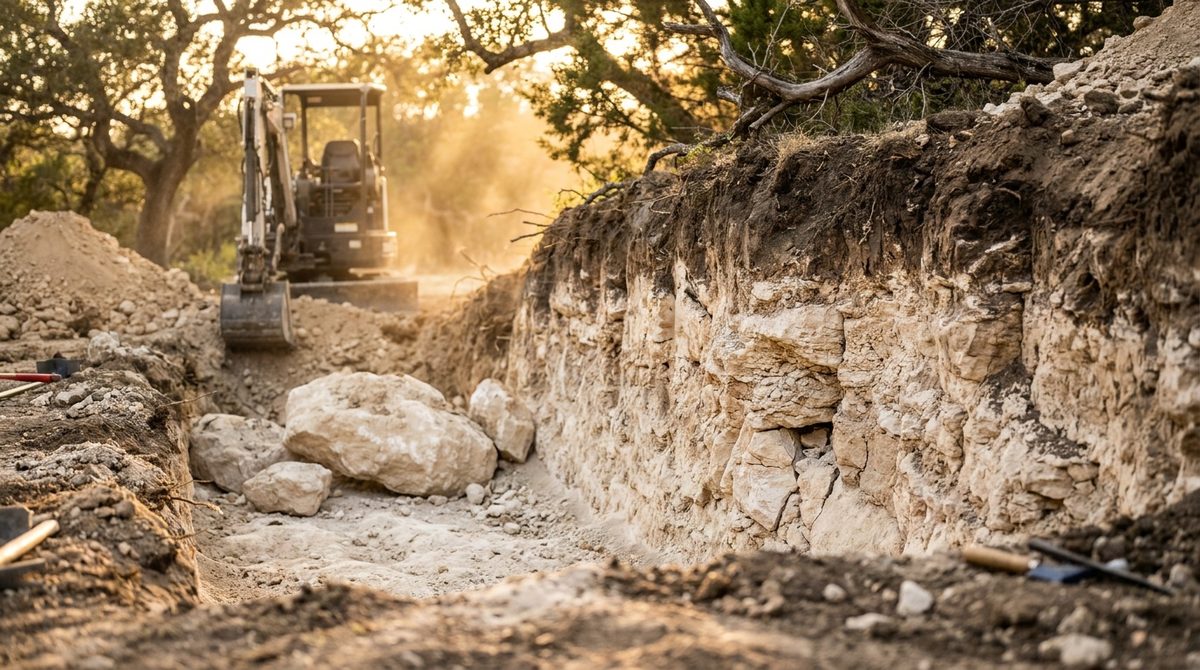
In Austin's Hill Country, limestone often begins at 18–36 inches. A contractor who's never worked in your region won't price that in — until they hit it, and the change orders start.
Drainage Patterns
How water moves across and through your lot affects every grading decision. Local contractors understand the drainage behavior of your terrain before the first bucket moves.
Permitting Requirements
Austin, Salt Lake City, and surrounding jurisdictions each have distinct excavation, grading, and site prep permit requirements. A local contractor already knows the inspectors and the process.
"Local knowledge becomes a direct financial asset — accurate quotes, fewer surprises, and a faster timeline from start to finish."
— ClearGround, Austin TX · Salt Lake City UT
// 02 What to Actually Look for in a Local Excavation Company
Company age and fleet size are easy to market. Here's what actually tells you whether a contractor will perform — and protect you when something unexpected comes up.
A Track Record in Your Specific Area
How long a company has been in business matters less than how many projects they've completed in your area. Ten years in business, but all of it in a different region, tells you almost nothing about their readiness for your site.
Knowledge of Local Permitting
Excavation, grading, and site preparation each have permit requirements that vary by city and county. A contractor who operates locally is already familiar with the process, knows the timelines, and isn't waiting on paperwork they didn't plan for.
A Detailed, Specific Quote
A vague quote is a red flag — not because the contractor is dishonest, but because it means they're guessing. A contractor familiar with local ground conditions can quote more precisely because they already know what they're likely to find.
Documentation of Past Work
Photos, references, and project data from similar local jobs tell you more than any sales pitch. The best contractors can show you what they've done — and prove the results with numbers.
Working on a project in Austin or Salt Lake City? We'll give you a straight assessment of your site — ground conditions, timeline, and what to expect. No guesswork.
Get a Free Site Assessment →// 03 What the "Near Me" Search Is Really Telling You
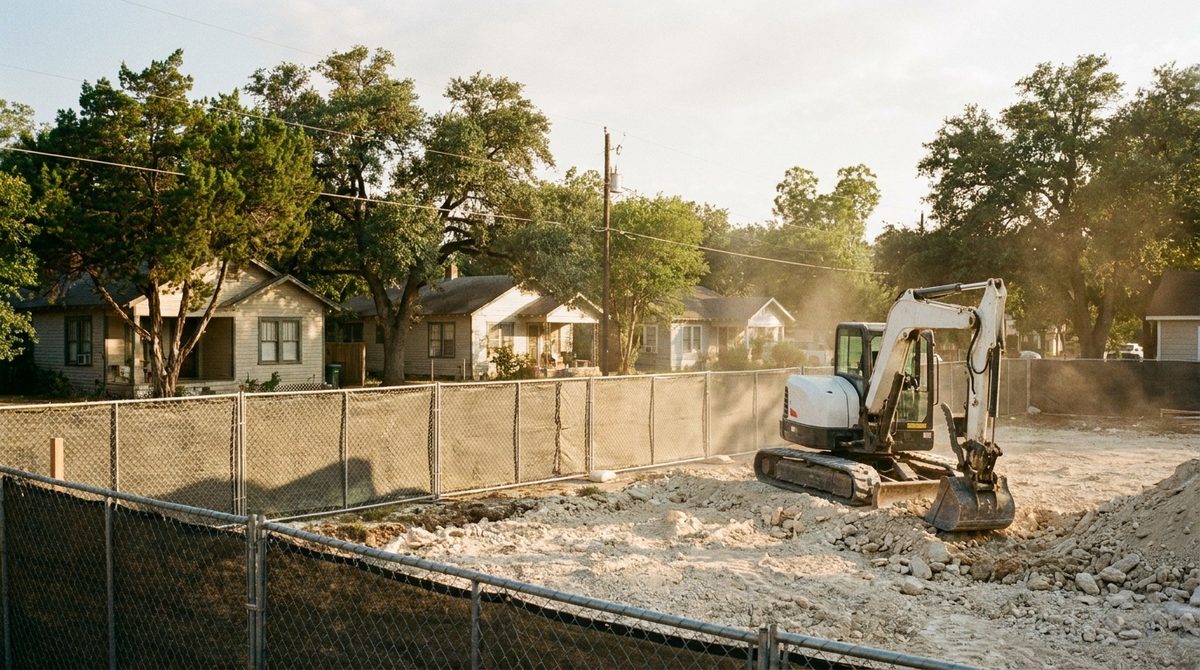
When you search "excavation companies near me," you're not just filtering by geography for convenience. You're instinctively reaching for accountability — for a contractor whose work is visible in your community, whose reputation is local, and who can't simply disappear once a job is done.
// Why Proximity Signals Accountability
A contractor who operates locally has a reputation they have to protect — not just from project to project, but in the same community where their next client might see their last job. That dynamic creates a fundamentally different incentive structure than a company flying in from out of region.
The contractor who cuts corners and leaves town is a different business than the one whose crew drives past your property on the way to their next neighborhood job. Local accountability is a form of quality assurance that no certification can fully replicate.
// 04 Where ClearGround Operates — and Why We Stay Focused
ClearGround serves Austin, TX and Salt Lake City, UT — and that's intentional. We're not trying to be everywhere. We're built to be the most knowledgeable, most accountable excavation and site prep partner in the specific markets where we work.
Austin, TX
Hill Country limestone, Austin's permitting process, Heritage Tree Ordinance compliance, drainage review — we know this ground because we work it every week.
Salt Lake City, UT
Wasatch Front soil conditions, Utah's WUI and fire mitigation requirements, Wasatch County permitting — the same knowledge-first approach, applied to a different geography.
If your project is in either area, we'd be glad to take a look. If it isn't — we'll tell you that directly and point you toward what to look for locally. That's the accountability we think any honest contractor should offer.
// Frequently Asked Questions
How do I find a good excavation company near me?
Focus on contractors with a documented track record of completed projects in your specific area. Local experience with your region's soil, rock depth, and permit requirements matters far more than company size or low price. Ask for local references from similar projects before signing anything.
Why does local experience matter so much for excavation?
Ground conditions — soil type, rock depth, drainage behavior, and lot access — vary significantly by location. A contractor familiar with your area has encountered those conditions before, which means more accurate quotes, fewer surprises once digging begins, and faster timelines.
What should I ask when comparing excavation companies?
Ask about their history of projects in your specific area, how they handle local permitting, what's included in their quote (depth, disposal, backfill, grading), and whether they can provide photos or references from similar nearby projects. Price should be the last thing you evaluate, not the first.
Is the cheapest excavation bid usually the best deal?
Rarely. The lowest bid often doesn't account for local ground conditions — unexpected rock, poor drainage, or access limitations that add cost once work has started. A detailed quote from a contractor who knows your area will be more accurate and protect you from mid-project change orders.
// Ready to Talk About Your Project?
Local Knowledge.
Verified Results.
ClearGround documents every project with RTK drone data — before and after. You see exactly what we moved, and you don't pay for anything we can't prove.
Get a Free Site AssessmentServing Austin, TX · Salt Lake City, UT