


CLEAR THE OLD FOUNDATION. BUILD ON PROVEN GRADE.
Pier-and-beam extraction and slab-on-grade tearout for infill development and site prep. Material sorted, subgrade verified with RTK, and documented before the next trade mobilizes.
Book a Site Scan
THE LAST THING STANDING
BETWEEN YOU AND GRADE.
Foundation removal is the extraction of existing substructures — pier-and-beam footings, slab-on-grade, and isolated concrete piers — that remain after a structure has been cleared or demolished. It's the final step before a lot is truly clean and ready for excavation or new construction. ClearGround pairs RTK scanning with the CAT 308E2 CR to locate, extract, and document every footing. The subgrade you hand your GC is verified to ±0.5cm — not guessed at, not assumed. The data travels with the job.
Foundation Extraction
Individual concrete piers and wood beam structures — the most common legacy foundation type on older Austin infill lots. Piers exposed by excavation around the perimeter, then extracted individually. Backfill compacted to grade specification after extraction. Typical older Austin homes run 20–40 piers per structure.
Tearout
Full residential or light commercial slab extraction — often paired with concrete slab removal when the structure has already been cleared. Rebar separated on-site, concrete hauled or crushed. Subgrade elevation verified by RTK scan against new construction target grade before any excavation begins.
& Orphaned Piers
Standalone concrete footings, deck piers, outbuilding foundations, and buried masonry pads left behind after selective demolition. Located via RTK scan and ground inspection, then extracted individually. Common on lots with additions, accessory structures, or prior demo work that left subsurface material behind.
IT'S A STEP IN A SEQUENCE,
NOT A STANDALONE JOB.
Foundation removal is almost never the only line item on an infill lot. It follows selective demo or structure clearance, and it precedes excavation and land reclamation. ClearGround bundles it as part of the full site prep sequence — one mobilization, one crew, one documented handoff to your GC. Understanding where it fits saves you from scheduling three separate contractors for three sequential tasks.
Existing hardscape — driveways, patios, and slabs — removed first. Creates access and clears the surface layer before foundation work begins.
→Piers extracted, footings removed, subgrade brought to target elevation. RTK scan confirms every void is backfilled and compacted.
→Pool shell digging, foundation excavation, or utility trenching begins on verified, clean subgrade. No surprises underground.
→Final grading, clearing, and construction-ready surface prep. Your GC receives a documented, grade-verified lot ready for the first trade.
PRICED PER STRUCTURE.
FIXED BEFORE WE START.
Foundation removal is quoted per structure after the RTK pre-scan confirms the foundation type, pier count, slab area, and access constraints. There's no range-based guessing. The scan tells us what we're extracting before the CAT 308 arrives — so the price you get is the price you pay.
All pricing reflects typical Central Texas residential and light commercial foundation removal. Actual quotes based on foundation type, pier count, slab area, and site access — all confirmed during your free RTK drone scan. Pricing for bundled site prep (concrete removal + foundation + land reclamation) is quoted as a single scope after scan. Every proposal includes a fixed price and timeline before any work begins.
EVERY FOOTING LOCATED BEFORE WE DIG.
Most foundation removal problems show up mid-job — a footing that's bigger than expected, a pier buried deeper than the records show, or an isolated pad nobody knew was there. ClearGround starts with an RTK drone scan that maps the entire lot to ±0.5cm and a ground-level inspection that confirms the foundation type and pier layout. Everything we're going to extract gets identified and priced before the CAT 308 arrives. No change orders for discoveries that should have been found before mobilization.
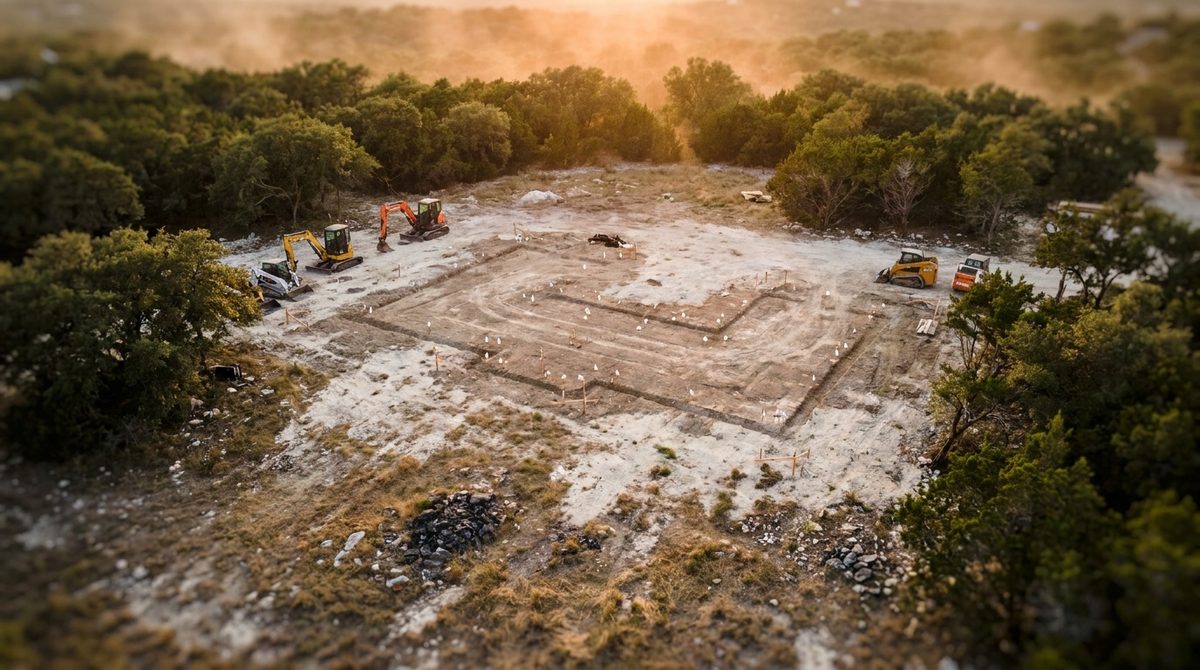
Pier-and-beam extraction starts at the perimeter — excavation around individual footings using the CAT 308E2 CR bucket, then hydraulic thumb extraction once the pier is exposed and isolated. Slab-on-grade tearout follows the same bucket-and-thumb process as concrete removal, with the hydraulic hammer added for heavily reinforced grade beams. The 308's compact radius keeps the work contained even on tight 50×100 infill lots with adjacent structures less than 10 feet away.
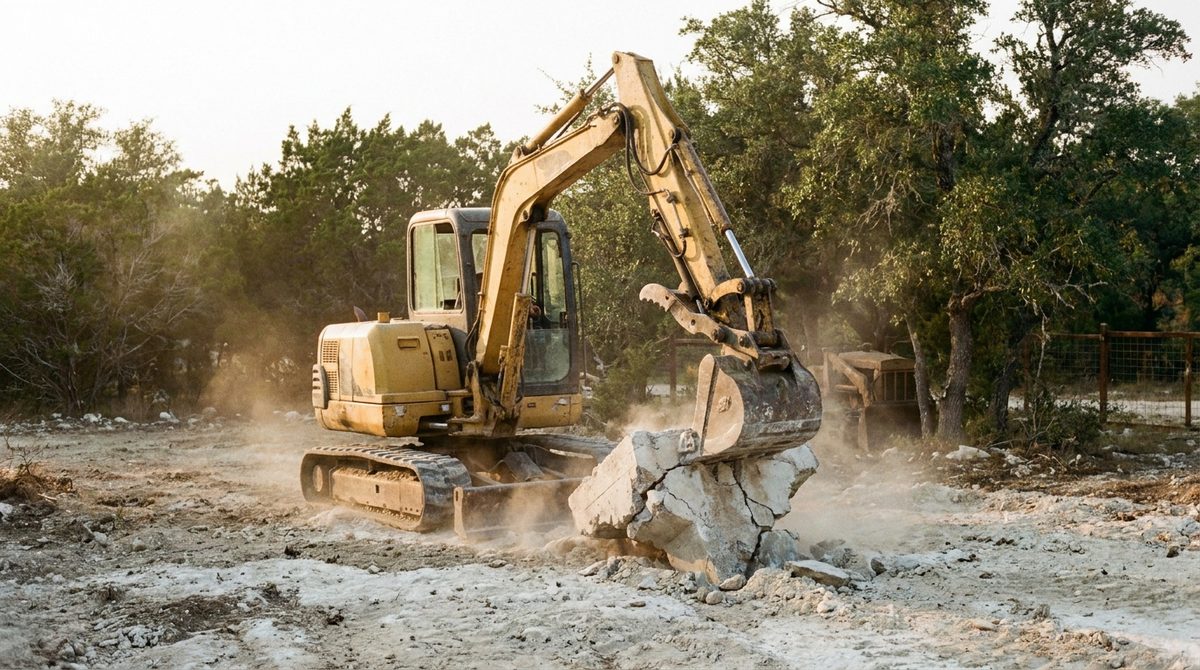
Every pier void and footing excavation gets backfilled and compacted to the target subgrade specification — not filled to a visual approximation. The compaction process follows the same documentation standard as the extraction: each void backfilled in lifts, compacted by layer, and confirmed against target elevation before moving to the next footing. No loose voids left for excavation crews to discover. Material from the extraction is sorted on-site — concrete recycled, rebar staged for steel recycling, fill material reused where it meets spec.
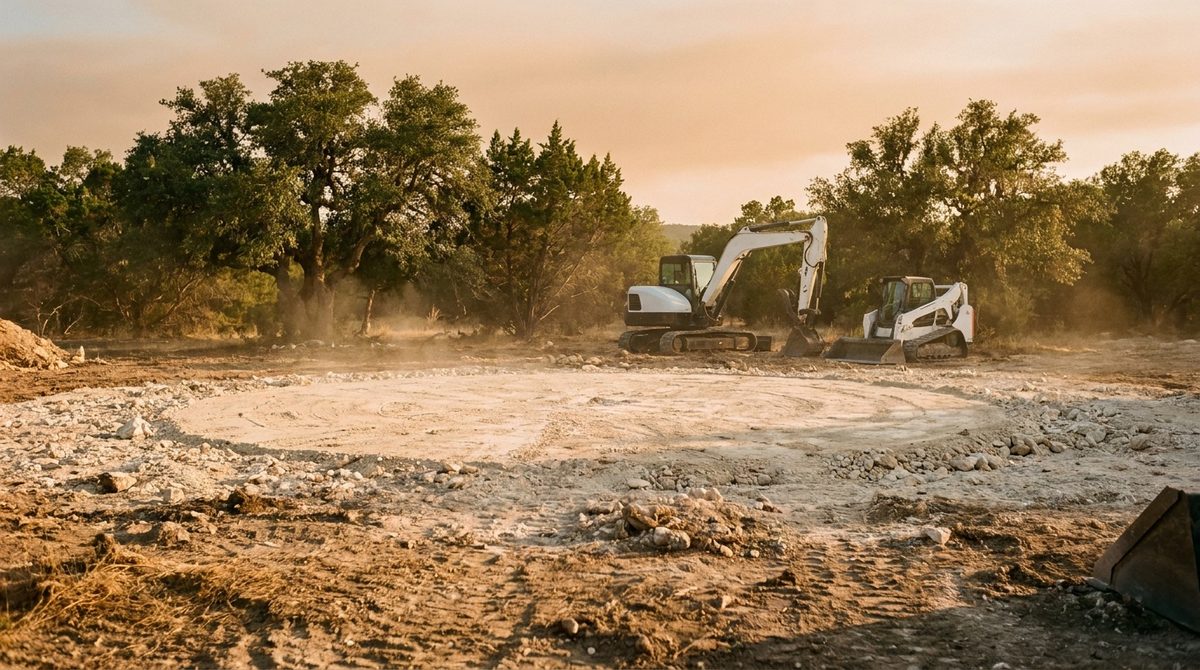
When the last footing is extracted and backfilled, the drone flies one final verification pass. The post-job RTK scan confirms final subgrade elevation against the target specification across the entire foundation footprint — every pier location, every void. You receive a signed accuracy report, a 3D Digital Twin of the cleared and verified subgrade, and C&D recycling documentation. Share the digital twin link with your GC, structural engineer, or permit coordinator before their first day on site. They'll know exactly what they're starting from.
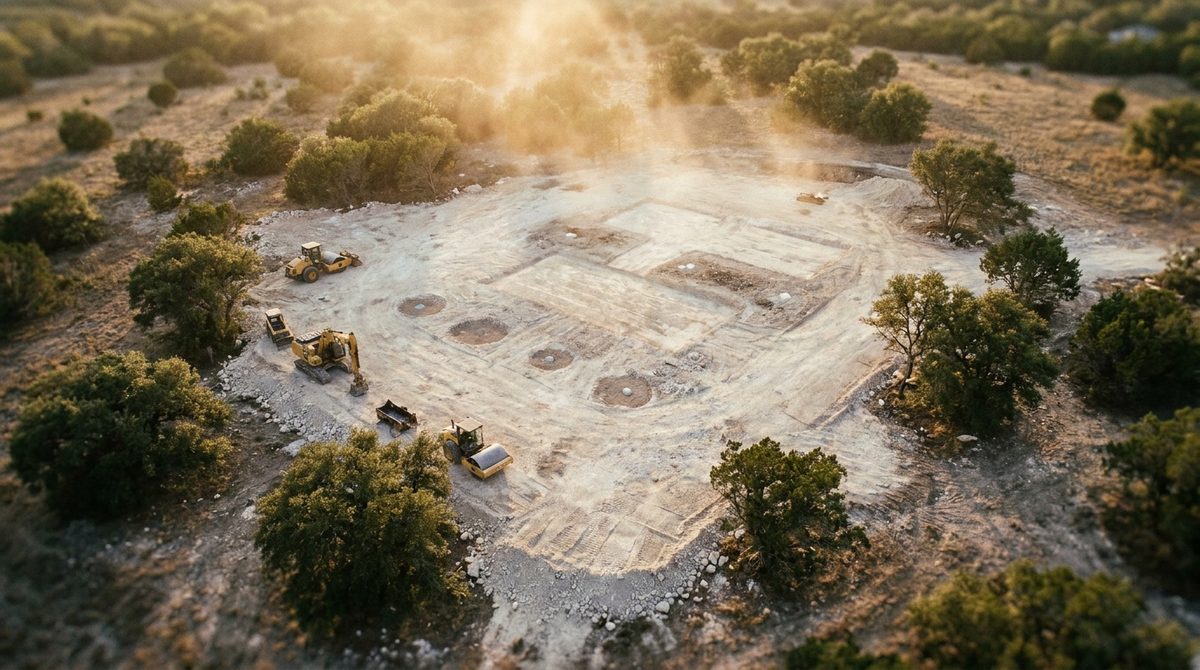
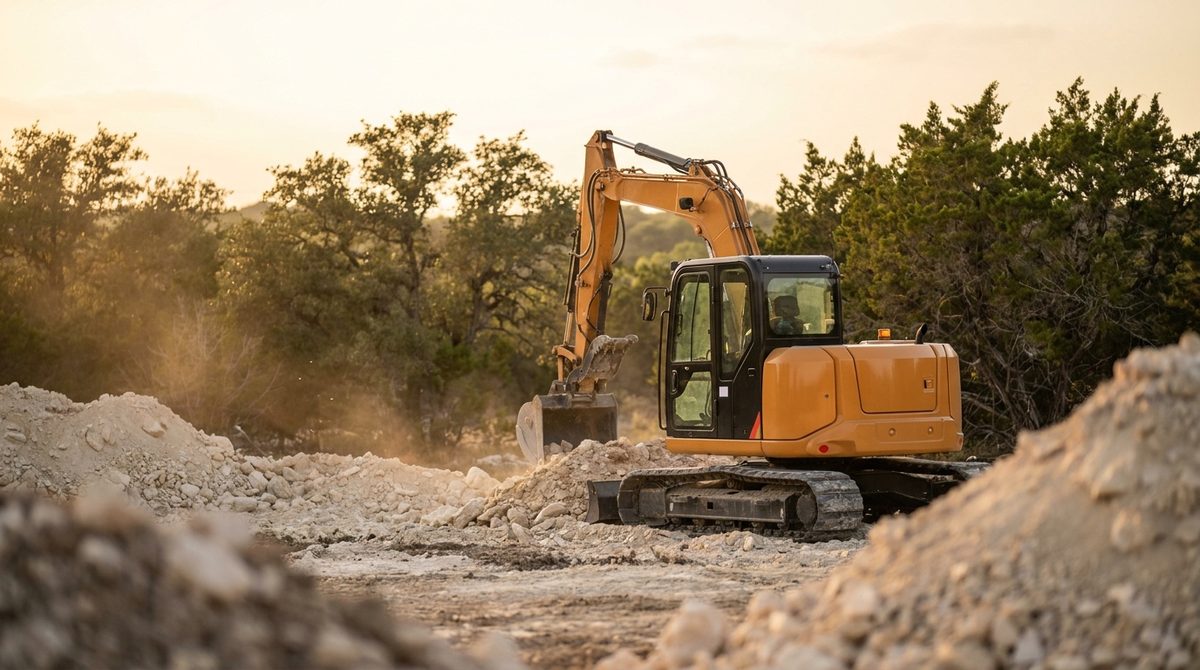
Compact radius excavator. 17,900 lb operating weight. Hydraulic thumb for pier extraction and footing isolation. Zero tail swing for work on tight infill lots adjacent to existing structures or fences. Quick coupler switches to NPK GH6 hammer for heavily reinforced grade beams and thick slabs without downtime.
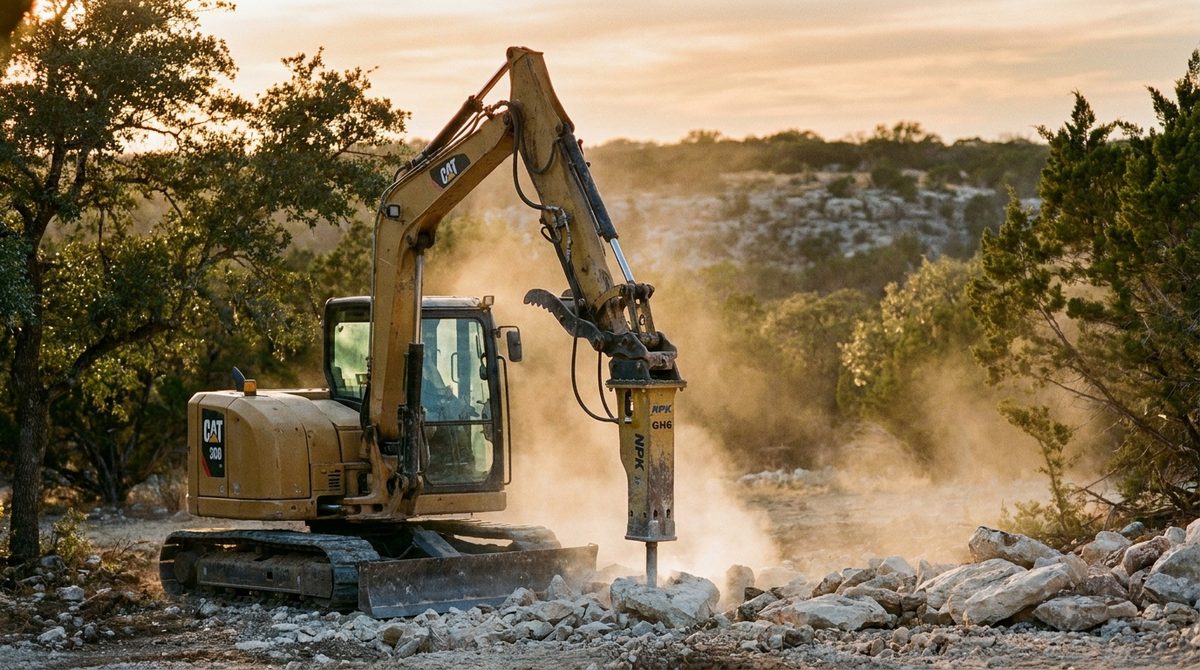
1,500 lb hammer class. Chisel bit configuration. Used when grade beams, heavily reinforced footings, or deep slab sections require breaking before bucket extraction. Pre-scan identifies where the hammer is needed versus where the bucket and thumb are sufficient — right tool, right location, no overkill.
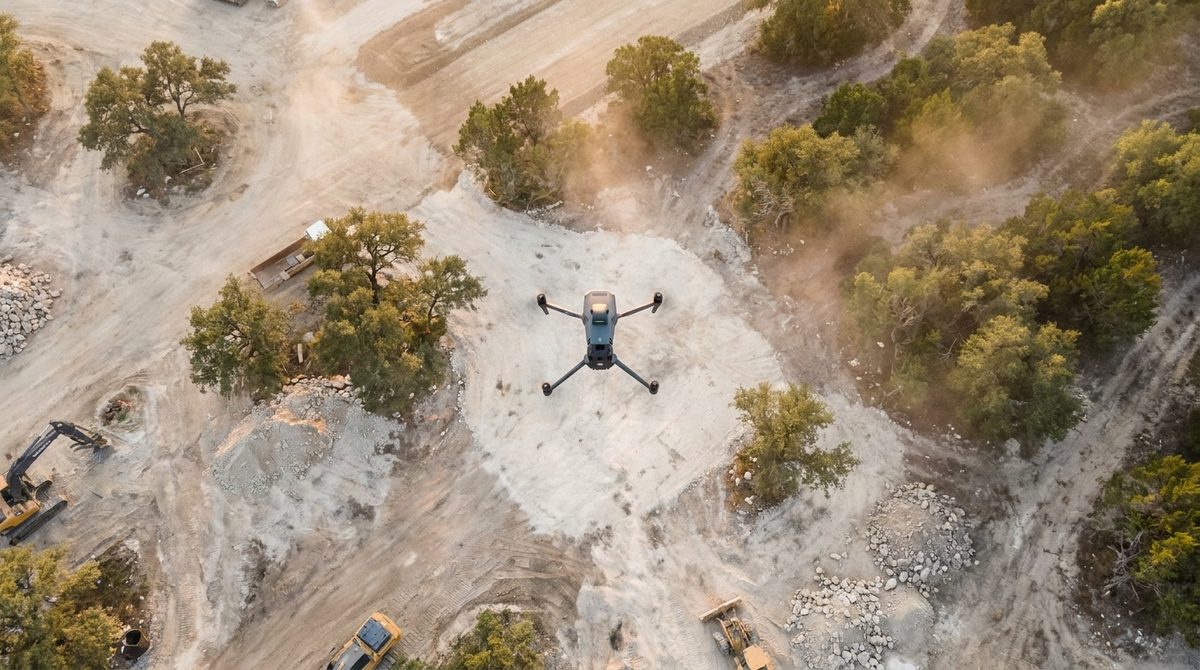
Survey-grade RTK drone. ±0.5cm horizontal accuracy. Flies the pre-job scan to locate and map the foundation footprint, and the post-job verification to confirm subgrade elevation at every extraction point. Generates the Digital Twin and signed accuracy report that documents the handoff to your next trade.
EVERY POUND
LEAVES A PAPER TRAIL.
Foundation material doesn't just disappear into a truck. ClearGround sorts every extracted pier and footing on-site: concrete broken to haul size and sent to Austin C&D recycling, rebar staged separately for steel recycling, and clean fill material reused as backfill when it meets compaction specification. Every load is documented. The recycling receipts come with your post-job package.
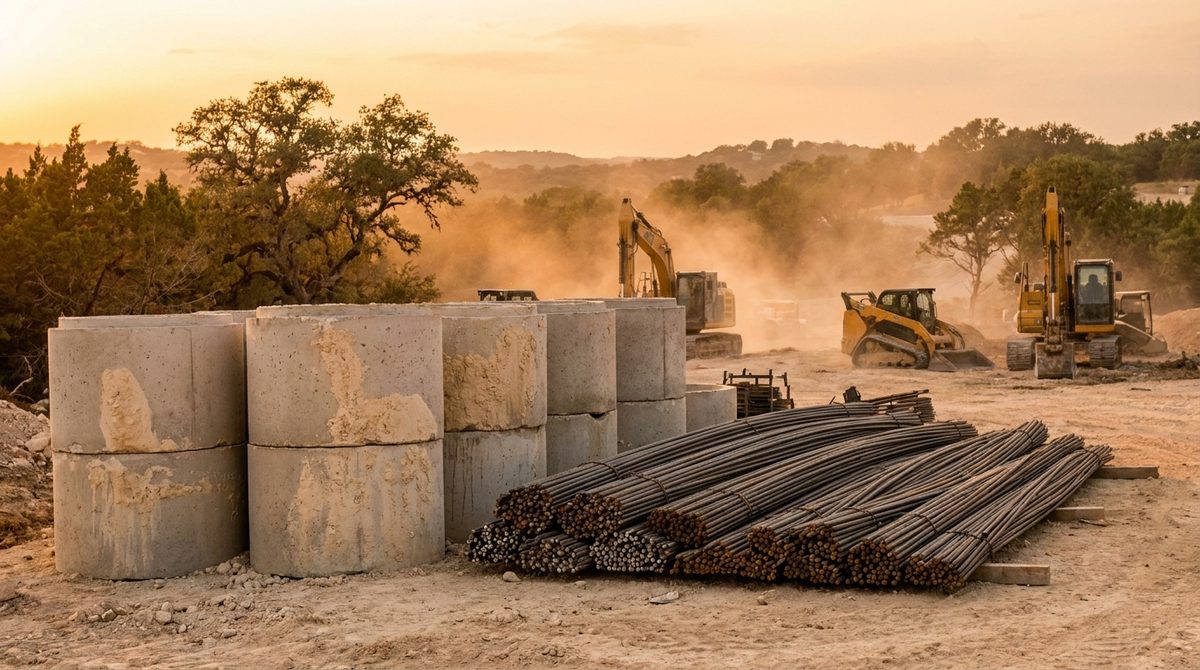
The Lot Isn't Ready
Until the Foundation Is Gone.
Austin infill lots — particularly 50×100 teardowns in 78704, 78745, and East Austin — almost always have a legacy foundation that needs to come out before your project can begin. It's rarely the glamorous line item, but it's the one that holds everything else up if it's not done right. ClearGround removes the foundation, verifies the subgrade, and hands your GC a documented grade confirmation before they schedule their first crew. One mobilization. One crew. No gaps in the sequence.
See the Infill Developer JourneyA Clean Subgrade
Before Your First Day On Site.
GCs managing infill builds often inherit subgrade uncertainty — the prior demolition contractor removed the structure but left foundation work for someone else. ClearGround takes that handoff and closes it: foundation extracted, voids backfilled and compacted, RTK verification run, Digital Twin delivered. Your subs start on a subgrade that's been measured, not assumed. The accuracy report is in their hands before they mobilize.
Talk to Us About Your ProjectThe pre-job RTK drone scan maps the full lot surface, and we follow that with a ground-level inspection of the exposed foundation perimeter. On pier-and-beam structures, the beam layout typically reveals pier spacing and count. For lots where the structure has already been removed, we use the scan plus any available building records to confirm the footprint. If the scan and inspection suggest buried footings outside the main foundation area — from additions, outbuildings, or prior demolition — those get flagged and priced before work begins. Nothing about the foundation scope should be a surprise by the time the CAT 308 arrives.
Every pier void gets backfilled in compacted lifts to the target subgrade elevation specified for the project. We don't just push dirt in and level it — backfill is placed in layers and compacted per lift before moving to the next. The post-job RTK scan verifies that every void location matches the target elevation across the full foundation footprint. Loose voids are how excavation crews and foundation pours go wrong — we eliminate that risk with documented compaction before the next trade shows up.
Yes, and this is usually the most cost-effective way to handle it. On a full infill teardown, the typical sequence is: concrete slab and hardscape removal first, then foundation extraction, then land reclamation and final grading. ClearGround handles all three on a single mobilization — one crew, one project manager, one documented handoff. Bundled scope typically saves 10–20% versus three separate contractor mobilizations, and it produces a single verified Digital Twin that covers the full site prep sequence from start to grade-ready.
Foundation removal is the extraction of existing substructures — what's already in the ground from the previous building. Excavation is the removal of native soil to create a new void for a new structure (pool shell, building foundation, utilities). They're sequential, not interchangeable. Foundation removal clears the existing substructure and verifies the subgrade. Excavation then starts from that verified subgrade and digs to the new construction depth. On most infill lots, one follows the other on the same mobilization.
Pier-and-beam extraction on a standard Austin residential structure (20–40 piers) typically runs 1–2 days including backfill and compaction. Slab-on-grade tearout is 1–3 days depending on slab area and reinforcement. Isolated footings or orphaned piers are often half a day. The pre-job scan gives us an accurate pier count and slab measurement — so the timeline you get in the proposal reflects the actual scope, not a contingency-padded estimate. 48-hour mobilization from proposal acceptance.
Permit requirements depend on project context. Foundation removal associated with a full structure demolition typically falls under the demolition permit already pulled for the structure. Standalone foundation removal for lot prep on a permitted new construction project usually doesn't require a separate permit — but this varies by jurisdiction, lot type, and project scope. ClearGround is not a permitting authority and doesn't pull permits. We strongly recommend confirming permit requirements with the City of Austin Development Services Department or your GC before scheduling any foundation removal work.
Driveways, patios, and surface slabs removed before foundation work begins. Usually bundled on the same mobilization for infill site prep.
View Service →Pool shell digging, building foundation excavation, and utility trenching — all start from the verified subgrade foundation removal leaves behind.
View Service →Clearing, grading, and construction-ready surface prep. The last step before your GC mobilizes. Often bundled with foundation removal on infill lots.
View Service →FOUNDATION TO REMOVE?
WE SCAN IT FIRST.
Free RTK site scan confirms pier count, foundation type, and access constraints before we quote. Fixed price, 48-hour mobilization, and a verified subgrade before your GC arrives.
Book a Site Scan48-hour mobilization · Austin & Hill Country · Fixed-price proposals · No obligation