


OLD OUTBUILDING? WE TAKE IT DOWN. SLAB AND ALL, IF YOU WANT.
Detached garage demolition, shed removal, carport tear-outs, and old barn demolition across Austin and the Hill Country. Part of ClearGround's Austin demolition service: scanned before the first strike, metal recycled, wood hauled, nothing buried — and a price that's fixed before the machine shows up.
Book a Site Scan
OUTBUILDING DEMOLITION,
DONE LIKE A REAL DEMO JOB.
Garage demolition, shed demolition, carport removal, and barn removal are the small jobs most demolition contractors don't want and most junk haulers can't actually finish. The structure comes down, the tin and lumber go in a trailer, and you're left with a slab, a footing, half a foundation, and a pile of nails in the grass. ClearGround runs an outbuilding the same way we run a house: an RTK drone scan before the first strike, the right machine for the access you actually have, every load ticketed, metal recycled, wood hauled, nothing buried on site — and a verification scan at the end so you know what's left is exactly what you asked to be left. If you want the slab gone too, we break it and haul it on the same mobilization. Fixed price after the scan. 48-hour quote turnaround. Not a junk hauler with a sledgehammer.
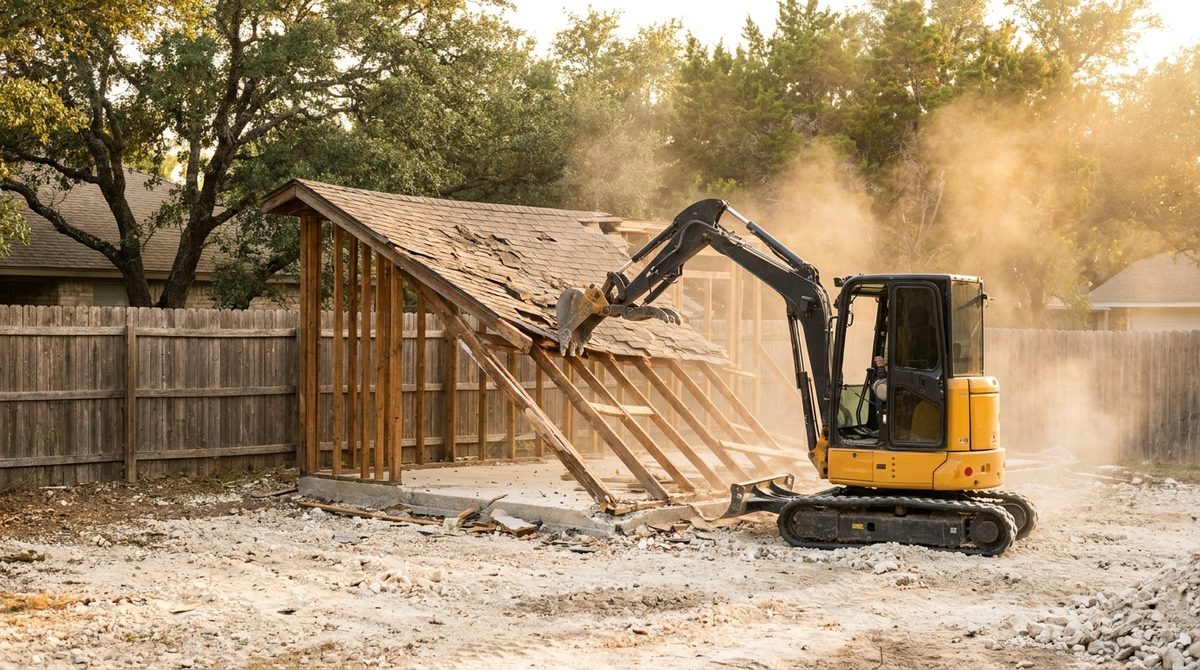
& Garage Removal
One- and two-car detached garages — wood frame, block, or metal — on suburban lots where the neighbor's fence is ten feet away. Roof and walls dropped inward, framing and roofing sorted on the slab, slab left in place or removed as an add-on. Tight-lot access planned from the scan, not discovered on demo day.
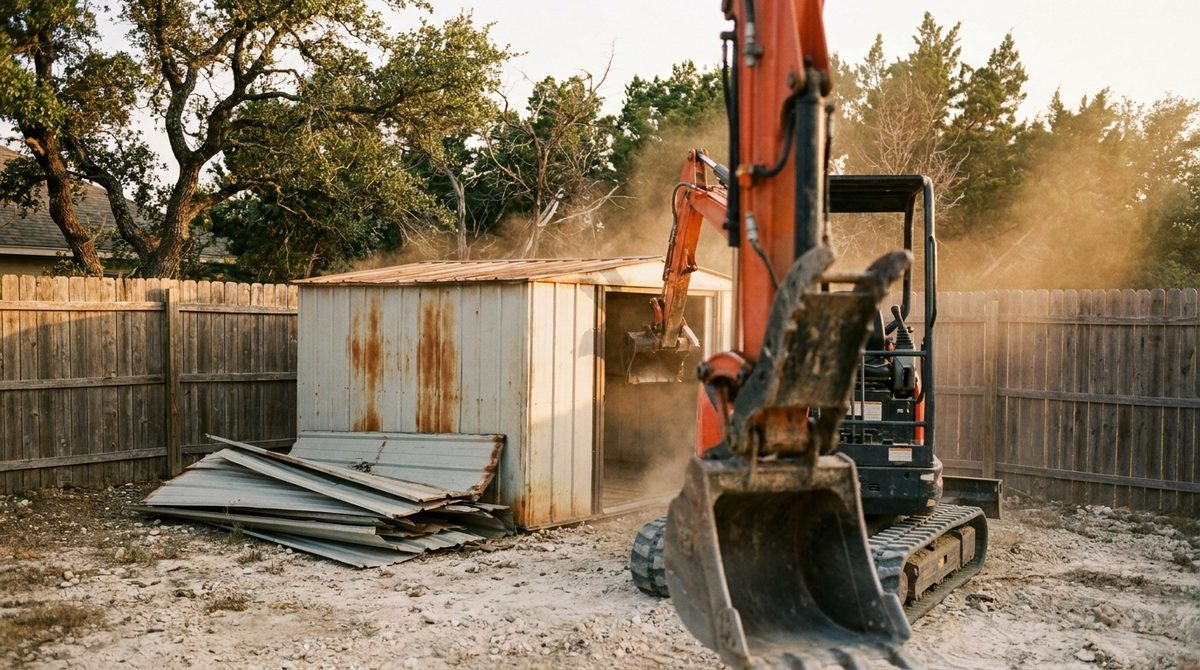
& Shed Removal
Metal kit sheds, wood storage buildings, workshops, and old well houses. The cheapest thing on the lot and the one most often left half-done. We take the structure, the floor framing or slab, the anchors, and the junk that was inside it — and we don't leave tin panels in the grass for the mower to find.
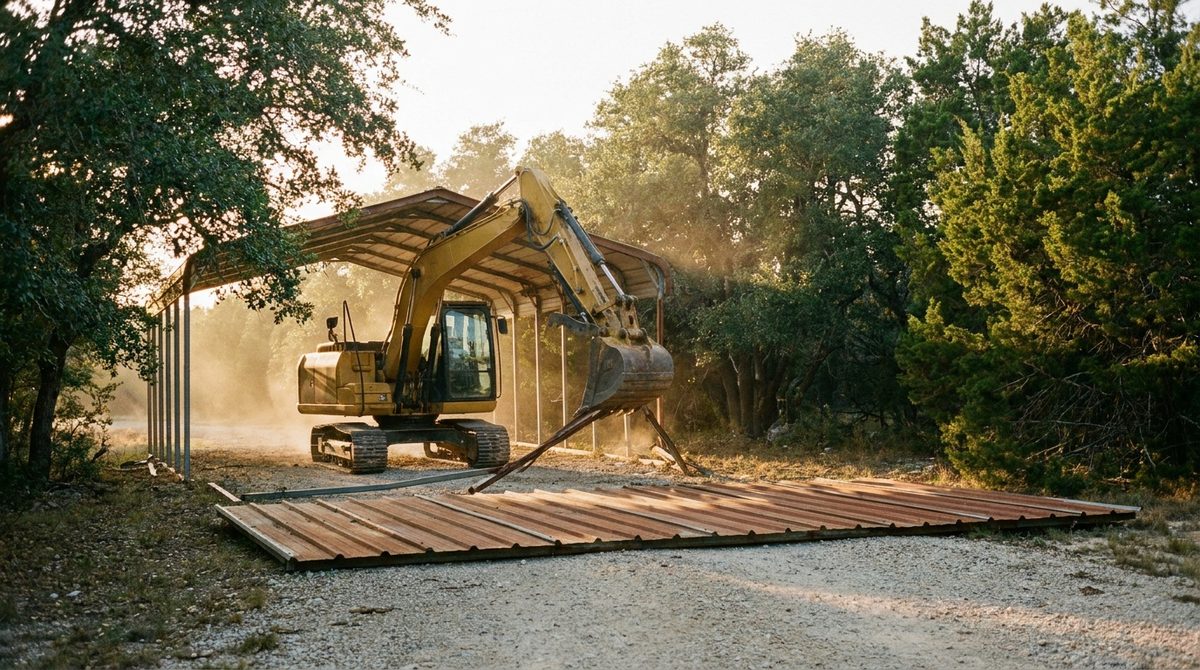
Structure Removal
Steel and aluminum carports, RV covers, lean-tos, and metal awnings. Posts pulled, footings broken out, panels stacked flat and recycled as scrap. The concrete apron underneath stays or goes — your call, priced per square foot as concrete removal.
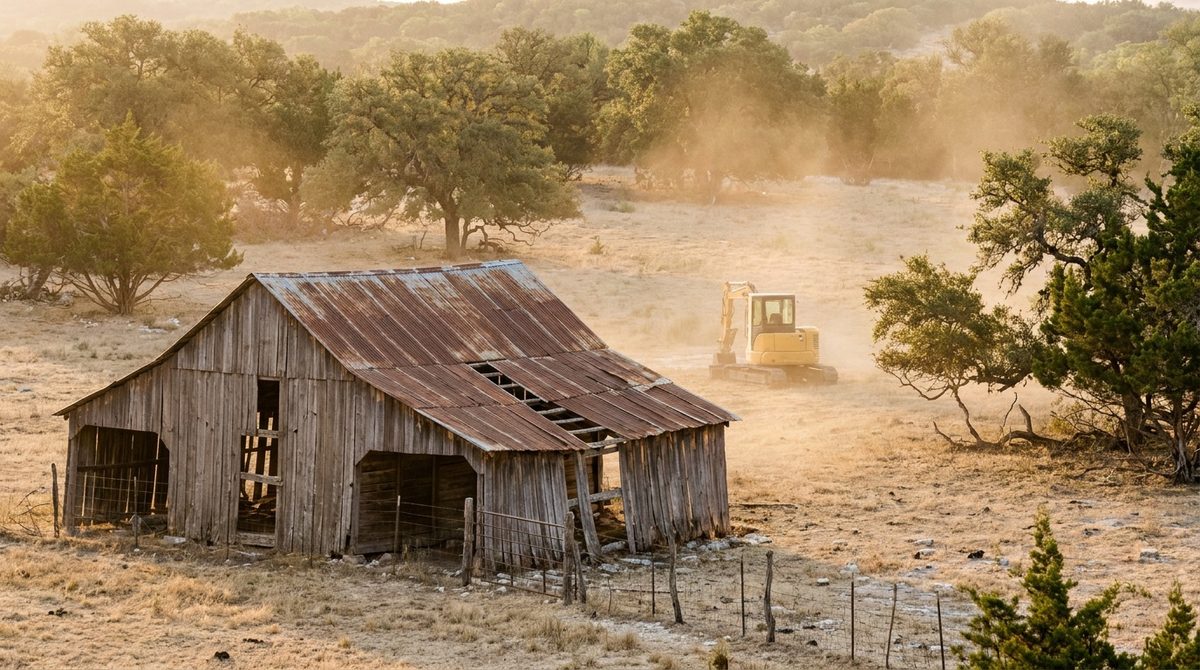
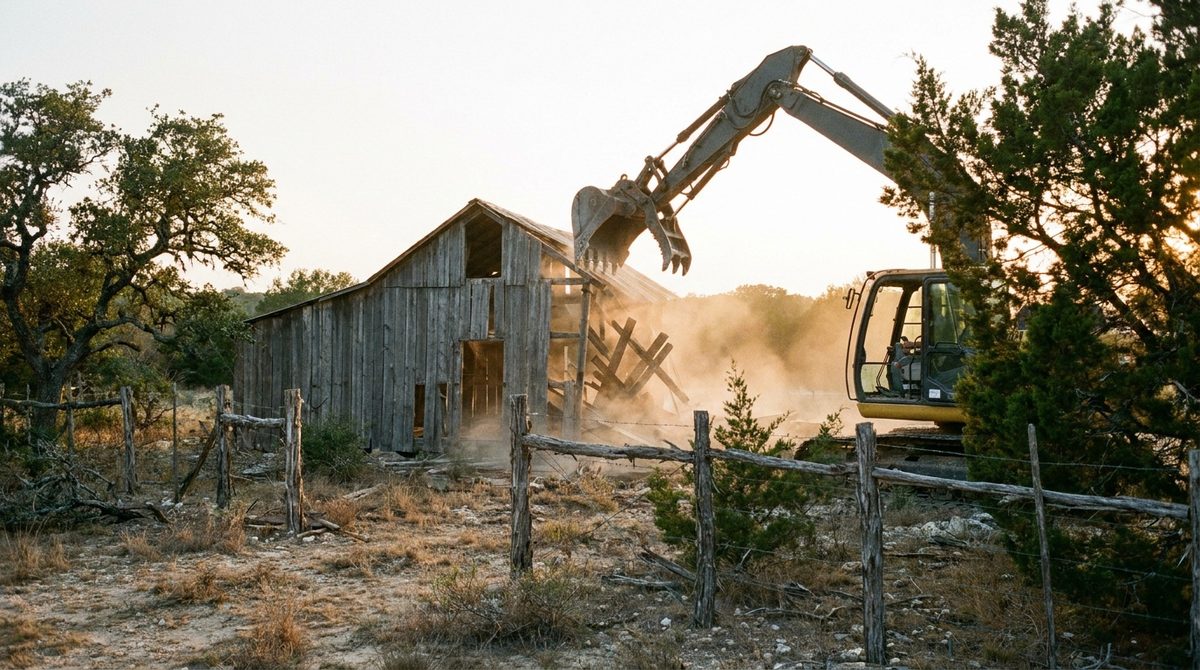
BARN DEMOLITION ON
HILL COUNTRY RANCH LAND.
TEAR DOWN THE SHED FIRST.
THEN DECIDE WHAT THE GROUND IS FOR.
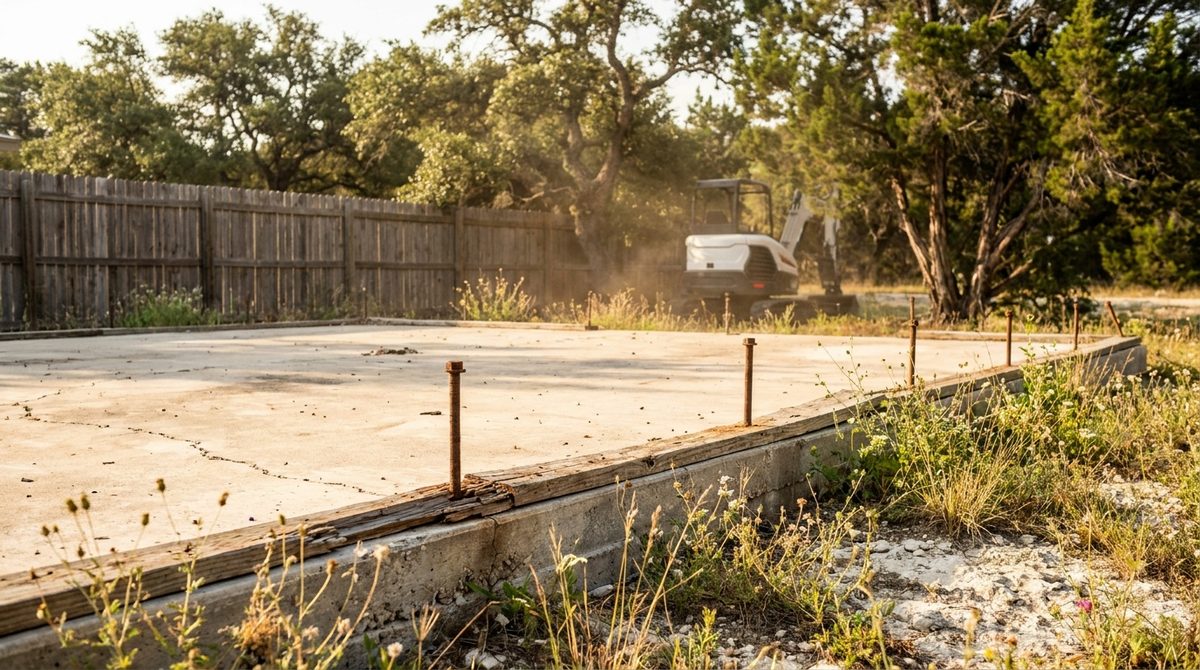
An outbuilding rarely comes down for its own sake. It's in the way of a new garage, a pool, an ADU pad, a bigger barn, or a cleaner lot to sell. That's why the slab question matters so much: a junk hauler leaves it because they can't remove it; we ask because the answer changes what you need next. Leave it if you're rebuilding on it. Remove it if you're grading, pouring new, or putting the ground back to grass. Either way, one crew and one mobilization takes you from standing structure to the next step.
Garage, shed, carport, or barn taken down, sorted, and hauled. Metal recycled, wood hauled, nothing buried. This page.
→Optional add-on. The slab, piers, or footings broken out and hauled at $4–8 per square foot. See concrete & slab removal or foundation removal.
→Footprint graded and verified. If a new structure is coming, site prep & pad prep starts here. If the ground is going back to pasture, land clearing finishes it.
→Outbuildings often ride along with a house demolition or a pool demolition. One mobilization, one packet, better price.
SHED REMOVAL COST. GARAGE DEMOLITION COST.
SHOWN, NOT HIDDEN.
Most outbuildings in Central Texas land between $1,000 and $5,000 per structure to demolish, sort, and haul. Large barns and pole barns run higher. The slab is an add-on at $4–8 per square foot. The range depends on size, materials, whether there's a slab or footings under it, how far the trucks have to go, and whether a mini excavator has to squeeze through a gate. The RTK scan settles all of that before we write the number — so the number is fixed.
All pricing reflects typical Central Texas residential and light-commercial outbuilding demolition. Ranges depend on structure size and materials, slab or footings present, site access, and haul distance — all confirmed during your RTK drone scan. Haul-off runs $1,000 – $3,500 per load or site depending on distance and volume, and is itemized in the proposal. The exact price is fixed after the scan, before any work begins. Try the demolition calculator or read the demolition cost guide for a rough number first.
A GUY WITH A TRAILER WILL BEAT OUR NUMBER. HERE'S WHAT HE'S LEAVING OUT.
Somebody with a sledgehammer, a Sawzall, and a dump trailer can knock a shed down for less than we charge, and for a rotten 8×10 kit shed that might be the right call — we'll tell you if it is. What that price usually doesn't include: the slab, the footings, the anchors, the nails in the grass, a scale ticket showing where the debris went, and anyone who's insured if the wall falls the wrong way onto your fence. Our price includes the scan, the machine that fits your gate, the sorting, the recycling tickets, $5M in general liability, and a verification scan proving the ground is what we said it is. If you only want the structure gone and the slab is staying, we'll price exactly that. We just won't pretend the rest doesn't exist.
SAME DISCIPLINE AS A HOUSE.
The RTK drone maps the structure, the slab or footings under it, the trees around it, and the route from the street to the building to ±0.5 cm. We measure the gate opening, check for overhead lines and septic, and confirm whether it's a CAT 308 job or a mini-excavator-through-the-side-yard job. Older garages and sheds may need an asbestos survey before demolition; abatement must be complete before we mobilize, and we can point you to an abatement contractor. Then you get a fixed price within 48 hours.
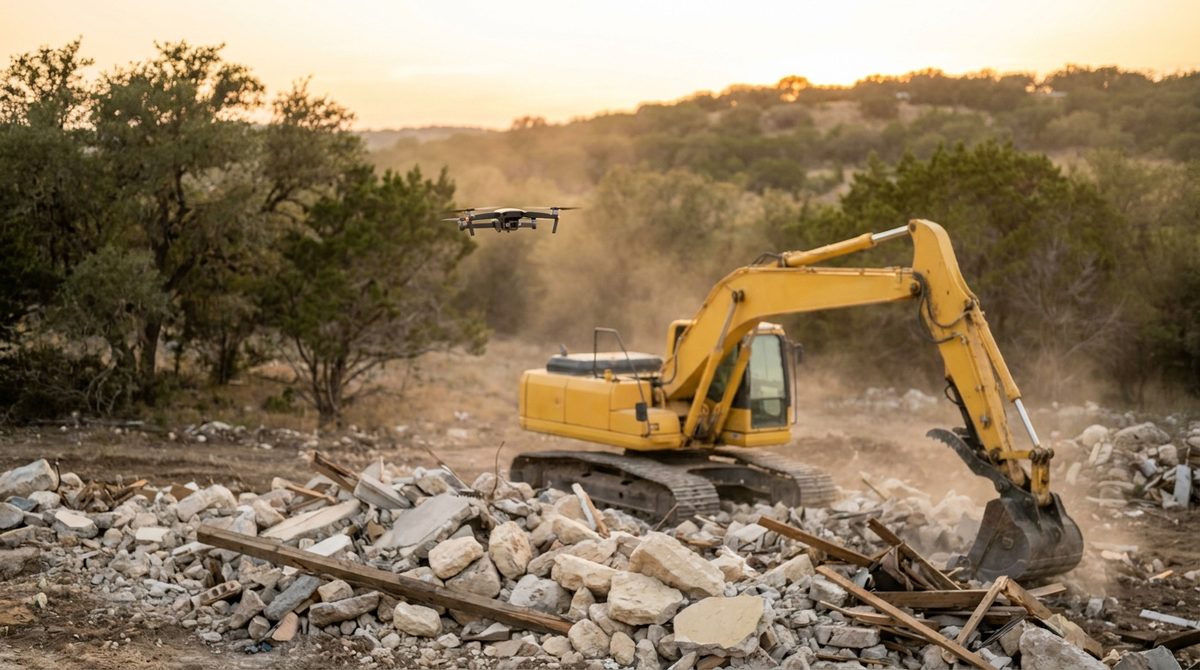
Roofing comes off or gets folded in first, then walls are pulled inward with the hydraulic thumb so nothing lands on the neighbor's fence, your live oaks, or the pool deck. Block garages are broken course by course. Metal buildings are unbolted or sheared at the posts and laid flat. On a barn, we work bay by bay from the far end toward the truck. The machine matches the access: CAT 308E2 CR where there's room, a mini excavator on plywood mats where there isn't.
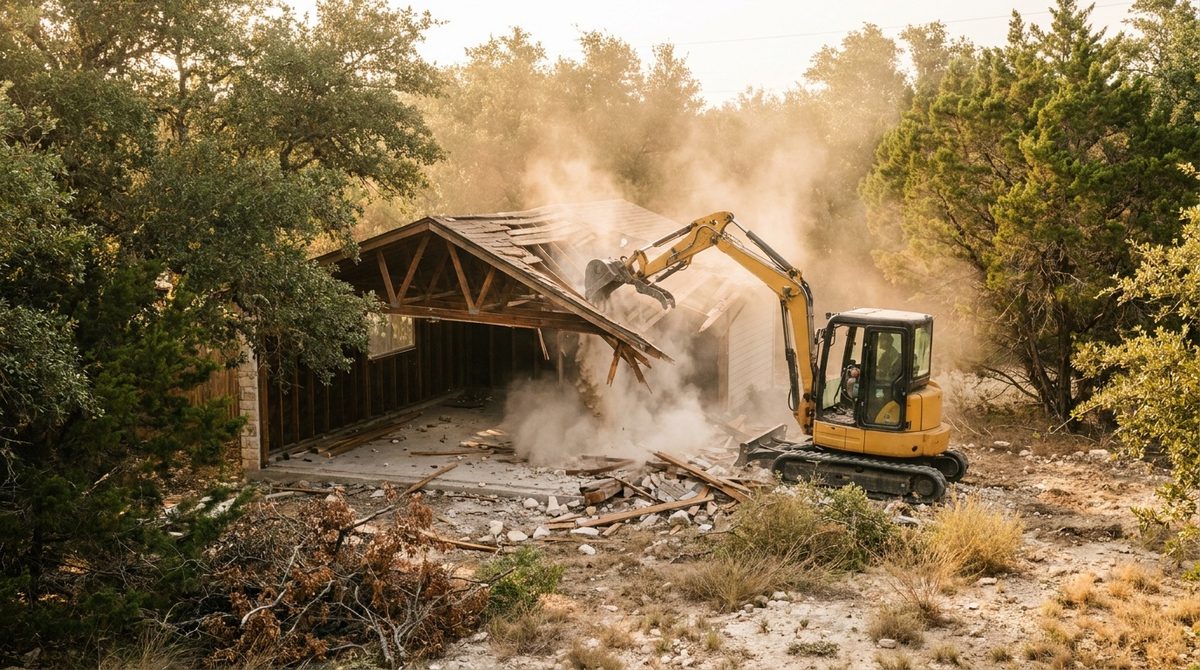
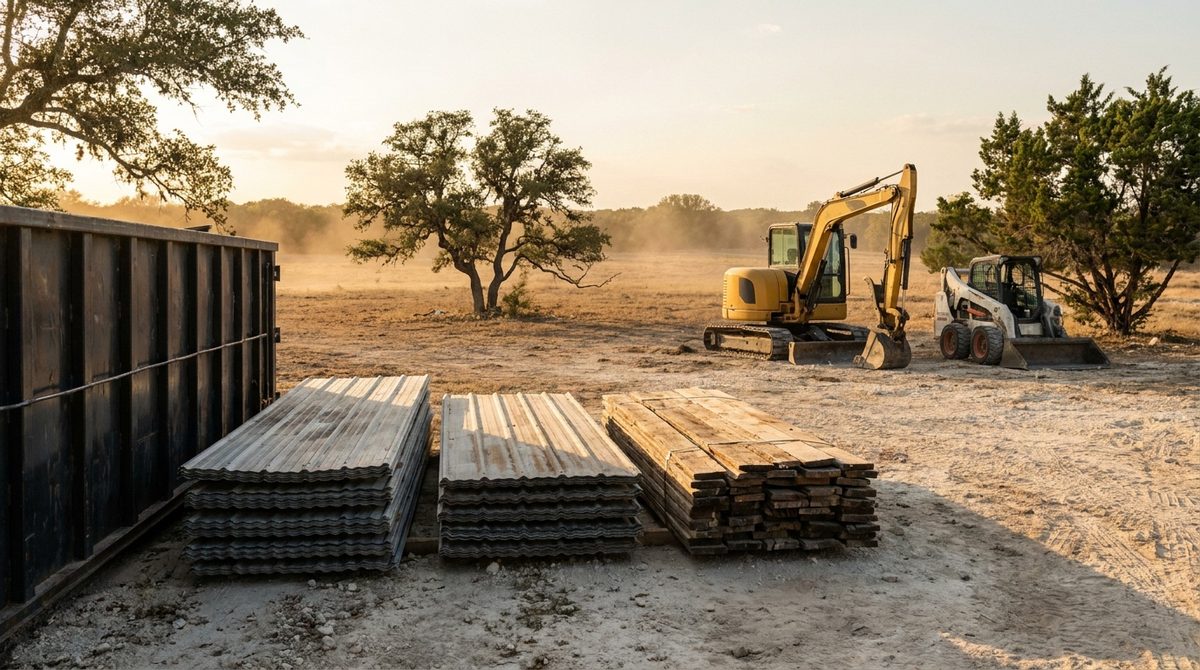
Everything gets sorted where it falls. Corrugated tin, steel posts, and wire go to metal recycling. Lumber, shingles, and drywall go to C&D. Concrete and block go to the crusher. Whatever was stored inside — the mower, the paint cans, the forty years of stuff — gets pulled and handled before the walls come down, and anything hazardous is flagged for you rather than mixed into a load. Every truck that leaves has a ticket, and the tickets come back to you in the packet.
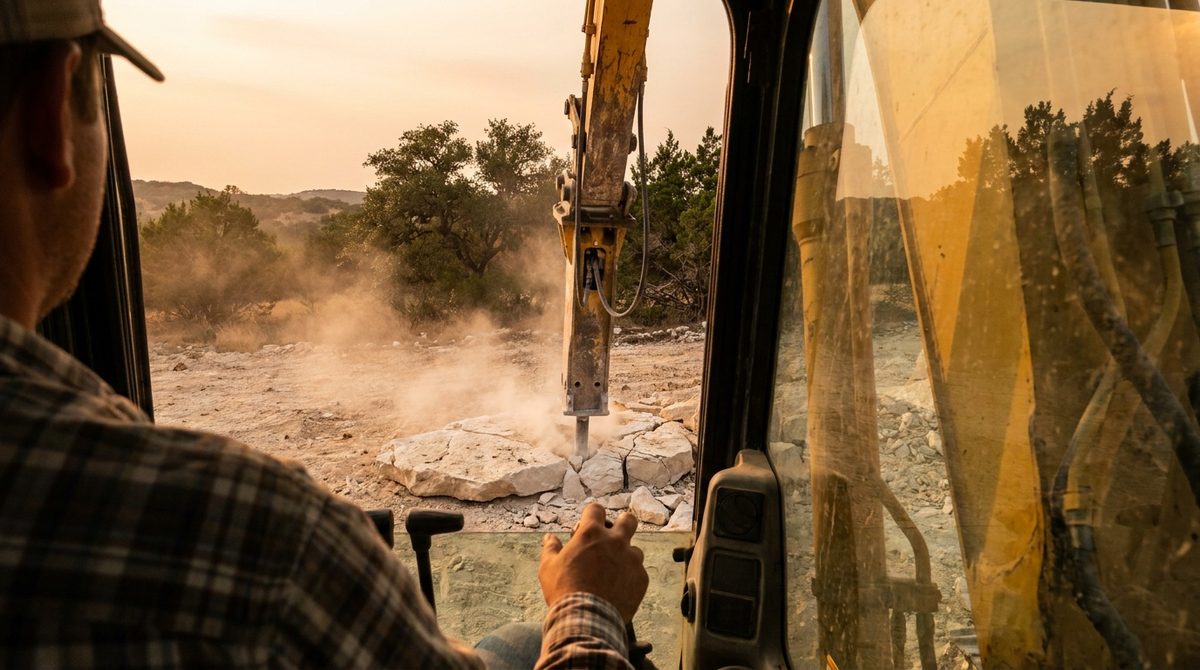
If you've added slab removal, the NPK GH6 hydraulic hammer breaks the slab, apron, and footings on the same mobilization; concrete is loaded and hauled to C&D recycling with the rebar and mesh separated. If the slab is staying, it's swept clean and the anchor bolts are cut flush. Either way, the footprint is graded — piers pulled, voids backfilled and compacted, surface left ready for sod, gravel, a new pad, or the next structure.
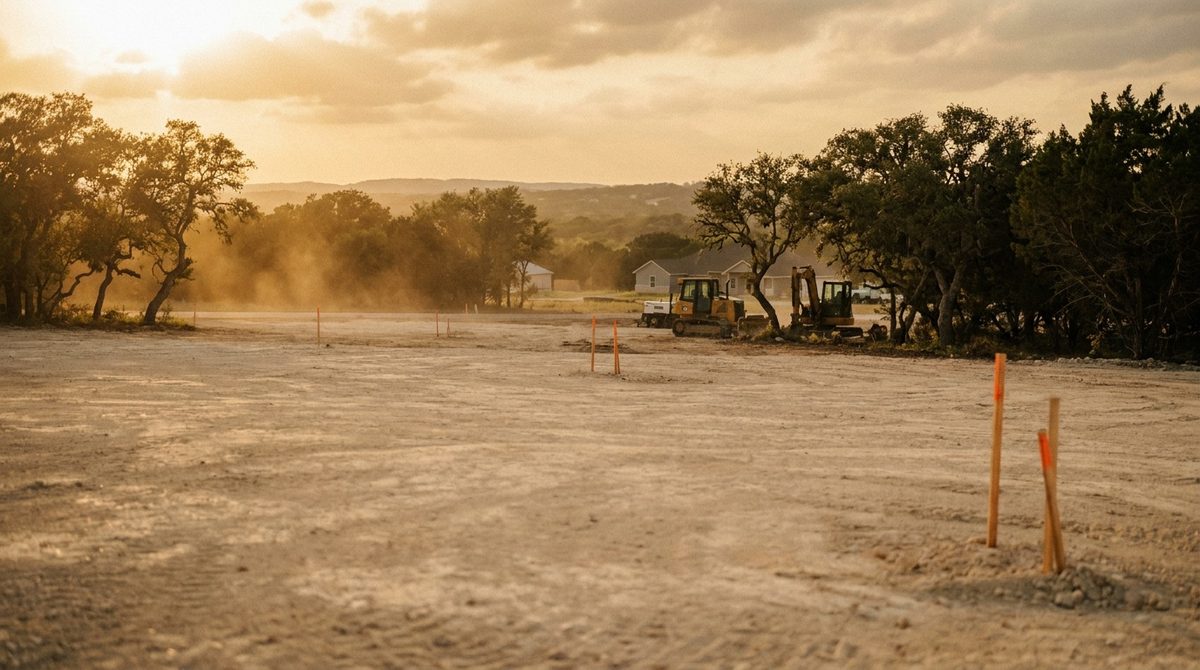
The drone flies one more pass. The post-demo RTK scan confirms the footprint is clear and the grade is where the proposal said it would be. You receive a 3D digital twin of the finished ground, the recycling and haul tickets, and the before-and-after record — useful for a permit close-out, a builder starting a new garage or barn, an insurance file, or a buyer who wants to know what's under the grass. Nothing about the job is left to memory.
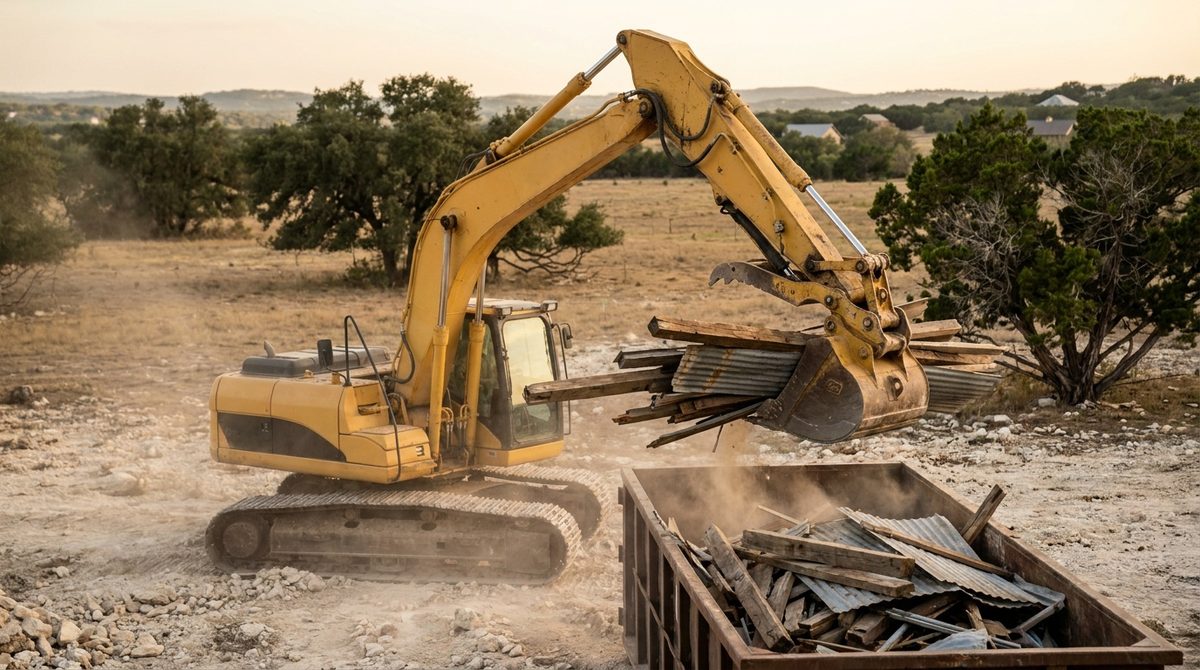
Compact-radius excavator with hydraulic thumb and bucket. Enough reach and weight to pull a two-story barn wall inward under control, and a tail swing small enough to work next to a fence line or a live oak. Quick coupler switches to the NPK GH6 hydraulic hammer for slabs, aprons, and footings on the same day.
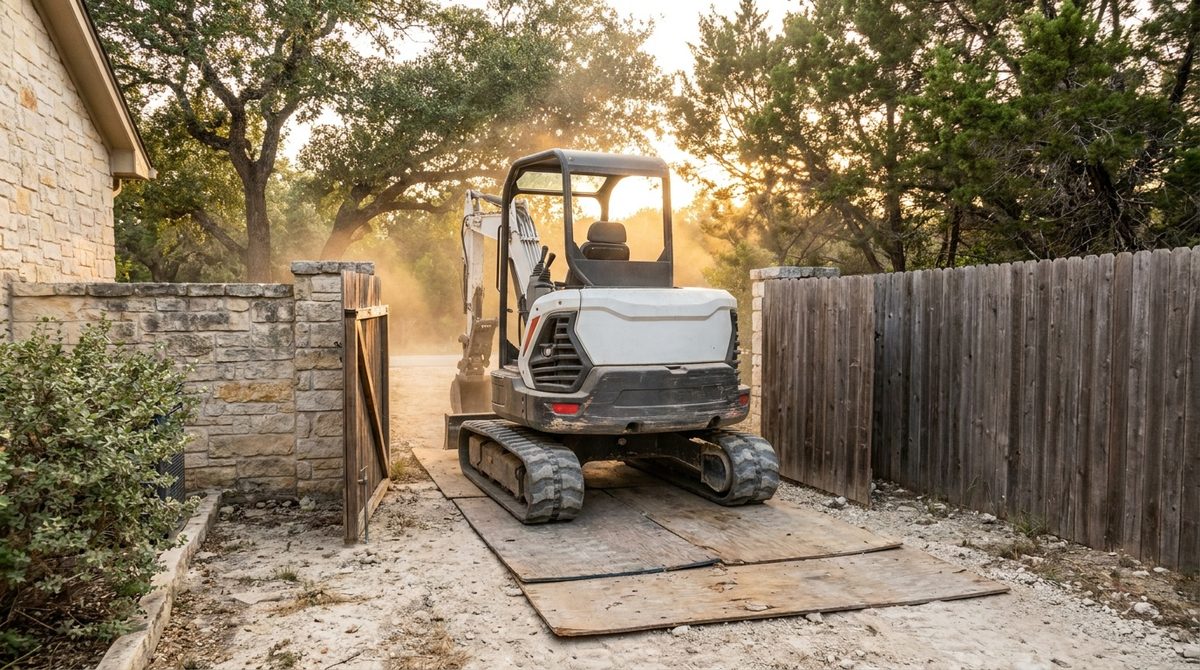
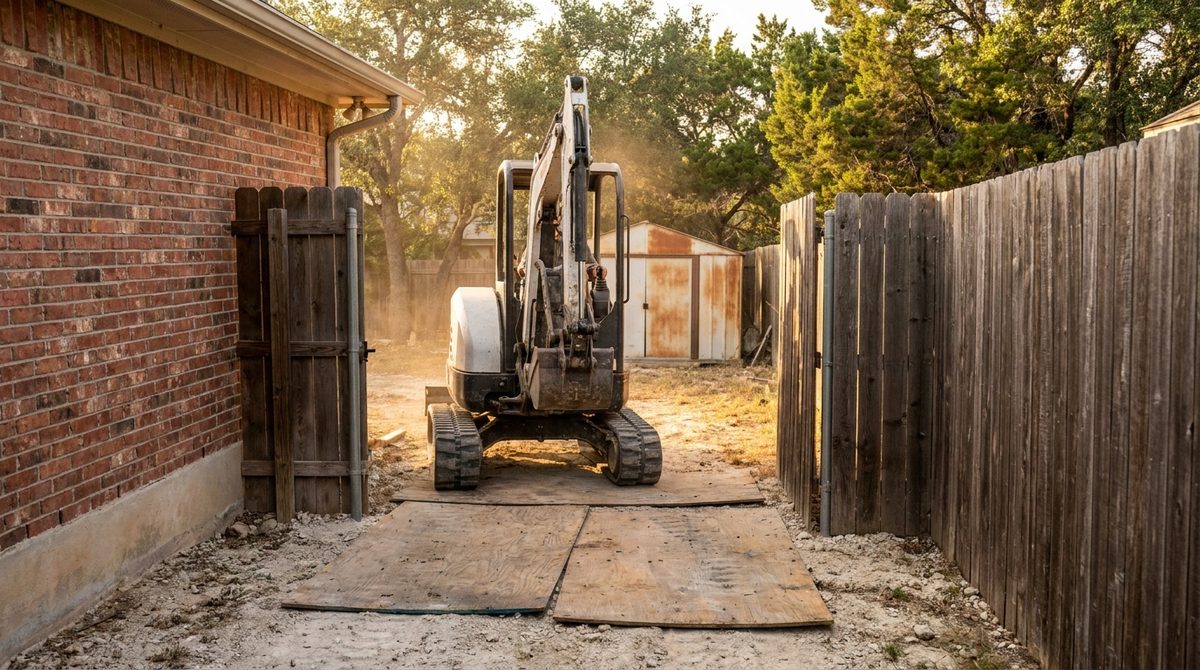
For the backyard shed behind a standard gate and the garage in a side yard with no drive-through. Runs on plywood mats to protect turf and sprinkler lines, works in the space between a house and a fence, and still has the hydraulics to lift sorted loads over the fence to the truck. The scan tells us which machine before we quote — not on demo morning.
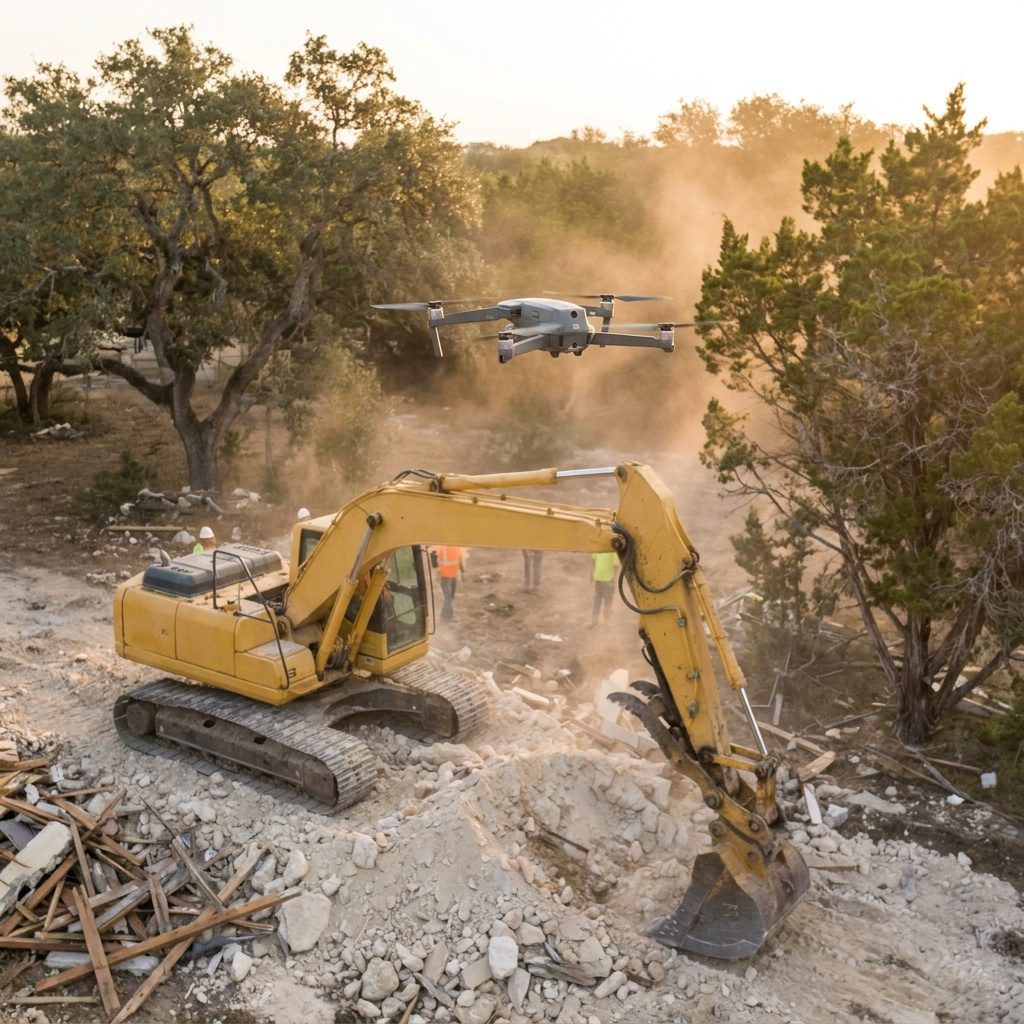
Survey-grade RTK drone, ±0.5 cm horizontal accuracy. Maps the structure, slab, access route, and tree canopy before the quote; confirms the cleared footprint and grade after. Produces the 3D digital twin and the volume report that go in your packet.
TIN, WOOD, BLOCK.
EACH ONE LEAVES ON A TICKET.
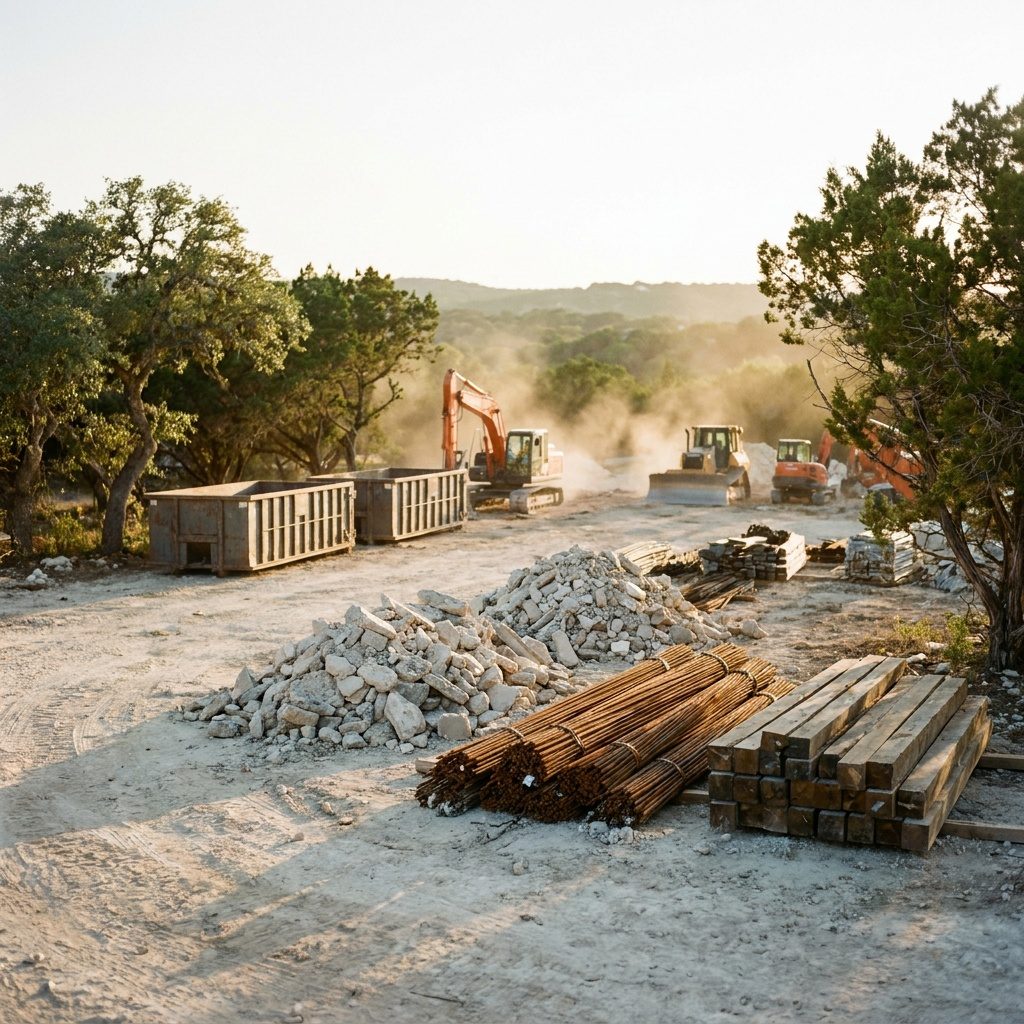
An old garage or barn is three or four different waste streams, and the honest way to handle them is separately. Mixed loads cost more at the gate, can't be recycled, and are how tin ends up in a landfill and treated posts end up in a burn pile. We sort on site, we haul each stream to the right facility, and every load ticket and recycling receipt comes back to you in the post-job packet. Nothing is buried on your property. Nothing is burned. If a hauler tells you otherwise, ask to see the tickets.
The Shed You've Been
Meaning to Deal With.
The leaning shed from the previous owner, the detached garage that's more raccoon than garage, the carport the last storm bent. You want it gone, you want the yard usable, and you don't want to find out afterward that the slab and the anchors are still there. We measure your gate on the scan, bring the machine that fits, protect the fence and the trees, and leave you either a clean slab or clean dirt — your choice, priced before we start.
Book a Site Scan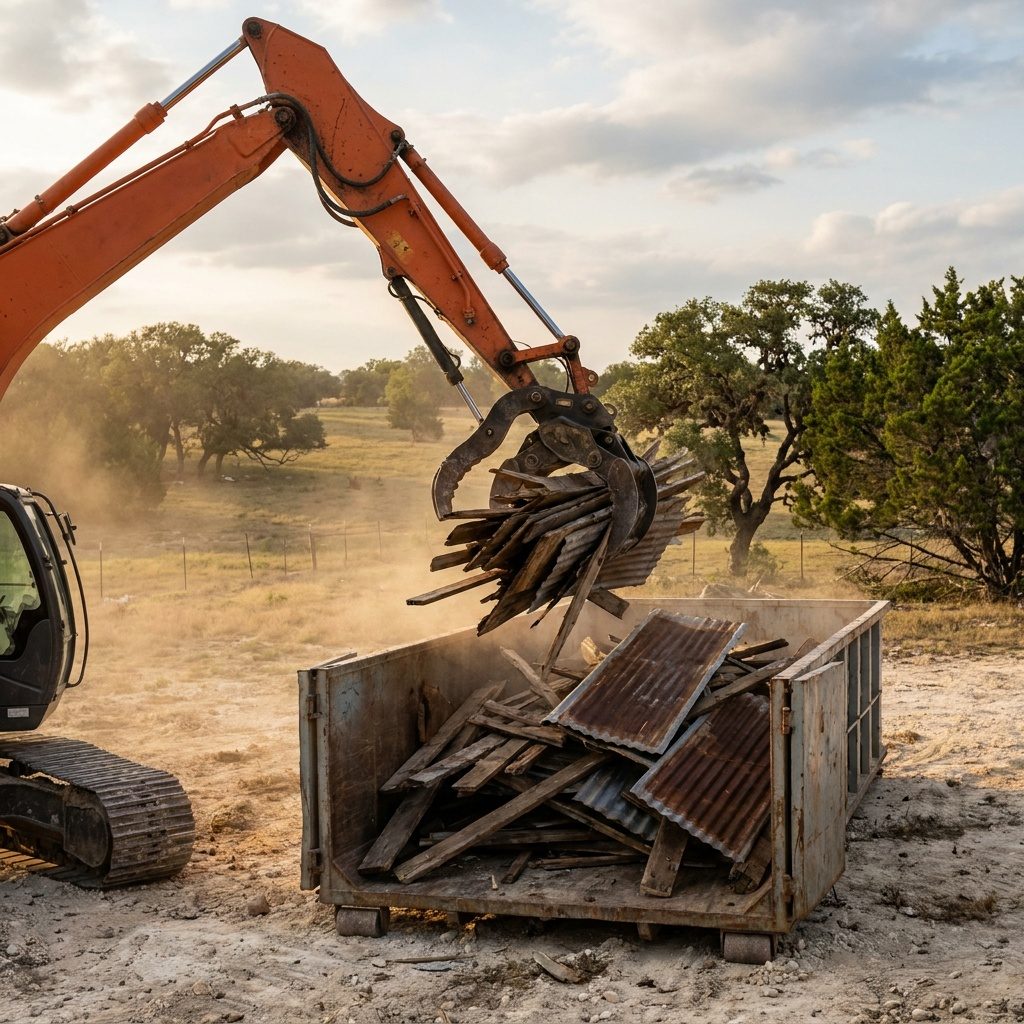
The Barn That's Past Saving,
Forty Minutes From a Landfill.
Hill Country and Blackland ranches carry old barns, pole sheds, and equipment buildings that have stopped being worth the roof repair. Distance is the real cost driver out here, and it's the one nobody puts in writing. We quote the haul up front, we recycle the tin instead of burying it behind the tree line, and we leave a graded footprint ready for a new barn pad or pasture. If you're clearing the whole homestead, an old house and a mobile home can go on the same mobilization.
See Land ClearingMost sheds, carports, and small outbuildings in Central Texas run $1,000–$3,000 to demolish, sort, and haul; a detached one- or two-car garage typically runs $2,000–$5,000. Both sit inside the $1,000–$5,000 per-structure range we quote for outbuildings. What moves the number: size, block versus wood versus metal, whether the slab is coming out (add $4–8 per square foot), how far the trucks are driving, and whether we can get the CAT 308 to it or need a mini excavator through the gate. The RTK scan settles all of that, and the price you get after the scan is fixed.
Yes. That's the core job, and if the slab is staying and the building is empty, that's exactly what we'll price. The difference between us and a junk hauler isn't that we make it complicated — it's that we do the whole thing: the structure, the anchors, the footings if you want them gone, the nails in the grass, and a ticket for every load so you know where it went. We'll also tell you honestly when a rotten 8×10 kit shed isn't worth mobilizing a machine for.
Your call, and we ask before we quote. If you're building a new structure in the same spot or want a patio, leave it — we sweep it clean and cut the anchor bolts flush. If you're grading, planting, pouring new, or selling, remove it — we break it with the hydraulic hammer, pull the rebar and mesh, haul the concrete to recycling, and backfill the footprint to grade, all on the same mobilization at $4–8 per square foot. A typical 400 SF garage slab runs $1,600–$3,200. See concrete & slab removal for the full breakdown.
Usually. A mini excavator fits through most standard residential gates, and we run it on plywood mats so the lawn and sprinkler lines aren't torn up. Where a gate is too narrow, we can often remove a fence panel and put it back, or reach over the fence from the driveway. The drone scan measures the opening and the route before we quote, so access is planned, not improvised. If a structure genuinely can't be reached with a machine, we'll say so.
Yes — see the barn demolition section above. Wood barns, steel pole barns, hay barns, loafing sheds, and equipment buildings across the Hill Country and surrounding counties are in scope. Small barns fall in the $1,000–$5,000 range; large barns and pole barns typically run $2,500–$8,000+ depending on size, footings, and haul distance. We recycle the tin and steel, haul the lumber, pull the posts and piers, and grade the footprint. We do not burn debris and we do not bury it on your land.
We sort it where it falls. Tin roofing, steel posts, carport frames, and wire go to metal recycling. Lumber, shingles, and drywall go to a C&D facility. Concrete, block, and piers go to concrete recycling with the rebar pulled. Every load leaves on a ticket and the tickets come back to you in the post-job packet along with the recycling documentation. Nothing is buried on site, and nothing goes on a burn pile.
It depends on where you are and what the structure is. Requirements vary by jurisdiction — inside the City of Austin, in a suburb, in the ETJ, or on unincorporated county land can all be different, and some places exempt small accessory structures while others don't. Rather than guessing, we tell you what applies to your address during the scan and handle the demolition permit where we can. If your outbuilding is old enough to need an asbestos survey before demolition, that survey and any abatement must be complete before we mobilize; we can point you to an abatement contractor.
A shed or carport is usually half a day. A detached garage is a day. A large barn or pole barn is one to three days depending on size and haul distance. Add a day if the slab or footings are coming out. We mobilize within 48 hours of an accepted proposal, and the fixed price you signed includes the sorting, hauling, and the verification scan at the end.
Every demolition service ClearGround runs in Austin and the Hill Country, with the calculator and the full pricing table.
View Hub →Full residential teardown. Outbuildings usually ride along on the same mobilization when the house is coming down too.
View Service →Single- and double-wide dismantling and removal. Often paired with barns and sheds when a rural homestead is being cleared.
View Service →Single-story shop, retail, and warehouse buildings — steel or block — with the documentation a GC or lender expects.
View Service →The slab, apron, or driveway under and around the outbuilding, broken and hauled at $4–8 per square foot.
View Service →Piers, footings, and grade beams under barns and older garages pulled and backfilled to a verified grade.
View Service →The pool house and the pool often go together. Shell broken, backfill compacted, verified with RTK.
View Service →When the new barn pad hits limestone. Hydraulic hammer on the CAT 308, priced per obstruction.
View Service →GARAGE, SHED, OR BARN TO TEAR DOWN?
WE SCAN IT FIRST.
An RTK site scan measures the structure, the slab, and the gate before we quote. Fixed price in 48 hours, 48-hour mobilization, metal recycled, wood hauled, nothing buried — and proof of the finished ground when we leave. Not a junk hauler with a sledgehammer.
Book a Site Scan48-hour mobilization · Austin & Hill Country · Fixed-price proposals · Licensed & insured, $5M general liability · 512-880-8888