


FOUNDATION REMOVAL IN AUSTIN & CENTRAL TEXAS
We remove pier-and-beam foundations, piers, footings and grade beams on Austin and Central Texas lots, then backfill and compact the voids for site prep. Removal of piers, footings and grade beams runs $5,000–$7,500 per structure, more with rock (slab is priced per sq ft under concrete removal), and usually takes one to three days. Concrete goes to recycling and rebar is separated.
Get a Quote
THE LAST THING STANDING
BETWEEN YOU AND GRADE.
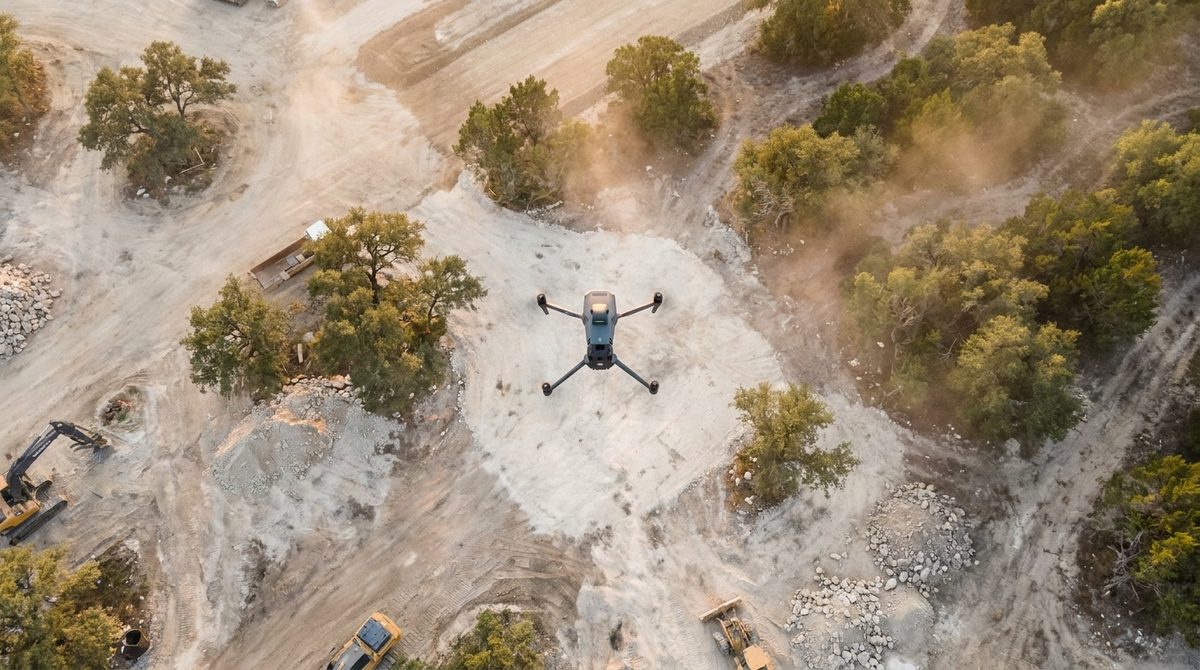
Foundation removal is the extraction of existing substructures (pier-and-beam footings, slab-on-grade and isolated concrete piers) that remain after a structure has been cleared or demolished. It is the last step before a lot is ready for excavation or new construction. Before we quote, we walk the lot and look at what is exposed. A drone models the ground surface. Rock, footings and buried lines below the surface are found with test holes, probing, 811 locates and GPR where needed.
Foundation Extraction
Individual concrete piers and wood beam structures, common on older Austin infill lots. Piers are exposed by excavating around the perimeter, then extracted one at a time. Backfill is compacted to grade after extraction. We count the piers at the site walk.
Tearout
Full residential or light commercial slab extraction, often paired with concrete slab removal once the structure has been cleared. Rebar is separated on site and concrete is hauled to recycling. Subgrade is left at your target grade before any excavation begins. Slab is priced per sq ft under concrete removal; this covers piers, footings and grade beams.
& Orphaned Piers
Standalone concrete footings, deck piers, outbuilding foundations and buried masonry pads left behind after demolition. Found by probing, test holes and inspection of the lot, then extracted one at a time. Common on lots with additions, accessory structures or earlier demo work.
IT'S A STEP IN A SEQUENCE,
NOT A STANDALONE JOB.
Foundation removal is rarely the only line item on an infill lot. It follows structure demolition, and it precedes excavation and land clearing. We can run the full site prep sequence on one mobilization, which saves you from scheduling three contractors for three sequential tasks.
Existing hardscape (driveways, patios and slabs) is removed first. That creates access and clears the surface layer before foundation work begins.
→Piers are extracted, footings removed and the subgrade brought to target elevation. Voids are backfilled and compacted in lifts.
→Pool shell digging, foundation excavation or utility trenching begins on cleared subgrade.
→Final grading, clearing and construction-ready surface prep, so your GC starts on a clean lot.
PRICED PER STRUCTURE.
QUOTED BEFORE WE START.
Foundation removal is quoted per structure after the site walk shows the foundation type, pier count or slab area, and access. Rock, extra footings outside the main foundation and long haul distances move the number up. Written quote within 48 hours of the site walk.
| Service | Unit | Range | Typical timeline |
|---|---|---|---|
| Foundation removal (piers, footings and grade beams; slab is per sq ft under concrete removal), with backfill and compaction | per structure | $5,000–$7,500; more with rock | 1–3 days |
| Isolated footings and orphaned piers found on the lot | per scope | Quoted at the site walk | 0.5–1 day |
| Bundled with concrete removal and land clearing | combined scope | One quote for the combined scope | Same mobilization |
| Optional drone scan (surface grade and volume record) | per scan | $500–$1,500 | Typically 2–3 business days after the flight |
Prices reviewed: September 2026. Ranges for Austin and Central Texas; your site walk sets the final number.
Pricing reflects typical Central Texas residential and light commercial foundation removal. The quote is based on foundation type, pier count, slab area and access confirmed at the site walk. Bundled site prep (concrete removal, foundation removal and land clearing) is quoted as a single scope. Concrete and slab work priced by the square foot is on the concrete removal page.
THEN PULL THEM.
Foundation problems usually show up mid-job: a footing bigger than expected, a pier buried deeper than the records show, or an isolated pad nobody knew was there. We start with a walk of the lot, a look at the exposed foundation and any records you have. A drone models the ground surface. Rock, footings and buried lines below the surface are found with test holes, probing, 811 locates and GPR where needed. Anything we find outside the main foundation gets flagged and priced before we go further.
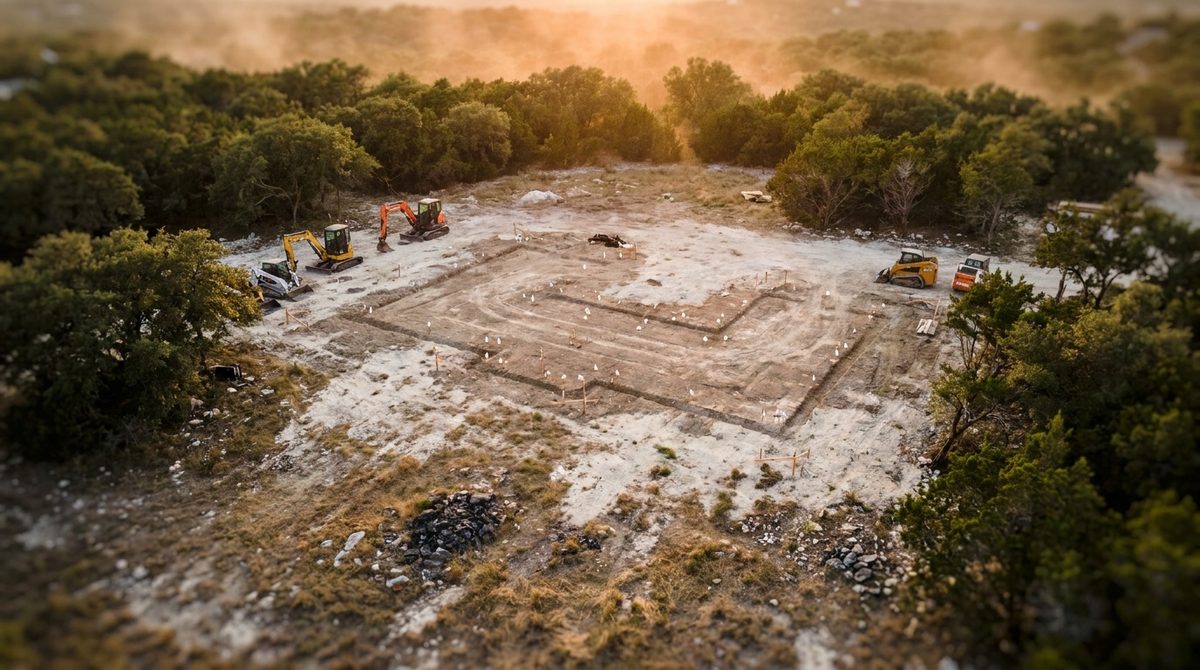
Pier-and-beam extraction starts at the perimeter. We dig around individual footings with an excavator, then pull each pier with the hydraulic thumb once it is exposed. Slab-on-grade tearout follows the same bucket-and-thumb process as concrete removal, with the hydraulic hammer added for heavily reinforced grade beams. A compact machine keeps the work contained on tight infill lots.
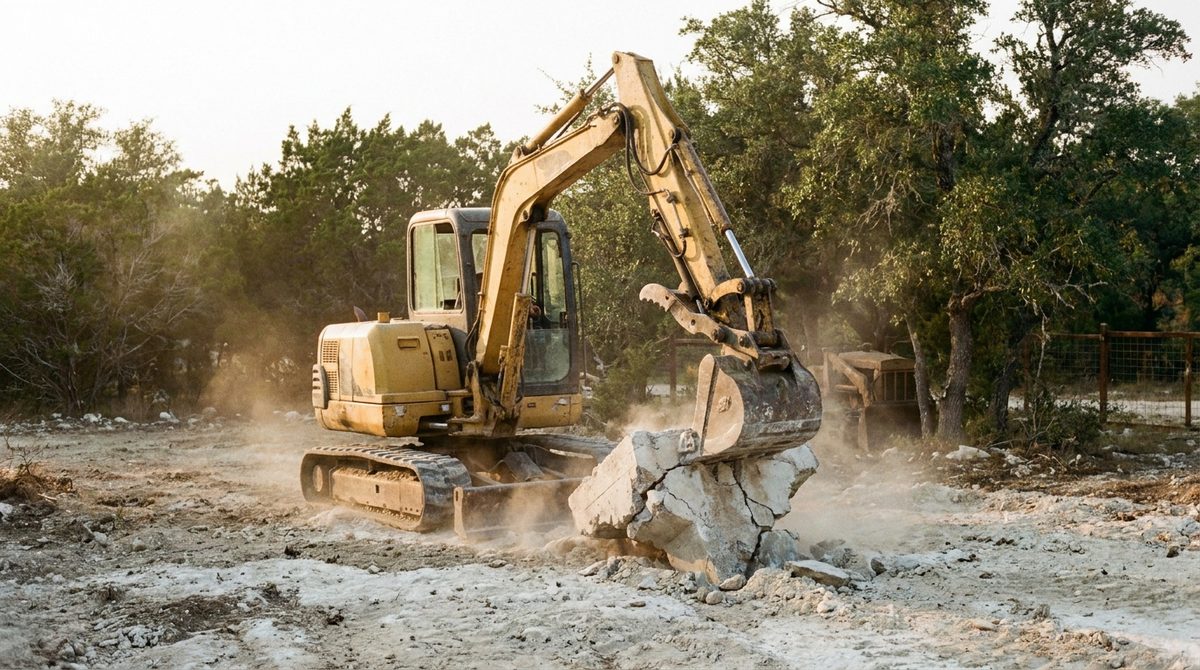
Every pier void and footing excavation is backfilled in lifts and compacted by layer to the target subgrade elevation for your project, then checked against that elevation before we move on. Material from the extraction is sorted on site: concrete to recycling, rebar staged for steel recycling, and clean fill reused as backfill where it meets spec.
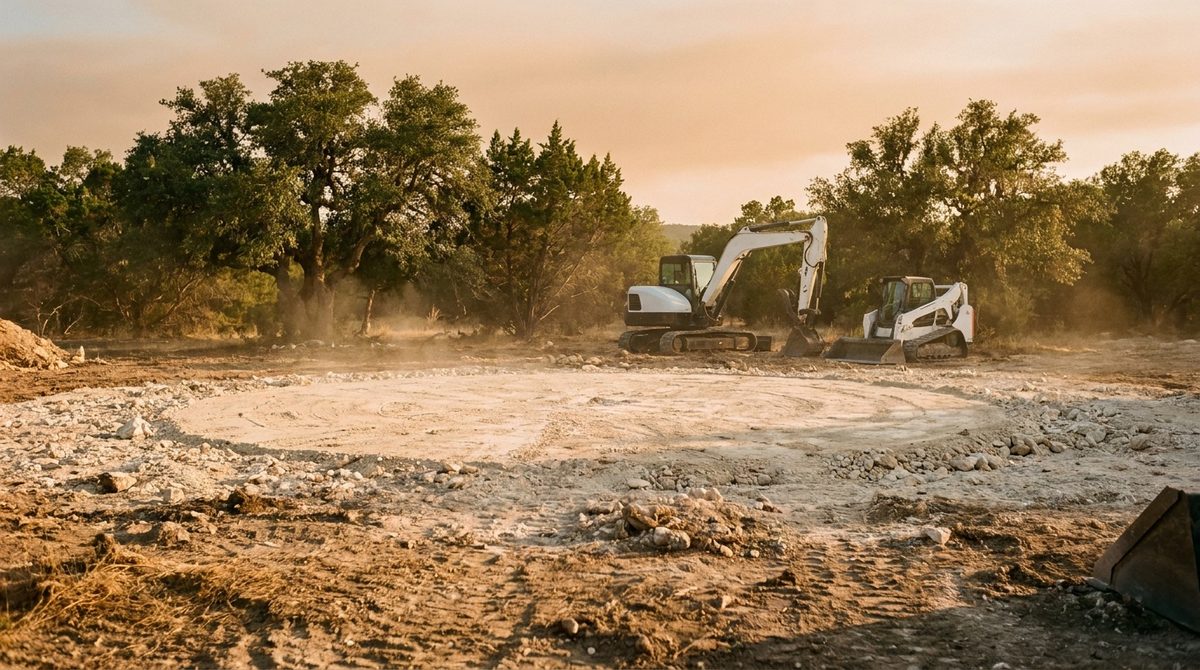
When the last footing is out and backfilled, we walk the footprint with you or your GC and confirm the subgrade is at the agreed elevation. You get the C&D recycling receipts for your file. If you added the optional drone scan, you also get a surface grade and volume report from the flight.
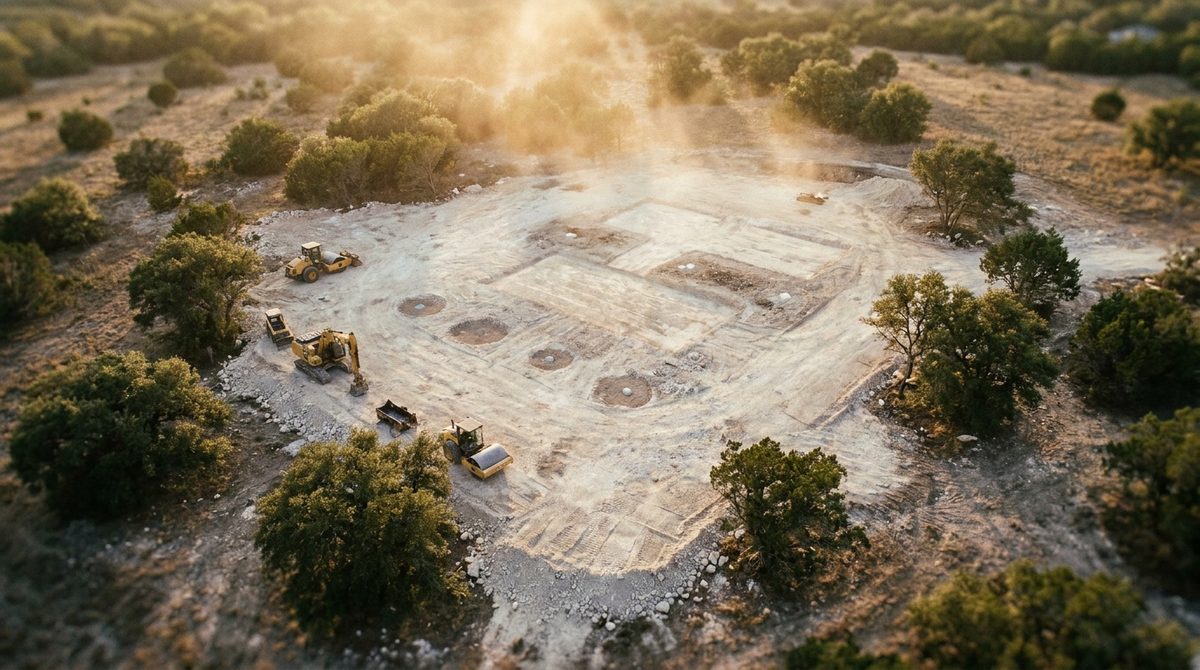
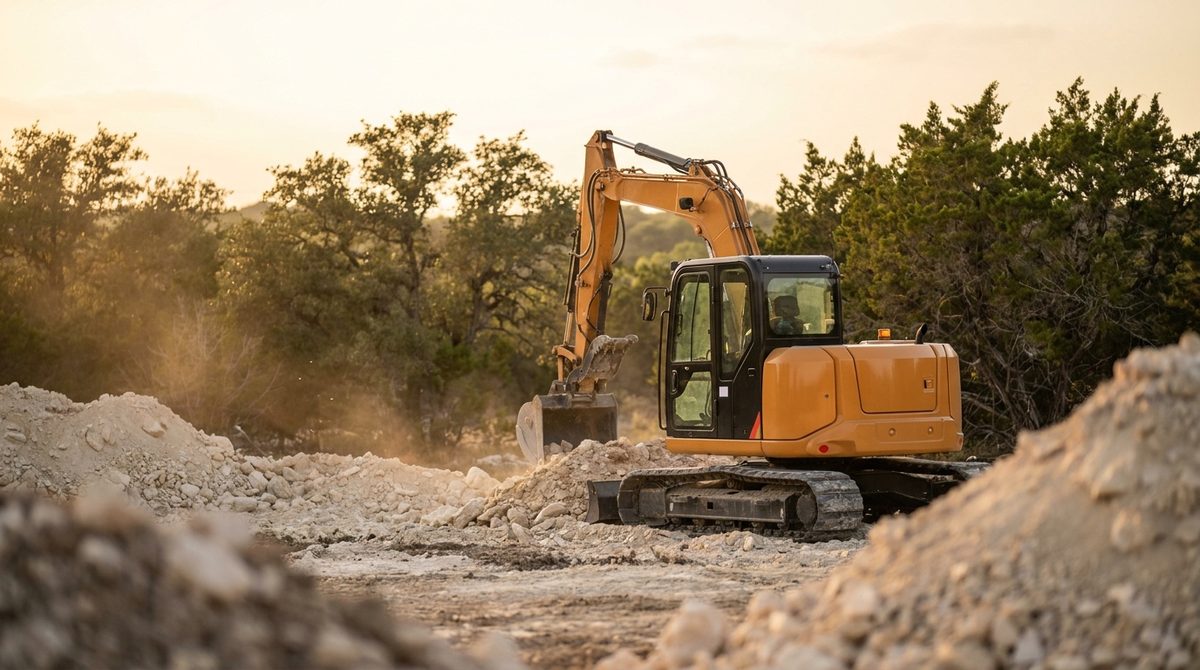
Our excavators and mini excavators run hydraulic thumbs. The thumb grips piers and broken footings for extraction and loading, and the compact size works on tight infill lots next to structures or fences.
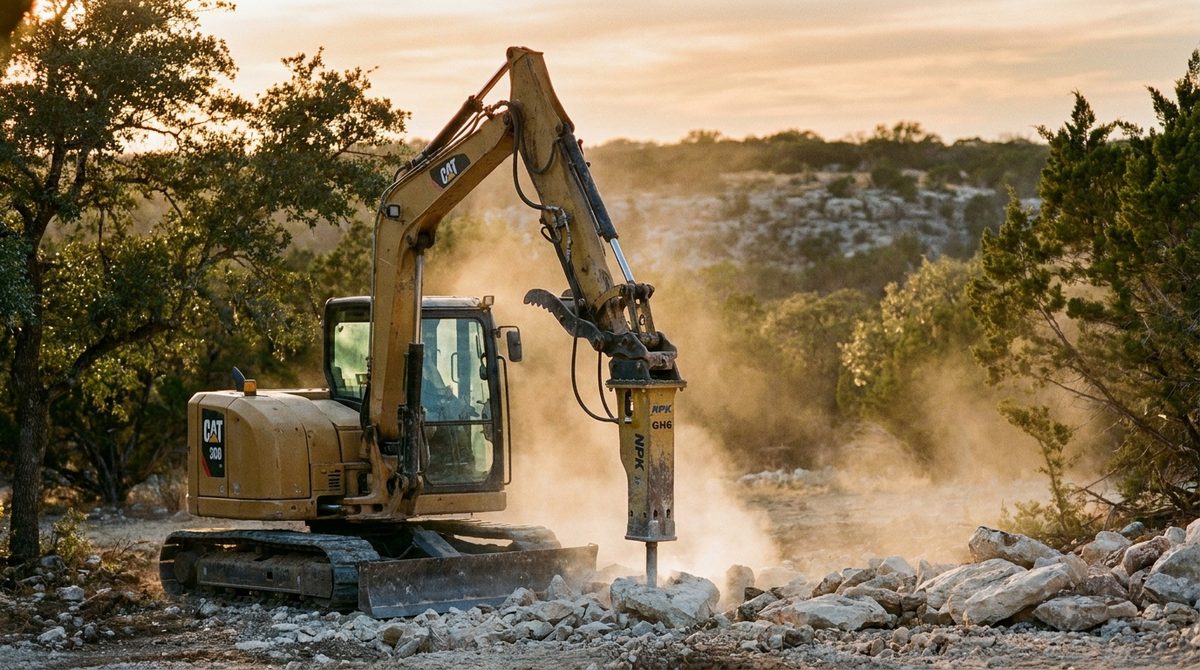
Our excavators carry hydraulic hammers, including a 1,500 lb class hammer. We use them when grade beams, heavily reinforced footings or deep slab sections need breaking before bucket extraction. At the site walk we decide where the hammer is needed and where the bucket and thumb are enough.
Ram 3500 dually and Diamond C equipment trailer for moving machines. We scale up with dozers, larger excavators, forestry mulchers and compaction equipment from partner and rental fleets to fit the job.
EVERY POUND
LEAVES A PAPER TRAIL.
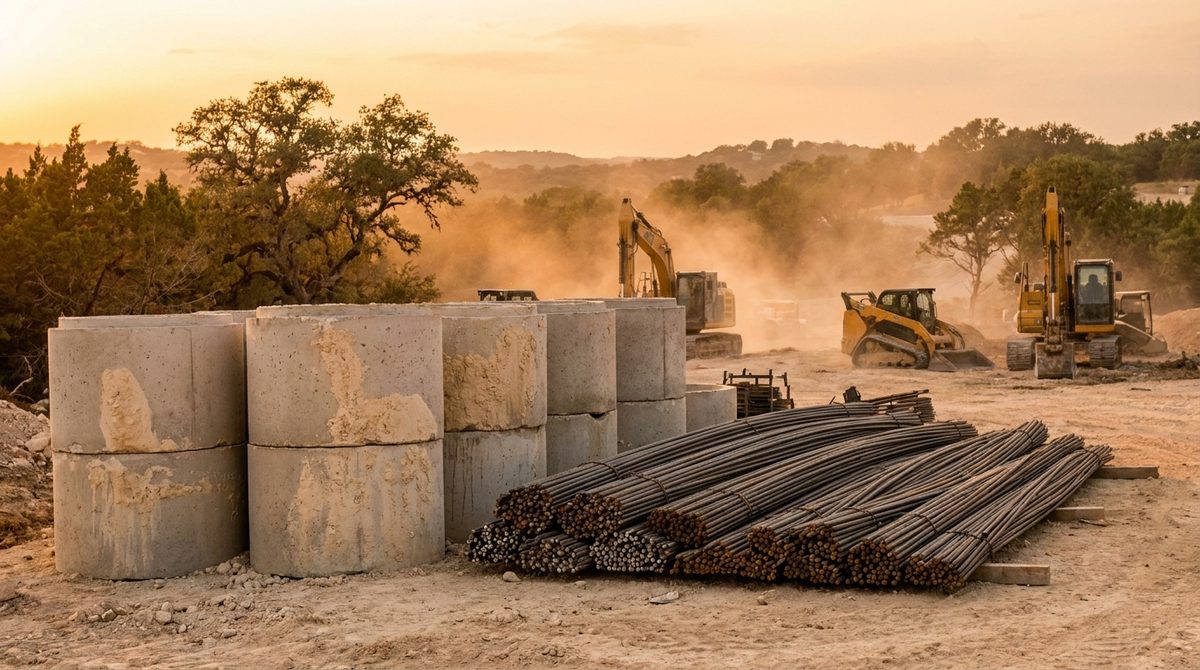
We sort extracted material on site: concrete broken to haul size and sent to Austin-area C&D recycling, rebar staged separately for steel recycling, and clean fill reused as backfill when it meets compaction spec. Load tickets and recycling receipts are available for your permit or close-out file.
The Lot Isn't Ready
Until the Foundation Is Gone.
Austin infill teardowns almost always have a legacy foundation that has to come out before your project can begin. It is rarely the glamorous line item, but it holds everything else up. We remove the foundation, backfill and compact the voids, and hand your GC a lot ready for the first crew. One mobilization.
See the Infill Developer JourneyA Clean Subgrade
Before Your First Day On Site.
GCs on infill builds often inherit subgrade uncertainty: the prior demolition contractor removed the structure but left the foundation for someone else. We take that handoff and close it. Foundation extracted, voids backfilled and compacted, subgrade left at the elevation your plans call for.
Talk to Us About Your ProjectHow much does foundation removal cost? +
Foundation removal runs $5,000–$7,500 per structure, and more with rock. The number depends on foundation type, slab area or pier count, access and haul distance. We set it at the site walk and put it in a written quote.
How do you know where all the piers are before you start? +
We walk the lot and look at what is exposed. On pier-and-beam, the beam layout usually shows pier spacing and count. A drone models the ground surface. Rock, footings and buried lines below the surface are found with test holes, probing, 811 locates and GPR where needed. If we find footings outside the main foundation, from additions or old outbuildings, we tell you and price them before we continue.
What happens to the voids after piers are pulled? +
Each void is backfilled in compacted lifts up to the target subgrade elevation for the project. Backfill goes in layers, and each layer is compacted before the next. That leaves the excavation crew or foundation pour a firm surface instead of loose voids.
Can foundation removal be bundled with concrete and slab work? +
Yes. On a full infill teardown the usual order is concrete and hardscape removal, then foundation extraction, then land clearing and final grading. Bundling puts it on one mobilization, and the quote covers the combined scope.
What is the difference between foundation removal and excavation? +
Foundation removal pulls out the existing substructure left from the previous building. Excavation digs native soil to make room for something new, such as a pool shell, building foundation or utilities. On most infill lots one follows the other on the same mobilization.
How long does foundation removal take? +
A pier-and-beam foundation typically runs 1–2 days including backfill and compaction. Slab-on-grade tearout runs 1–3 days depending on slab area and reinforcement. Isolated footings or orphaned piers are often half a day. Most jobs start 1–3 weeks after approval.
Do I need a permit for foundation removal in Austin? +
Foundation removal tied to a full structure demolition usually falls under that demolition permit. We check whether your address needs a demolition permit and say so in the quote; where one applies we pull it or coordinate with whoever holds it. You can also confirm with the City of Austin Development Services Department.
Last reviewed: September 2026
House, barn, pool and commercial demolition, plus concrete, foundation and rock work.
View Service →Driveways, patios and surface slabs removed before foundation work begins, usually on the same mobilization.
View Service →Footings sitting on or in limestone often need the hammer. Rock is billed separately from the foundation range.
View Service →Pool shell digging, building foundation excavation and utility trenching start from the subgrade foundation removal leaves behind.
View Service →Rate ranges for every service, reviewed September 2026.
View Pricing →Run a quick estimate for your project.
Open Calculator →FOUNDATION TO REMOVE?
WE WALK IT FIRST.
We look at the foundation type, pier count or slab area, and access, then send a written quote. Written quote within 48 hours of the site walk.
Get a QuoteMost jobs start 1–3 weeks after approval · Austin & Hill Country · Written quotes · No obligation