


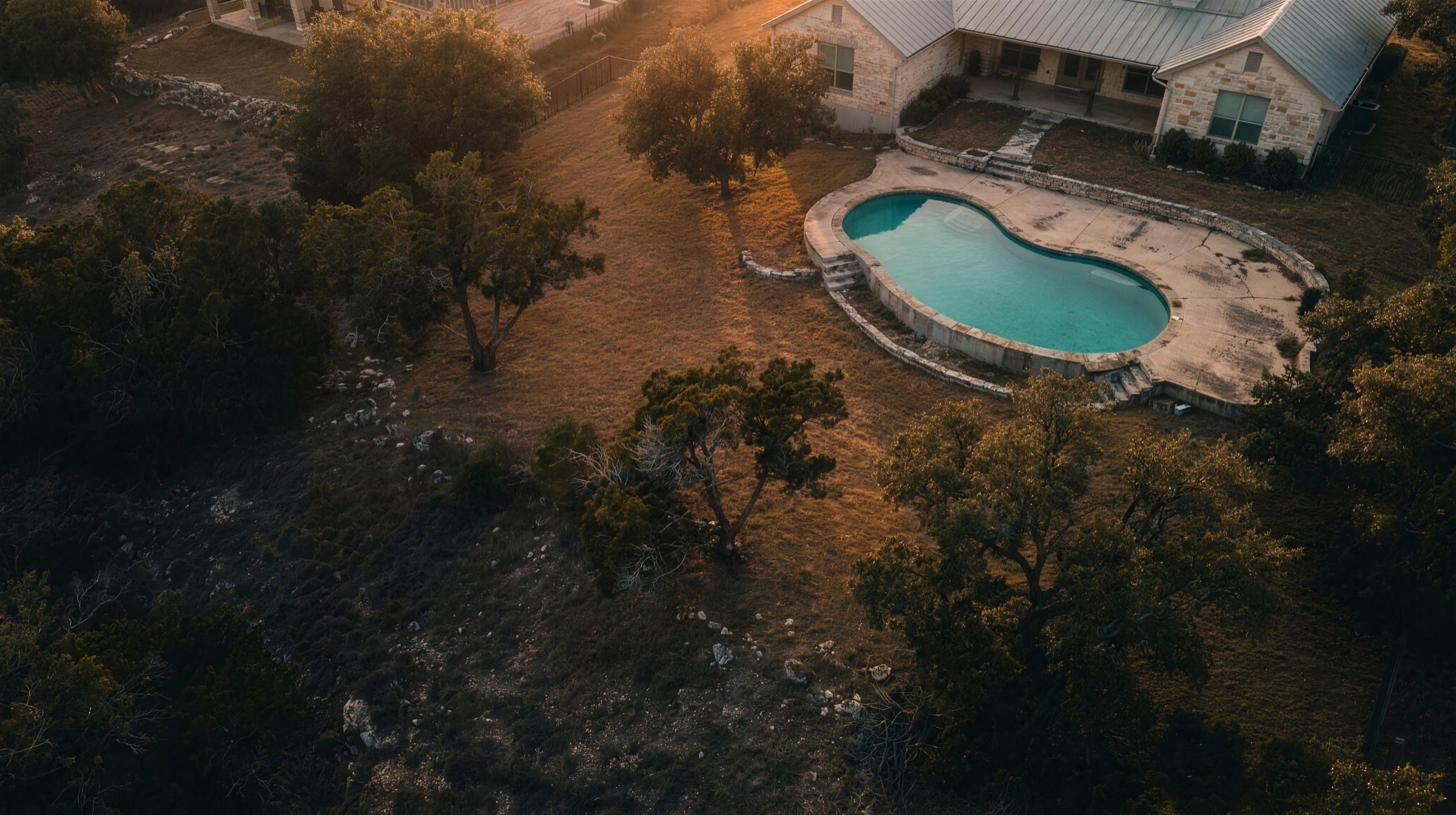
Pool removal in Austin: every option, from $15,000.
Clear Ground removes residential pools in Austin and Central Texas. You choose how much of the pool comes out and how the hole is filled. With dirt fill, a sunken garden starts at $15,000, a top removal at $20,000, a partial removal at $25,000 and a full removal at $29,000. With compacted fill in lifts, a partial runs $43,500–$77,000 and a full removal $47,500–$88,000. Independent lab testing is an add-on. What each one leaves behind is in writing. Most jobs start 1–3 weeks after approval.
Selling, building on the footprint, or tired of paying for a pool nobody uses. Start with a free on-site inspection. We tell you in writing whether to repair, watch or remove.
Free on-site inspection · Written quote within 48 hours of the site walk · Serving the Austin metro
On-site, about 30 minutes, no obligation. We'll call to schedule.
Choose what comes out. Then choose the fill.
How much of the pool comes out decides what stays in your ground. How the hole is filled decides what you can put on top. Every price includes the haul, the fill and the paperwork that goes with it.
| What comes out | What stays in the ground | With dirt fill | With compacted fill | When you sell |
|---|---|---|---|---|
| Sunken garden: floor broken through | Walls, coping and deck, whole | $15,000–$34,000 per pool | Not offered | The shell is still there, and an inspector will find it. Disclosed. You sign a page that lists what stays. |
| Top removal: coping and top 2 ft of wall | Lower walls and the cracked floor | $20,000–$43,000 per pool | Not offered | Remnants below and no test reports. Disclosed. Same signed page. |
| Partial removal: top and floor | Lower walls | $25,000–$59,000 per pool | $43,500–$77,000 per pool | Lower walls stay. Compacted fill comes with our lift log and photos; add lab testing for an independent density report. Disclosed. |
| Full removal: the whole shell | Nothing hard | $29,000–$70,000 per pool | $47,500–$88,000 per pool | With compacted fill: the cleanest record, a former pool, removed, with our lift log. With dirt fill: no shell, but no lift log or test report. Disclosed either way. |
| Repair and keep | The pool | Not our service. We don't sell repairs, so our inspection verdict has no thumb on the scale. | Nothing to disclose about removal. | |
| Punch and bury | Broken concrete, buried | Not offered | Weakest record. Buried debris and settling. | |
Prices reviewed: October 2026. The low end is a small pool, under 300 sq ft, with open access and no rock. The high end is a pool of about 900 sq ft with a spa, limestone around the shell and a long haul. Your site walk sets the final number.
Dirt fill
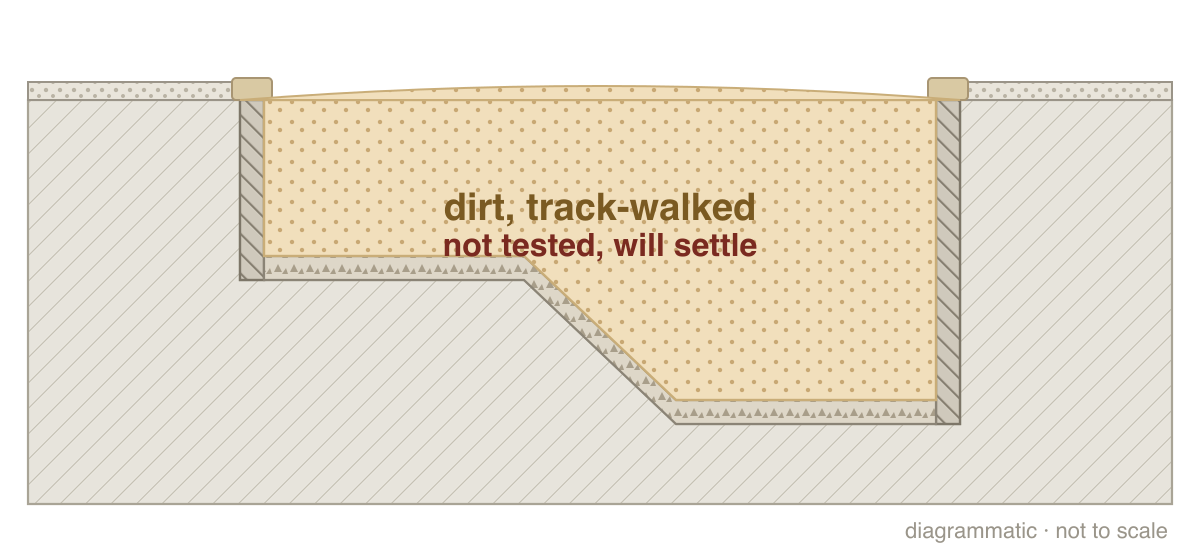
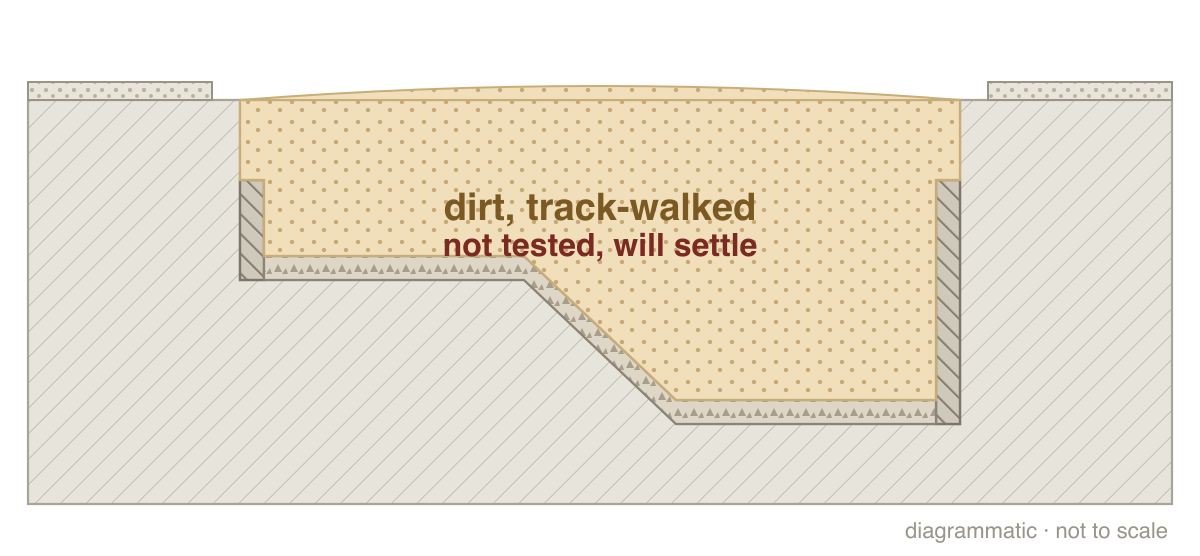
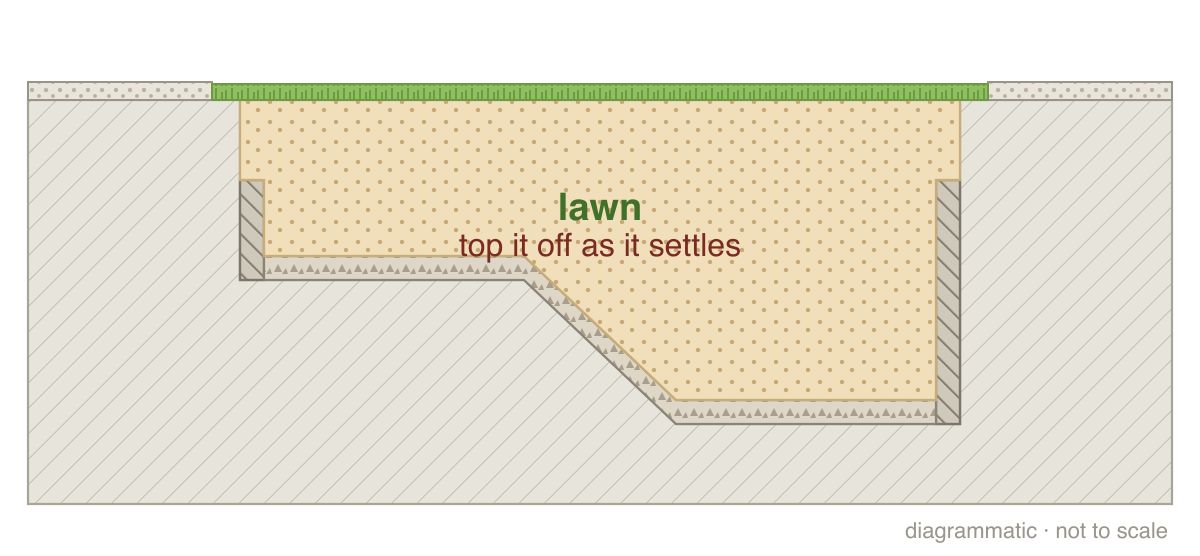
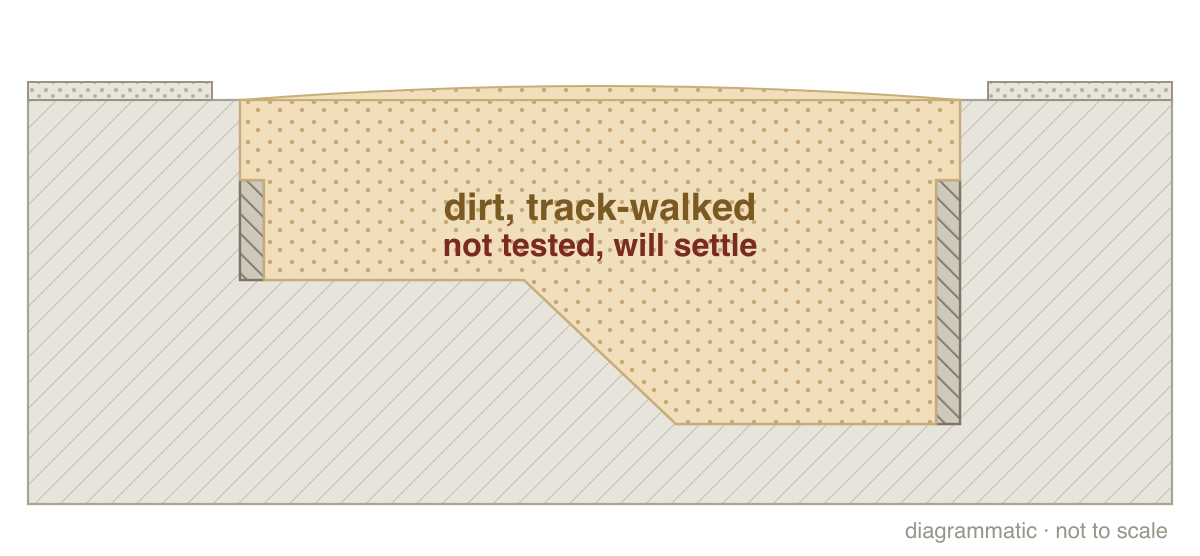
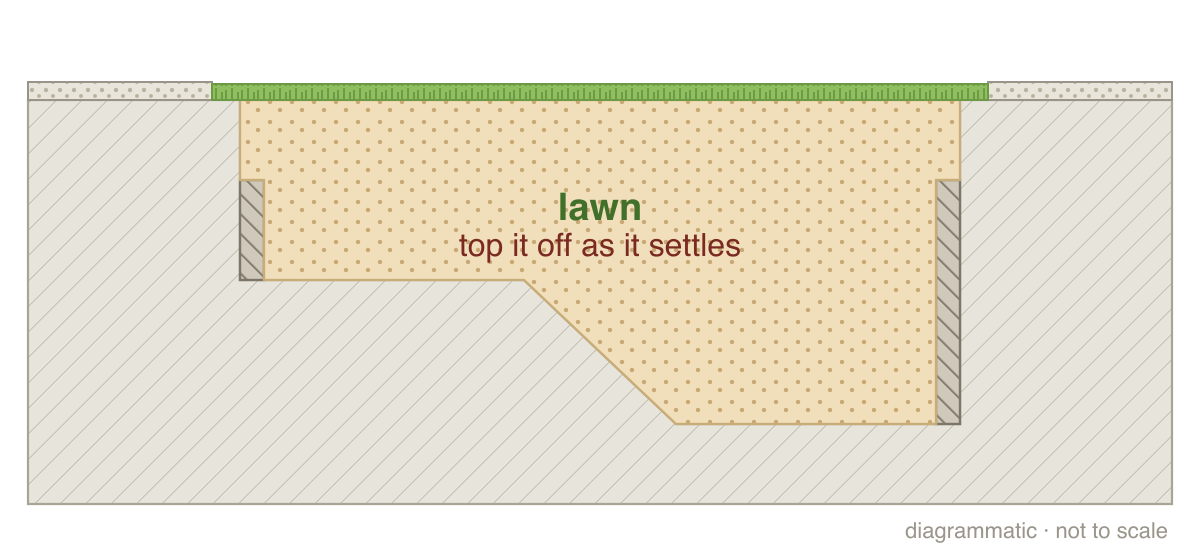
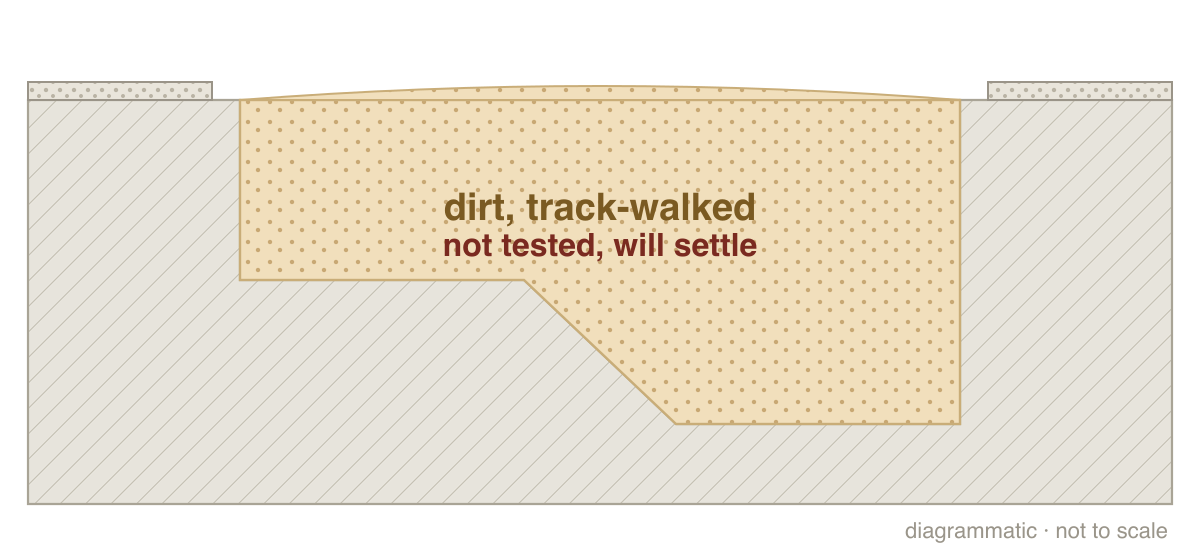
The lower-cost fill. We track-walk it in with the machines and crown it. It isn't compacted to a test, so it settles and you top it off. Plant it, seed it or lay sod. Don't pour a slab or build on it without digging it back out.
Compacted fill
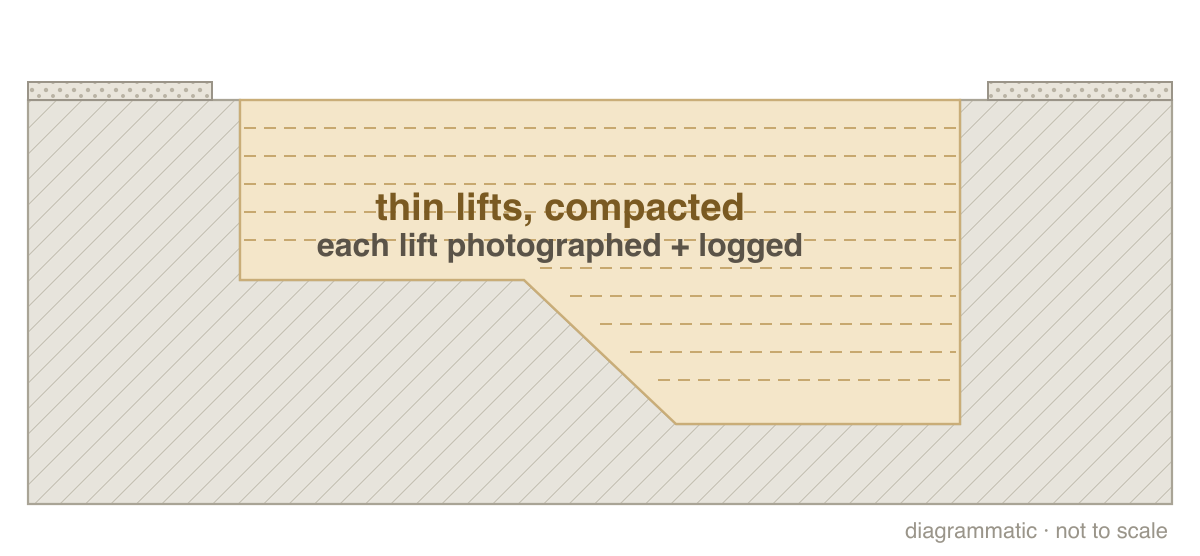
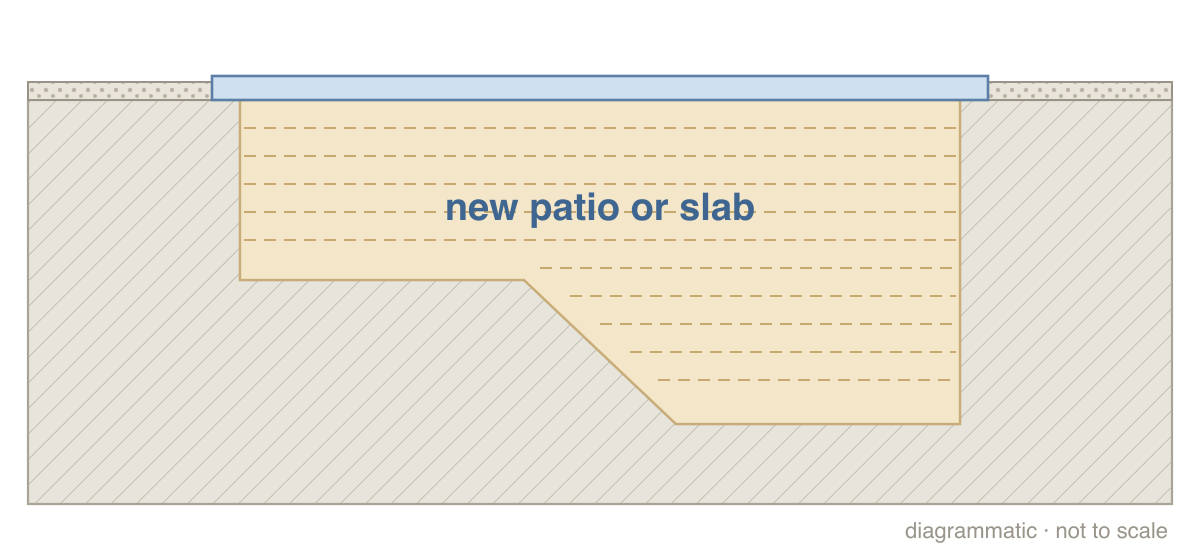
Thin lifts, each run with a compactor, photographed and logged by our crew. That takes longer, which is most of the price difference. It's the base for a patio or a slab, and it comes with a Resale Protection Packet. Want independent proof of density? Add lab testing at the lab's price, about $585 a visit, usually one visit every two lifts. We recommend it under a slab, a driveway or a building, or when a lender asks.
A lower price leaves more in the ground. We say so in writing.
Every option on this page is yours to choose. Every option short of a full removal leaves pool shell in the ground, and an inspector will find it. Any dirt fill settles and has no test report, so there is no engineer's letter. Compacted fill without the lab add-on has our lift log but no independent test report.
We believe any of these could affect the sale of your home, and some buyers will ask for a lower price. Filling a pool does not change what you disclose under Texas Property Code §5.008. We are not lawyers, so ask your agent.
Every dirt-fill option comes with photos and a one-page acknowledgment that lists what stays, where it sits and what it means at sale. You sign it before we start. Then the choice is yours.
Why we won't sell punch and bury
It doesn't remove a pool. It hides one. Buried rubble settles on its own schedule, and nobody can say where it sits.
The sunken garden costs less and leaves a known, whole shell instead of broken pieces. Our standard is to leave the ground better than we found it, with a record of what is in it. If a cheaper quote lands next to ours, ask exactly what happens to the broken concrete.
Selling your home? Start with the free inspection. Repair or remove: free pool inspection in Austin.
Each option from start to finish. Then the yard you get.
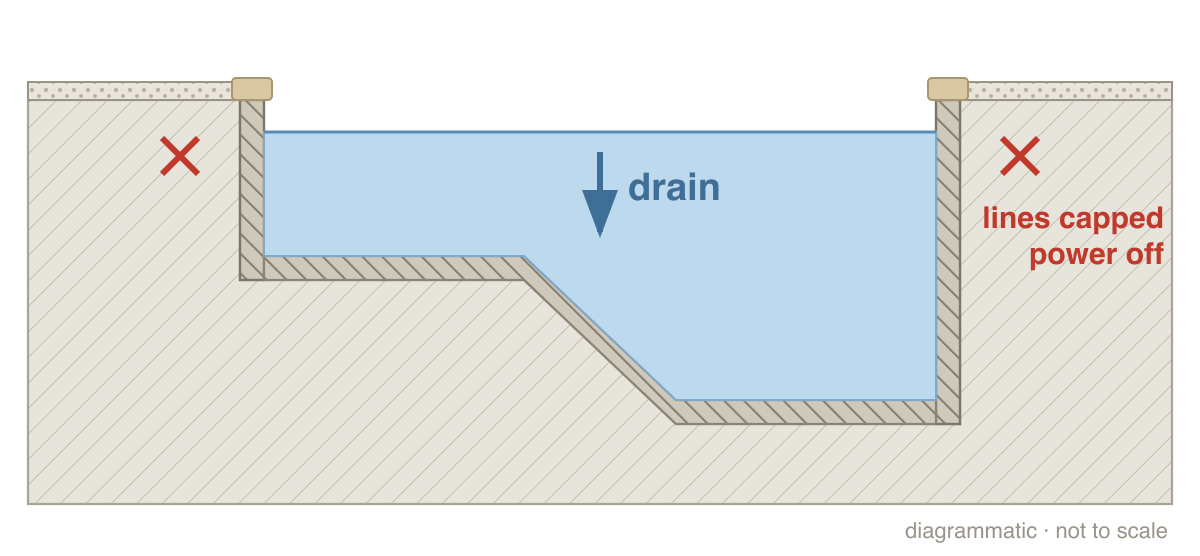
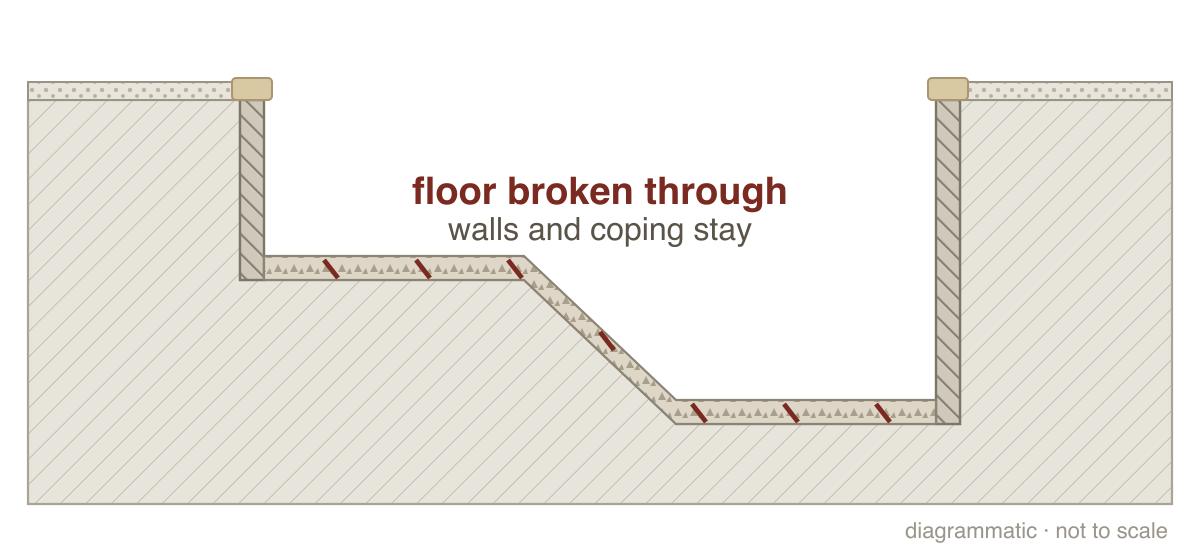
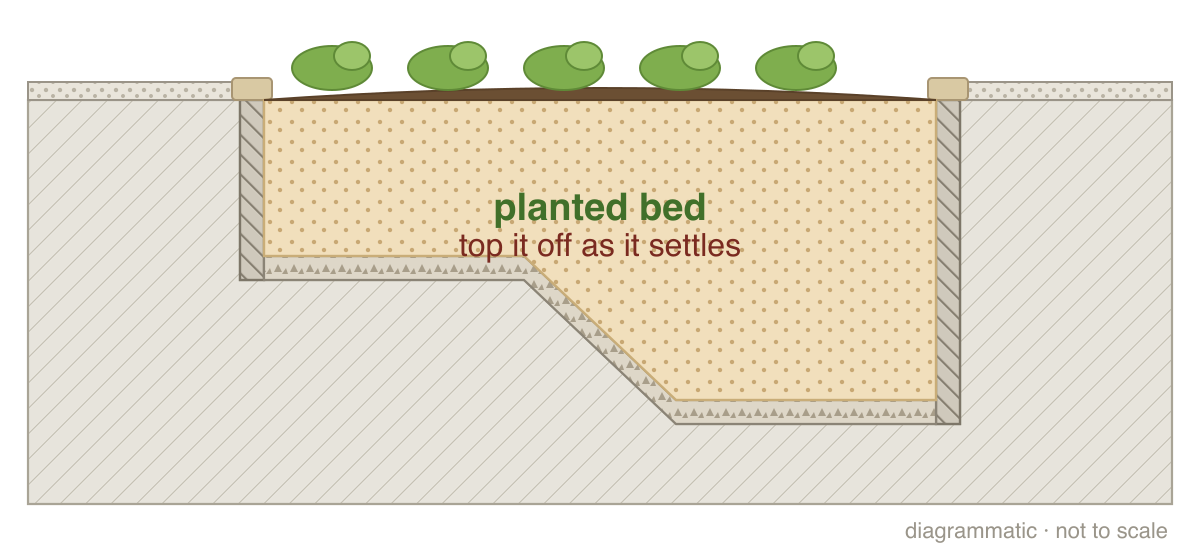
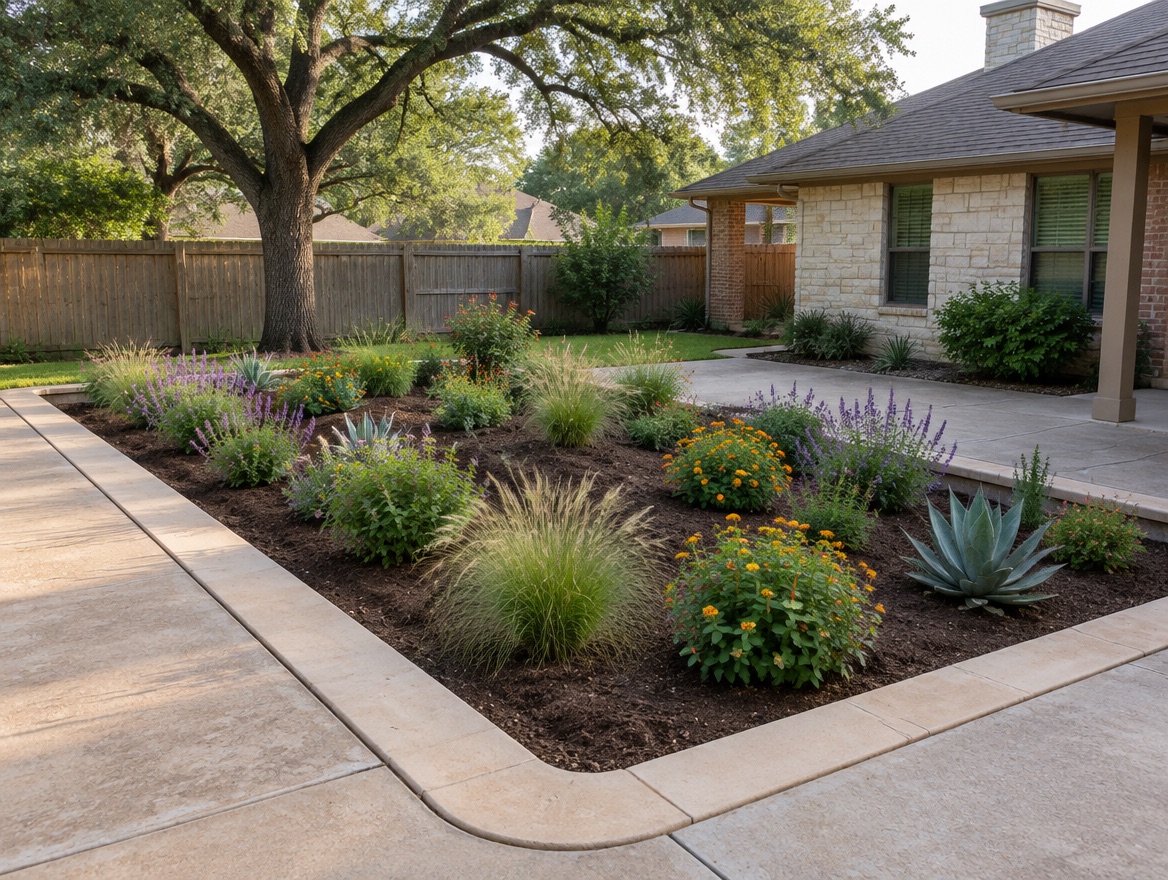
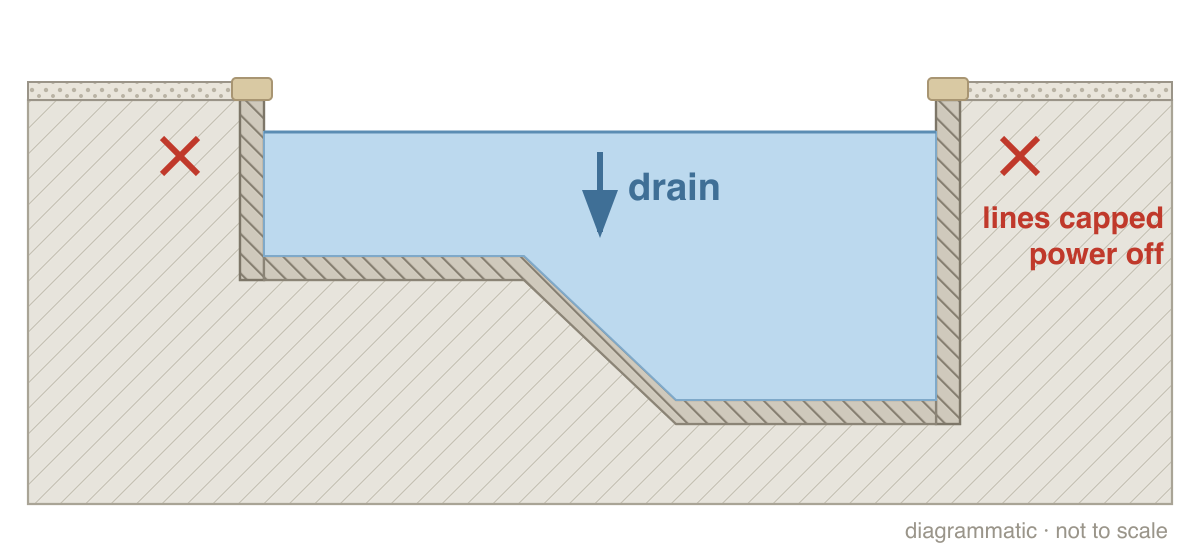
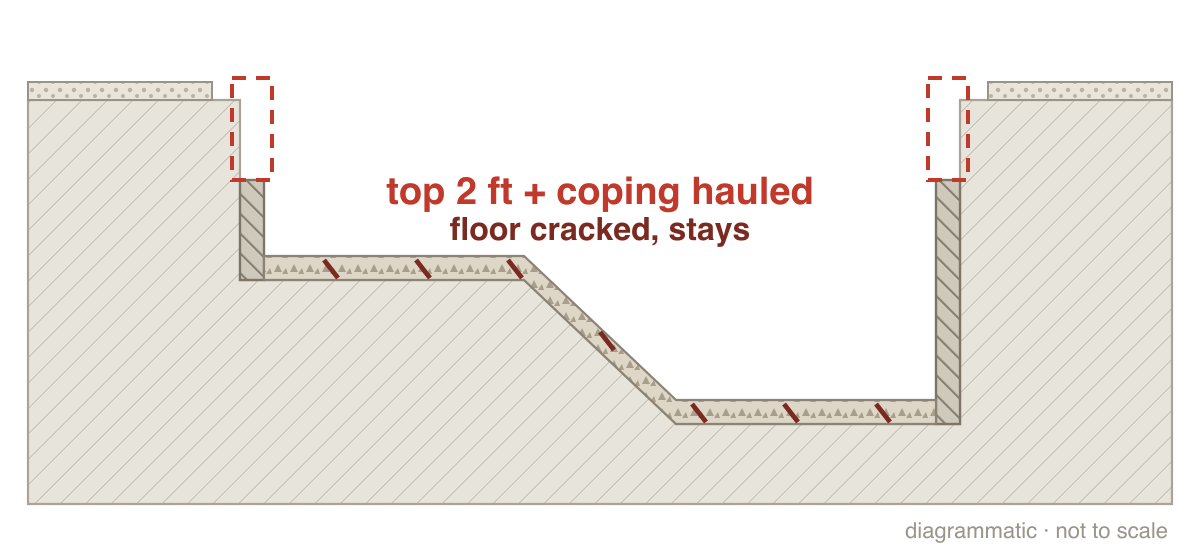
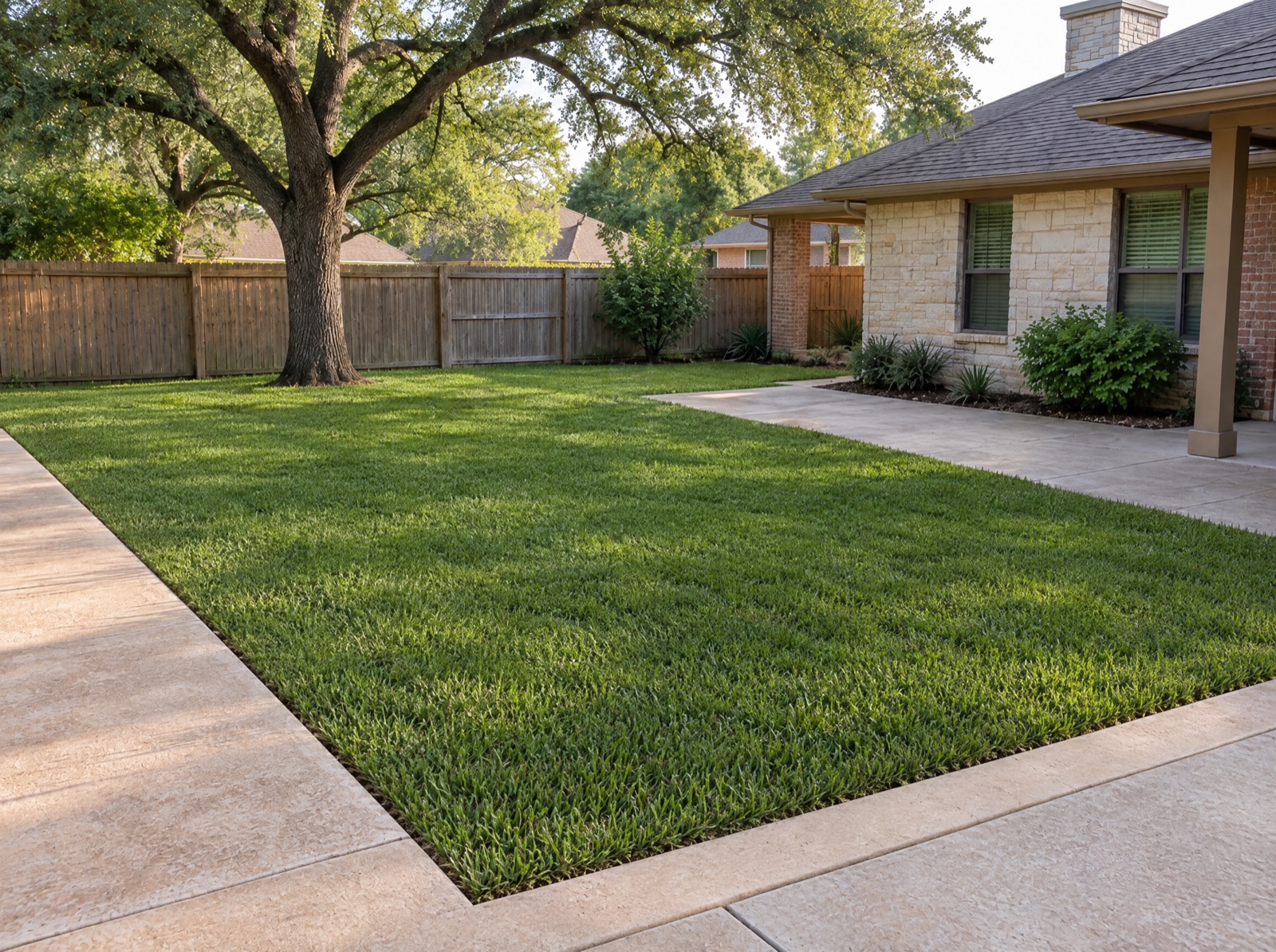
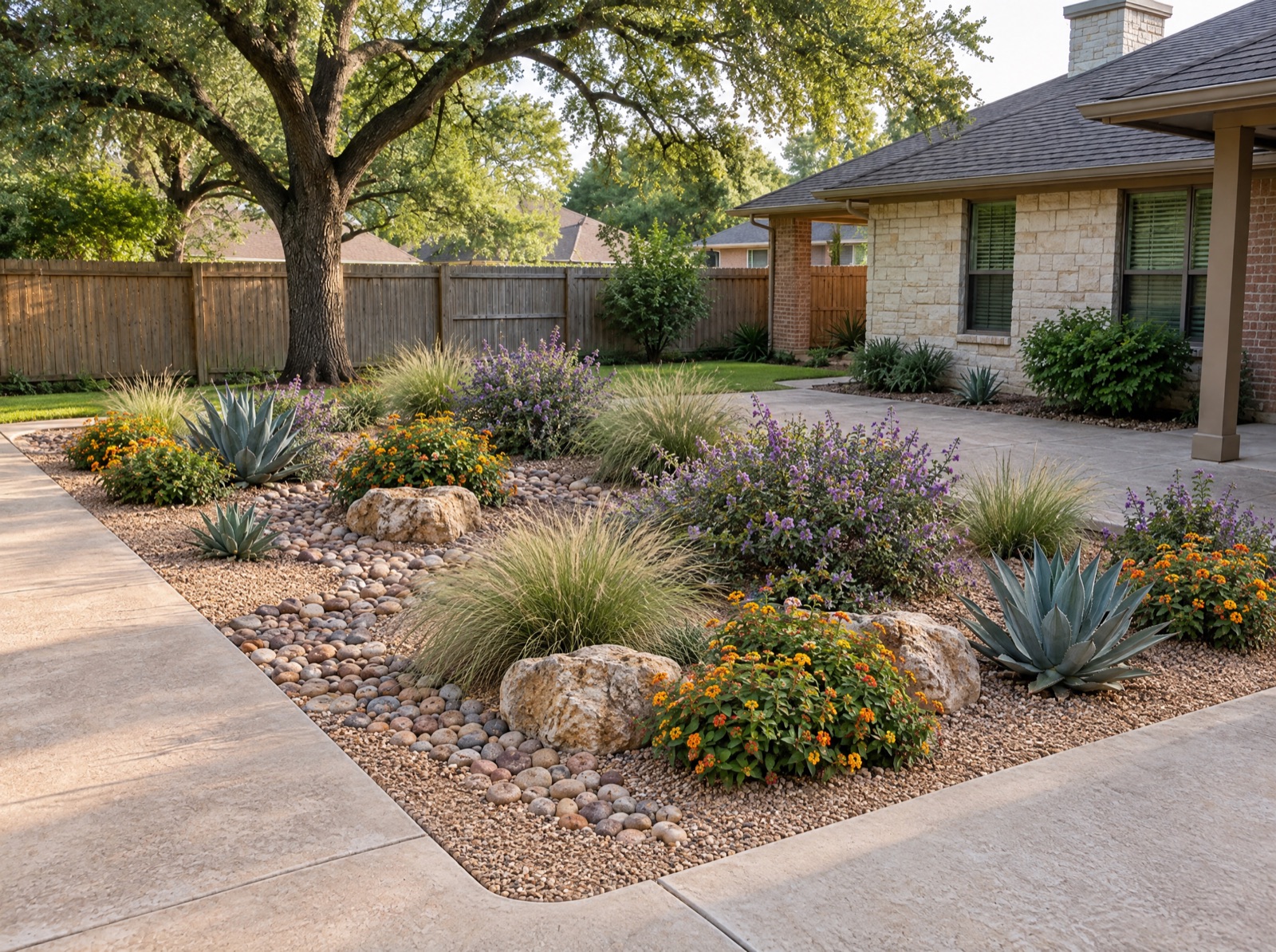
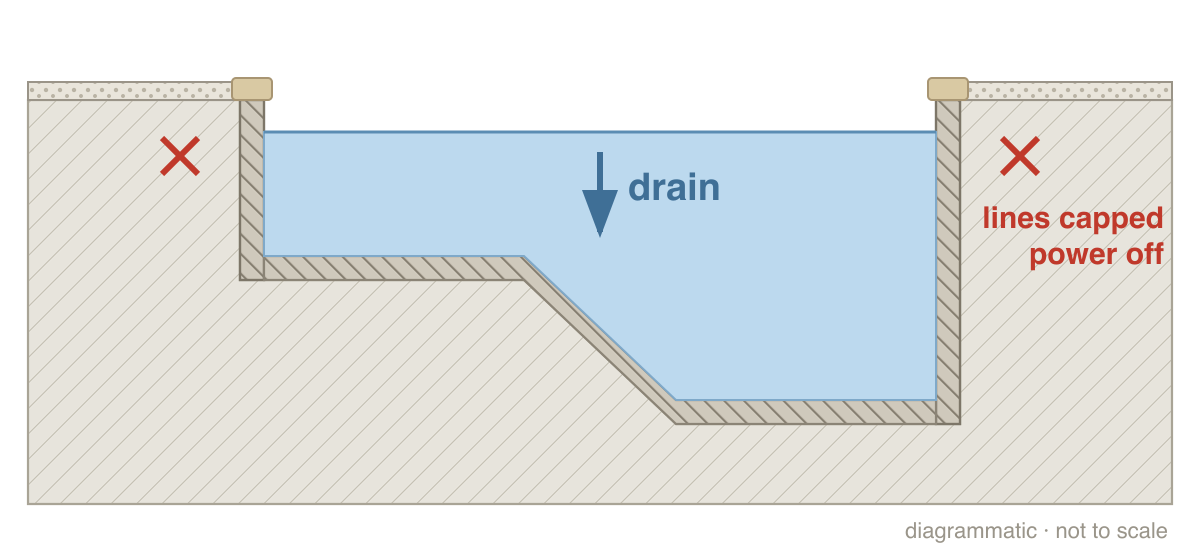
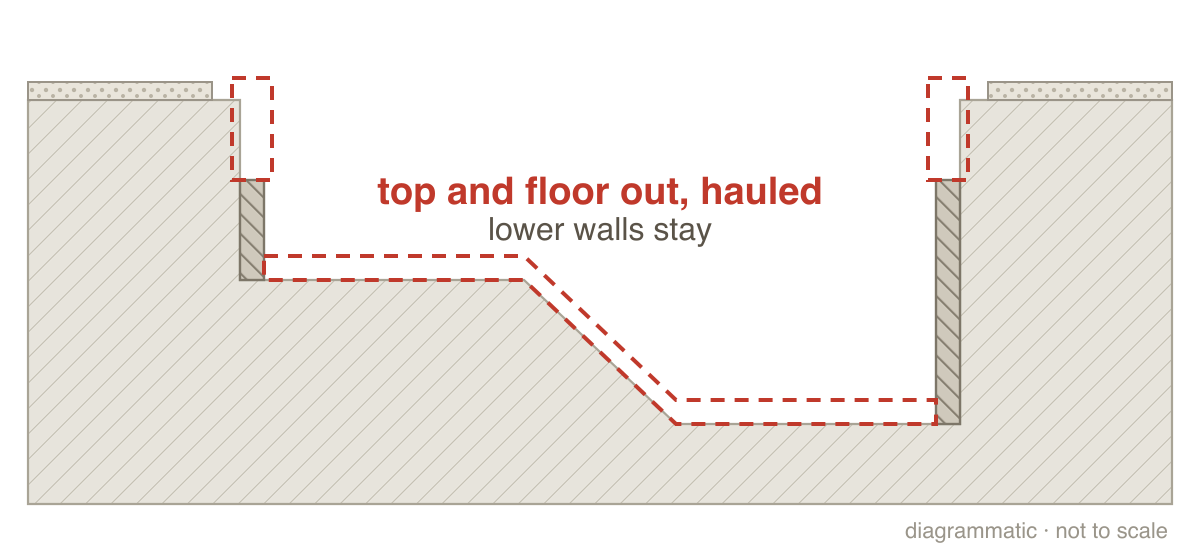
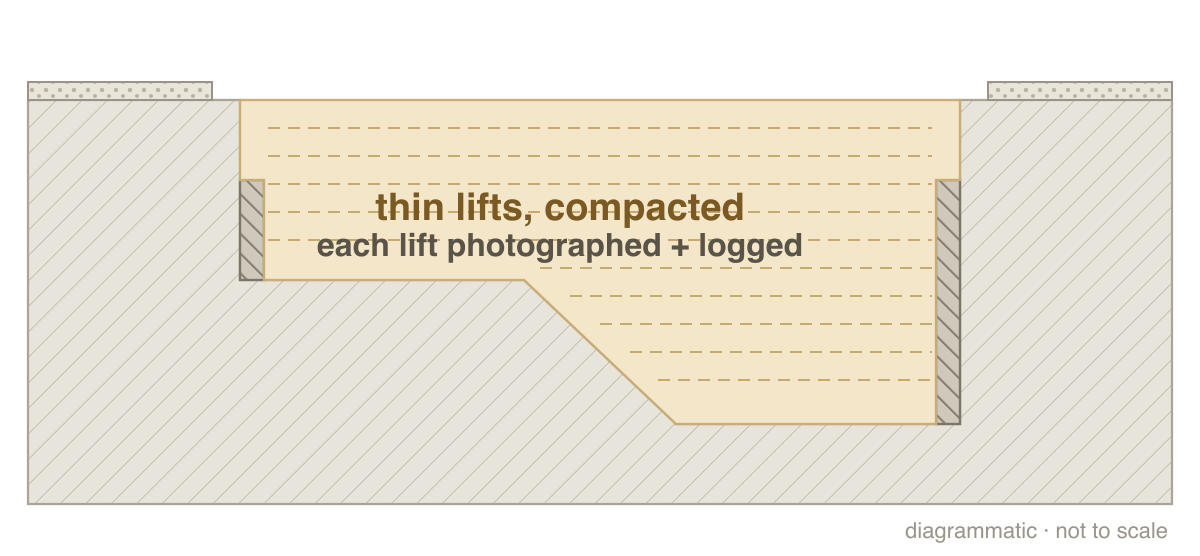
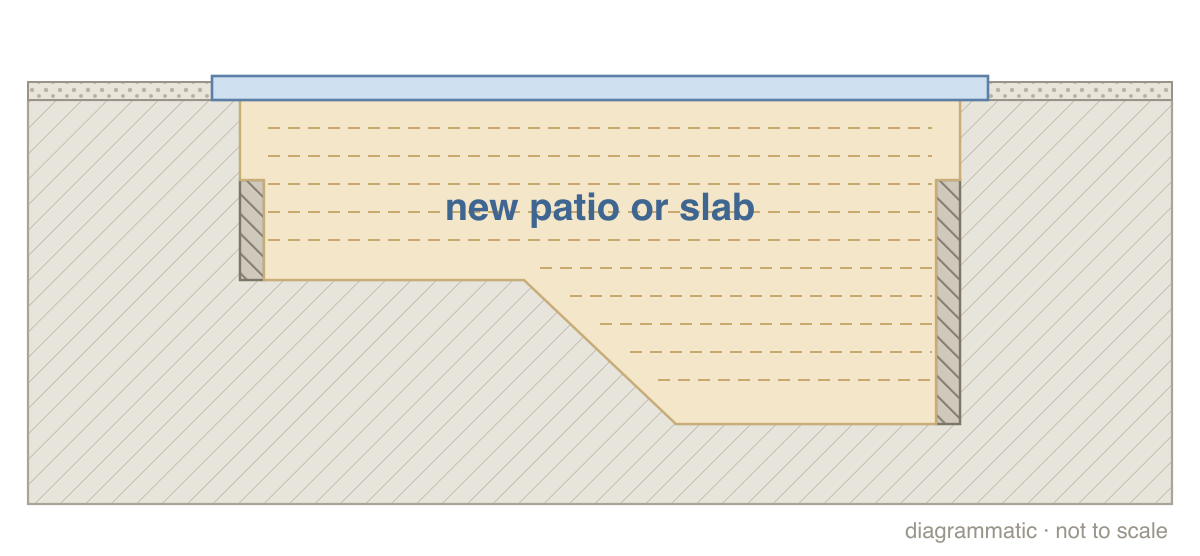
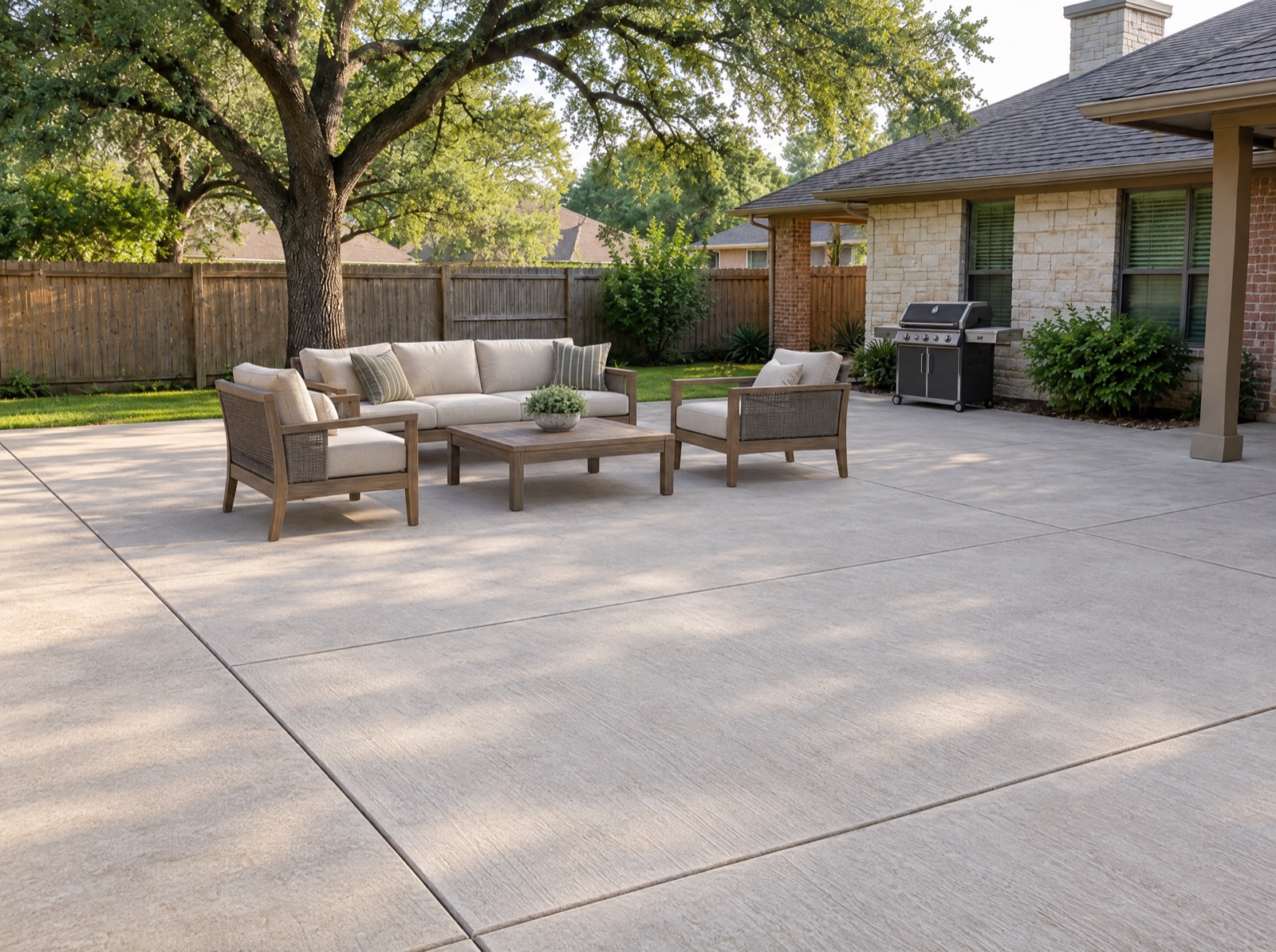
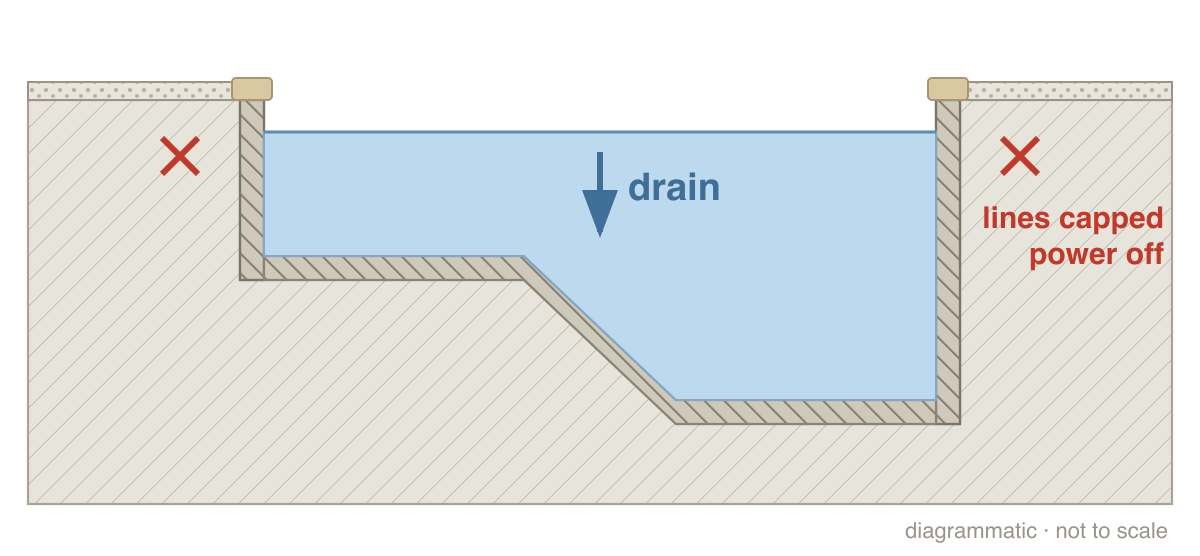
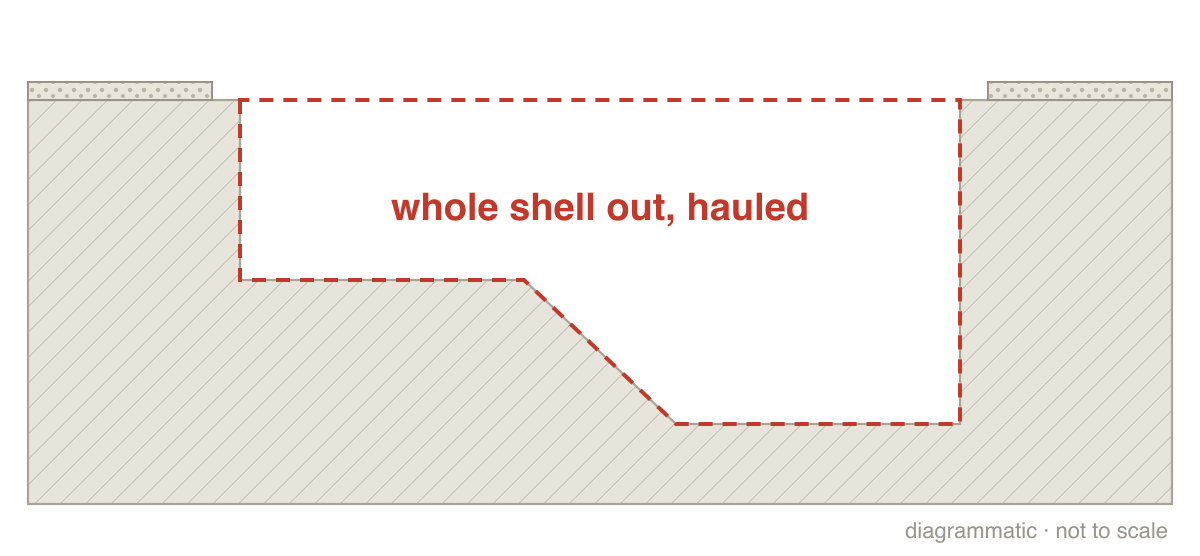
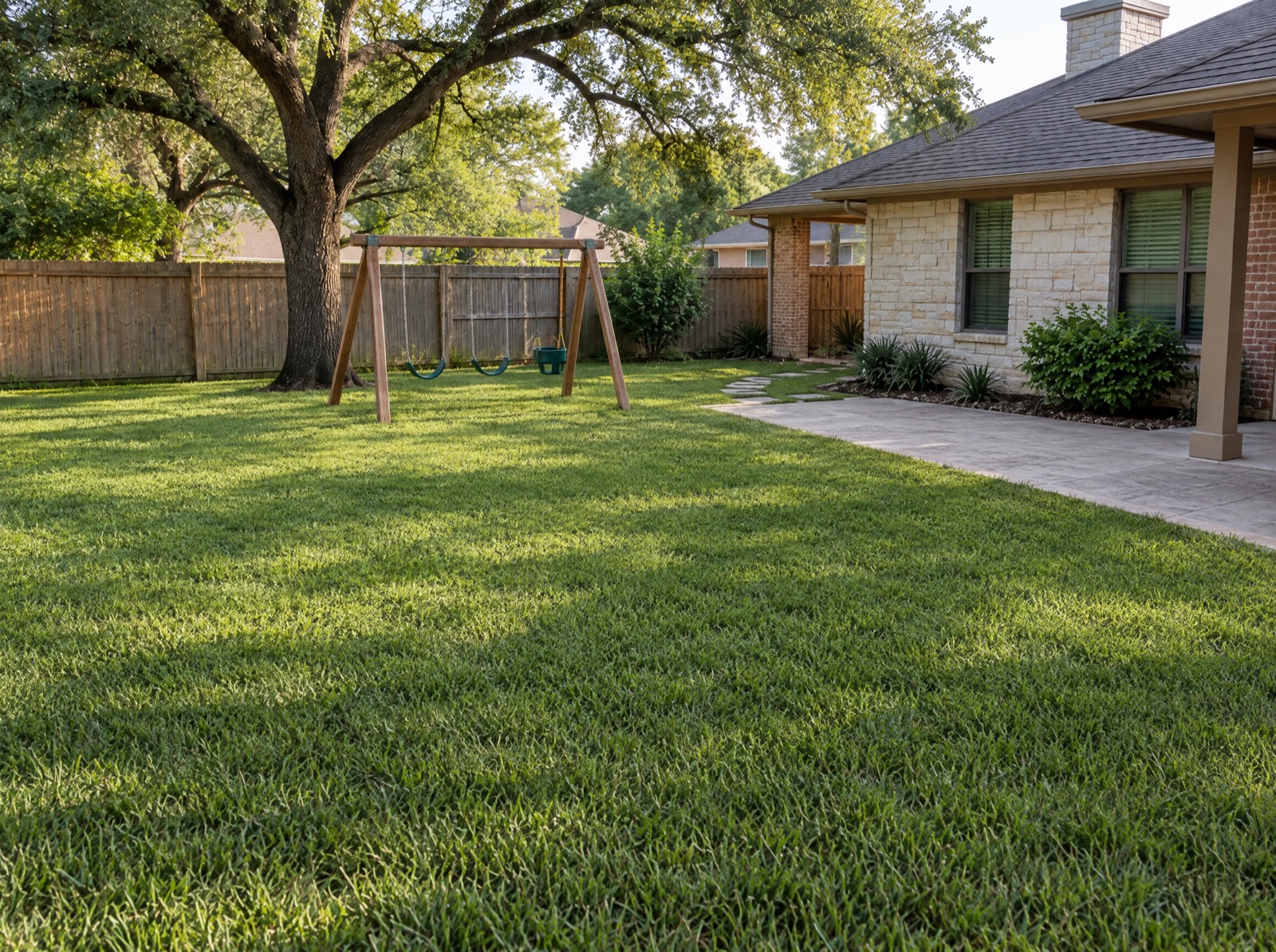
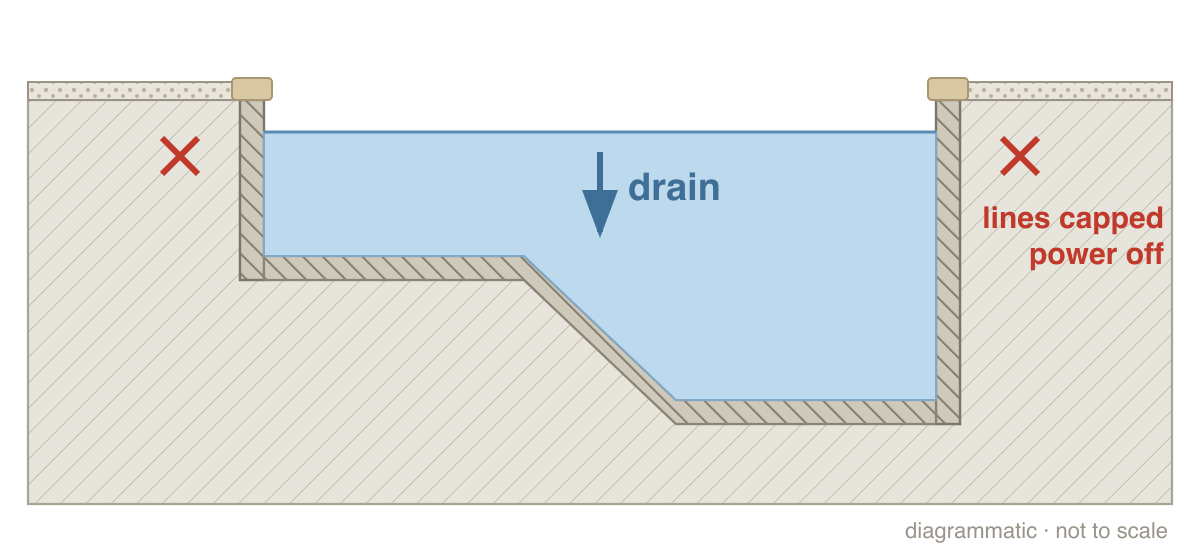
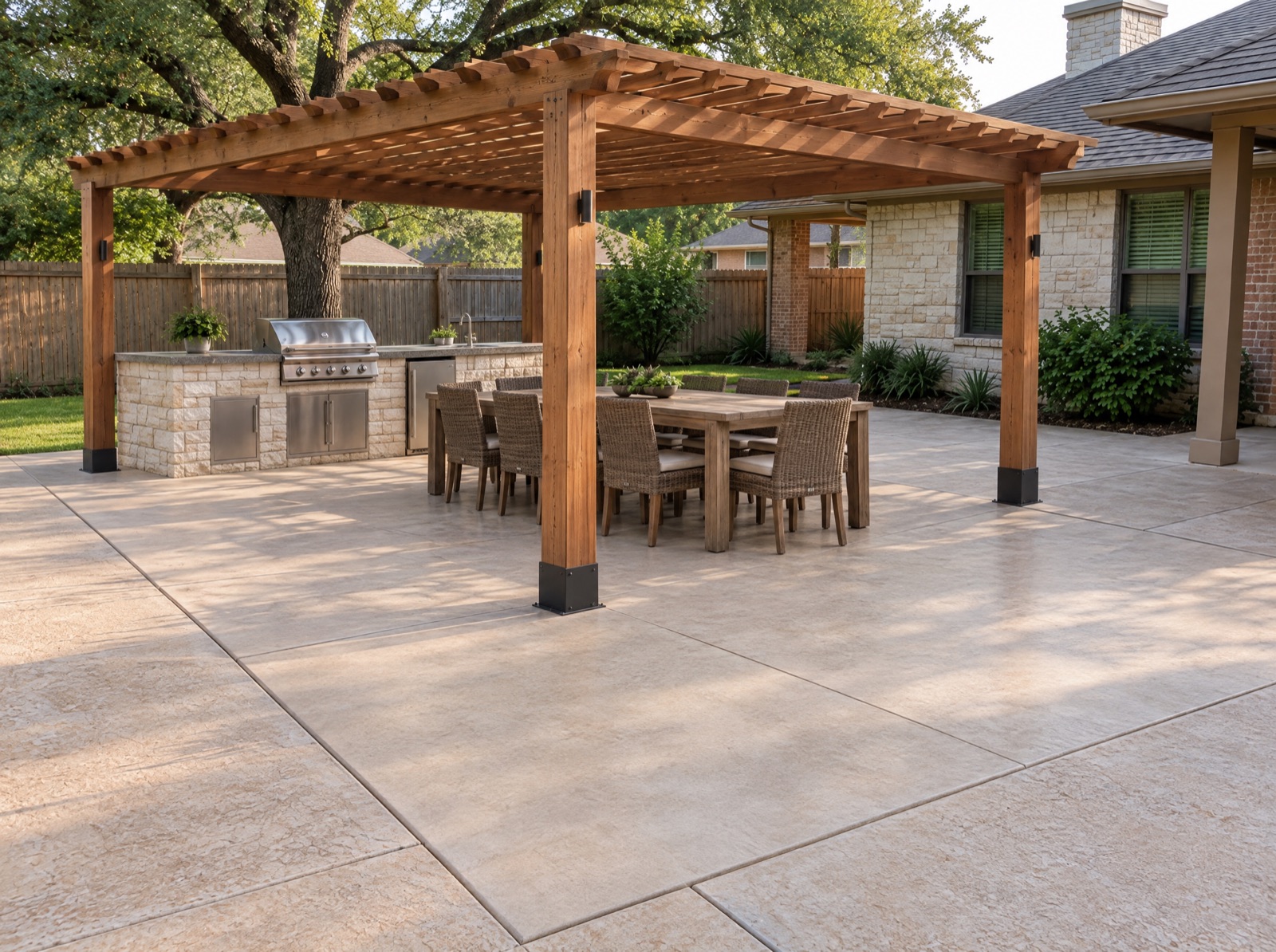
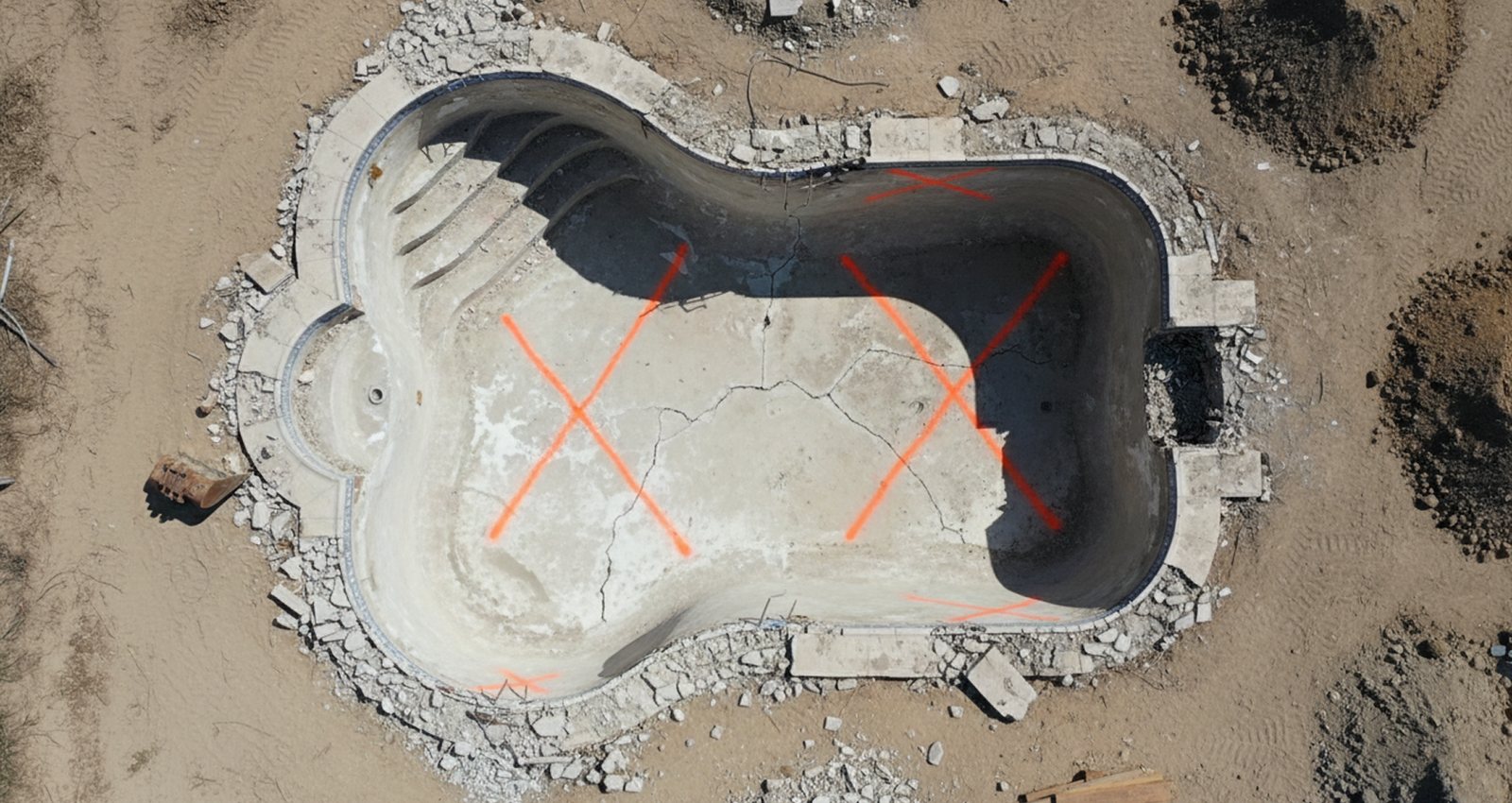
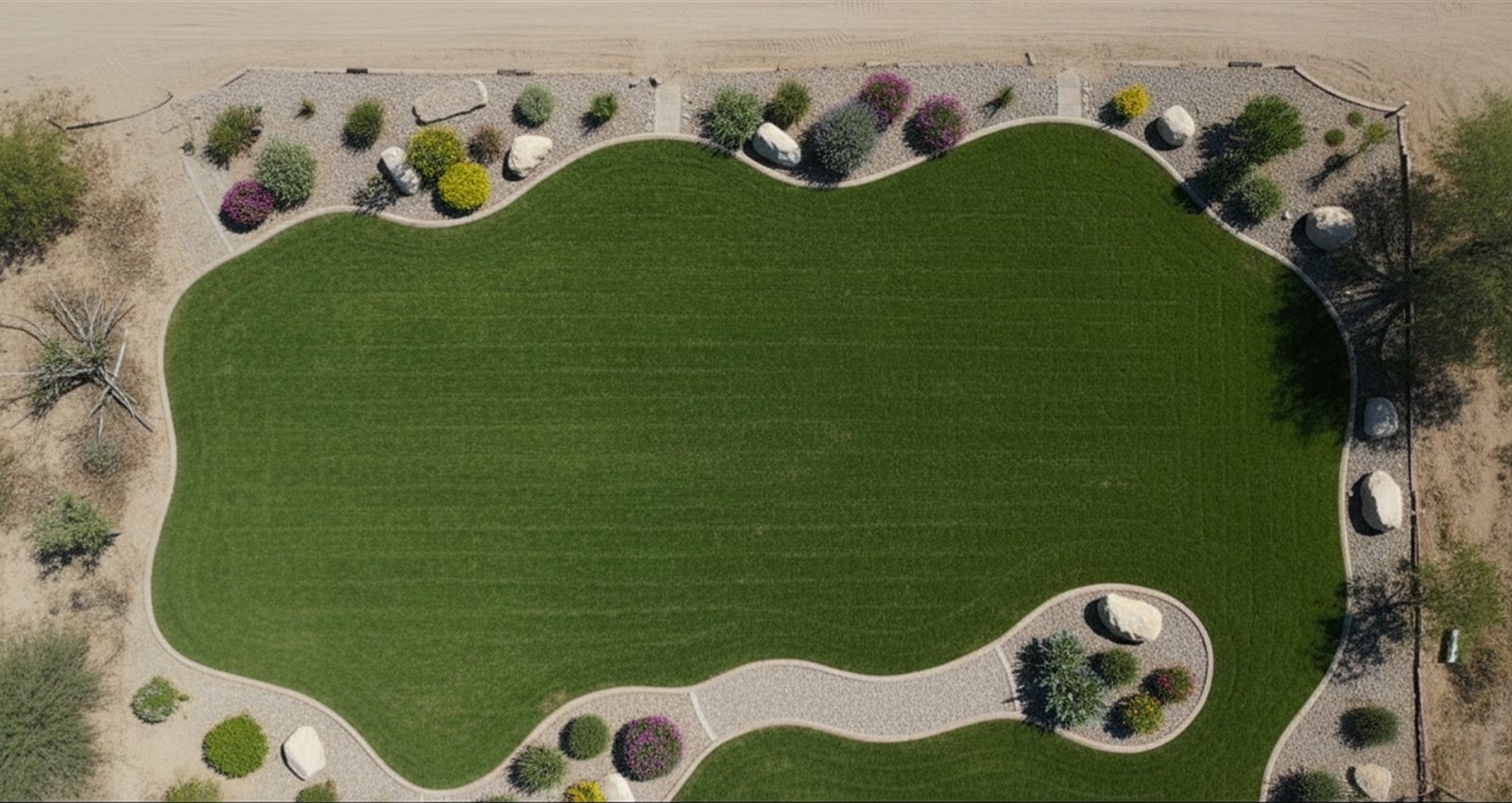
The drawings show what happens in the ground. The last picture shows one finish that option allows. A patio or slab needs compacted fill, and we recommend the lab add-on under one. Lawn, xeriscape and planted beds work on either.
Sunken garden
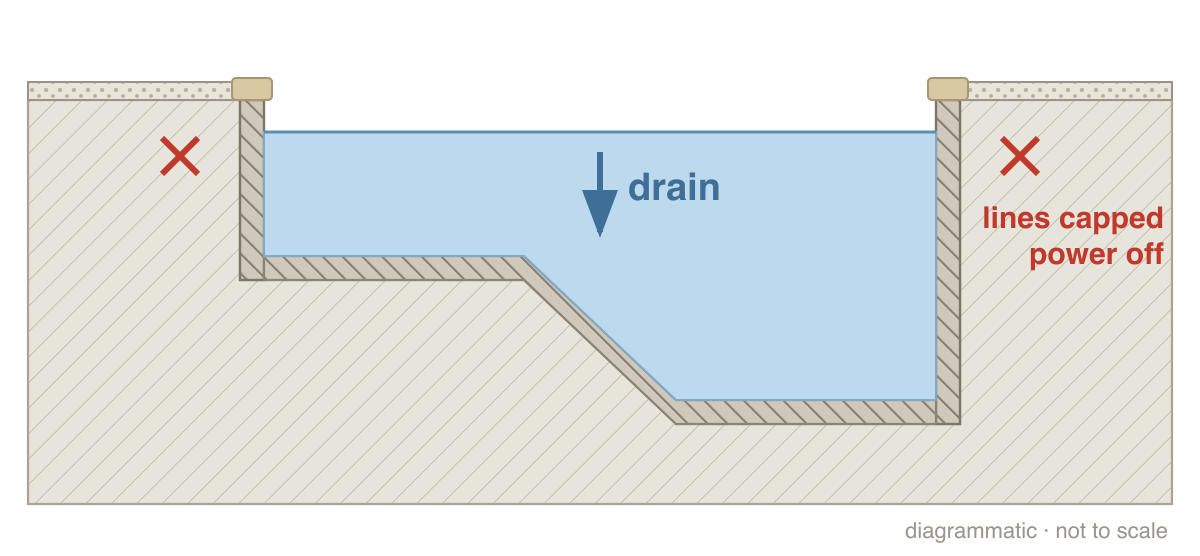
The lowest price. The floor is broken through so water drains, and the shell becomes a planted bed.
Top removal
The coping and top 2 ft of wall come out, so nothing hard sits near the surface. The cracked floor and lower walls stay.
Partial removal
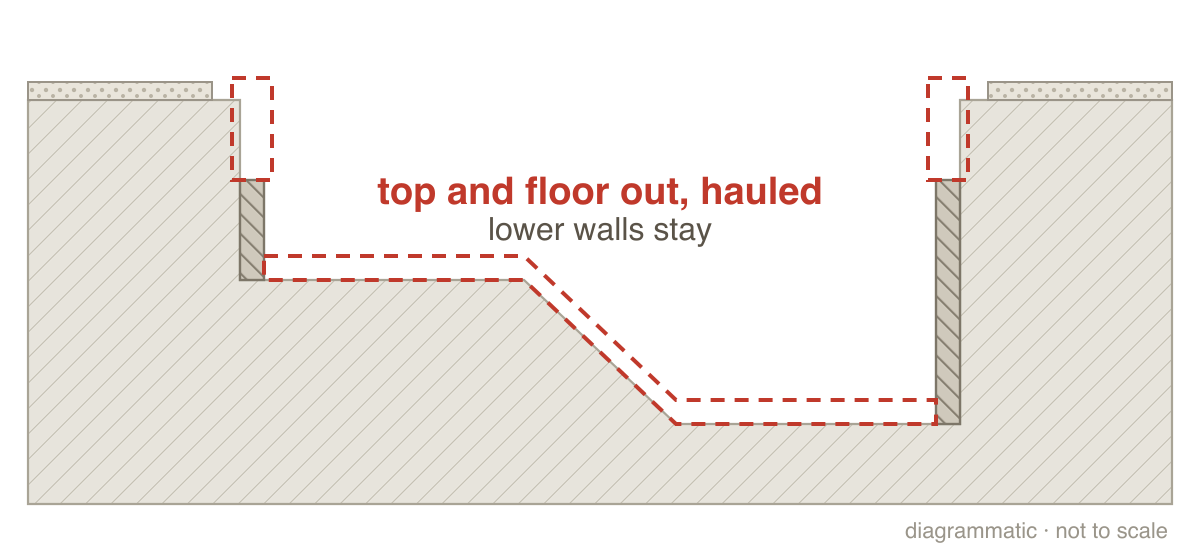
The top and the whole floor come out. Only the lower walls stay. Pick dirt fill or compacted fill.
Full removal
Every wall, the floor and the coping come out. Nothing hard stays in the ground. Pick dirt fill or compacted fill.
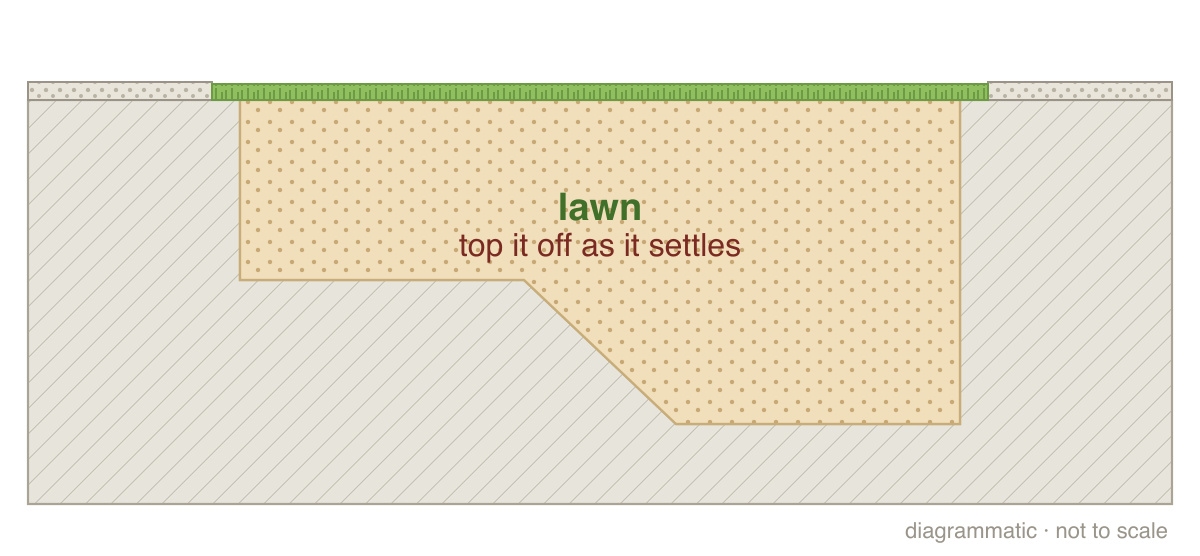
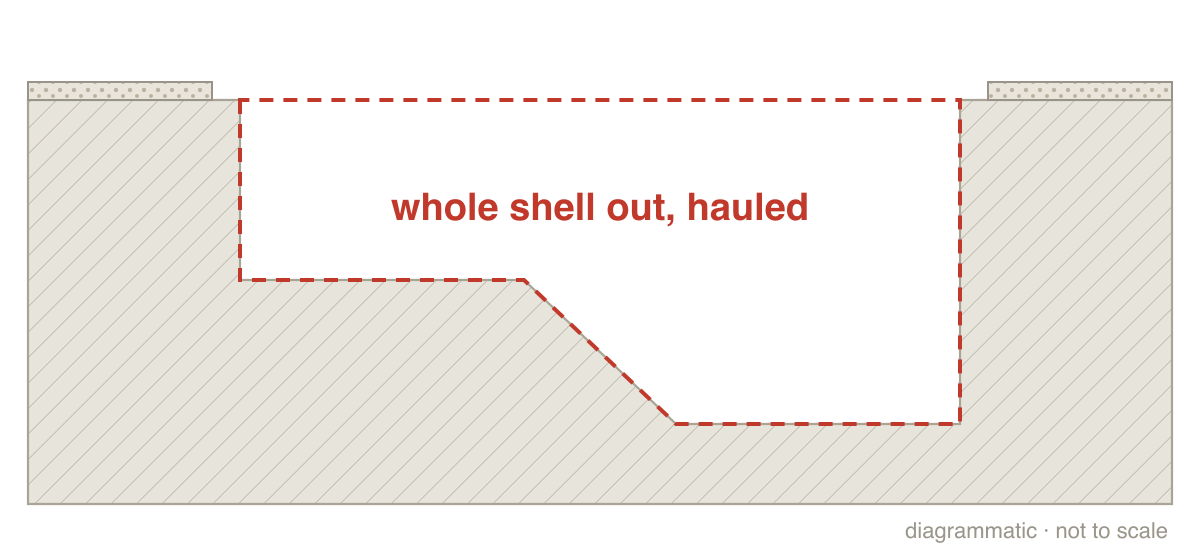
Every price includes the work, the haul and the record. Here is what changes by option.
| Included | Sunken garden | Top removal | Partial removal | Full removal |
|---|---|---|---|---|
| Pool floor | Broken through, stays | Cracked through, stays | Out and hauled | Out and hauled |
| Coping and top 2 ft of wall | Stay | Out and hauled | Out and hauled | Out and hauled |
| Lower walls | Stay | Stay | Stay | Out and hauled |
| Fill | Dirt, to the top | Dirt | Dirt or compacted lifts | Dirt or compacted lifts |
| Independent lab testing | No | No | Add-on, with compacted fill | Add-on, with compacted fill |
| Plumbing capped, power disconnected | Yes | Yes | Yes | Yes |
| Loading, trucking and disposal | Pool hardware only | Yes | Yes | Yes |
| Finished surface | Crowned, ready to plant | Crowned for settling | Crowned (dirt) or graded to drain (compacted) | Crowned (dirt) or graded to drain (compacted) |
| What you get at the end | Photos + signed what-stays page | Photos + signed what-stays page | Signed page (dirt) or Resale Protection Packet (compacted) | Signed page (dirt) or Resale Protection Packet (compacted) |
- Break-out. An excavator with a hydraulic hammer cuts the concrete down to pieces we can load.
- Haul loads. Trucks are limited by weight, not by how full they look, so a concrete shell takes several loads. Loading, trucking and disposal are in the price.
- Compacted fill. On a partial or full removal with compacted fill, fill goes in thin lifts, each compacted and logged. Independent lab testing to 95% Standard Proctor (ASTM D698) is an add-on at the lab's price.
- Utility safe-off. Pump, electrical and gas lines are capped or disconnected first. A licensed plumber or electrician handles gas and power where the law requires one.
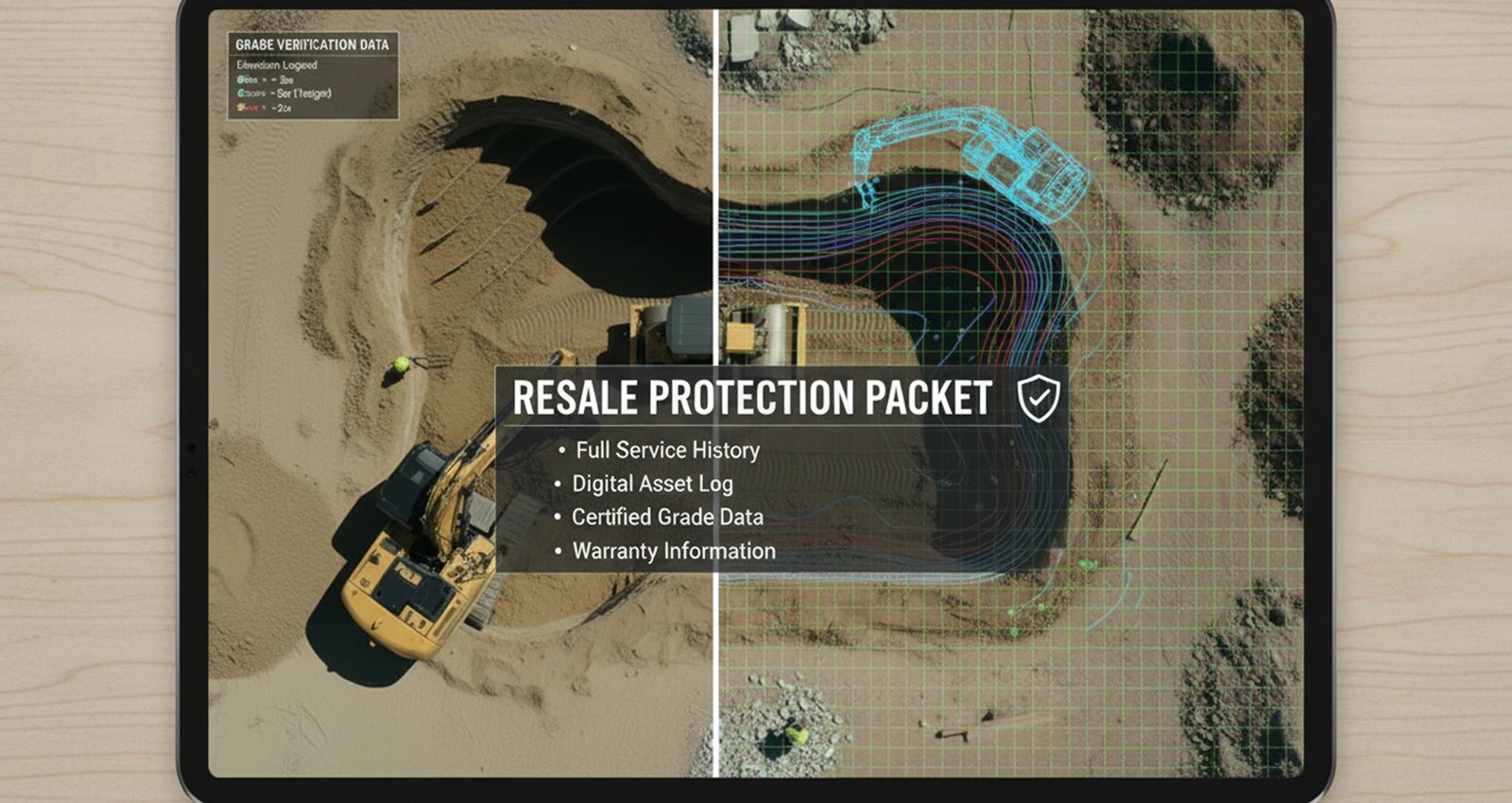
- Resale Protection Packet (compacted fill). Photos by phase and by lift, fill tickets, the lift log, disconnect records, and a permit closeout or the county's written no-permit confirmation. Lab test reports go in it if you add testing.
- Insurance and site supervision. $2M per occurrence / $5M aggregate general liability. One point of contact, Cody Baird, Owner.
A before-and-after drone scan and 3D model can be added for $500–$1,500 per scan. It records the surface. It is not a survey.
What moves the price
Pool size and depth. A spa or raised walls. Access: a tight side yard means smaller passes and more hand work. Limestone around the shell, which is inside the range. Rock you need dug out beyond the shell is billed as rock excavation at $35–$90 per cubic yard, or $250 per hour for hammer work when the volume can't be known. Haul distance. Pools up to about 900 sq ft and 6 ft average depth, with the deck staying, fall inside these ranges. A deck that comes out too is quoted at the site walk. Oversized or deeper pools, and large pools with no wide gate, are quoted after the site walk.
Want a number for your pool? Try the pool removal cost calculator or see all pricing.
How a Clear Ground pool removal runs, phase by phase.
Walk it before
we break ground
We measure the pool, check access, locate utilities and photograph the starting grade. We confirm your jurisdiction and whether a demolition permit applies. Written quote within 48 hours of the site walk.
Break-out and
haul-off
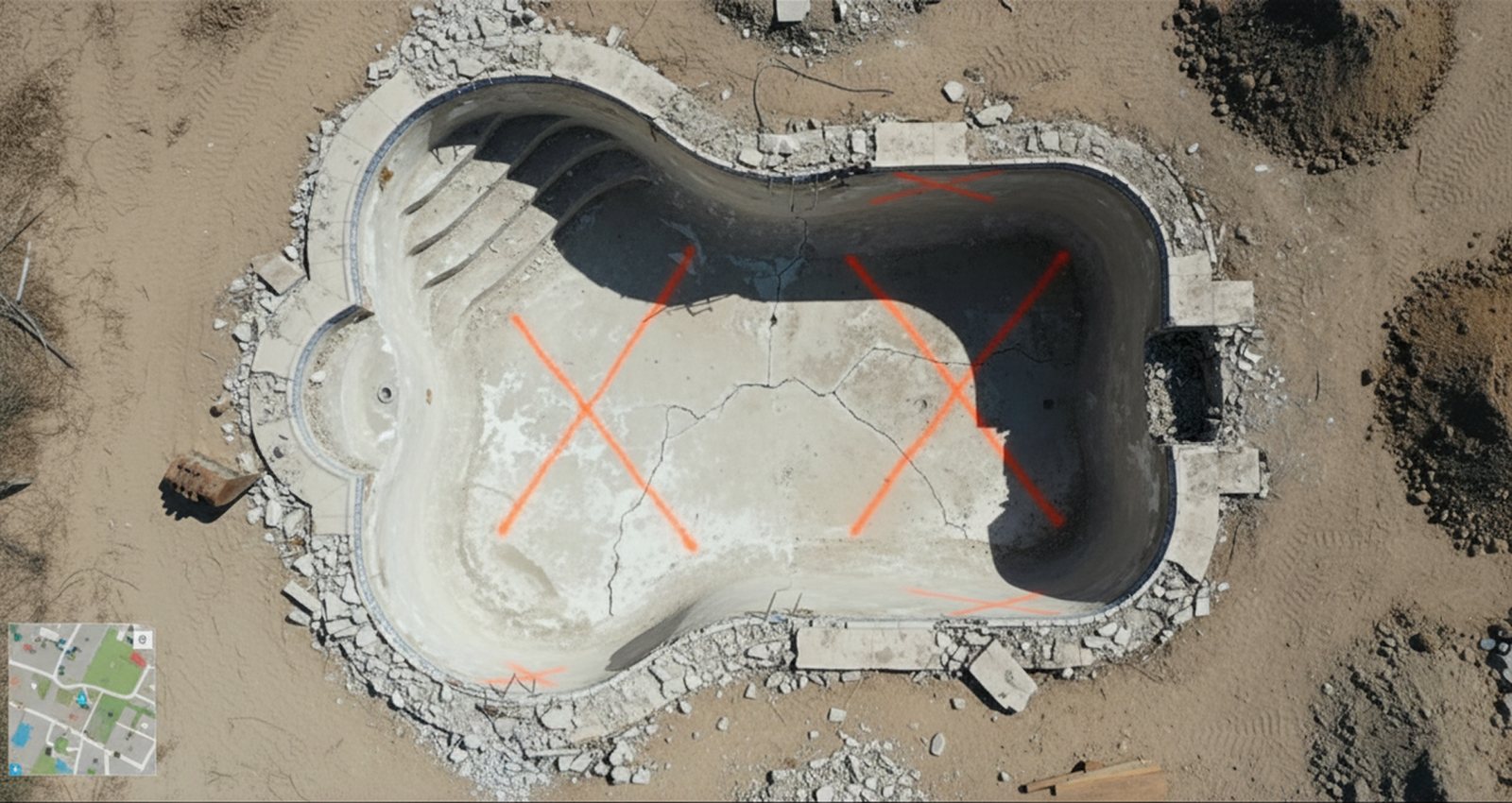
An excavator with a hydraulic hammer breaks the concrete. Concrete and rebar are loaded and hauled. Hammer work near your house and fence lines is planned from the site walk. A sunken garden only breaks the floor. A top removal takes off the top of the pool. A partial takes the top and the floor, and a full removal takes the whole shell.
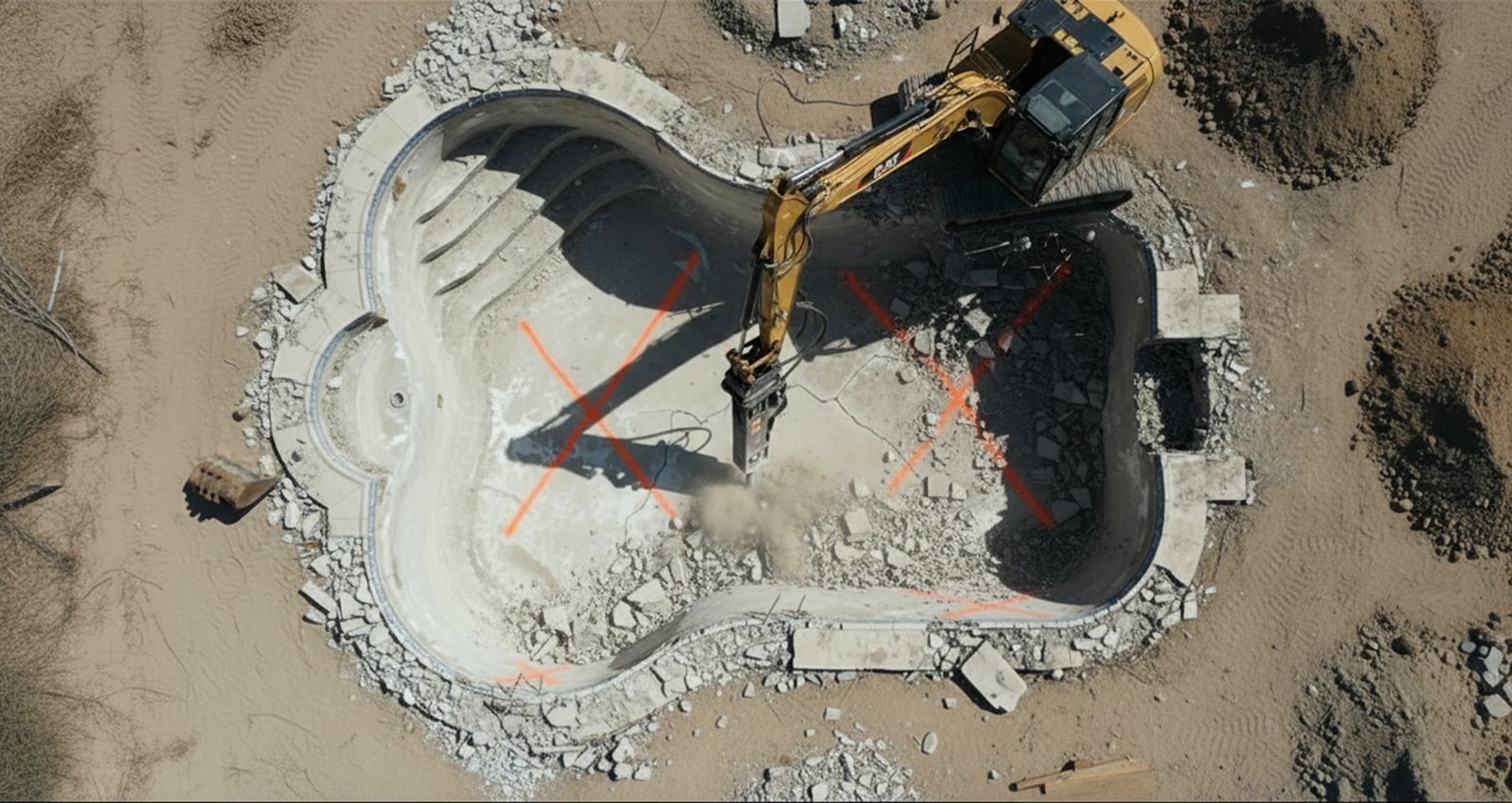
Fill, compacted
or track-walked
With compacted fill, fill goes in thin lifts. Each lift is compacted, photographed and logged, and lab testing is an add-on. With dirt fill, fill is track-walked in, not compacted in lifts. It settles, so we crown it and you top it off.
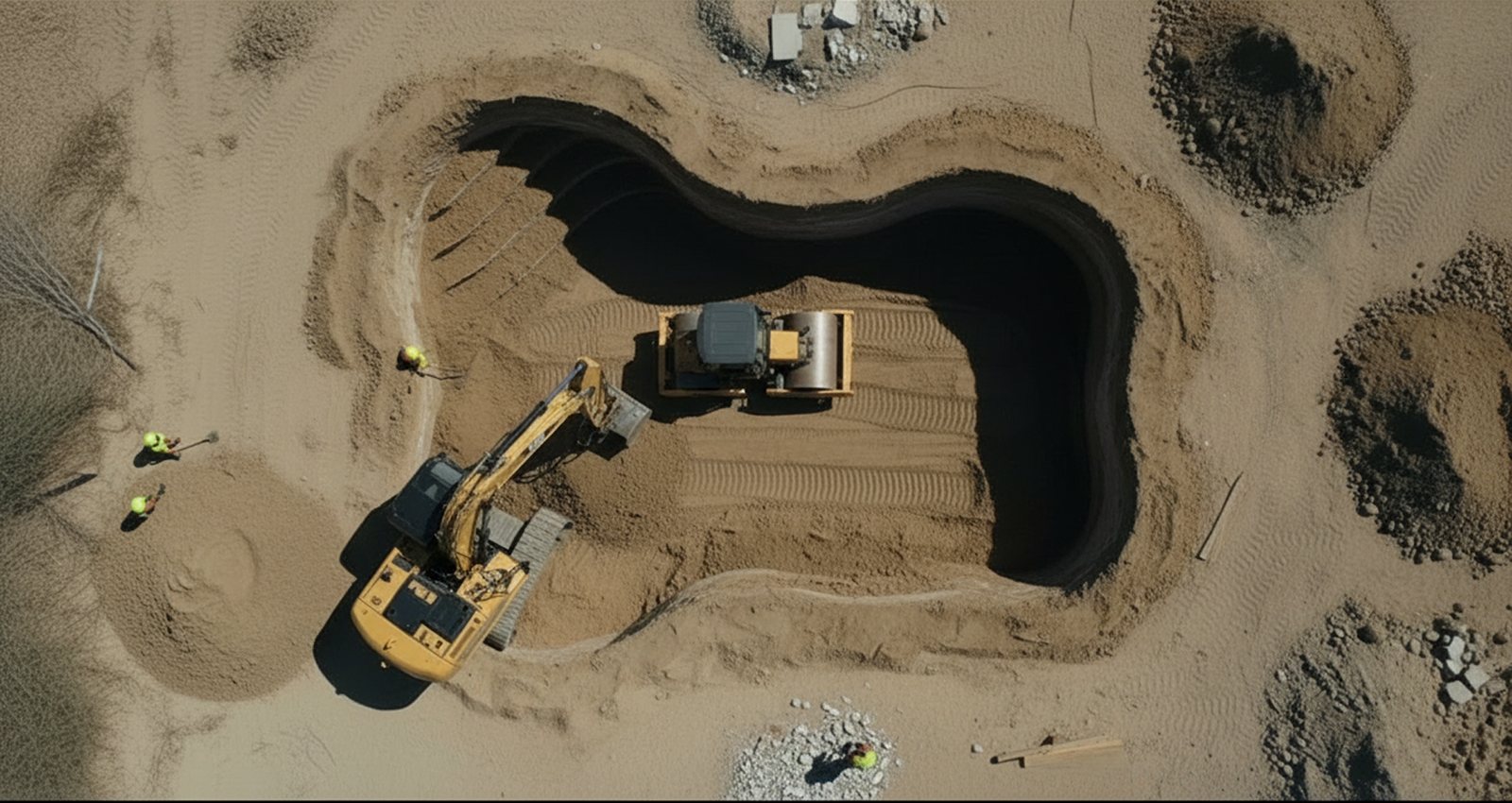
Graded to
drain
The yard is shaped to drain away from the house and left ready for sod or xeriscape, or a patio on compacted fill. We compare it against the starting-grade photos so you can see the ground came back where it started.
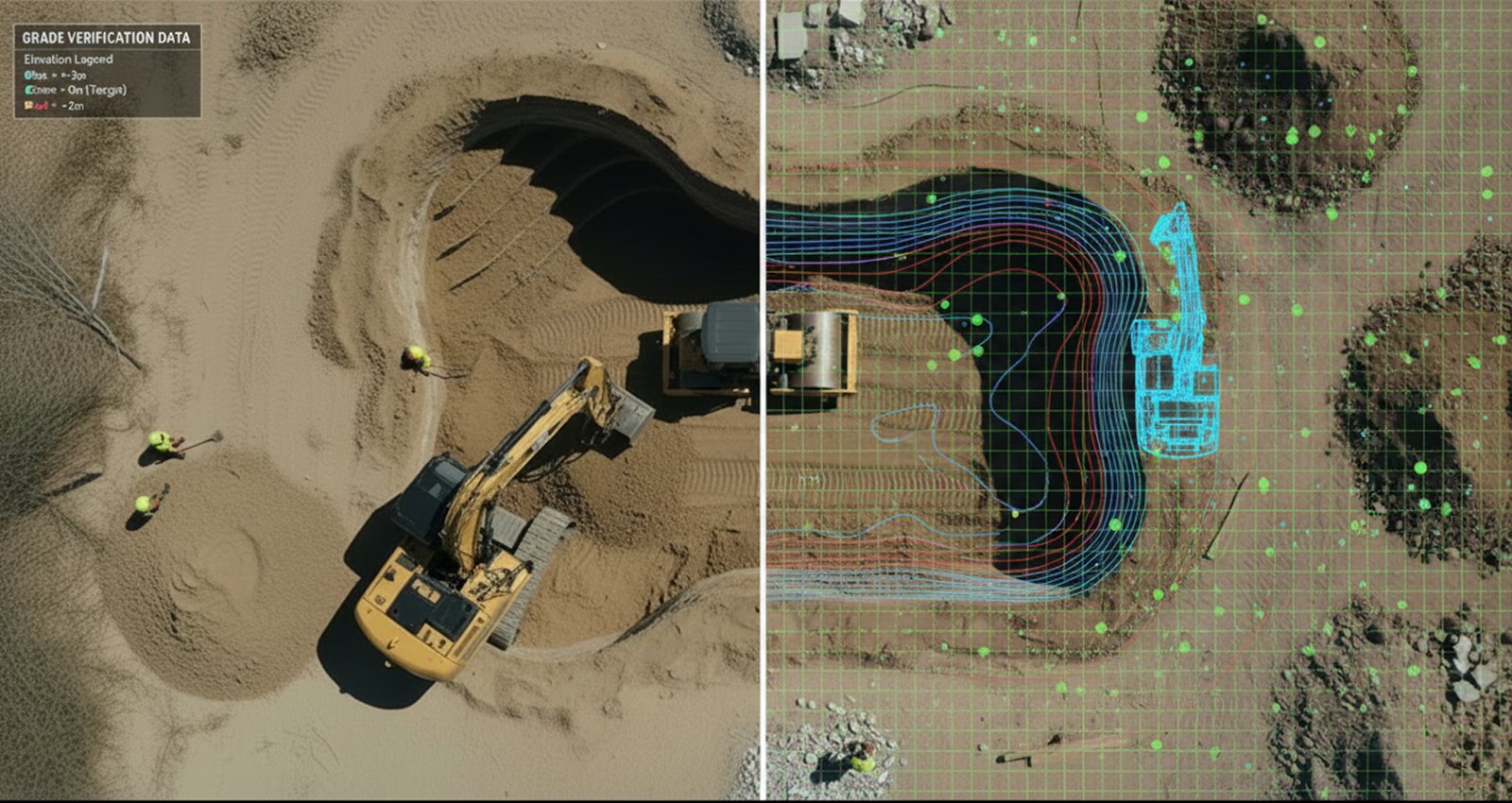
A packet,
not a question
Compacted fill closes with a Resale Protection Packet: photos by phase and lift, fill tickets, the lift log, disconnect records, and the permit closeout or the county's written no-permit confirmation, plus lab reports if you add testing. Dirt fill closes with photos, fill tickets, the permit record and the signed page that says what stays. Either way, when you sell, you hand the buyer paper.
Permits and your seller's disclosure.
Permits. Whether you need a demolition permit depends on the address. Inside most city limits one is required. Many unincorporated county lots need none. We check your jurisdiction before we quote and say in writing what applies. Where a permit is required, the closeout goes in your packet. Where it is not, we ask the county to confirm that in writing, so the question "was this permitted?" has a paper answer. HOAs often want approval too, so check your covenants early.
Selling. The TREC Seller's Disclosure Notice asks sellers to report conditions they know about, and Texas law (Property Code §5.008) requires the notice for most residential sales. A past pool removal or fill is worth raising with your agent or attorney. Our packet documents what was done. It supports your disclosure and does not replace it. This is not legal advice.
Last reviewed: October 2026
How much does pool removal cost in Austin?
It depends on what comes out and how the hole is filled. With dirt fill, a sunken garden runs $15,000–$34,000, a top removal $20,000–$43,000, a partial removal $25,000–$59,000 and a full removal $29,000–$70,000. With compacted fill in lifts, a partial runs $43,500–$77,000 and a full removal $47,500–$88,000. Independent lab testing is an add-on at the lab's price. Pool size, depth, a spa, access, limestone and haul distance move the number. Your free site walk sets the final price.
What is the cheapest honest way to get rid of a pool?
The sunken garden, from $15,000. We break the floor through so water drains, cap the plumbing and fill the shell to the top for planting. The coping and walls stay, so you cannot build there and the soil will settle. We believe it could affect the sale of your home, and you sign a page saying you know what stays. Then it is your choice.
What is the difference between dirt fill and compacted fill?
Dirt fill is track-walked in with the machines and crowned. It is not compacted in lifts, so it settles and you top it off, and nothing should be built on it. Compacted fill goes in thin lifts, each compacted, photographed and logged. It takes longer and costs more, and it is the base for a patio or a slab. Add independent lab testing if a building, a driveway or a lender needs a density report.
Can I get a full removal without compacted fill?
Yes. A full removal with dirt fill runs $29,000–$70,000. The whole shell comes out and is hauled, so nothing hard stays in the ground. The fill is track-walked, not compacted in lifts, so it settles and you top it off. Lawn and xeriscape are fine on it. A slab, a building or a new pool needs that fill dug out and replaced in compacted, lab-tested lifts first. You sign a page that says so.
Do I have to disclose a removed or filled pool when I sell in Texas?
Plan on it. The TREC Seller's Disclosure Notice asks sellers to report known conditions, and a past pool removal is worth raising with your agent or attorney. Our closeout record documents what was done. It supports your disclosure and does not replace it. This is not legal advice.
Do I need a permit to remove a pool in Austin?
It depends on the address. Inside most city limits a demolition permit is required. Many unincorporated county lots need none. We check your jurisdiction before we quote and say in writing whether a permit applies. Where none is required, we ask the county for written confirmation.
How long does a pool removal take?
Most jobs start 1 to 3 weeks after approval. A sunken garden or top removal is one to four weeks on site. A partial or full removal with dirt fill is about two to six. Compacted fill takes longer, about five weeks for a small pool and up to ten for a large one, because the fill goes in one compacted lift at a time.
Are you insured?
Yes. We carry $2M per occurrence / $5M aggregate general liability, plus Texas workers' compensation. A certificate of insurance and additional-insured endorsement are provided before work starts.
Rather just talk
to a person?
(512) 880-8888
Call or text · Leander · Cedar Park · Round Rock · Georgetown
Pflugerville · Liberty Hill · Hutto · Lakeway · Bee Cave
Cody Baird, Owner