


For developers working under the HOME Initiative
Residential lot prep
clearing
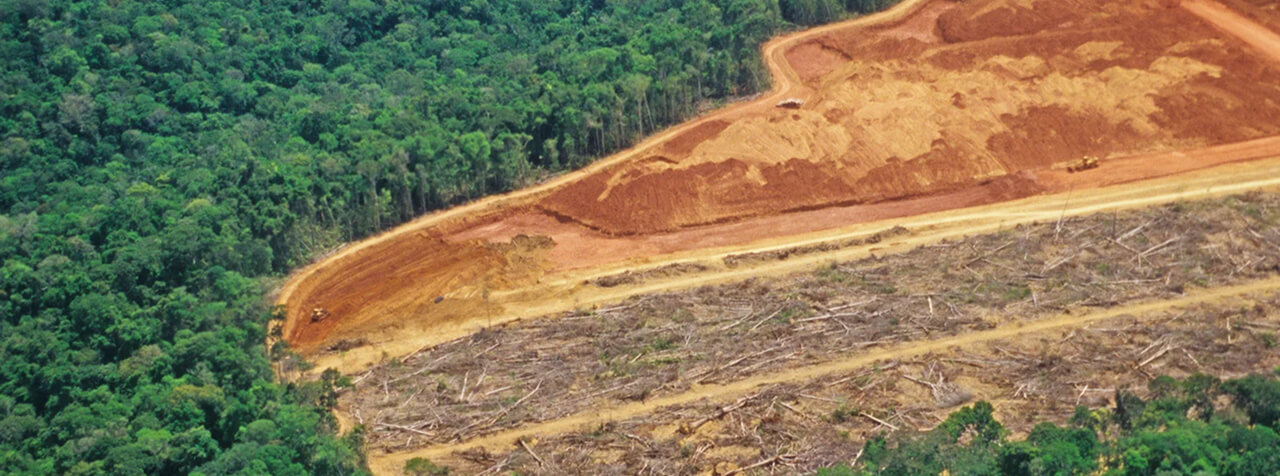
Traditional land clearing is a destructive, multi-stage process of "clear and grub" that leaves your land scarred and your budget depleted by hauling and tipping fees. One pass. Zero hauling. Zero burn permits. Your land restored to a park-like finish with the soil intact — and drone-verified proof of every acre cleared.
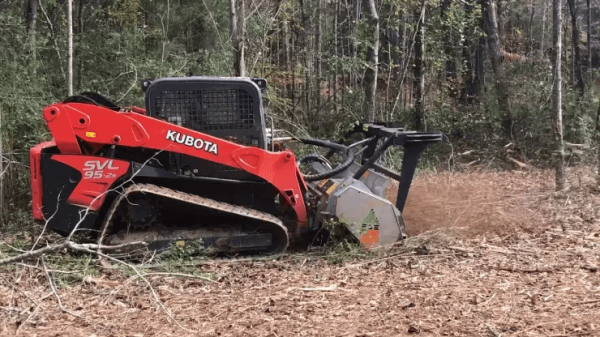
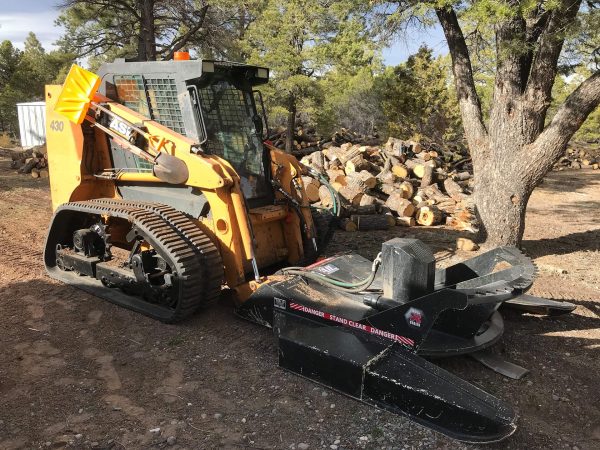
5–50 acre properties. Pre-clearing RTK scan included.
Properties with structures require a more precise clearing plan — defensible space zones, ember-resistant perimeters, and access road clearance all have to be coordinated. Texas A&M Forest Service recommends a 30–100' cleared zone around structures, and the exact configuration depends on your site's fire history, slope, and prevailing wind exposure. Steep terrain limits machine speed and adds time per acre.
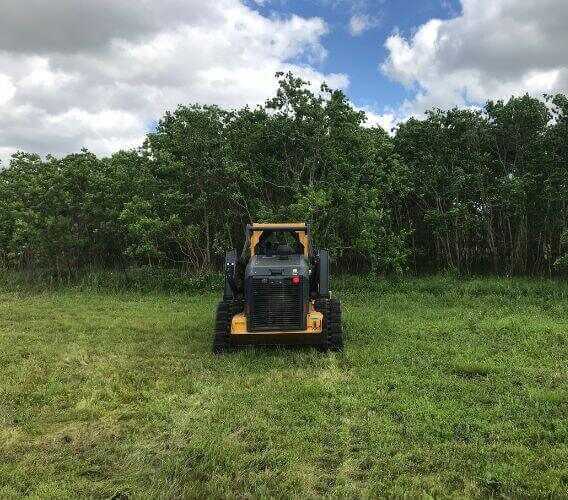
Priced per acre based on tree density and terrain.
Mature Mesquite with trunk diameters above 8" takes significantly more mulching head time per tree than young growth. Properties with a mix of invasive species require more selective passes than a uniform stand. Rough or rocky terrain slows machine speed and increases wear. Properties that haven't been maintained in 10+ years have denser undergrowth than land with recent clearing history.
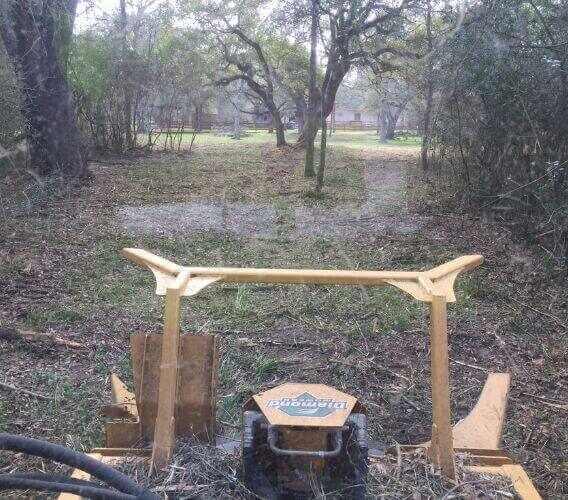
Varies by cedar density and terrain slope.
Dense cedar stands with mature trees at 6"+ diameter require slower machine passes and more mulching head hours per acre than light brush. Steep terrain limits machine speed and increases equipment wear. Properties with significant rock outcroppings require the operator to navigate around formations rather than run efficient straight passes. Larger contiguous acreage is more efficient per acre than fragmented clearing.
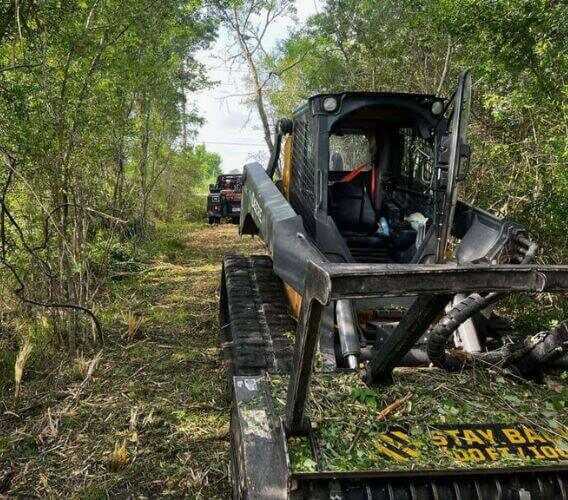
Lighter vegetation, faster passes — priced accordingly.
Thick mesquite or thorny brush tangles the mulching head more than straight cedar, slowing pass speed. Soft or wet soil after rain can limit machine access and slow the job. Properties not maintained recently have denser undergrowth requiring more passes per acre. The more uniform and accessible the terrain, the faster the machine runs and the lower the per-acre cost.
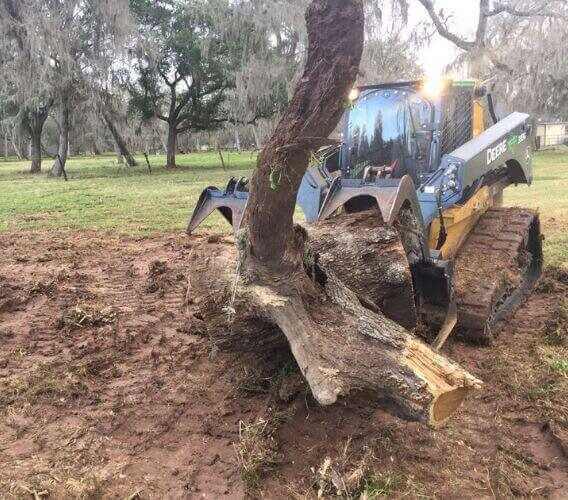
Quoted after site scan. Root depth and density are key variables.
Deep-rooted Mesquite can extend 6–12 feet below grade, requiring excavation equipment in addition to the mulching head. Tree diameter and density are the primary variables — removing 20 mature trees is a different job than 200 saplings. Work near existing structures or fences requires precision excavation to avoid damage. Every GPS-flagged specimen tree near the clearing zone adds repositioning time and precision operator requirements.
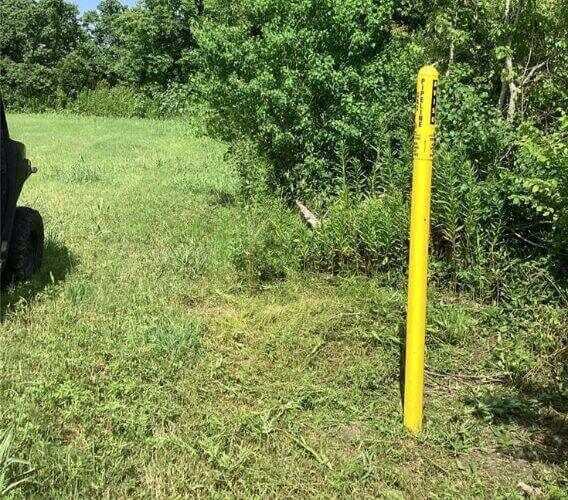
Light to medium vegetation density.
Dense multi-stem brush tangles the mulching head more than single-trunk trees, requiring slower pass speeds. Wet conditions after rain can limit machine access. Properties with significant rock outcroppings require navigation around formations. If the clearing goal is construction-ready bare ground rather than a managed finish, scope shifts to Land Clearing rates.
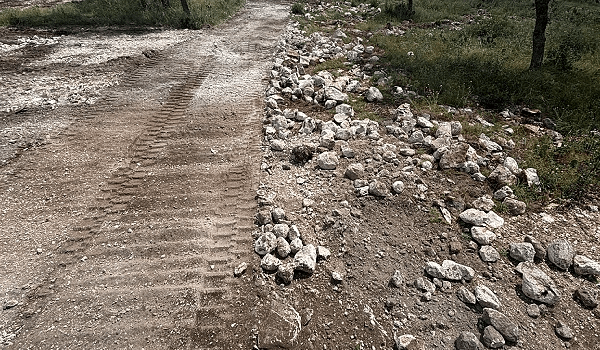
Road length and rock depth are the primary variables.
Rock hardness varies significantly — standard Hill Country limestone mills predictably, but denser "blue rock" formations can double mill time per linear foot. Width requirements for heavy equipment roads vs. foot traffic paths change the scope. Significant grade changes along the road profile require additional grading work. Wet or unstable soils below the rock layer may require sub-base stabilization before milling.
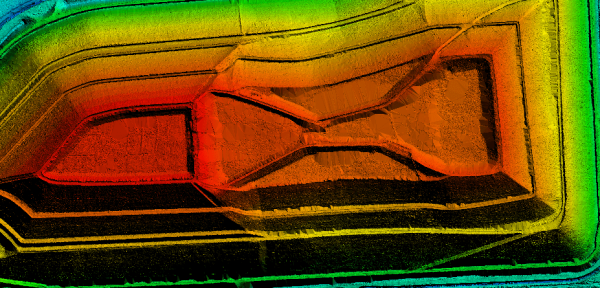
AT ANY PHASE OF YOUR CLEARING
SEE EXACTLY WHAT CHANGED
WE MAP BEFORE WE MULTCH.
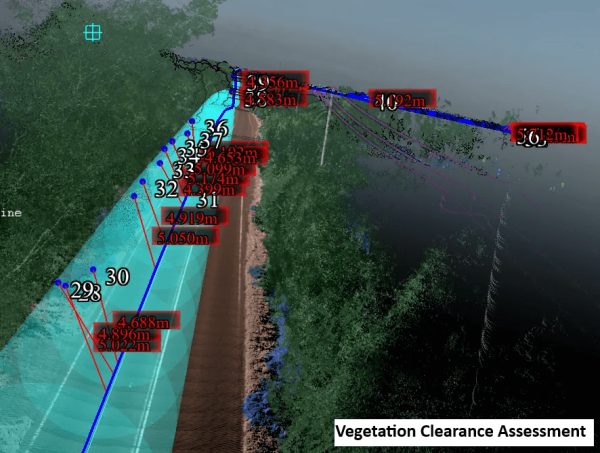
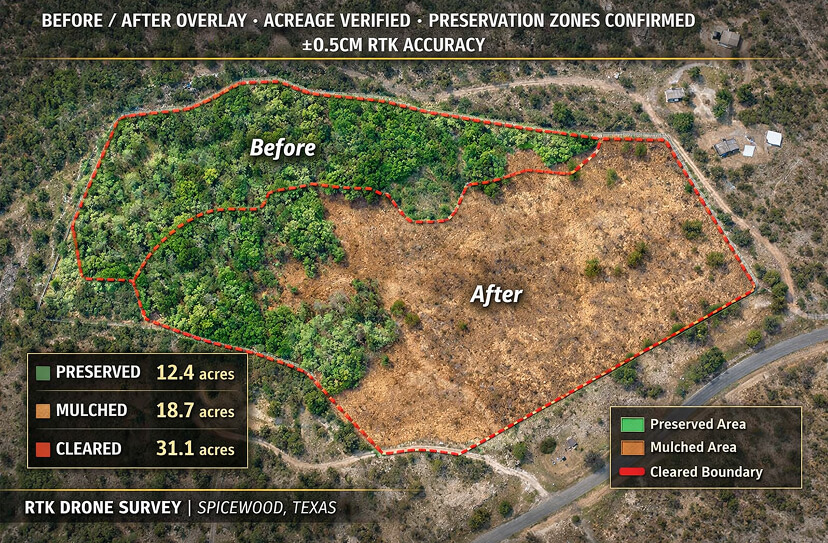
Most mulching crews show up and start cutting. We show up with a Mavic 3 Enterprise RTK drone that maps your entire property to ±0.5cm accuracy before a single tree is touched. Cedar density gets mapped. Fire hazard zones get flagged. Specimen oaks and view corridors get marked for preservation. You approve the clearing plan — not us.
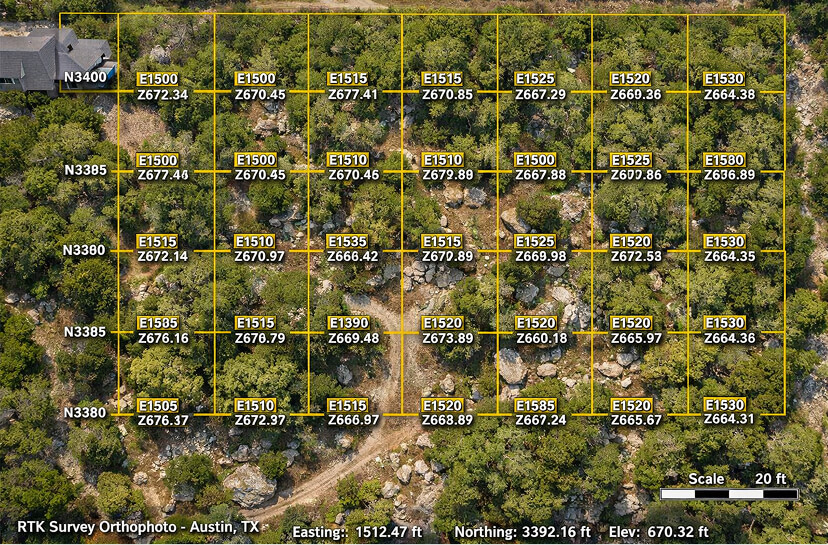
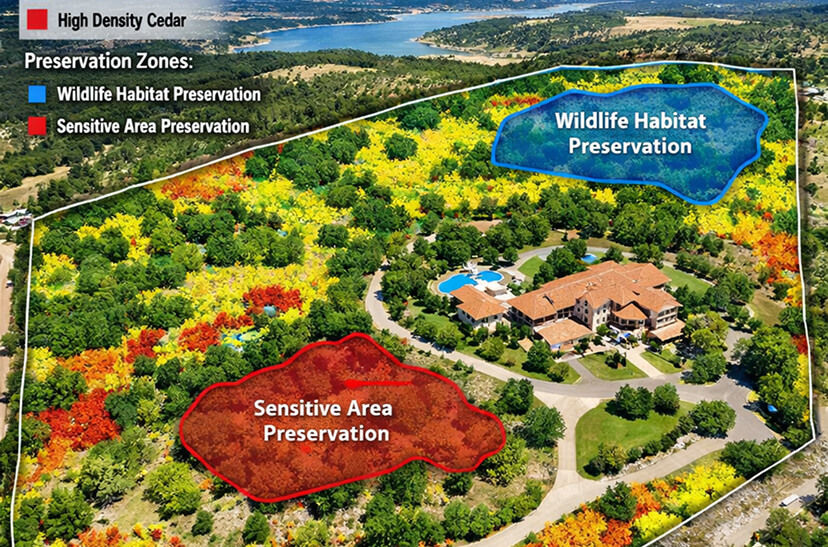
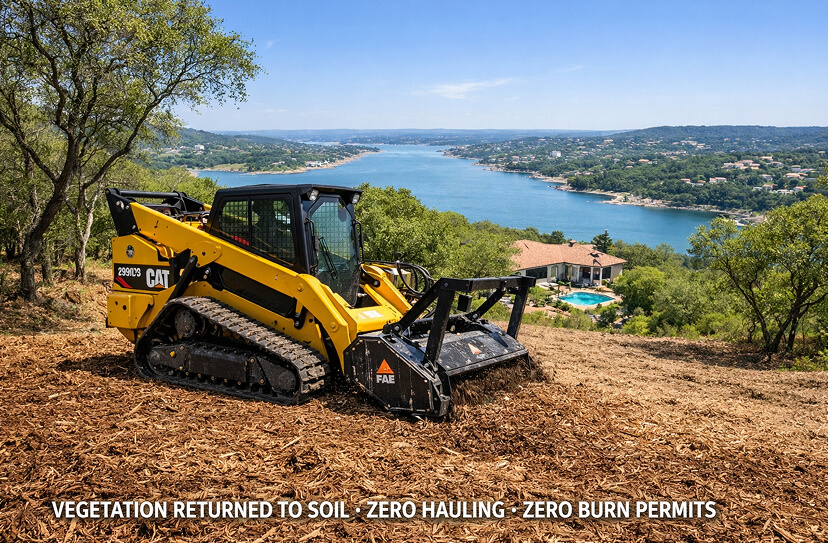
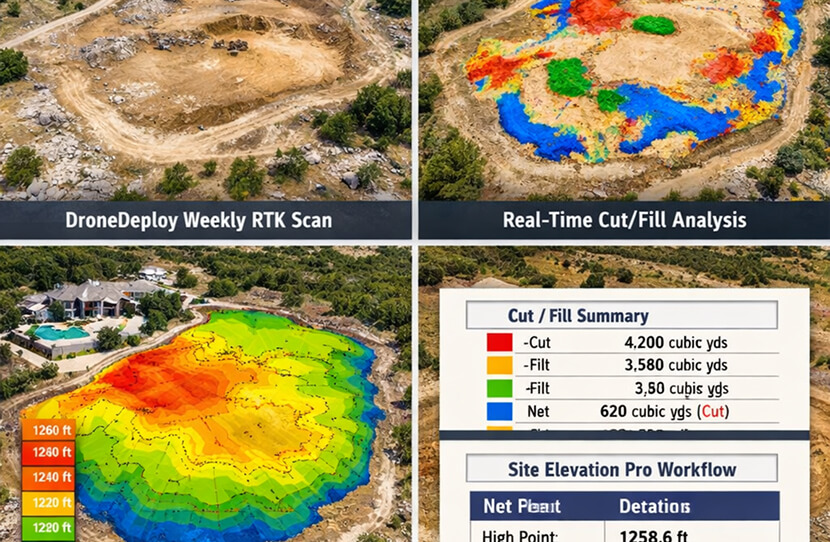
Real Projects.
Austin & Hill Country.
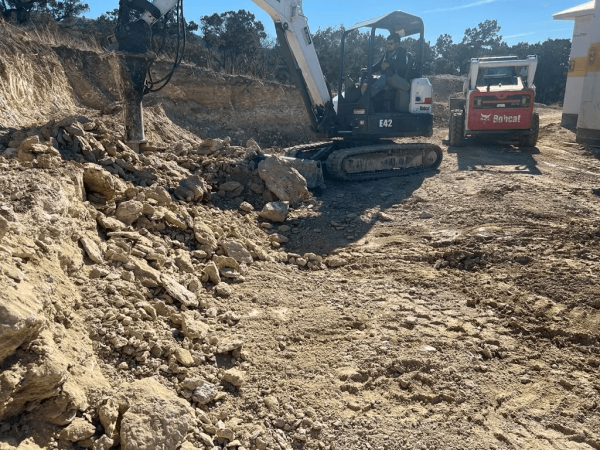
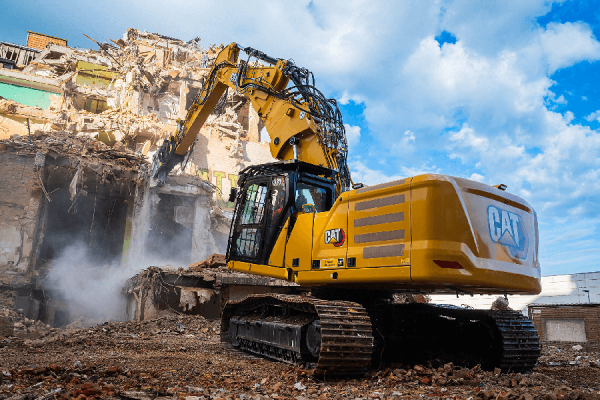
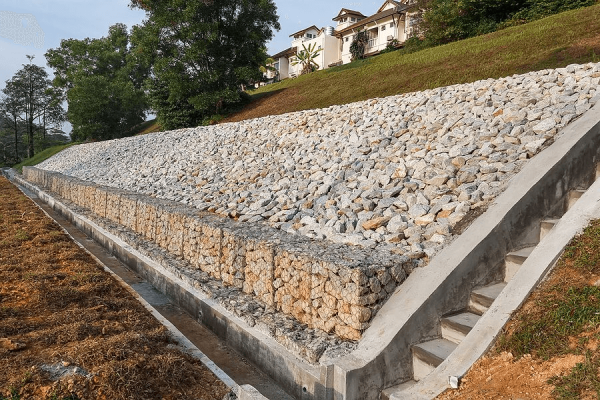
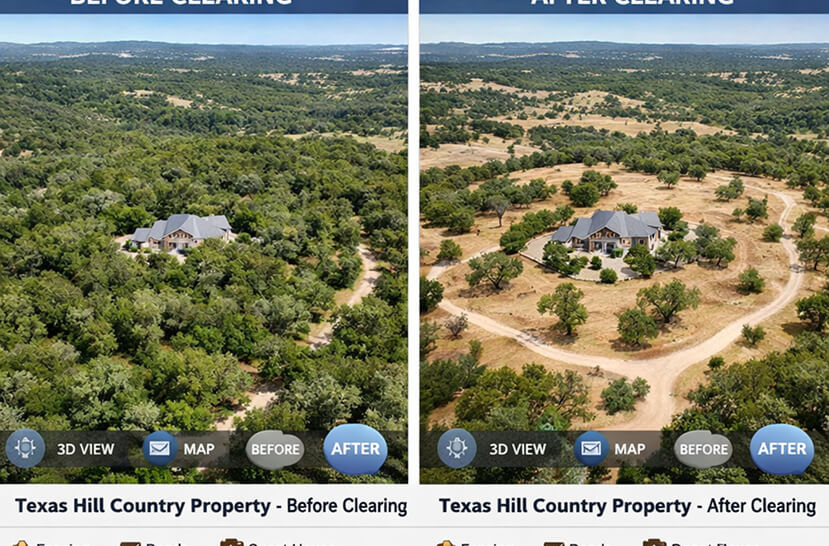
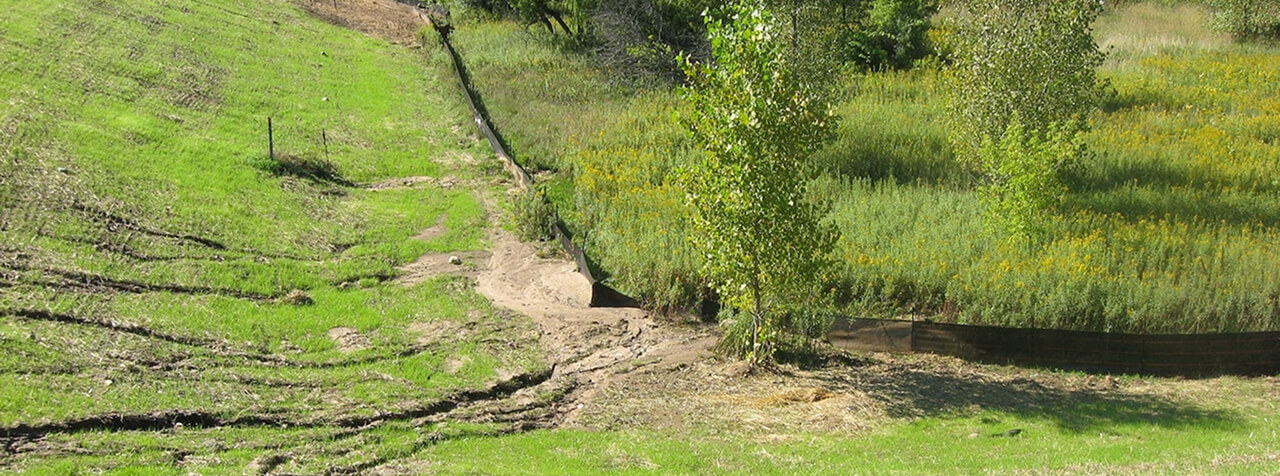
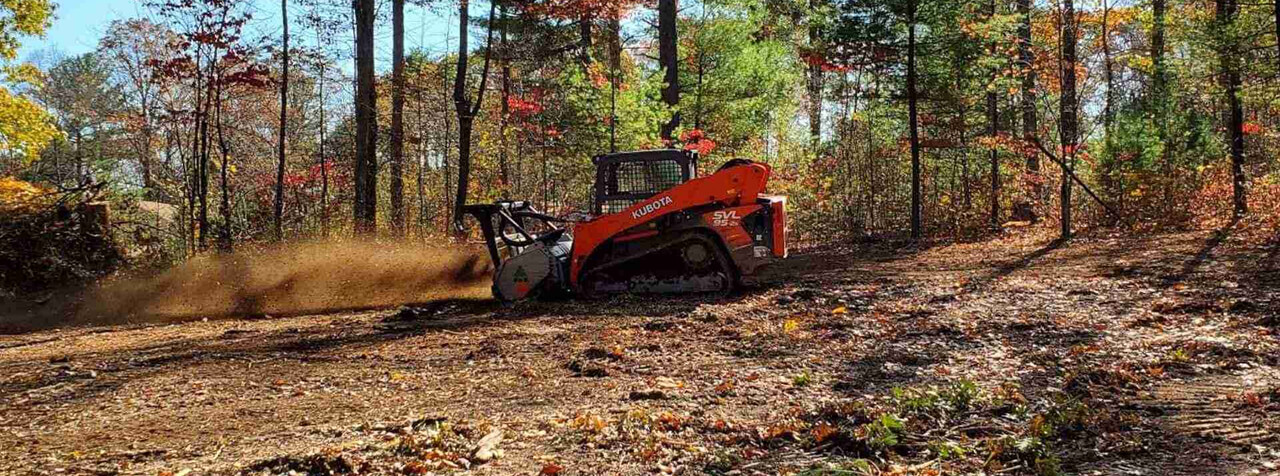
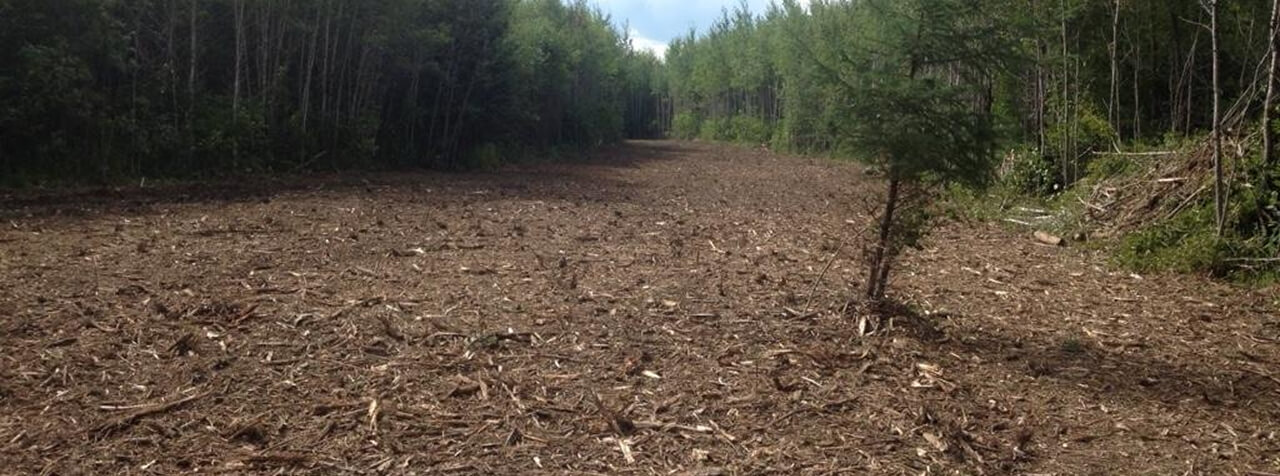
Every photo is from a real ClearGround job site. No stock. No renders. What you see is what we do.





Factors to Consider For Forestry Mulching




FOR CENTRAL TEXAS.
Every project is unique — but your quote shouldn't be a mystery. We price by terrain density and acreage, not by how long the crew feels like staying. Every estimate is backed by a pre-clearing RTK site scan.
| Service | Ave. Project Duration | Ave. Project Size | Rate Basis | 2026 Range |
|---|---|---|---|---|
| Forestry Mulching | 1-3 days | 0.5-5 acres | acres | $1,500 - $3,500 / acre |
| Cedar / Juniper Removal | 1-3 days | 1-10 acres | acres | $1,500 - $3,000 / acre |
| Mesquite Grubbing | 1-3 days | 1-5 acres | acres | $1,500 - $3,500 / acre |
| Dense Trees (Cedar, Juniper, Mesquite) Mulching | 1-5 days | 0.5-5 acres | acres | $4,000 - $10,000 |
| Brush / Underbrush Clearing | 0.5-1 day | 0.25-2 acres | acres | $800 - $2,000 / acre |
| Field & Brush Clearing | 0.5-1 day | 1-10 acres | acres | $800 - $2,000 / acre |
| Forestry Clearing & Land Prep | 0.5-3 days | 0.5-5 acres | acres | $1,500 - $3,500 / acre |
| Forestry Mowing | 0.5-1 day | 0.25-2 acres | acres | $800 - $2,000 / acre |
| Tree Mulching & Root Extraction | 0.5-3 days | 0.5-5 acres | per project | $4,000 - $10,000 |
| Ranch Pasture Restoration | 1-3 days | 1-10 acres | acres | $1,500 - $3,000 / acre |
| Selective Clearing + Heritage Tree Preservation | 1-3 days | 1 lot | Per lot/site | $4,000 - $10,000 |
| Rock Milling / Rock Crushing Access Roads & Pads | 1-3 days | 0.25-2 acres | acres | $2,000 - $5,000 / acre |
| ROW / Easement Clearing | 1-5 days | 3 linear miles | linear miles | $2,000 - $5,000 / mile |
| Wildfire Defensible Space | 3-10 days | 5-50 acres | acres | $2,000 - $4,000 / acre |
| Wildfire Recovery / Rehab | 3-10 days | 5-50 acres | acres | $2,000 - $4,000 / acre |
| Lot Clearing (Construction-Ready) | 1-3 days | 0.25-1 acre lot | 0.25-1 acre lot | $3,000 - $8,000 |
| Rough Grading to Spec | 1-3 days | 0.25-1 acre lot | 0.25-1 acre lot | $1,500 - $4,000 |
| Mobilization / Transportation | 2 hours - 0.5 days | 1-3 acres | project | $500 - $1,500 / project |
Pricing includes veteran operators (12–20 years experience) and all fuel/maintenance costs. Projects with significant limestone may require integrated rock milling at a premium rate.
SUBSCRIPTION.
Cedar and juniper don't clear themselves once. They grow back. An annual maintenance agreement keeps your defensible space intact, your views open, and your fire risk managed — on a predictable schedule.
Your Project. Our Scope.
Three types of buyers hire us for land clearing. Here's how we approach each one.
Pool & Estate Builders
Hit limestone at 18 inches? That's not a surprise — that's a Hill Country Tuesday. ClearGround scans the subsurface before your crew mobilizes, locates rock shelves in 3D, and clears the lot to construction-ready spec. Rock gets milled. Heritage trees get protected. Your pool dig starts on a pad that's been verified, not assumed.
See how we work with pool buildersInfill Developers
A heritage tree violation kills your permit timeline. A failed drainage review blows your pro forma. ClearGround handles selective clearing, CRZ compliance, and grading verification as a single mobilization — with RTK documentation that gives your engineer exactly what they need for city review. One partner, one scan, one handoff.
See how we work with developersEstate & Ranchette Owners
You want a park-like result on your property — not a clear-cut moonscape. Mulch stays on the ground. Topsoil is protected. Desirable trees are flagged before we start. Annual vegetation management available — one call, handled.
Estate Owners pageEvery Acre Mapped, Mulched
& Verified.
No other forestry mulching contractor in the Hill Country scans before they cut, documents what they clear, or delivers a 3D model when they're done. Here's what that means for your property.
Before We Cut
Our Mavic 3 Enterprise RTK drone scans your property before the first pass. We map drainage paths, legacy trees, and clearing zones — so nothing gets touched by accident and every decision is data-driven.
RTK ±0.5cm AccuracyDigital Twin
Every job scanned before and after. You receive a 3D model proving exactly what was cleared, what was kept, and what changed — the kind of documentation no other clearing contractor delivers.
3D Model DeliveredThe CAT 299D3 XE with FAE mulching head leaves a fine mulch layer that's immediately walk-ready — aesthetically superior to bare ground and ready for seeding or landscaping.
No Hauling
All material processed on-site in a single pass. No burn permits, no hauling trucks, no tipping fees. Your driveway and access roads stay intact throughout the job.
Zero Permits RequiredProtection
Heritage oaks and specimen trees are GPS-flagged in the pre-scan and protected with exclusion zones before equipment rolls. We clear around what matters — with centimeter-level precision.
Defensible Space
Creates the 30–100' defensible perimeter recommended by Texas A&M Forest Service — without the complexity of traditional clearing methods. Cedar and brush eliminated in one pass.
Fire MitigationEfficiency
One pass, one machine, one operator. No convoy of dozers, dump trucks, and loaders tearing up your property. Less ground pressure, less disruption, faster completion.
Preserved
The mulch layer returns nutrients to soil, prevents erosion, and eliminates post-clearing remediation costs. Your land is measurably healthier after we leave than before we arrived.
Zero WasteMaintenance Plans
Annual or biennial defensible space and fence line clearing keeps cedar and mesquite from reclaiming your property. Fixed pricing, scheduled visits — your land stays clear year after year.
& TDA Certified
Full liability coverage plus Texas Department of Agriculture certifications for herbicide application when selective treatment is needed. Every operator OSHA-trained. Every job insured. No shortcuts on compliance — ever.
Frequently Asked Questions
Everything you need to know about our forestry mulching services in the Austin and Texas Hill Country area.
Contact us for a LiDAR-based site assessment. We'll provide a geo-referenced 3D model and a fixed-price bid.