


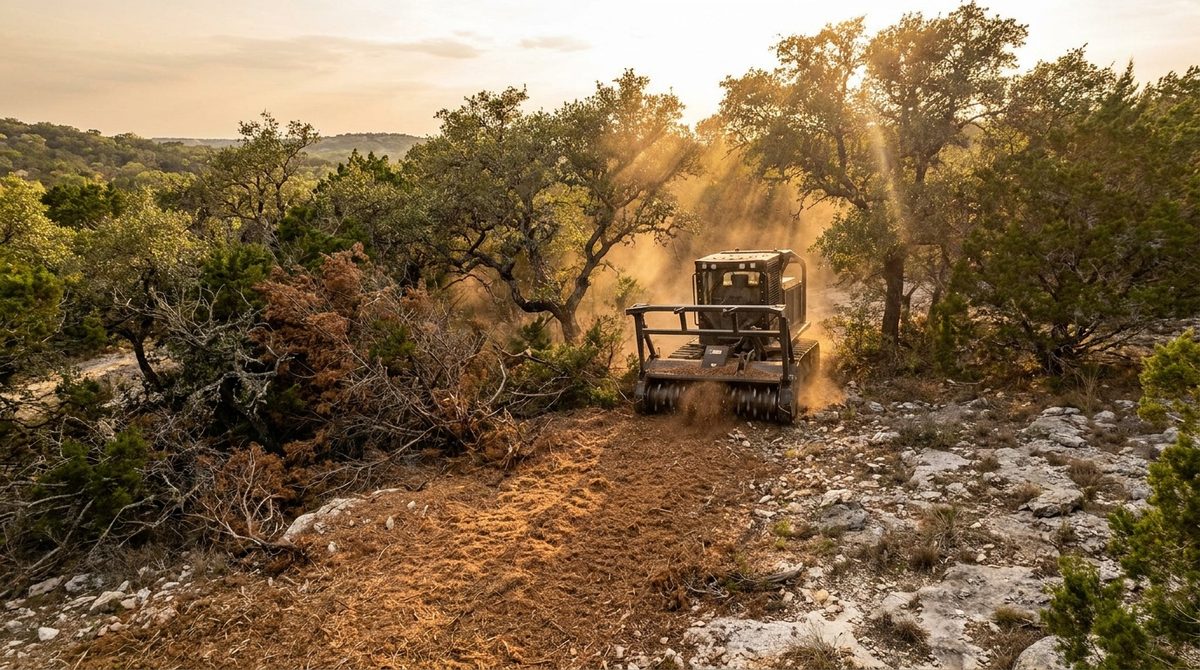
Forestry mulching clears brush and trees in one pass and leaves the ground cover on site. Whether you're reclaiming an overgrown residential lot or preparing a development site for construction, knowing how forestry mulching differs from traditional land clearing often saves time and haul-off cost.
In this guide
What is forestry mulching?
Definition
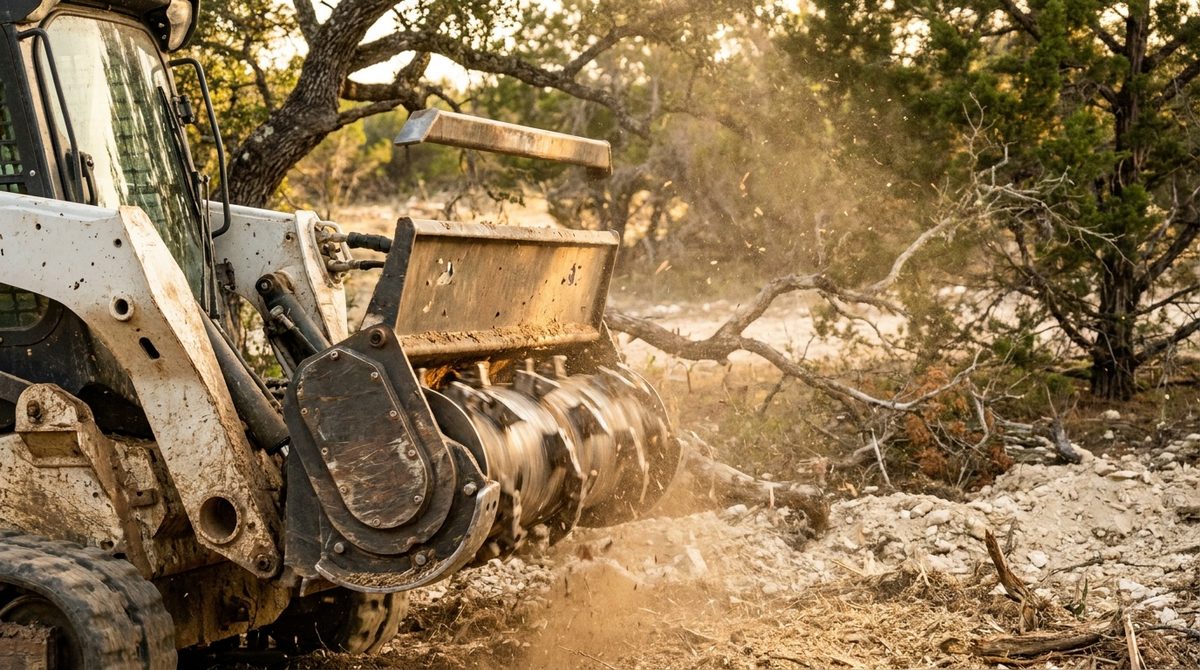
Forestry mulching is a single-pass land clearing process. A specialized machine with a rotary drum head moves through the property — cutting down trees, brush, stumps, and undergrowth, then grinding everything into mulch in the same pass. The mulched material stays on site as a natural ground cover. Nothing is hauled off, burned, or pushed into piles.
What stays on site matters. The mulch layer covers bare ground, holds moisture and slows runoff. See what it costs or see pricing.
What are the benefits of forestry mulching over traditional land clearing?
Traditional land clearing — bulldozers, burn piles, haul-off trucks — involves multiple pieces of equipment, multiple crews, and a lot of coordination. Forestry mulching replaces most of that with one pass. Here's what that means in practice.
One Pass. Fewer Crews.
Traditional clearing requires a convoy — bulldozers, excavators, dump trucks, and sometimes burn crews. Forestry mulching handles all of it in a single pass. That usually means a faster timeline and fewer crews to coordinate.
Faster TimelineNo Debris Hauling or Disposal Costs
Because the mulched material stays on site, there is no debris to haul off. On large clearing jobs, hauling and disposal add up fast. Mulching in place removes that line from the budget.
No Haul-OffProtects and Improves the Soil
Bulldozing and burning strip topsoil and leave the ground bare and exposed — which invites erosion on slopes. A mulch layer holds moisture and slows runoff, then breaks down into the soil. On Hill Country slopes and drainage-sensitive lots, that often decides the method. Site conditions vary, so we do not promise a specific erosion reduction.
Ground Stays CoveredSelective Clearing — Precision at the Tree Level
Forestry mulching gives you precise control over what gets removed and what stays. The machine can work around mature oaks, specific vegetation, natural buffers, or any trees you want to preserve. A bulldozer doesn't offer that — everything in its path is cleared. In Austin, a protected tree is 19 inches or larger in diameter, any species, and a heritage tree is 24 inches or larger of a listed species (City of Austin, LDC 25-8-641). Removing them takes City approval, so we flag them before the machine starts. Oaks also need timing care: Texas A&M Forest Service advises avoiding pruning or wounding oaks from about February through June and painting fresh wounds right away.
Heritage Tree SafeMinimal Site Disturbance
Because forestry mulching doesn't require heavy dozer work or multiple equipment passes, there is less disruption around the work area. The machine moves through once and leaves everything else in place. Neighboring properties, existing landscaping, and site access routes stay intact throughout the job.
No Burning, No Burn-Ban Delays
Burning cleared brush falls under TCEQ outdoor-burning rules and county burn bans, which can postpone a job for weeks in dry months. Mulching in place means no burning, so no burn-ban delays and no smoke. Hauling to a landfill adds trips and tipping fees that mulching skips. Tree-removal rules in your city still apply.
No Burn-Ban DelaysThe mulch layer does work. It holds moisture, slows runoff and feeds the soil as it breaks down.
— Cody Baird, Owner
How does forestry mulching compare with traditional clearing?
Wondering how forestry mulching fits your site? We walk every property before quoting, so you see what will be cleared before we start.
Request a Quote →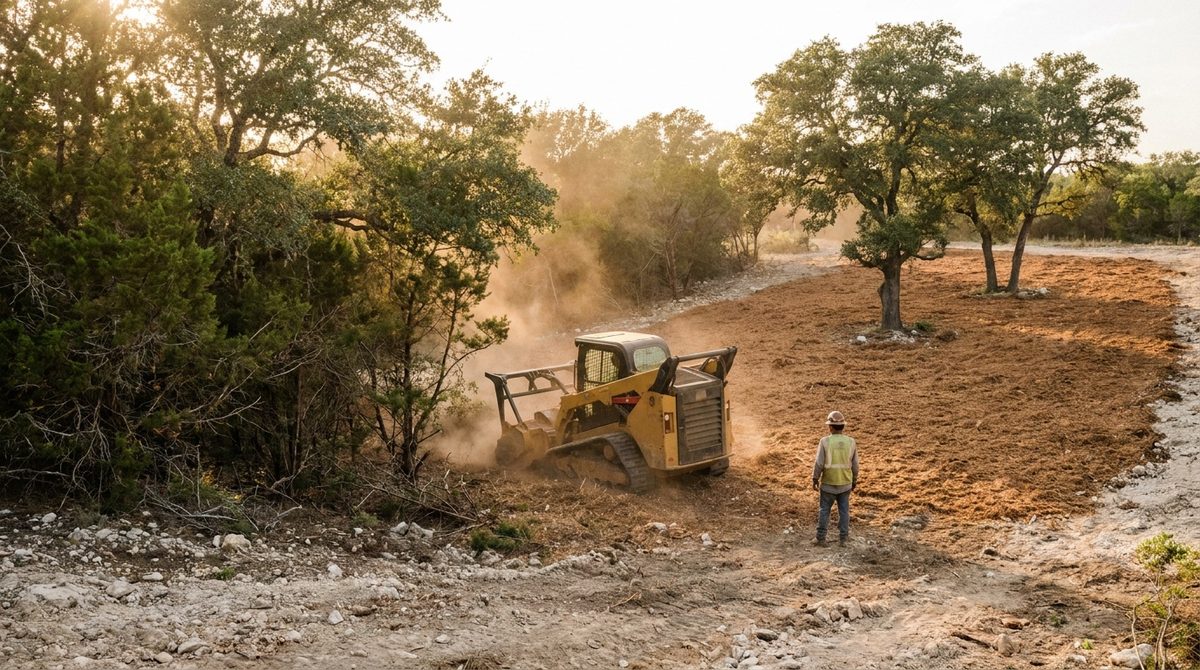
Is forestry mulching right for your property?
Mulching fits many projects but not all. Here is where it works well and where another method may fit better. Prices run $2,000–$5,200 per acre (light brush to dense cedar). See pricing or use the land clearing calculator.
- Overgrown residential lots with cedar, brush, or mesquite
- Development sites that need vegetation cleared before grading
- Properties creating wildfire defensible space (home ignition zones out to 100 feet, per NFPA 1140)
- Lots with trees you want to preserve alongside areas being cleared
- Sites where access routes and neighboring properties need to stay intact
- Rural land with dense undergrowth and uneven terrain
- Properties where burn bans or haul-off costs are a concern
- Very large trees, which may need an excavator assist
- Sites requiring bare-dirt grading immediately after clearing
- Mesquite, huisache and other resprouters, which may need root extraction or follow-up treatment
- Sites with significant existing concrete, debris, or non-organic material that needs removal
The denser the brush and undergrowth, the stronger the case for mulching. On most residential and light development sites in Austin and the Hill Country, it is a good first option.
Related services
More on how we clear, and what it costs.
Frequently asked questions
What is forestry mulching?
Forestry mulching is a single-pass land clearing process. A machine with a rotary head cuts trees, brush and undergrowth and grinds them into mulch in the same pass. The mulch stays on site as ground cover. Nothing is hauled off, burned or piled.
What are the main benefits of forestry mulching over traditional land clearing?
A faster timeline (one pass instead of several crews), no haul-off, a mulch layer that holds moisture and slows runoff, selective clearing around trees you want to keep, less site disruption, and no burning, so no burn-ban delays.
How much does forestry mulching cost in Austin, TX?
In Austin and the Texas Hill Country, forestry mulching typically runs $2,000–$5,200 per acre (light brush to dense cedar), depending on vegetation density, slope and access. Prices reviewed September 2026; a site walk sets the final number. See pricing.
Will cleared brush grow back after forestry mulching?
It depends on the species. Ashe juniper (cedar) does not resprout once cut below the lowest green limb, so regrowth comes from seedlings (Texas A&M AgriLife). Mesquite, redberry juniper, huisache and shin oak do resprout, and they may need root extraction or follow-up treatment. We check this during the site walk.
Can forestry mulching work on steep Hill Country slopes?
Often, yes. Tracked mulching machines are built for uneven ground. Very steep or rocky slopes are judged on the site walk.
Ready to clear your property?
Walk the Site.
Get a Written Quote.
Written quote within 48 hours of the site walk. Most jobs start 1–3 weeks after approval.
Request a QuoteServing Austin, TX · Texas Hill Country
Prices reviewed: September 2026. Ranges for Austin and Central Texas; your site walk sets the final number. Last reviewed: September 2026.