


Rock Milling in Austin & the Texas Hill Country We eat limestone for breakfast, and turn it into your driveway.
Clear Ground mills surface limestone in place into aggregate across Austin and the Texas Hill Country, for building pads, driveways and access roads. Milling runs $2,500–$6,000 per acre, usually one to three days. The rock stays on site as base material, so there is no haul-off. Deeper rock is broken with an excavator and hammer instead.
What is rock milling?
The rock in your way
becomes base material.
Rock milling grinds surface limestone in place with a rock-milling head rented for the job. It turns a shelf of intact rock into crushed aggregate at typical depths of 4 to 6 inches, without disturbing the soil around it.
The output is crushed limestone, the same kind of material supply yards sell as road base and driveway aggregate. The gradation depends on the rock and the pass, so ask for the target in your quote. It is produced on your site, from your rock.
Milling runs on its own, bundled with lot clearing, or as part of access road and pad construction. This page owns the milling price. The road page prices by the linear foot.
How it works
HOW DOES ROCK MILLING WORK?
BEFORE MOBILIZING
STEP 1
WE FIND THE ROCK BEFORE WE QUOTE.
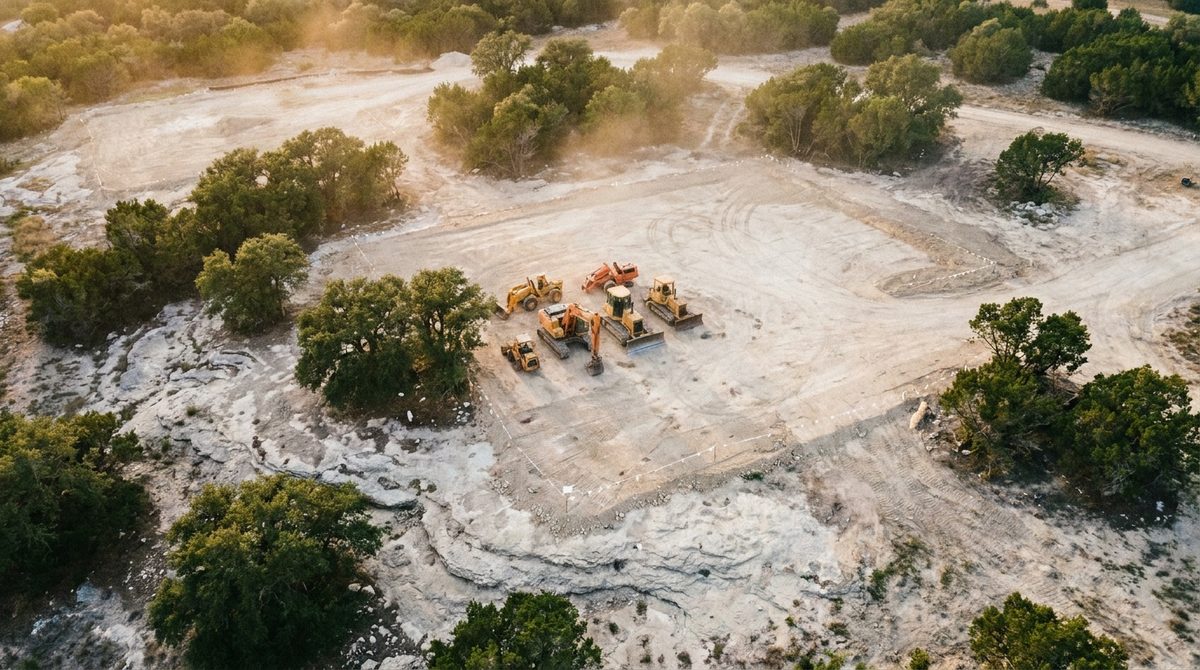
We walk the site, look for outcrops and shelving, and probe rock depth. An optional drone scan adds a surface map of where rock is exposed. A drone sees only the surface, so probing tells us how deep it goes. You see the rock extent and what it means for cost before you commit.
SITE WALK · ROCK PROBING · OPTIONAL SURFACE MAP · WRITTEN QUOTE
MILLING
STEP 2
OBSTRUCTION IN. AGGREGATE OUT.
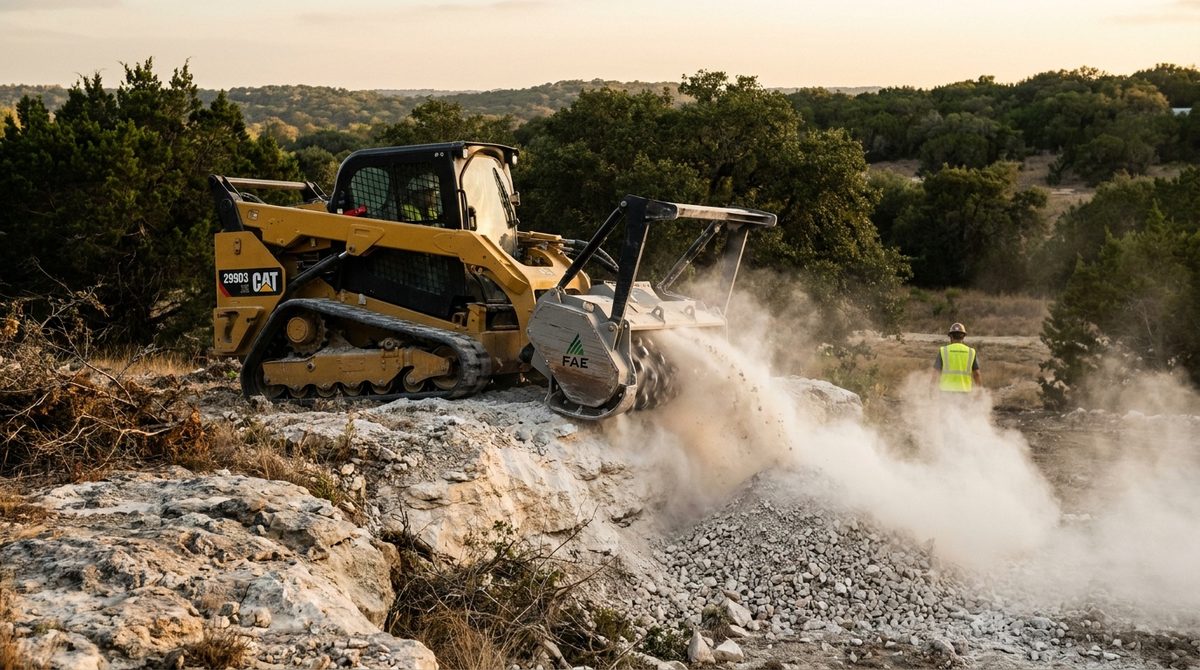
The rented rock-milling head works the rock in straight, overlapping passes. The crushed limestone lands behind the drum as a uniform layer. Nothing is loaded into trucks. The FAE mulching head clears the vegetation, then the rented mill follows, so clearing and milling share one mobilization.
CAT 299D3 XE · ROCK-MILLING ATTACHMENT · TYPICAL 4–6" DEPTH · NO HAUL-OFF
CHECKING DEPTH
STEP 3
DEPTH CHECKED AS WE GO.
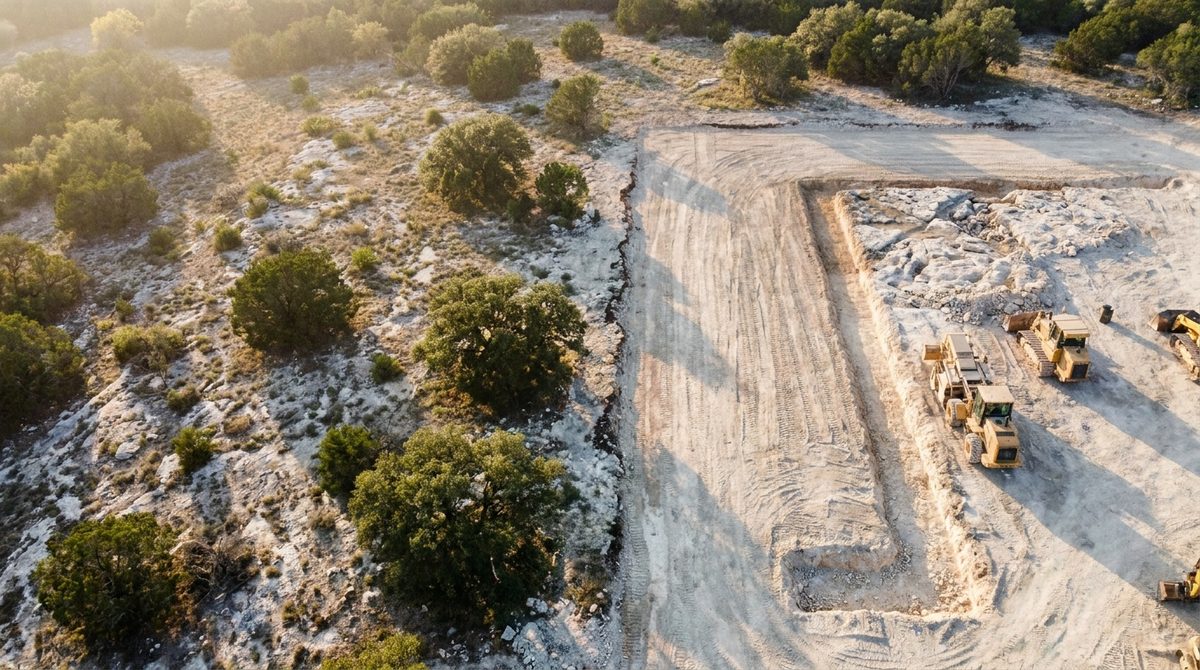
The operator checks milled depth with a probe and a tape as the job goes, so you get the depth you paid for and not a few inches of dust on top of an intact shelf. If the rock changes hardness or depth partway across the site, we tell you before it changes the scope. Where rock is too hard or too deep to mill, we switch to the excavator and hydraulic hammer.
DEPTH CHECKS · FORMATION CHANGES REPORTED · HAMMER FOR DEEP OR HARD ROCK
HANDOFF
STEP 4
A SURFACE YOUR ENGINEER CAN USE.
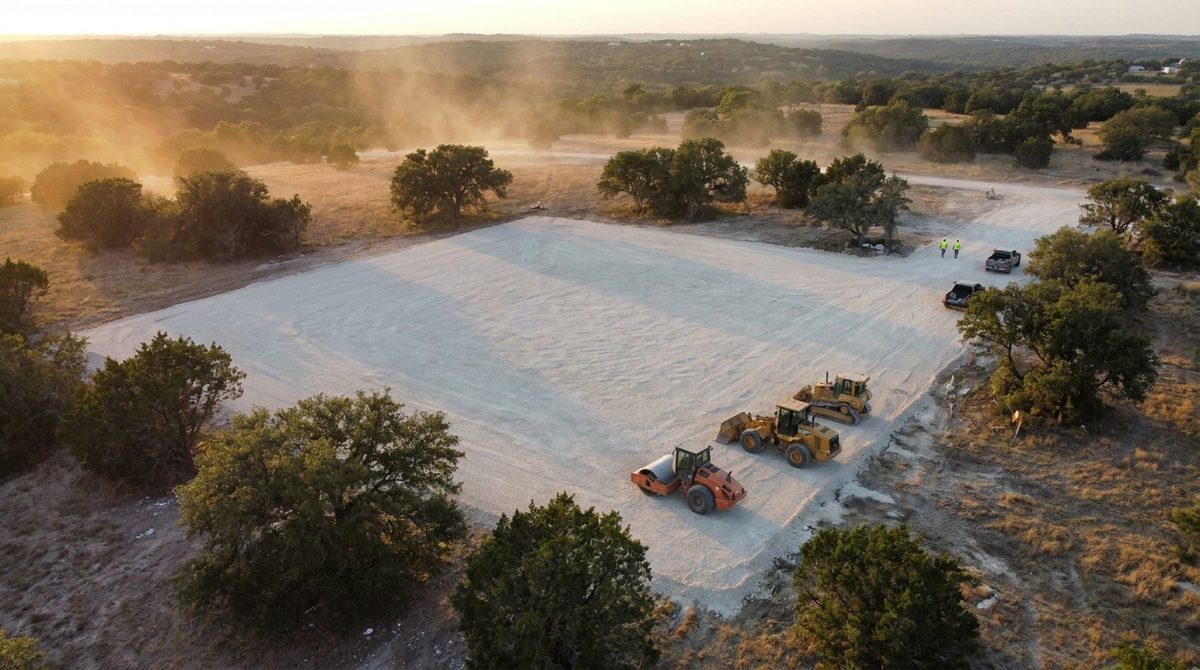
We walk the finished surface with you and hand over before-and-after photos. Your engineer decides whether the milled layer is acceptable as sub-base for a slab or pad. An optional drone scan measures surface grades and quantities, typically 2–3 business days after the flight. Our drone scans measure surfaces, quantities and grades. They are not a boundary survey or a sealed survey by a licensed surveyor, and a drone cannot see below the ground surface.
WALK-THROUGH · PHOTO RECORD · OPTIONAL SCAN · ENGINEER APPROVES USE
How much does rock milling cost?
$2,500–$6,000 per acre.
Lot & site
rock milling
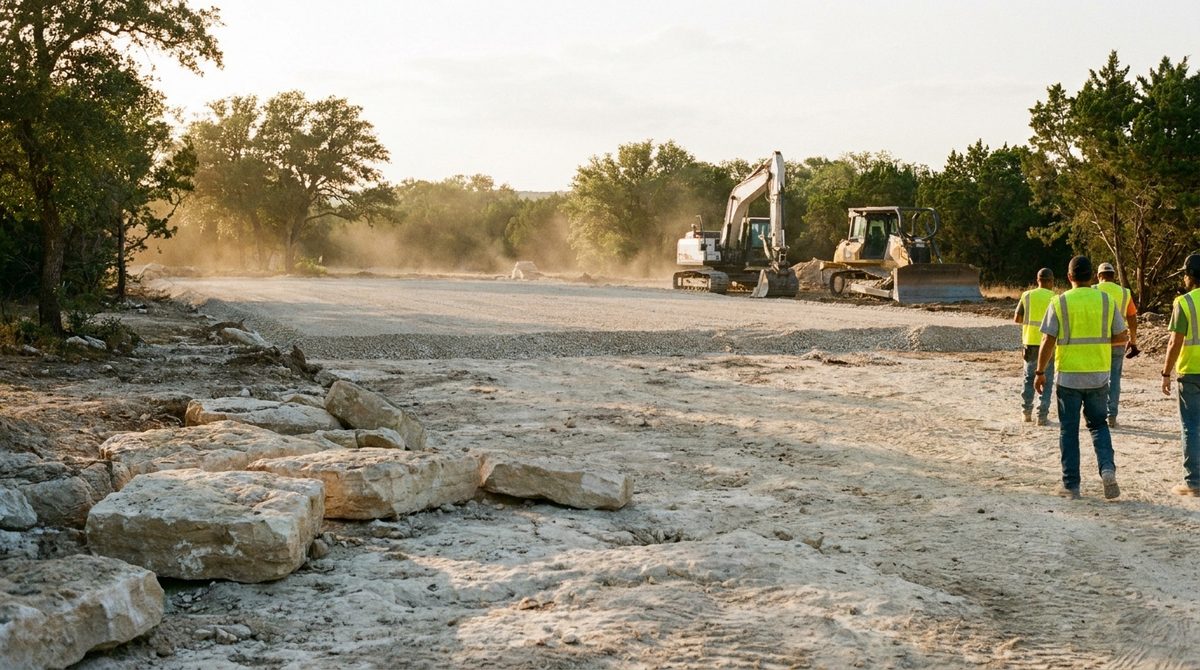
Surface limestone on a pool build or infill lot does not have to leave the site. The mill processes it in place and it stays on the ground as sub-base for the work that follows. Typically bundled with lot clearing as one mobilization.
Rock-milling head rented for the job
Access roads
& pads
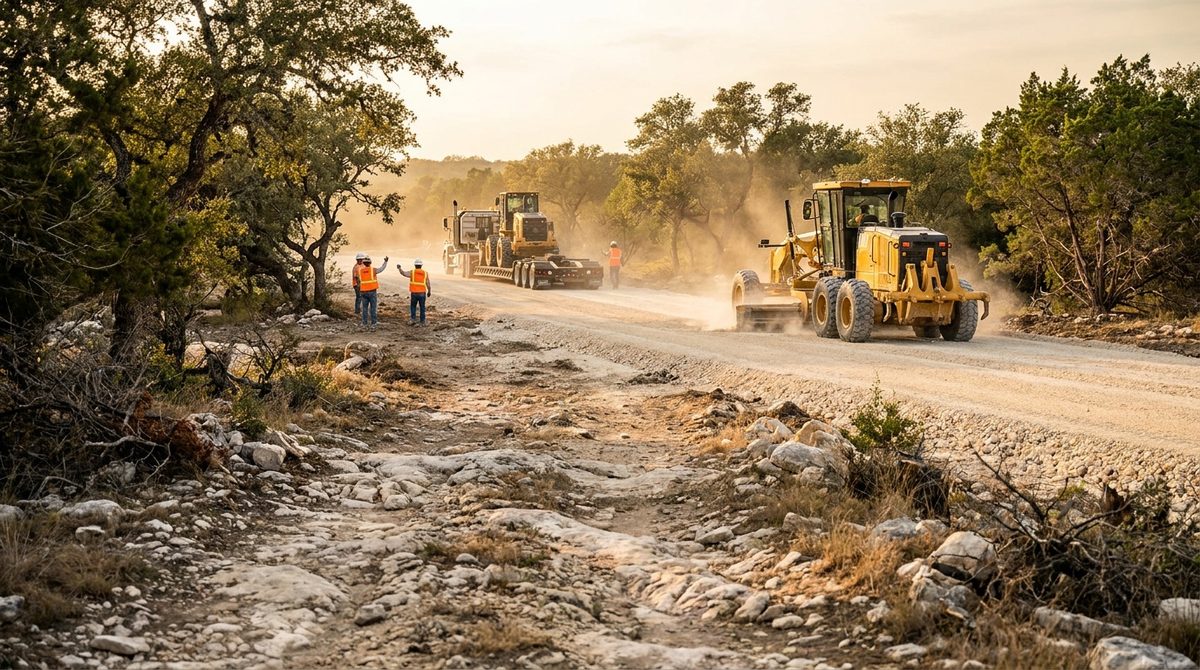
Milled limestone makes a firm surface for ranch roads, driveways, staging pads and equipment hardstands. Roads are priced by the linear foot and pads by the acre on the rock-milled access roads page.
Culverts and crossings quoted with the road
Clearing
+ rock milling
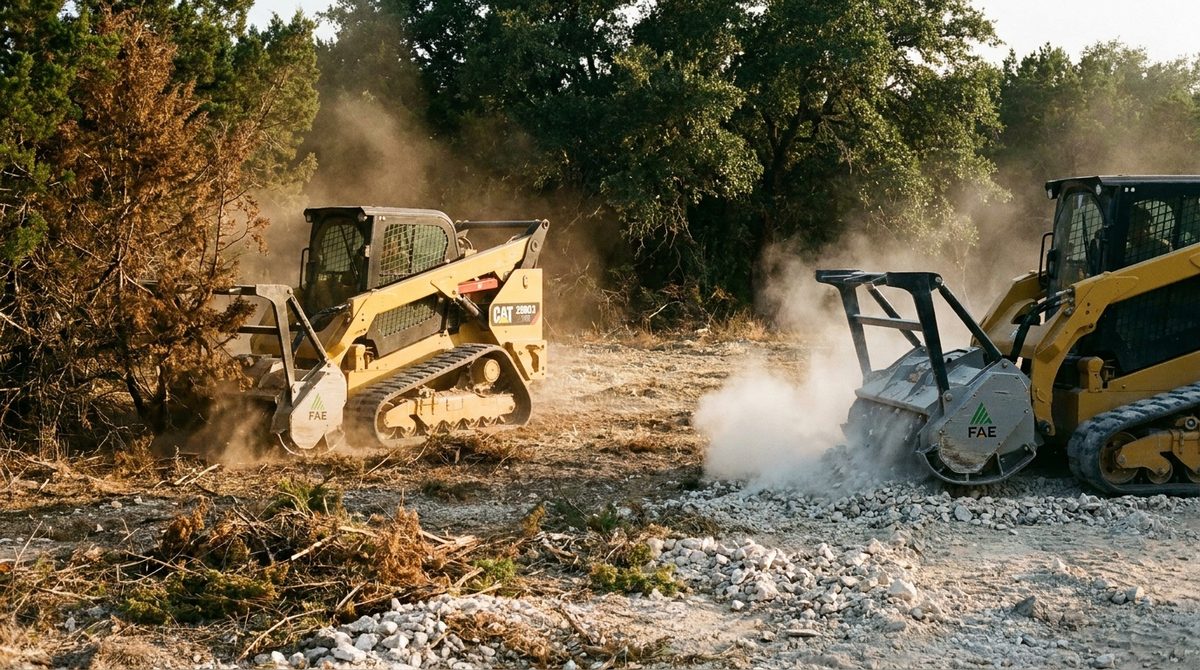
The most common setup on Hill Country lots: the CAT 299D3 XE clears vegetation with the mulching head, then a rented mill works the exposed limestone. One crew, one visit, two problems solved. Rough grading can be a third phase in the same mobilization.
Priced by component
Prices reviewed: September 2026. Ranges for Austin and Central Texas; your site walk sets the final number. Mobilization is typically $725 per job, more with distance. See all pricing or the land clearing calculator.
Should you haul rock off
or mill it in place?
The machines that turn
obstacle into material.
Who hires us
to mill rock?
Your crew shows up to dig and there is a limestone shelf near the surface. We mill the surface rock before your crew mobilizes, so the dig starts in processed aggregate and not an intact shelf. We probe rock before you quote the homeowner, so the change-order conversation happens before the dig.
An infill lot with surface limestone has no room for a haul-off line the pro forma did not have. Milling converts the rock to sub-base on site where your engineer approves it. One mobilization handles clearing, milling and rough grade.
Rough grade in the same visit
Estates with rock outcroppings on the driveway or access road do not have to import limestone from a quarry. They are sitting on it. Milling processes existing surface rock into driveway and road base. Roads are priced on the access roads page.
Often with cedar clearing in the same mobilization
Rock Milling Questions
Find the rock
before you quote around it.
We walk the site, probe the rock and send a written quote. Written quote within 48 hours of the site walk. Austin and Central Texas.