


ROCK & BOULDER DEMOLITION IN AUSTIN & CENTRAL TEXAS
We break embedded boulders and limestone shelves in place with an excavator and hydraulic hammer, then sort and load out the fragments, across Austin and Central Texas. Each obstruction is priced at $1,000–$15,000 per obstruction. Rock spread through a dig is billed by the cubic yard, and open-ended hammer work by the hour.
Get a QuoteTHE GEOLOGY
DOESN'T CARE
ABOUT YOUR TIMELINE.
West of the Balcones Fault, Edwards and Glen Rose limestone sits at or near the surface. East of it, Austin Chalk and Blackland Prairie clays dig differently, though caliche and stray rock still turn up. Pool builders hit rock a foot or two down. Infill developers find limestone shelves where a crawlspace used to be. Estate owners discover boulders the size of trucks when grading begins.
Contractors who don't plan for rock blow timelines and pass the overrun to their clients. The ones who do bring a hydraulic hammer sized for the job and look at the ground before they mobilize.
COMMON
CLASS
HAZARD
COMMON
IN-PLACE BREAKING.
BILLED ON WHAT'S IN THE GROUND.
Rock & boulder demolition is the controlled, in-place mechanical breaking of limestone and embedded boulders with an excavator and hydraulic hammer, followed by fragment extraction, sorting and debris management. A drone models the ground surface. Rock, footings and buried lines below the surface are found with test holes, probing, 811 locates and GPR where needed.
HARDER ROCK CHANGES THE NUMBER IN YOUR PROPOSAL.
Not all limestone breaks the same. Dense, hard rock takes more hammer time and wears tooling faster than soft or fractured layers. That is why we bill open-ended hammering by the hour and rock volume by the cubic yard, at different rates for rippable and hammered rock. When a contractor bids a rock job without looking at the rock, somebody eats the overrun. We probe or dig a test hole before the quote where the job calls for it.
DEMOLITION JOB ACTUALLY WORKS
We walk the site, log outcrops and access constraints, and look at what is exposed. A drone models the ground surface. Rock, footings and buried lines below the surface are found with test holes, probing, 811 locates and GPR where needed. For pool and foundation excavation scopes, a test hole helps characterize depth and hardness. That is what lets us tell you which billing method fits and give you a range you can plan around.
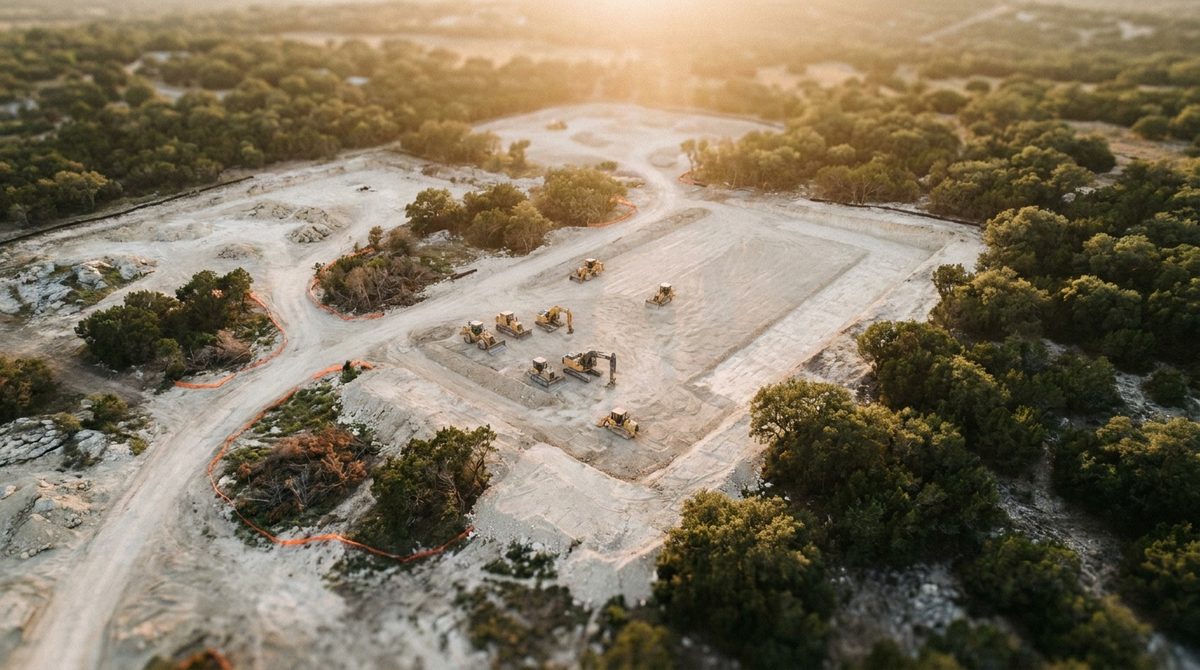
An excavator with a hydraulic hammer arrives with a chisel bit chosen for the rock we expect. Utility marks are confirmed and adjacent structures are flagged for vibration and clearance. The job starts with a plan.
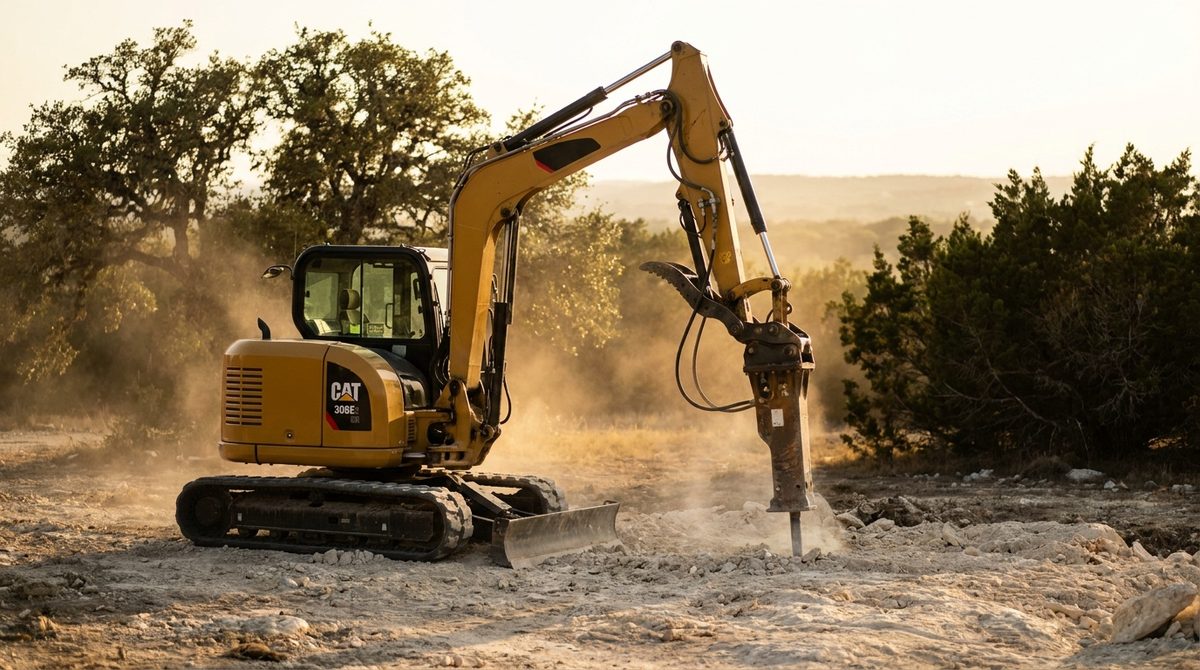
Rock is broken to size, extracted and sorted on site. Fragments suitable for milling can be processed into smaller aggregate for base course, drainage layer or compacted fill, which can cut haul-off cost. Oversized debris is staged for truck haul to an approved facility.
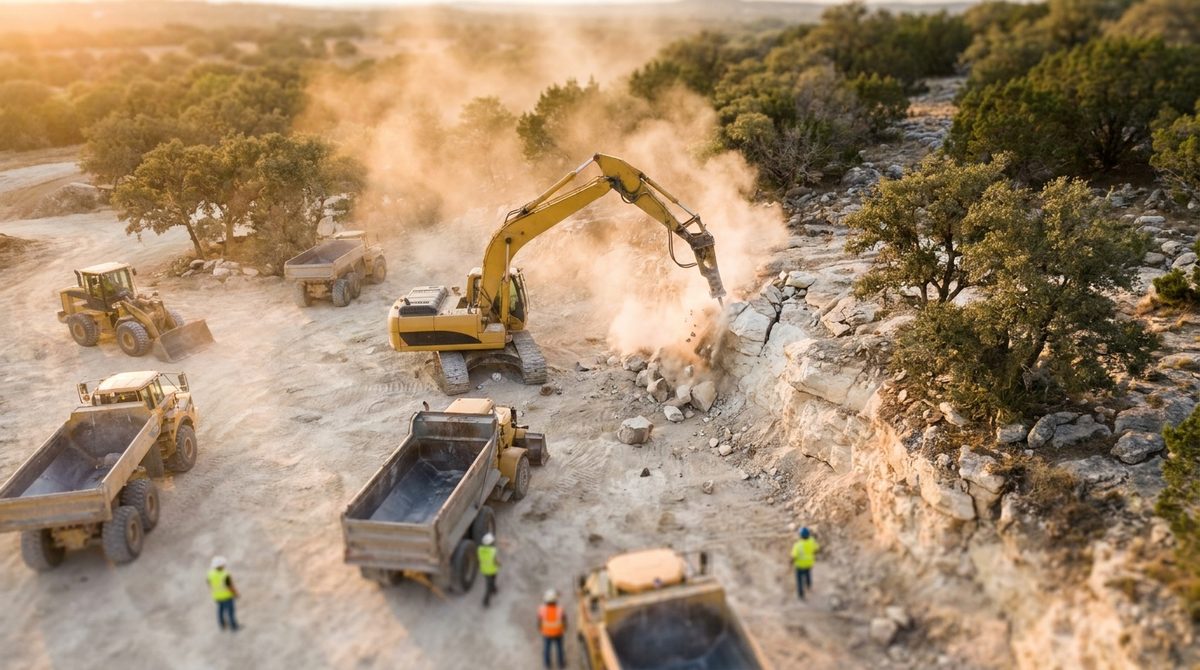
When the rock is out, we check the grade against your target with you or your GC and reconcile hammer hours and cubic yards against the quote. If you added the optional drone scan, you also get a surface grade and volume report.
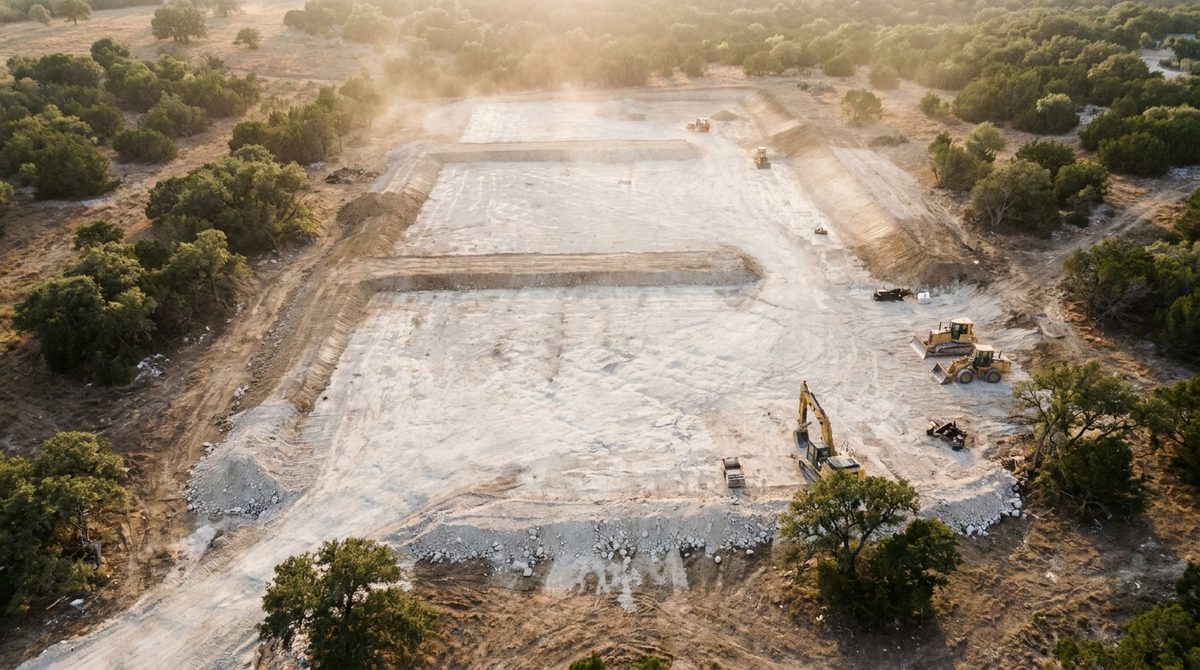
THREE WAYS ROCK IS BILLED.
THE QUOTE SAYS WHICH.
Rock jobs resist one flat per-square-foot price because hardness, depth and fragment size vary too much between sites. We bill a countable obstruction per obstruction, open-ended breaking by the hour, and rock volume by the cubic yard. Which one applies depends on whether the rock can be counted, whether a bucket can rip it or it needs the hammer, and whether the extent is known before we start.
| Method | Unit | Range | Used when |
|---|---|---|---|
| Per obstruction | per obstruction | $1,000–$15,000 | An isolated boulder or a single shelf you can point to. Size, depth, hardness, access and haul distance set where it lands in the range. |
| Hammer time | per hour | $250 | Open-ended breaking where the extent is only known as we go, such as rock found mid-dig. |
| Rippable rock | per cubic yard | $35–$45 | Soft or fractured limestone and caliche that the excavator can rip with the bucket without hammering. |
| Hammered rock | per cubic yard | $65–$90 | Hard, solid limestone that has to be broken with the hydraulic hammer before it can be dug. |
| Mobilization | per job | A mobilization charge (typically $725) applies to each job | Every job. Shown as its own line on the quote. |
Prices reviewed: September 2026. Ranges for Austin and Central Texas; your site walk sets the final number.
- Typical duration: 0.5 to 3 days per obstruction scope.
- What moves it up: harder limestone, depth beyond about 4 ft, longer haul distance, and more than one formation type on the same job.
- What keeps it down: on-site rock milling, which can cut haul-off, a single formation type and accessible staging.
Pricing reflects Central Texas residential and light commercial rock demolition. The actual quote depends on conditions confirmed at the site walk. Harder rock, unusual depth and access constraints are the main variables, and the quote states which billing method applies.
Excavation Contractors
Hill Country substrate is the biggest single risk factor in pool construction. When excavation hits limestone, a crew without a hydraulic hammer either walks or damages equipment. A probe or test hole before you commit to a dig depth helps you bid accurately the first time. When rock shows up mid-dig, call us. We answer the same business day. Most jobs start 1–3 weeks after approval.
Pool Builders: How We Work TogetherCustom Home Builders
Austin infill lots hold geological surprises: old fills over limestone, caliche caps hiding rock below, and boulders that never got removed during original site work. Our compact excavators fit the tight clearances of infill lots, where swinging near a neighbor's foundation is the daily condition. Clean grade delivered and ready for the next phase.
Infill Developers: How We Work TogetherRural Landowners
Estate and ranch property in the Hill Country often hasn't been cleared in decades. Boulder fields, limestone outcrops and caliche need to be identified and removed before construction grading can begin. We walk the site with you, count the obstructions and estimate volume before clearing starts, so you know the scope and not just a day rate.
Estate Owners: How We Work Together& Site Developers
Rock found mid-project is a schedule problem. Call us. We answer the same business day. Most jobs start 1–3 weeks after approval. We quote by the method that fits the rock, and the hammer hours and yardage we log let you reconcile the change order with your client.
Talk to Us About Your SiteHow much does rock breaking cost?
A single obstruction runs $1,000–$15,000 per obstruction. Hammer time is billed at $250 an hour. Rock spread through a dig is billed by the cubic yard: $35–$45 per cubic yard for rippable rock and $65–$90 per cubic yard for rock that needs the hammer. The quote says which method applies.
How do you know how hard the rock is before quoting?
We can't tell from the surface alone. A drone models the ground surface. Rock, footings and buried lines below the surface are found with test holes, probing, 811 locates and GPR where needed. We look at nearby outcrops and probe or dig a test hole where the job justifies it. If the rock turns out harder than the quote assumed, hammer time or cubic-yard billing reflects it.
What is the difference between rippable and hammered rock?
Rippable rock, such as soft or fractured limestone and caliche, can be pulled apart with an excavator bucket. Hammered rock is hard, solid limestone that has to be broken with the hydraulic hammer first, which takes longer and costs more per cubic yard.
Can you break rock next to a house, pool or neighbor's foundation?
Often yes, with a compact excavator and hydraulic hammer. We check clearance and vibration risk near adjacent slabs and foundations at the site walk, and we tell you if a spot is a poor fit for hammering.
What happens to the broken rock?
Fragments are sorted. Rock that can be milled on site becomes smaller aggregate for base, drainage or fill, which cuts haul-off. The rest is hauled to an approved facility.
How soon can you start?
We answer the same business day. Written quote within 48 hours of the site walk. Most jobs start 1–3 weeks after approval. Rock found mid-dig is a schedule problem, so call and tell us where the job stands.
Last reviewed: September 2026
KNOW YOUR ROCK
BEFORE YOUR CREW DOES.
We walk the site, look at the rock and tell you which billing method fits before a hammer strike. Written quote within 48 hours of the site walk.
Get a Quote